


· By Boat Juice Team
Polishing an Aluminum Boat: Your Step-by-Step Guide to a Mirror Finish
Polishing your aluminum boat is about stripping away that dull, chalky layer of oxidation to bring back its original shine and protect the metal. Think of it as essential maintenance that goes way beyond just looking good—it actively prevents long-term corrosion, keeping your boat’s value and structural integrity intact for years to come.
Why Polishing Your Aluminum Boat Is a Smart Move
That mirror-like finish on a sharp-looking aluminum boat isn't just for show at the dock; it’s a sign of a healthy, well-protected vessel. Over time, the constant battle with water, sun, and air triggers a chemical reaction on the aluminum's surface. We call this oxidation, and it’s the culprit behind that dull, chalky film that kills the shine.
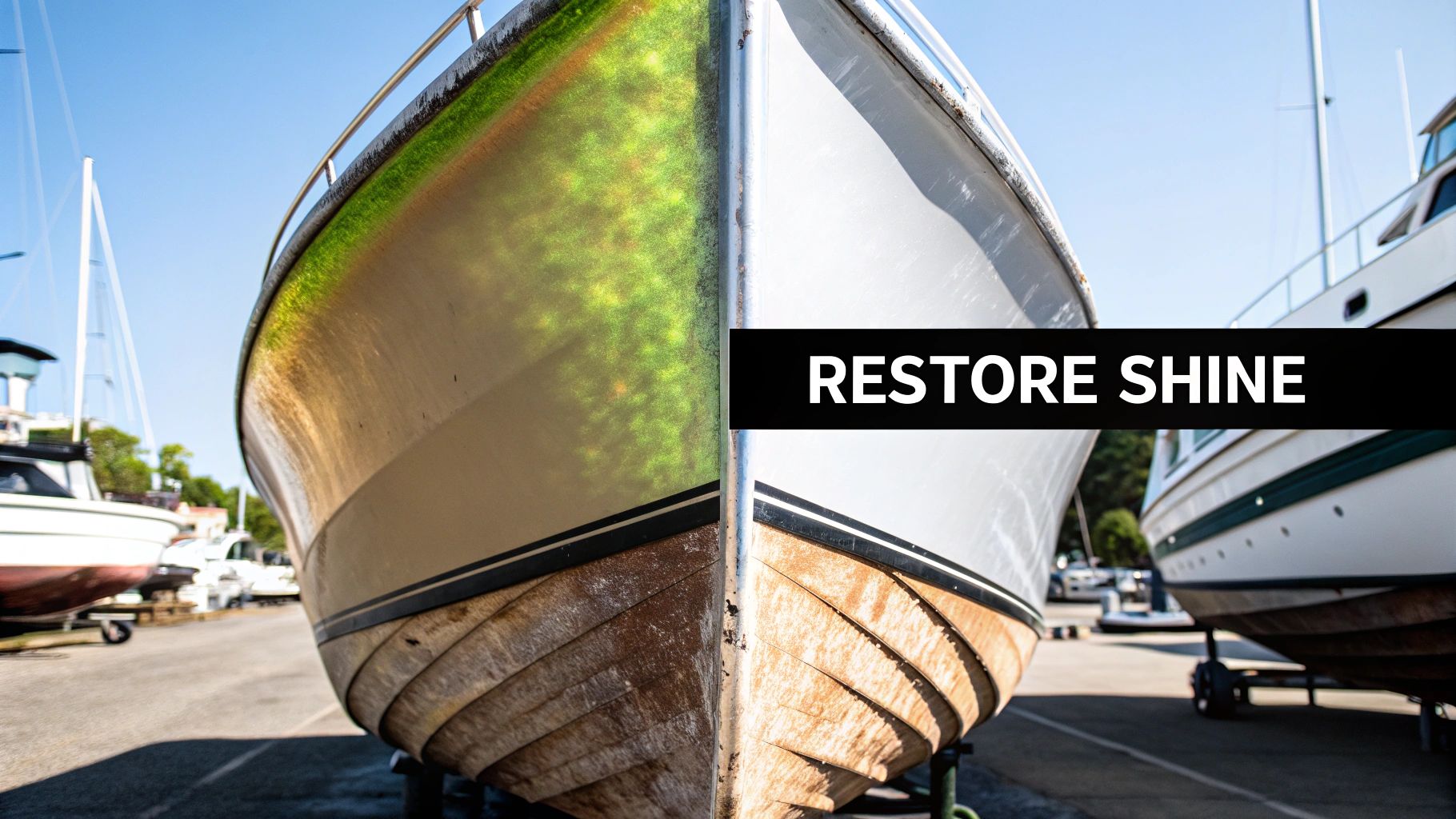
It’s best to think of polishing as essential preventive care, not just a cosmetic touch-up. When you get in there and polish the hull, you're literally removing that damaging layer of oxidation. This doesn't just restore that brilliant gleam; it brings back the metal’s built-in defense against corrosion and pitting.
More Than Just a Shine
Spending a weekend polishing your boat isn't just an investment of your time—it's a direct investment in your boat's future. By tackling this yourself, you're taking a hands-on role in its long-term health. It’s a growing trend, too. The global boat maintenance market was valued at USD 15.5 billion in 2023 and is expected to climb to USD 23.9 billion by 2030. That tells you how many boat owners like you are getting serious about upkeep. You can read more about the growing boat maintenance market and its trends to see for yourself.
Key Takeaway: Regular polishing is one of the most effective ways you can fight oxidation. It gets rid of that dull, chalky layer that traps moisture and other gunk, stopping it from eating away at the aluminum and causing deeper corrosion.
A good polish and seal at the start of the season can keep your aluminum hull protected for months. The payoff is huge:
- Brings Back the Wow Factor: It restores that head-turning, factory-new shine.
- Stops Corrosion in Its Tracks: By removing oxidation, you prevent serious damage before it ever gets a foothold.
- Boosts Resale Value: A well-maintained boat is always worth more when it’s time to sell.
- Makes Cleanup a Breeze: A smooth, polished surface is way easier to wipe down after a day on the water.
Choosing Your Polishing Tools and Supplies
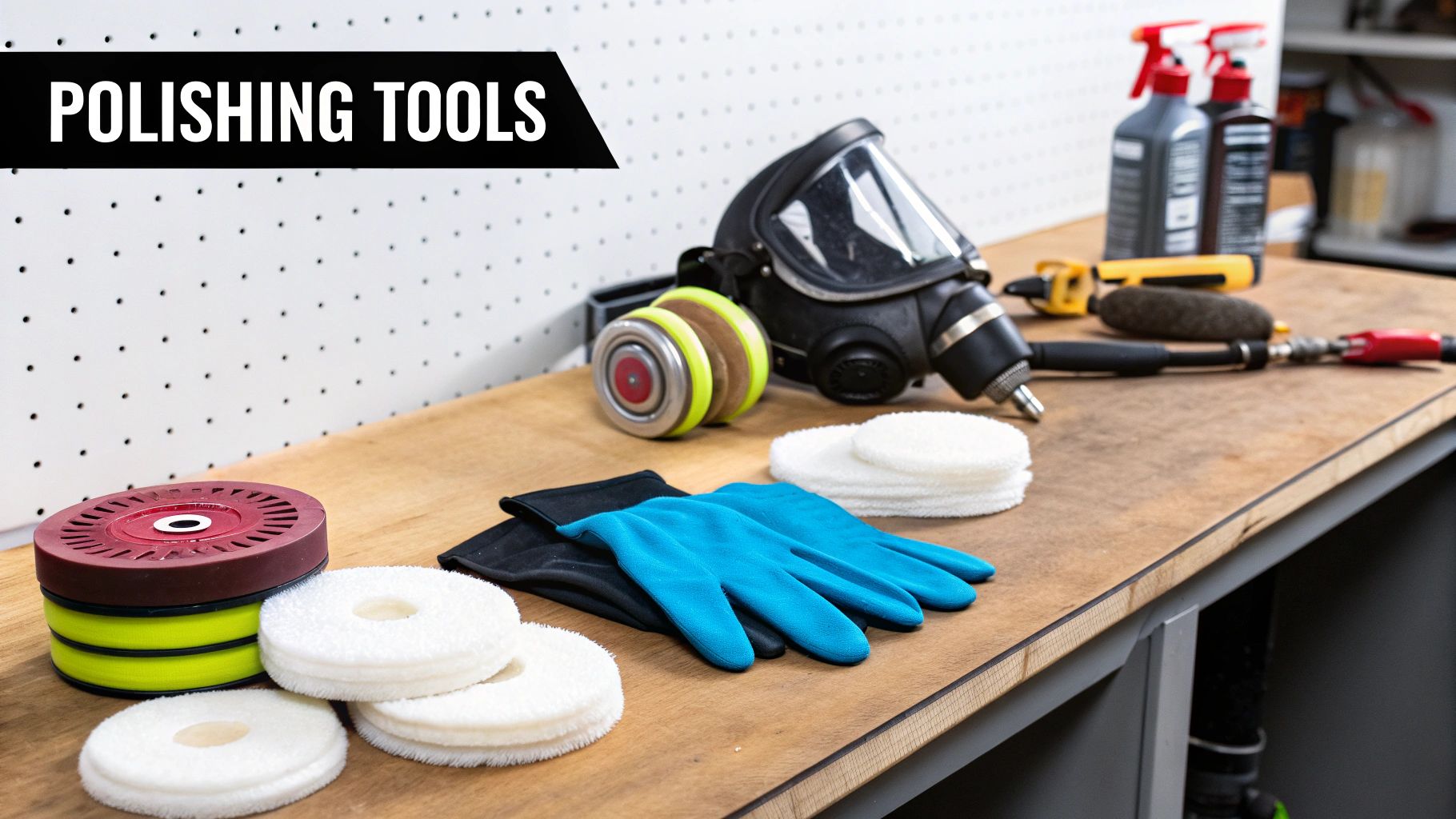
Walking into a marine supply store can feel a bit overwhelming, but getting the right gear sorted out is half the battle. Before you buy anything, your most critical tool is your own eyes. Get up close and personal with your boat’s hull.
Are you dealing with a light, hazy dullness, or are you staring down heavy, chalky oxidation with some real pitting? Your answer here dictates the entire game plan. A newer boat that just lost its luster might only need a light polish. But if you’re tackling a pontoon that’s been braving the elements for years, you’ll need a much more aggressive approach.
Picking Your Polisher Machine
Let's be real: for a job of this size, a machine polisher isn't a luxury—it's a necessity. You have two main choices, and they each have a specific role to play in getting that head-turning shine.
- Rotary Buffer: This is your heavy-hitter. A rotary spins on a single axis, which generates heat and friction. That power is exactly what you need to cut through severe oxidation and smooth out deeper imperfections.
- Dual-Action (DA) or Orbital Polisher: This machine is all about finesse. It oscillates in a random pattern, making it much gentler on the aluminum. A DA polisher is perfect for applying finishing polishes because it dramatically reduces the risk of leaving behind swirl marks.
For professional-grade results, you might even use both. You could start with the rotary to do the heavy lifting and then switch to the DA for that perfect, mirror-like finish.
Compounds, Pads, and Safety Gear
Okay, you’ve picked your machine. Now you need the right abrasives to go with it. Polishes and compounds are sold based on their "cut," ranging from heavy-duty compounds that chew through oxidation to ultra-fine polishes that create that deep, reflective shine. You can find some great guides on how to choose the right aluminum polish for boats depending on your boat's condition.
You're also going to need an assortment of pads to match your compounds.
- Wool Pads: These are your most aggressive option. Pair them with a heavy-cutting compound and a rotary buffer to make quick work of a badly weathered surface.
- Foam Pads: These come in a range of densities—cutting, polishing, and finishing. They’re fantastic for refining the surface with a DA polisher, stepping down the aggressiveness as you go.
To make it simpler, here’s a quick guide to help you match your boat’s condition with the right products.
Aluminum Polish and Compound Selection Guide
This table will help you choose the right level of abrasive based on what you see on your hull.
| Oxidation Level | Visual Cues | Recommended Abrasive | Application Method |
|---|---|---|---|
| Light | Hazy, dull finish, slight loss of reflectivity. | Fine Polish | Dual-Action (DA) Polisher with foam pad |
| Moderate | Noticeable dullness, some chalky residue, light swirls. | Medium-Cut Polish | Rotary or DA polisher, foam polishing pad |
| Heavy | Thick, white, chalky layer, visible pitting or stains. | Heavy-Cut Compound | Rotary Buffer with a wool pad |
| Extreme | Very rough texture, deep pitting, significant neglect. | Wet Sanding + Compound | Start with wet sanding, then Rotary/wool |
Starting with the least aggressive method that works is always a good rule of thumb. You can always step it up if you need to, but you can't undo taking off too much material.
Don't Forget Safety: This is non-negotiable. Polishing aluminum kicks up fine metal dust that you do not want to breathe in. Always wear safety glasses, a good respirator or dust mask, and gloves to protect yourself.
Getting the Hull Ready for a Killer Shine
You wouldn't wax a dirty car, right? The same logic applies here, but it's even more critical. Trying to polish an aluminum boat caked with grime is a recipe for disaster. You’ll just end up grinding all that dirt and salt into the hull, creating a mess of scratches and swirls.
A flawless, mirror-like finish starts with a perfectly clean foundation. It's that simple.
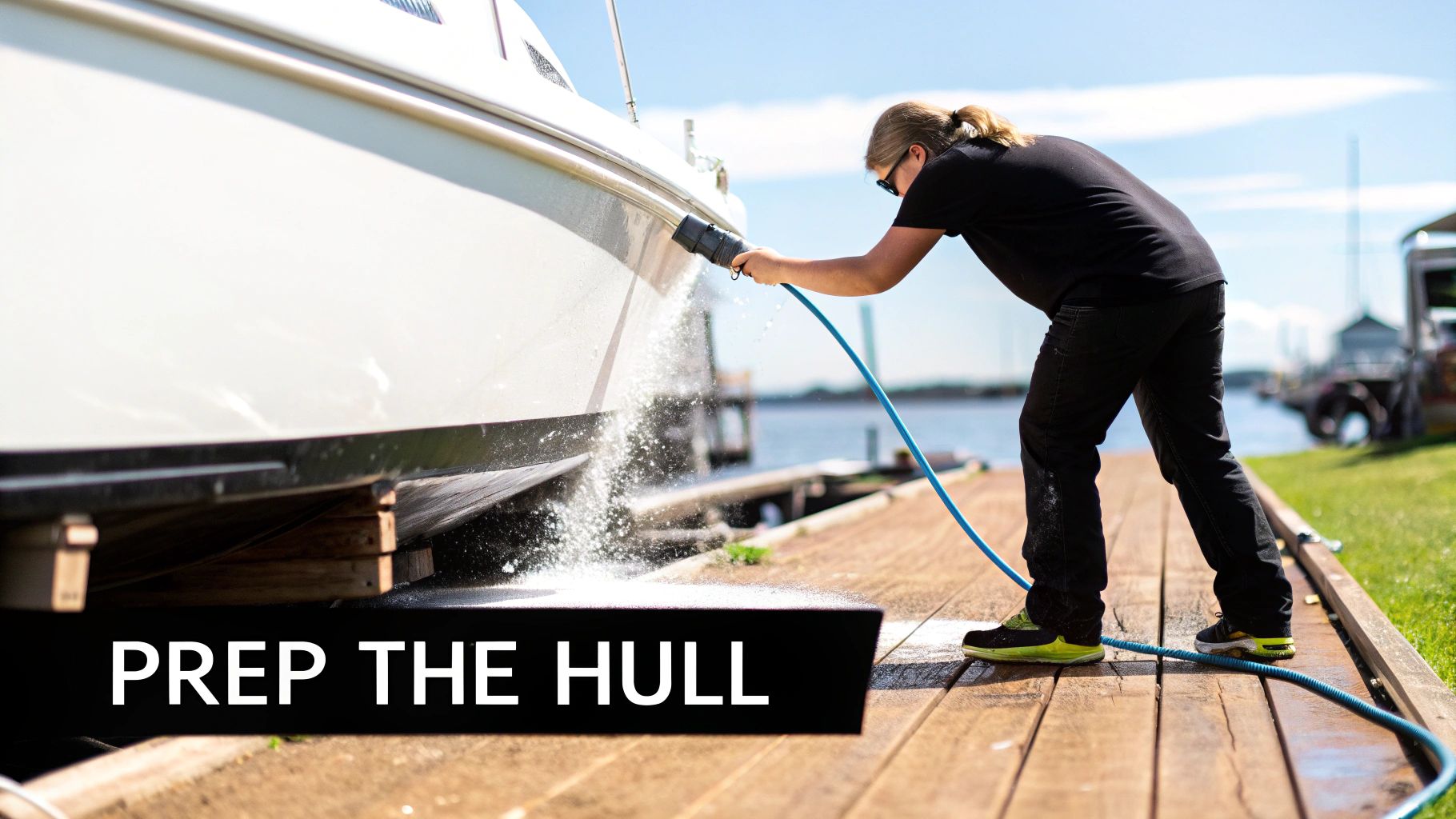
This initial cleaning isn't a suggestion—it's the most important part of the whole job. Your mission is to get rid of every last bit of contamination that could get between your polish and the metal. Nail this part, and you're setting yourself up for a fantastic result.
The All-Important First Wash
First things first, grab a pressure washer or a hose with a strong nozzle and blast off all the loose stuff. Once you've knocked off the easy-to-remove gunk, it's time for a real scrub-down. For this, you want a powerful but pH-neutral cleaner that can slice through filth without being harsh on the aluminum.
This is where Boat Juice Exterior Cleaner really shines. It’s made to dissolve stubborn lake scum, salt spray, and general grime without damaging your boat's surfaces. Just spray it on, let it work its magic, then go over the surface with a soft-bristle brush before a final, thorough rinse. What you're left with is a perfectly clean canvas.
This level of care is why aluminum fishing boats are so popular, especially in North America. The love for recreational fishing in the U.S. and Canada, backed by great infrastructure, means owners like you take serious pride in keeping their boats looking sharp. You can see more on the global aluminum fishing boats market trends and what's driving them.
Tackling That Pesky Oxidation
If your boat has been sitting for a bit, you've probably noticed that dull, chalky white film. That's oxidation, and a simple wash won't cut it. You have to deal with that layer before you even think about picking up a buffer.
My Two Cents: Don't try to power through heavy oxidation with a buffer alone. Using a chemical remover first does the heavy lifting for you. It saves your back, your time, and a ton of polishing compound.
For a hull with a serious case of the chalkies, an oxidation remover or a mild acid-based cleaner is your best friend. These products are specifically designed to dissolve the aluminum oxide, stripping it away to reveal the clean, healthy metal underneath. It's a critical step because it saves you a massive amount of time on heavy buffing and ensures you get a better finish. The polish can get right to work on bare metal, giving you a much deeper and more brilliant shine.
When you’re facing this kind of buildup, you need the right tool for the job. To get a better handle on what to look for, take a look at our guide on choosing the right aluminum corrosion cleaner. A little extra time spent on prep now pays off big time when you see that final, stunning polish.
Bringing Out the Shine: Your Polishing Technique
Alright, with your hull perfectly prepped, it's time for the main event—making that aluminum shine. This is where your hard work really pays off, and you’ll see that dull, chalky surface transform into a brilliant, reflective finish.
Whether you're using a machine or polishing by hand, the right technique is what separates a decent job from a stunning one.
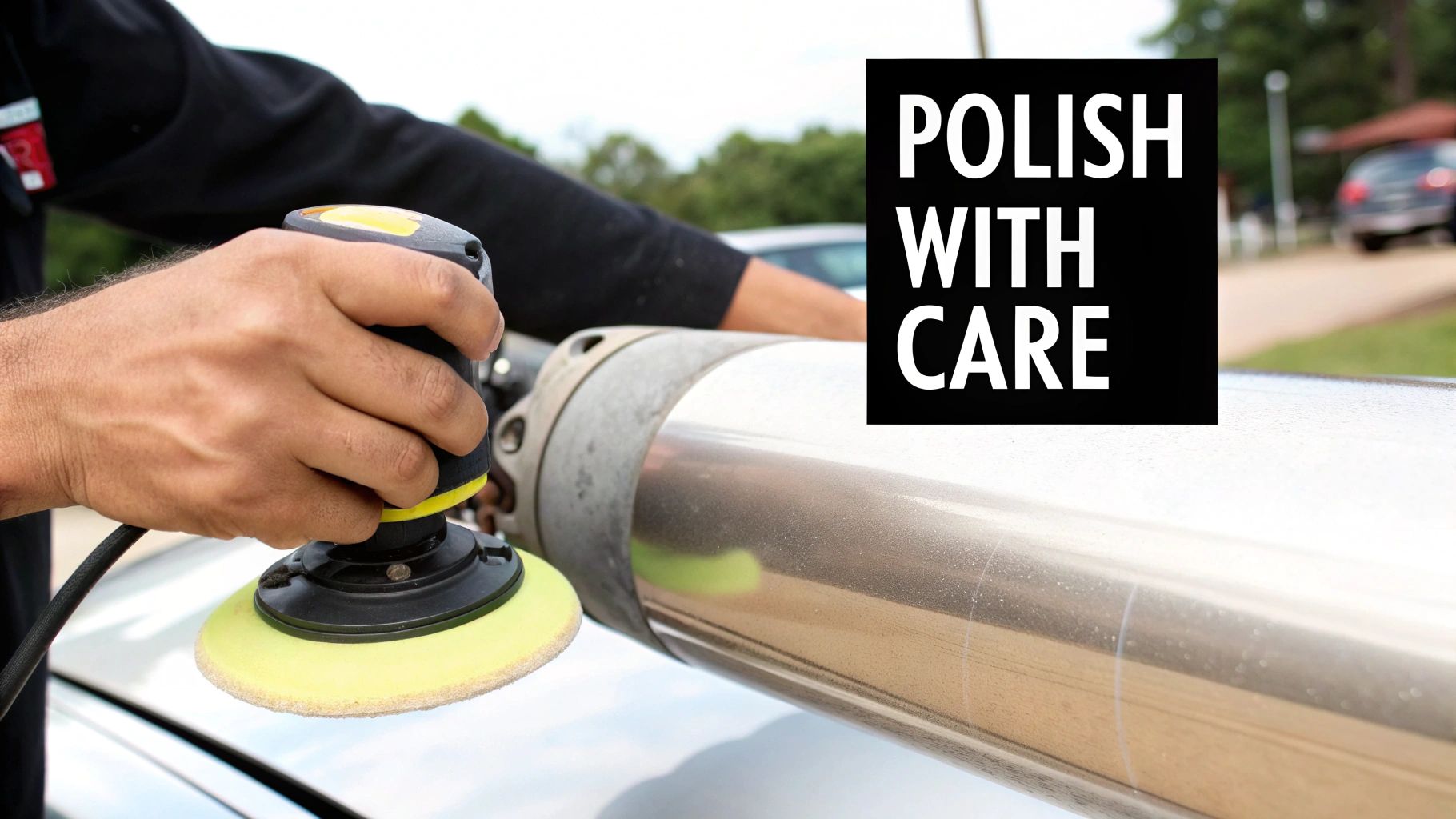
This stage is all about controlled abrasion. You're using a specific compound and pad to systematically remove a microscopic layer of oxidized aluminum, revealing the fresh, gleaming metal just underneath. The principles are similar whether you're working on a boat or a car. If you want to dive deeper into the science of it, check out this comprehensive guide on achieving a showroom shine through polishing.
Mastering the Machine Polisher
For big, flat surfaces like pontoon tubes or the side of a hull, a machine polisher is your best friend. It saves an incredible amount of time and delivers a much more even finish than you could ever achieve by hand. But using one effectively requires a bit of finesse to avoid creating new problems like swirl marks.
Your game plan should be to work in small, manageable sections. A two-by-two-foot square is the perfect size. This approach keeps the polish from drying out and helps you maintain consistent pressure.
Here’s your step-by-step action plan:
- Load the Pad, Not the Boat: Dab a few pea-sized drops of compound directly onto your wool or foam pad. Never put it on the boat first—you'll just sling polish everywhere the second you turn the machine on.
- Spread Before You Speed: With the machine off, gently smear the polish around your work area. This simple step prevents the compound from flying off the pad.
- Work the Area: Start the buffer on its lowest speed. Move in slow, overlapping passes, first horizontally and then vertically. Apply light, consistent pressure and let the machine and the polish do the work.
- Check for Heat: As you go, touch the surface with your hand. The aluminum will get warm, which is normal and helps the polish work. If it gets too hot to comfortably touch, you're either moving too slowly or pushing too hard. Ease up to avoid damaging the metal.
Pro Tip: Keep your buffer pad flat against the surface at all times. Tilting the machine concentrates all the pressure in one spot, which is the number one cause of ugly swirl marks.
The Art of Hand Polishing
A machine is great for the big stuff, but it can’t get into every nook and cranny. For tight corners, railings, and cleats, you'll need to switch to hand polishing. It’s more labor-intensive, but it gives you total control for those detailed spots.
The technique is straightforward but requires patience. Apply a small amount of polish to a microfiber applicator pad or a soft cloth, then work it into the aluminum using firm, circular motions.
You’ll know it's working when you see that signature black residue start to form. That’s the oxidized aluminum and spent polish lifting away. It looks messy, but it’s a great sign that you are removing the oxidation.
Once the polish starts to dry to a haze, grab a separate, clean microfiber towel to buff it off. Keep flipping to a clean side of the towel so you're not just smearing the black gunk back onto your freshly polished surface. This final buff is what really brings out that brilliant shine.
Protecting Your Polished Aluminum for the Season
You’ve put in the hours and the elbow grease, and man, does it show. Your aluminum is gleaming with a satisfying mirror-like shine. But here's the catch: freshly polished aluminum is completely exposed. It’s going to start oxidizing again almost immediately.
This final step is all about locking in that brilliant shine and making sure your hard work actually lasts. Applying a protective sealant isn't just a suggestion—it's absolutely essential. Think of it as an invisible shield that guards your boat against the very elements that made it dull in the first place.
The Magic of a Simple Spray-On Sealant
For most of us, ease of use is just as important as how well a product works. You need something you can apply quickly to keep that shine looking fresh. This is where a quality spray sealant becomes your best friend for seasonal upkeep.
An easy-to-use option like Boat Juice Protection Spray is perfect for this job. It’s formulated to guard against harsh UV rays, which can speed up oxidation, and it creates a super hydrophobic surface. That means water beads up and rolls right off, which drastically cuts down on those frustrating water spots that love to stain polished aluminum.
Making That Shine Last All Season
The real secret to keeping that just-polished look is regular re-application of a good protectant. It couldn't be simpler: just spray it onto a clean, dry section of your boat and gently wipe it off with a fresh microfiber towel. A quick wipe-down every few trips out, or at least once a month, will make a world of difference.
This kind of quick, effective maintenance is a game-changer. After all, aluminum fishing boats are a huge part of the recreational market, valued at around USD 2.1 billion in 2023. We all know maintenance costs can be a real pain point, so finding great DIY solutions that keep your boat looking sharp is always a win.
Looking for something with a little more staying power? For an even tougher layer of defense, you might want to look into a specialized marine ceramic coating. These advanced formulas create a much harder, more resilient barrier against the elements. If you want maximum protection that can last a full season, check out our guide on achieving a lasting shine with ceramic boat wax.
Bottom line: Seal the surface. After all that polishing, this one simple act ensures your boat remains a head-turner at the dock all season long. It protects both the look of your boat and the time you invested.
Your Top Questions About Polishing an Aluminum Boat
Alright, you've got the basics down, but a few questions are probably on your mind. That's totally normal. Let's tackle some of the most common things boat owners like you ask, so you can handle this project with confidence.
Think of this as the expert advice you'd get down at the marina—straightforward answers for real-world situations.
How often should I really be polishing my boat?
This is the big one, and the honest answer is: it depends entirely on where your boat lives.
- If your boat lives outside: Whether it’s on a trailer or in a slip, it’s taking a beating from sun and rain. You’ll want to schedule a full, top-to-bottom polish once a year. Knocking this out in the spring is a great way to get it looking sharp for the season.
- If your boat is garage-kept: If you have indoor storage, you can definitely ease up. A major polish might only be needed every two to three years.
In between the big jobs, a quick touch-up polish and a new layer of sealant every few months during the season will keep the shine alive and stop oxidation from getting a foothold.
Can I polish a painted or anodized aluminum boat?
This is a critical point, so listen up: Absolutely not. Polishes and rubbing compounds are abrasives designed to cut into raw, bare aluminum. Using them on a painted or anodized finish will be a disaster.
Anodizing is a special protective coating created in the factory, and paint is, well, paint. A polish will chew right through these layers, leaving you with a blotchy, damaged mess that’s expensive to fix. For those surfaces, stick to a gentle wash and use a sealant made specifically for painted or coated finishes.
Pro Tip: Not sure what you've got? Find a small, hidden spot to test—maybe under a seat. Rub a dab of polish on it. If a black residue appears on your cloth, you’re looking at bare aluminum. If not, stop right there.
What’s all this black gunk coming off my boat?
If you see that messy, black stuff building up, don't panic. In fact, give yourself a pat on the back—it means you're doing it right!
That gunk is just a mix of the polish and all the aluminum oxide you've successfully sheared off the surface. Cleaning it off is the key to getting that final, brilliant shine. Just grab a clean microfiber towel and some mineral spirits. Gently wipe down the area until every last bit of the black residue is gone. You need a perfectly clean surface before applying your sealant.
How do I stop water spots from ruining my new shine?
A mirror-like finish looks incredible, but it shows every single water spot. Those spots are just mineral deposits left behind when water evaporates. Keeping them at bay is a two-step process.
First, you have to be disciplined. Get in the habit of wiping the boat down with a soft, dry towel after every outing. Getting the water off before it can dry is the best prevention there is.
Second, use a solid protectant. A product like Boat Juice Protection Spray is perfect for this because its hydrophobic formula makes water bead up and roll right off. It won't sit flat and leave those annoying mineral rings, which makes your wipe-down job a whole lot easier.
With these answers tucked away, you're ready to get to work. Your next step is to assess your boat's condition, gather the right tools, and schedule a weekend to bring back that incredible shine. To make your ongoing maintenance even easier, check out the full lineup from Boat Juice.