


· By Boat Juice Team
Your Guide to Using a Mildew Stain Remover on Your Boat
You’ve been there. You pull back the boat cover, excited for a day on the water, only to be greeted by those ugly, creeping black spots on your vinyl seats. It’s a frustratingly common sight, and finding a mildew stain remover that’s tough on stains but gentle on your boat can feel like a tall order. Before we get into cleaning, let's talk about why this little enemy loves your boat so much. Understanding the cause is half the battle.
Why Mildew Keeps Coming Back
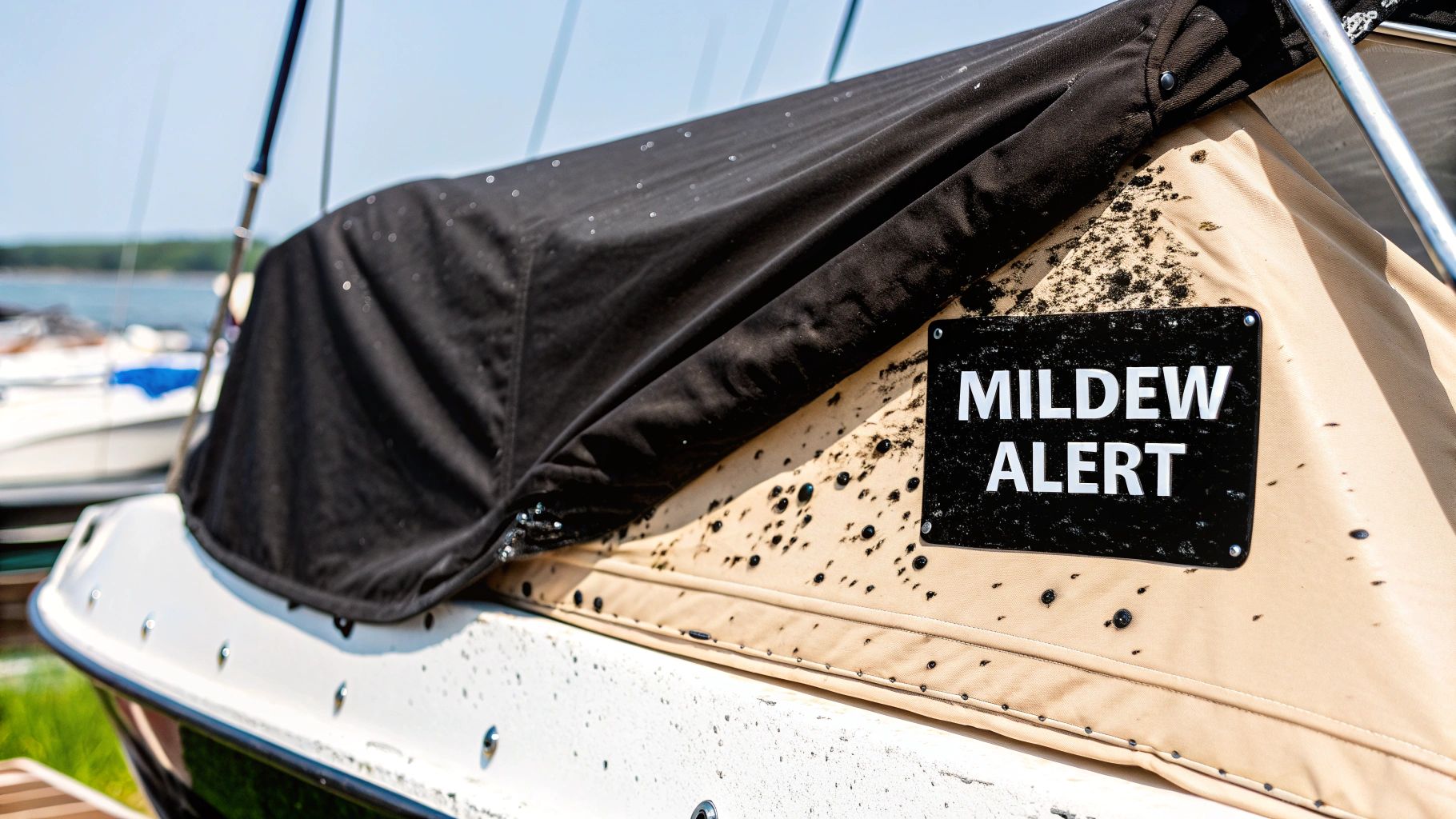
Think of your boat as a five-star resort for mildew. It offers the perfect trifecta of moisture, warmth, and darkness. Every time you hose down the deck, get caught in a pop-up shower, or leave damp life jackets piled up, you’re basically rolling out the welcome mat.
That moisture gets trapped under your boat cover, and when the sun beats down, it creates a steamy, humid greenhouse. This is the absolute ideal breeding ground for mildew spores, letting them settle into the tiny crevices of your vinyl seats and the weave of your canvas bimini top.
The Real Cost of Ignoring Mildew
It's easy to write off those little black dots as just an eyesore, but they’re a sign of a much bigger problem brewing. Mildew isn't just a stain; it’s a living fungus, and it’s actively feeding on the surfaces it calls home. Why does this matter? Because that means it's causing real, physical damage.
If you let it go, mildew doesn't just look bad—it causes real damage. It will literally eat away at the threads in your canvas, break down the protective coating on your vinyl, and can even etch into your boat’s gelcoat over time.
This isn't just about appearances; it's about protecting the value of your investment. Letting mildew run rampant can lead to some seriously expensive repairs down the line, from re-stitching a sun-faded bimini to completely re-upholstering your seats.
The fight against mildew is so universal that it has fueled a huge market. The global mildew remover market was valued at USD 1.37 billion and is only expected to grow, which shows just how seriously boaters and homeowners are taking this stuff. If you're interested in the market trends, you can explore the full report on 24marketreports.com.
To help you get ahead of the game, here's a quick rundown of the most common places mildew loves to hide on your boat.
Common Mildew Hotspots on Your Boat
| Hotspot Area | Why It Grows There | What to Look For |
|---|---|---|
| Vinyl Seat Cushions | Moisture gets trapped in seams, stitching, and under the cushions. | Black or green spots, especially along the thread lines and in corners. |
| Underneath Boat Covers | Trapped humidity and poor airflow create a perfect greenhouse effect. | A musty smell when you first remove the cover; widespread spotting on canvas and vinyl. |
| Canvas & Bimini Tops | The fabric weave holds onto moisture, especially on the underside. | Dark specks embedded in the fabric that don't just brush off. |
| Storage Lockers | Dark, damp, and rarely aired out. Wet ropes and life jackets are major culprits. | That distinct "mildew" odor and spots on the fiberglass interior or stored gear. |
| Carpet & Non-Skid Decks | These surfaces hold water much longer than smooth gelcoat, especially in shaded areas. | Discoloration in the carpet fibers or dark stains in the texture of the non-skid. |
Knowing where to look is the first step in stopping mildew before it gets out of control. Once you understand what causes it, you can shift from constantly cleaning up messes to proactively keeping them from starting. Your first move is to recognize that this is more than just a stain—it's a direct threat to your boat's health and your wallet.
Choosing a Mildew Remover That Actually Works
Walking down the cleaning aisle at any marine supply store can be overwhelming. You’re faced with a wall of products, all screaming they’re the best. It's tempting to just grab the one that looks the strongest, but when it comes to your boat, that's a surefire recipe for disaster.
What works wonders on your shower tile at home can cause some serious, irreversible damage to the sensitive materials on your boat. Your mission is to find a powerful mildew stain remover that was actually designed for the marine world. Household cleaners, especially anything with harsh bleach, are public enemy number one for your boat's interior.
Why Bleach is Your Boat's Worst Nightmare
I get the logic. Bleach is the nuclear option—it kills everything. The problem is, it doesn't know the difference between the bad stuff, like mildew, and the good stuff, like your expensive vinyl seats and the thread holding them together.
Using a bleach-based cleaner on your boat seats is one of the fastest ways you'll ruin your upholstery. The harsh chemicals literally chew through the vinyl's protective topcoat. This leaves it brittle, sticky, and just waiting to crack. It also dissolves the stitching that holds the seams together.
Sure, you might get rid of those ugly black spots for a week or two, but you’ll be paying for it down the road with faded, damaged upholstery that needs a costly replacement far sooner than it should.
What to Look for in a Marine Mildew Stain Remover
The right product needs to be tough on mildew but gentle on your boat. The best solutions are designed to be left on the surface to work their magic, breaking down stains without you having to do any aggressive scrubbing that could scratch or wear down the material.
Here’s a quick mental checklist to run through when you're buying a mildew stain remover:
- No Bleach: This is the big one. It's non-negotiable. The label should clearly state it’s bleach-free.
- Safe for Marine Surfaces: Look for formulas that specifically call out vinyl, upholstery, canvas, and gelcoat.
- High pH (Alkaline): Mildew loves slightly acidic conditions. An alkaline cleaner creates an environment where mildew can't survive, which helps prevent its return.
This is exactly why we formulated Boat Juice Mildew Stain Remover the way we did. It uses a potent, high-alkaline formula to break down stains on contact, but contains zero bleach. This makes it completely safe for your seats, canvas, and stitching. You just spray it on, let it work, and then wipe or rinse it away. If you're looking for the best mildew remover for boats, check out our complete guide.
This careful approach isn't just a trend in boating; it's happening across the entire cleaning industry. The shift just confirms what we already know: boaters like you are demanding solutions that are both incredibly effective and responsible.
So, How Do You Actually Banish Mildew from Your Boat?
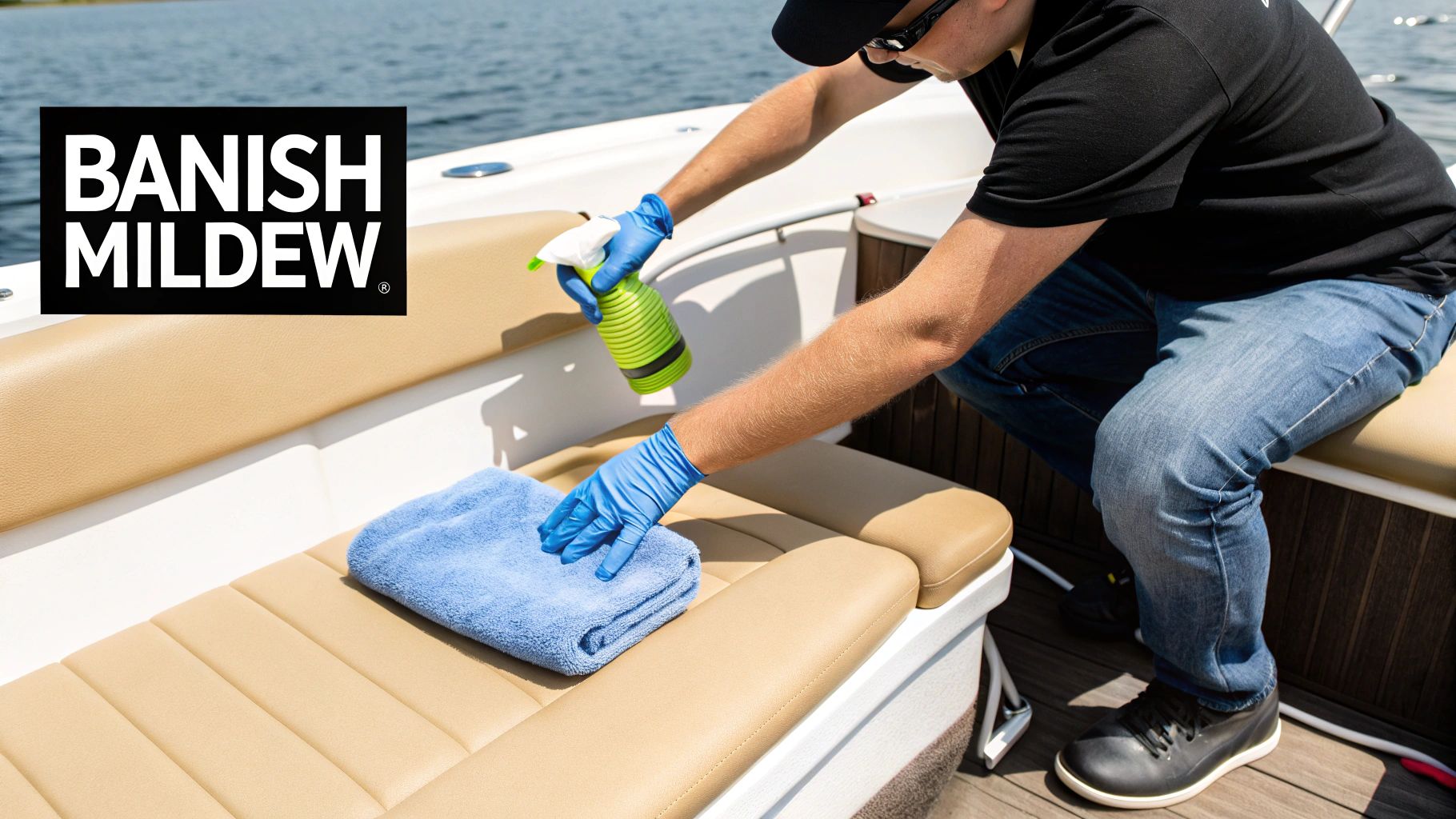
Alright, let's get those seats looking like new again. The key to getting rid of mildew isn't about scrubbing harder—it’s about working smarter. The best products are formulated to do the heavy lifting for you. Let's walk through the exact steps to get it done right.
Imagine this common scenario: you’ve had your boat covered for a rainy week. You finally pull back the cover, and there they are: those ugly little black spots speckled all over the back bench seat. Don't sweat it. This is a quick fix if you follow these steps.
Step 1: Prep the Surface
Before you even think about spraying anything, a little prep work goes a long way. This ensures the cleaner can go straight to work on the mildew spores instead of fighting through a layer of dirt. Think of it like washing your hands before putting on a band-aid—you want a clean slate.
Grab a clean, dry microfiber towel and give the whole area a quick wipe to knock off any loose dirt or dust. If the seats feel a bit damp, let them air dry for a few minutes. A dry surface lets the mildew remover really sink in and do its thing. Also, make sure you've got good airflow by opening up hatches or working outdoors.
Step 2: Apply the Mildew Stain Remover
Now for the main event. The technique here is straightforward: saturate the stain, but you don't need to drown it. Less is often more.
Grab a quality mildew stain remover like Boat Juice Mildew Stain Remover and spray it directly onto the mildew spots. Hold the bottle about 6-8 inches away and apply an even coat. You should see the product start attacking the stains almost immediately.
The biggest mistake you can make is reaching for a brush and scrubbing like crazy the second the spray hits the vinyl. The magic of a high-alkaline, no-scrub formula is in its dwell time. You have to give it a minute to work its way into the vinyl's pores and break down the mildew.
Let the product sit. Seriously, just let it be. For newer, lighter stains, 2-3 minutes is often all it takes. For those stubborn, baked-in spots that have been there a while, you might need to give it 5-10 minutes. You'll actually watch the stains fade right before your eyes. That’s the cleaner doing the hard work, so you don’t have to.
Step 3: Finish the Job the Right Way
Once you’ve given the product time to work, it's time to wrap this up. This last step is what gets you that perfect, factory-fresh look without any sticky residue. What you do next depends on how tough the stain was.
- For Light Stains: Most of the time, all you need is a clean microfiber towel. Just give the area a firm wipe to lift away the dissolved stain and any excess product.
- For Stubborn Stains: If you still see a few faint spots hanging on, it's time for some gentle persuasion. Grab a soft-bristle detailing brush and lightly agitate the area in small circles. This helps the cleaner get a little deeper into the vinyl's texture.
After the stains are gone, a quick final rinse is always a good idea. You can use a hose on a light spray setting or just wipe the whole area down with a clean, damp microfiber towel. This gets rid of any leftover cleaner and leaves the surface perfectly prepped for a good UV protectant.
How to Treat Mildew on Different Boat Surfaces
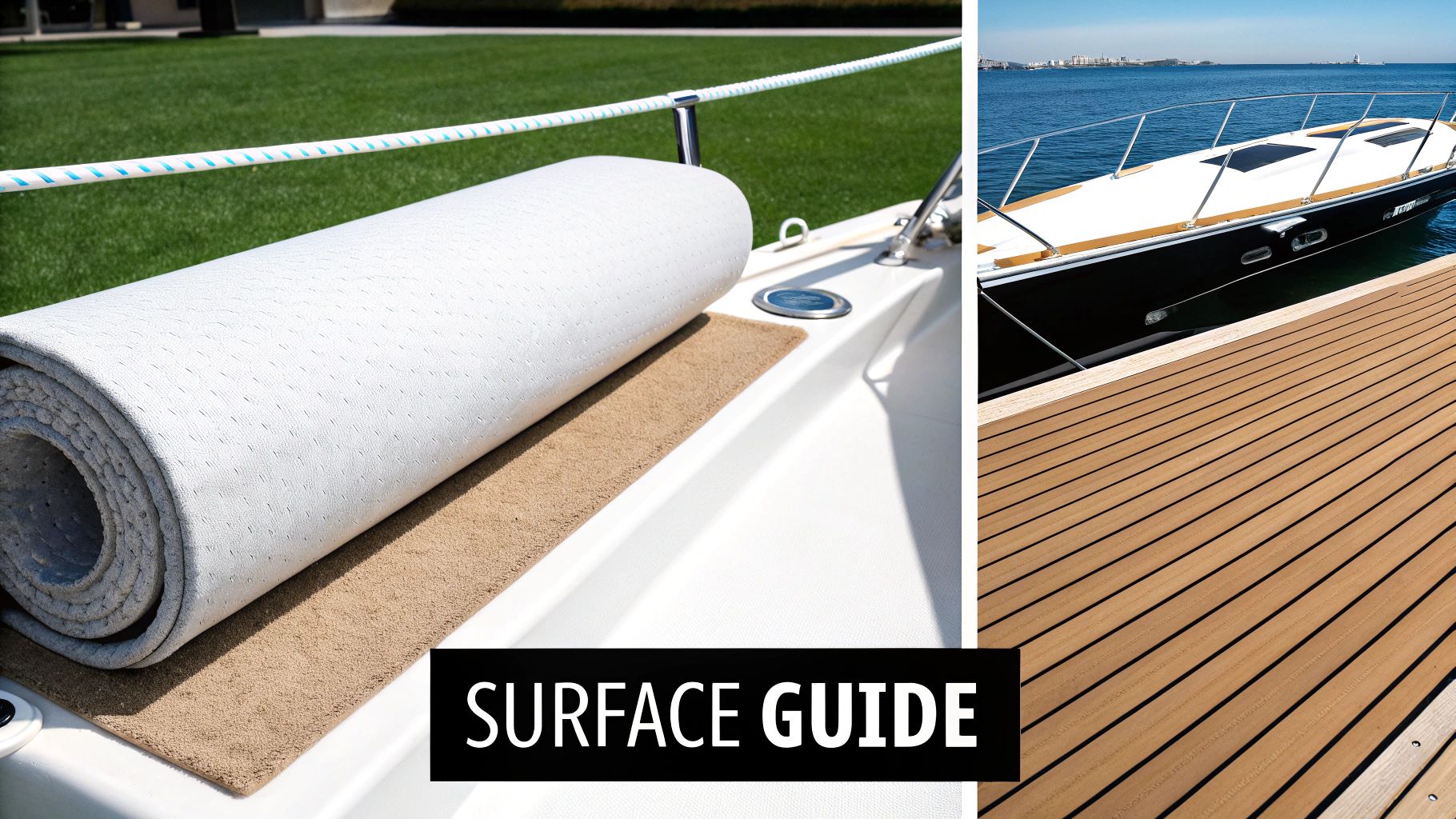
Mildew doesn’t play favorites. It'll happily set up shop on any surface, but your game plan for getting rid of it needs to be specific to the material you're cleaning. Your textured vinyl seats, woven canvas top, and fiberglass non-skid deck all need a slightly different touch. The goal is always to be tough on mildew but gentle on your boat.
Tackling Vinyl Upholstery and Seats
Vinyl boat seats are practically a magnet for mildew, especially deep in the seams and textured patterns where moisture loves to hang out. For these trouble spots, a simple spray-and-wipe often isn't enough. A little agitation is your best friend here.
After spraying Boat Juice Mildew Stain Remover and letting it sit for a minute, grab a soft-bristle detailing brush. Gently work the cleaner into the seams and textured areas with small, circular motions. This helps lift the embedded mildew spores right out of the vinyl's pores. You can get the full rundown on how to perfect your technique for removing mildew from boat seats in our detailed guide.
Cleaning Canvas and Bimini Tops
Canvas is porous, which means mildew can weave its way deep into the fabric. When you’re cleaning a bimini top or boat cover, you need to make sure the cleaner penetrates completely and—this is crucial—is rinsed out just as completely.
A common mistake is leaving cleaning residue behind on canvas. If you don't rinse it all out, that residue can actually attract more dirt or even become food for new mildew spores. Always finish with a thorough rinse until the water runs completely clear.
Spray the canvas until it's damp, let the product work for a few minutes, then use a soft brush to lightly scrub the stained spots. Rinse thoroughly from the top down, letting gravity help carry away all the gunk.
Clearing Mildew from Fiberglass and Non-Skid
Mildew on smooth gelcoat is usually the easiest to deal with; it often wipes away without a fight. That textured non-skid decking, though? That’s a different story. The very surface designed to give you grip also provides countless little hideouts for mildew.
For these tough, textured surfaces, you might need a medium-stiffness brush to really get into the grooves. For large exterior areas, it helps to know the difference between pressure washing vs soft washing methods. For most non-skid, a simple soft wash approach using Boat Juice and a good deck brush is the perfect combo.
Mildew Removal Techniques by Surface
Every material on your boat has its own quirks. This table breaks down the best way to approach the most common surfaces to get rid of mildew safely and effectively.
| Surface Type | Best Tool | Dwell Time | Pro Tip |
|---|---|---|---|
| Vinyl Seats | Soft Detailing Brush | 1-2 minutes | Focus on gentle, circular motions to lift stains from textured areas and seams without causing damage. |
| Canvas & Fabric | Soft-Bristle Brush | 2-3 minutes | Rinse thoroughly from the top down to ensure no cleaning residue is left behind in the porous fibers. |
| Fiberglass (Gelcoat) | Microfiber Towel | < 1 minute | For smooth surfaces, a simple spray-and-wipe is often all you need. The stains lift right off. |
| Non-Skid Deck | Medium-Stiff Deck Brush | 1-2 minutes | Agitate in multiple directions (front-to-back and side-to-side) to clean the texture from all angles. |
Matching your tool and technique to the job not only gives you better results but also protects your investment. A little know-how goes a long way in keeping your boat looking its best.
Keeping Mildew Away for Good
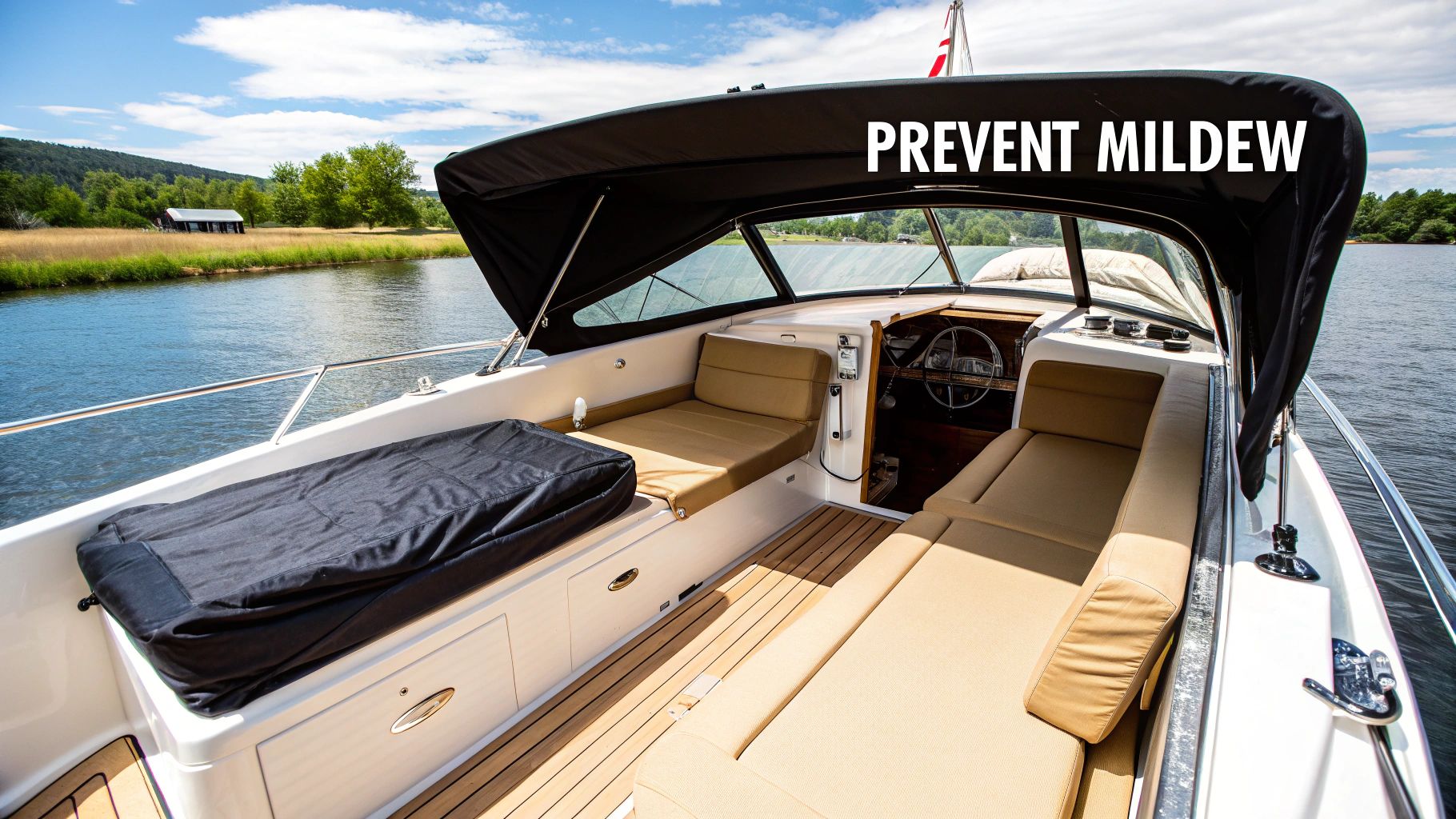
It feels great to win the battle against those ugly black spots, but winning the war is even better. The absolute best way to handle mildew is to stop it from ever showing up. This means shifting from a reactive "clean-it-when-I-see-it" mindset to a proactive one built on simple, consistent habits.
Think about what mildew needs to survive: moisture and stagnant air. If you take those two things away, you make your boat an incredibly hostile environment for it. After a day on the water, just take a few extra minutes to prop up your seat cushions to let air circulate underneath. Always try to get your boat as dry as possible before throwing the cover on for the week.
Create a Protective Barrier
Once you've used a mildew stain remover and your surfaces are spotless, you've got a golden opportunity to keep them that way. Applying a high-quality marine protectant is like putting an invisible shield on your vinyl and canvas. It creates a barrier that repels water, making it much harder for moisture to soak in and kick off the mildew cycle again.
This protective layer does more than just fight moisture. It also provides crucial UV protection—think of it as sunscreen for your boat's interior. This helps prevent vinyl from fading, drying out, and cracking over time, which really extends the life of your upholstery.
It's a quick step that pays off big time, saving you from future scrubbing sessions and protecting your investment. For an easy all-in-one solution, a spray-on product like Boat Juice Protection lets you quickly coat your seats after cleaning. And if you're building out your cleaning arsenal, we put together a guide on the best boat cleaning products that all work great together.
Your Seasonal Prevention Checklist
Staying ahead of mildew is a year-round job that becomes second nature when you break it down by season. Here’s a simple checklist to keep in mind.
- Spring Prep: As you're de-winterizing, give every cushion, canvas cover, and storage locker a thorough inspection. Tackle any spots that popped up over the winter and apply a fresh coat of protectant to start the season right.
- Summer Maintenance: This is all about airflow and dryness. Keep things aired out whenever possible, never toss wet gear into sealed lockers, and give the seats a quick wipe-down after each trip.
- Fall Winterization: Before putting the boat away, it is critical that everything is bone dry. Use moisture-absorbing products inside the cabin and any covered areas to fight condensation during storage.
Ultimately, prevention is about creating an environment where mildew simply can't survive. And remember, it's not just about what you see; you also need to know how to get rid of mildew smell to fully tackle the problem at its source. By adopting these simple habits, you'll spend a lot less time cleaning and a lot more time enjoying your boat.
Got Questions About Mildew Removers? We've Got Answers.
Even after you've got the basics down, a few questions always pop up. Let's run through some of the most common things we hear from boaters like you, because getting this straight will make you a pro at keeping your boat pristine.
How Often Should I Be Treating for Mildew?
The best answer is: as often as you need to. The real trick is to get into a preventative rhythm. A quick check and wipe-down after a weekend on the water can work wonders. If you keep your boat somewhere humid or it's constantly getting rained on, you'll just need to keep a closer eye on things.
The name of the game is catching mildew the second it shows up. Zapping a few tiny spots takes literally 30 seconds. Letting it go for a month means you're signing up for a major cleaning project. Think proactive, not reactive.
A solid routine is to do a deep dive during your spring prep and fall winterization, hunting down any problem areas before they dig in. During boating season, a quick once-over before you put the cover on is usually all you need.
Are These Products Going to Harm My Boat or the Environment?
This is a big one, and it's a great question to ask. The wrong stuff can absolutely wreck your boat and the water you enjoy. This is precisely why you should never use household bleach on your boat. It’s way too harsh, eats away at vinyl and thread, and isn't meant for a marine environment.
A proper, marine-specific mildew stain remover is built differently. Take Boat Juice Mildew Stain Remover, for instance. It's a high-alkaline, bleach-free formula that's tough on mildew but safe for your boat's surfaces. That means you can confidently use it on:
- Marine-grade vinyl seats
- Canvas T-tops and biminis
- Upholstery stitching
- Gelcoat and fiberglass
These products are engineered to be effective without the collateral damage you get from generic cleaners. As long as you follow the directions—spray, let it work, and wipe it up—you're minimizing your impact.
Can I Just Use One Product for Everything?
For the most part, yes. A high-quality, versatile mildew stain remover is going to be safe on almost every surface you'll encounter, from the vinyl cushions to the canvas covers and even the non-skid deck. The secret isn't swapping products; it's about adjusting your technique. You might use a soft-bristle brush for canvas and a simple microfiber towel for smooth gelcoat.
Having that one go-to bottle in your cleaning kit just makes life so much easier and gets you back on the water faster.
Ready to finally get rid of those stubborn mildew stains with something that's tough, safe, and dead simple to use? We made our Boat Juice Mildew Stain Remover to be the only one you'll ever need. Grab a bottle today and see what you've been missing!