


· By Boat Juice Team
Finding the Best Boat Cleaning Products for a Pristine Vessel
Welcome aboard! If you're looking for the best boat cleaning products, you've come to the right place. The secret to a spotless boat isn't one magic bottle; it's about using the right cleaners designed for the tough marine environment—ones that get the job done without damaging sensitive surfaces like your gelcoat and vinyl.
For a great start, you need a well-rounded kit. Think of a pH-neutral exterior wash for general cleaning, an interior cleaner with UV blockers to protect your seats, and a seriously powerful water spot remover for those stubborn mineral stains. With these three essentials, you're ready to keep your boat looking brand new all season.
Your Guide to a Spotless Boat All Season Long
Keeping your boat looking its best is about more than just pride at the dock—it’s about protecting your investment for all the adventures ahead. But let's be honest, staring at a wall of boat cleaning supplies can feel overwhelming. This guide is here to cut through all that noise and give you a clear, simple plan.
We’re going to break down exactly what you need in your cleaning kit, from heavy-duty hull cleaners to gentle vinyl protectants. Think of this as your personal roadmap to getting that professional-level shine, all on your own. After reading, you'll know exactly how to get the job done right.
Why Your Boat Needs Specialized Care
Your boat lives a tough life, constantly battling sun, salt, and waterborne grime. These elements can wreak havoc on its surfaces if you don't stay on top of them. Using the right products isn't just about making it look clean; it's about actively preserving your boat's integrity and value through a simple, effective maintenance routine.
Why can't you just use household cleaners? Because they can be too harsh, stripping the protective wax from your gelcoat or drying out your vinyl seats, leading to cracks. Marine-specific formulas are designed to clean effectively while protecting these delicate surfaces from the unique challenges of sun and water.
The demand for quality marine maintenance solutions has exploded. The global market for marine cleaning products was valued at an incredible USD 100.25 billion in 2024, and with North America's massive recreational boating community, it's easy to see why. You can explore more about this growing market trend to see just how vital proper care has become.
This guide will walk you through:
- The essential types of cleaners you need in your dock box.
- How to match the right product to the right surface to prevent costly damage.
- A step-by-step cleaning process for a flawless finish, every single time.
Let’s get your boat looking its absolute best and ready for the water.
Building Your Essential Boat Cleaning Toolkit
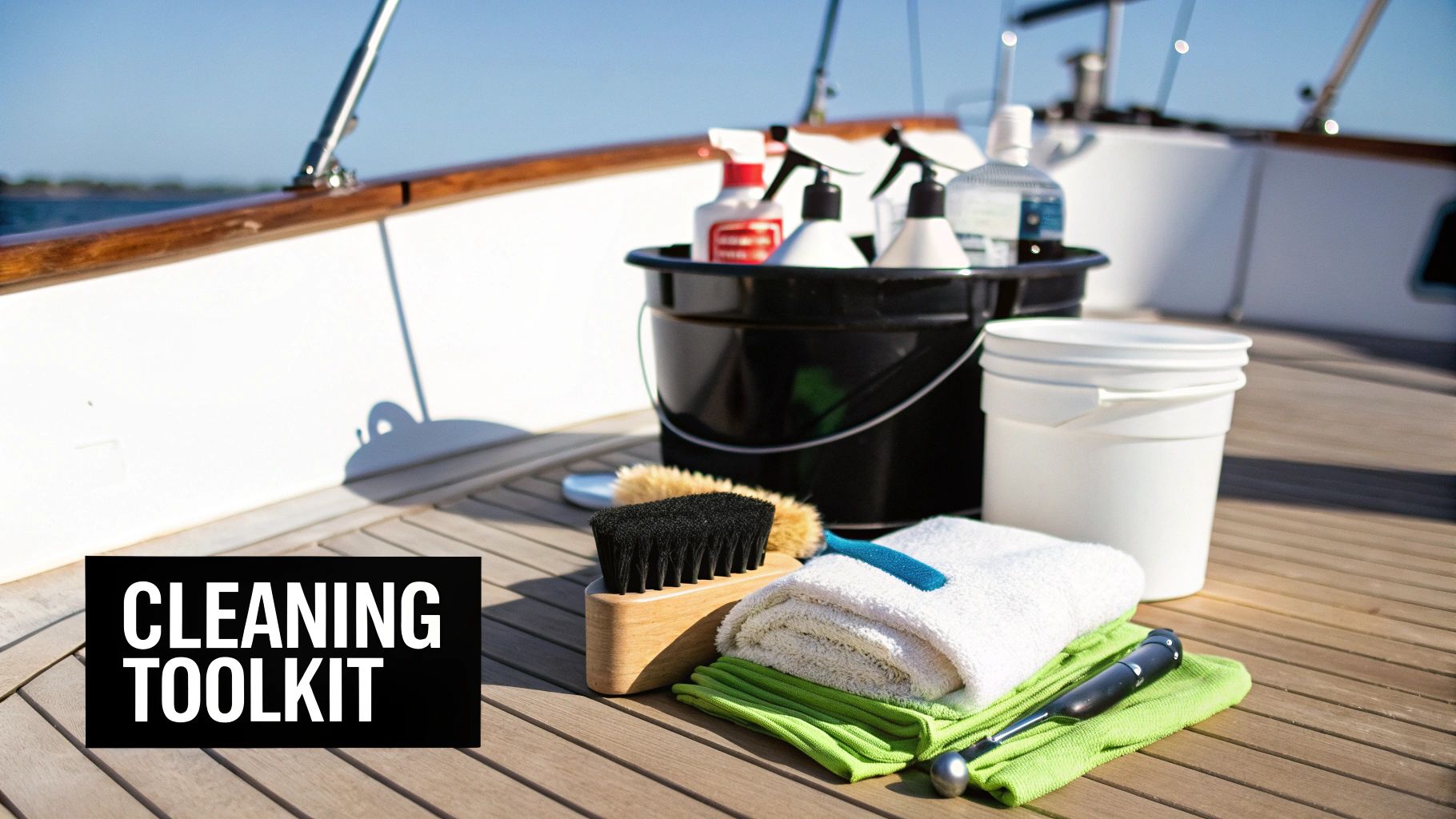
Think of your cleaning supplies like a mechanic's toolbox. You wouldn't use a wrench to hammer a nail, and the same idea applies here. Putting together the right arsenal of cleaners is the first real step toward making maintenance fast, easy, and genuinely effective.
Using the right product for the job isn't just about getting a better shine—it's about preventing costly damage. A generic household cleaner might seem harmless, but it can be way too harsh for marine-grade vinyl or strip the protective wax right off your gelcoat. Your boat's surfaces face a unique onslaught of sun, salt, and water, and they demand formulas built for that challenge.
The market for these specialized cleaners has grown as more people get out on the water. In fact, the global boat cleaner market is on track to hit USD 650 million by 2025, all thanks to a surge in recreational boating. This growth is great for innovation, but it also means you have a ton of options to sift through.
Your Essential Boat Cleaning Product Checklist
To cut through the clutter, here’s a quick reference table of the core products you should have on hand. Think of this as your must-have list to tackle just about any cleaning task that comes your way.
| Product Category | Primary Use | Surfaces | Solves This Problem |
|---|---|---|---|
| Exterior Cleaner | All-around exterior wash | Gelcoat, fiberglass, glass, non-skid | Grime, salt spray, light water spots |
| Interior Cleaner | Upholstery & hard surfaces | Vinyl, leather, plastic, carpet | Dirt, sunscreen, spills, body oils |
| Water Spot Remover | Targeted mineral deposit removal | Gelcoat, glass, metal trim | Stubborn, baked-on mineral spots |
| Mildew Remover | Mold & mildew stain treatment | Vinyl, canvas, fiberglass | Black spots, musty smells |
| Protectant/Sealant | UV & element protection | Gelcoat, vinyl, glass | Fading, cracking, oxidation |
| Wash & Shine Soap | Deep cleaning & waxing | Gelcoat, fiberglass | Heavy dirt, scum lines, oxidation |
With these staples in your dock box, you’re prepared for 99% of the cleaning jobs your boat will throw at you, from spring prep to fall winterization.
Simplifying Your Routine With Multi-Purpose Formulas
While having specialized products is key, you don't need a dozen different bottles cluttering up your storage locker. The best modern formulas are designed to simplify your routine. This is where products built for efficiency really shine.
For instance, a high-quality spray like Boat Juice Exterior is made to clean, shine, and protect your gelcoat and glass in one easy step. It cuts through water spots and grime while leaving behind a protective ceramic sealant. This single product saves you a ton of time and elbow grease after a long day on the lake.
The goal is to clean smarter, not harder. A great multi-purpose product replaces three or four separate steps, giving you more time to actually enjoy your boat instead of just cleaning it.
The same logic applies to the inside. An all-in-one cleaner like Boat Juice Interior can handle everything from your vinyl seats to plastic consoles and even marine flooring. Its formula is strong enough to lift dirt and sunscreen oils but also leaves behind crucial UV blockers and mildew inhibitors to protect the most vulnerable parts of your boat.
Of course, the best products work even better with the right tools. Pairing them with something like a high-quality microfiber boat wash mitt helps you get that perfect, scratch-free finish. By building your toolkit around these core products, you’ll have everything you need to keep your boat looking brand new, season after season.
Matching the Right Cleaner to the Right Surface
Your boat isn't one uniform surface. It's a mix of different materials—tough gelcoat, soft vinyl seats, and clear acrylic windscreens—all living in the same harsh marine environment. Each one needs to be treated differently.
Think about it this way: you wouldn't wash a nice sweater the same way you wash your truck's floor mats. Using the wrong cleaner on your boat can be just as damaging. A harsh degreaser might seem like a good idea for a stubborn stain on your seats, but it can also strip the vinyl of its essential plasticizers—the oils that keep it soft and pliable. Before you know it, you're looking at cracked, faded upholstery.
So, matching the right product to the right surface isn't just a suggestion—it’s the golden rule of boat care.
Why Your Gelcoat Needs a Gentle Touch
Your boat’s shiny gelcoat is its armor against sun, salt, and water. That glossy finish is designed to hold a protective layer of wax or a modern ceramic coating that shields it from UV rays and oxidation—the process that makes finishes look dull and chalky.
Using the wrong soap, like many household dish detergents, will strip that wax layer right off. Why? Because those soaps are designed to cut through grease aggressively. That's great for dishes but terrible for your boat's protective coating. You'll be left with a clean but unprotected surface, vulnerable to sun damage.
The secret is to use a pH-neutral boat soap for your regular washes. This kind of formula is engineered to break down dirt and grime without compromising that crucial layer of wax you worked so hard to apply. It takes off the bad stuff and leaves the good stuff behind.
Protecting Your Vinyl From Sun and Stains
Your boat's interior, especially the vinyl upholstery, takes an absolute beating from sun, sunscreen, and general wear and tear. Vinyl is also porous, which means it can absorb oils and chemicals, leading to deep-set stains and long-term damage.
This is where a dedicated interior cleaner is a must-have. You need something that can dissolve sunscreen and body oils without harsh solvents. But cleaning is only half the job. The most critical step for keeping your vinyl looking new is protection.
- UV Inhibitors: Think of this as sunscreen for your seats. It blocks the harsh UV rays that fade colors and make the material brittle.
- Mildew Blockers: These create an invisible shield that stops mold and mildew from growing in the vinyl's pores, a lifesaver in humid climates.
- Stain Repellents: A quality protectant makes spills bead up on the surface instead of soaking in, turning a potential disaster into a quick wipe-up.
If you really want to get into the details of keeping your upholstery looking fresh, check out our complete guide on how to clean boat seats properly. It’s packed with actionable tips for tackling even the most stubborn stains.
The Clear Choice for Marine Glass and Acrylic
When it comes to your boat's windows and windscreen, what you don't use is just as important as what you do. Many household glass cleaners contain ammonia, and ammonia is a disaster for the acrylic or polycarbonate plastics often used on boats.
Ammonia can cause the material to become cloudy, develop a haze, or even form tiny stress cracks over time. And once that damage is done, it's irreversible. You always want to grab an ammonia-free glass cleaner made for marine use. It'll give you that streak-free clarity without slowly destroying your windscreen.
Before you go all-in with any new product, remember the cardinal rule of boat cleaning: test it on a small, hidden spot first. This simple five-second check can save you from a massive, costly headache and give you the confidence you need to make every surface on your boat shine.
Your Step-by-Step Routine for a Perfect Shine
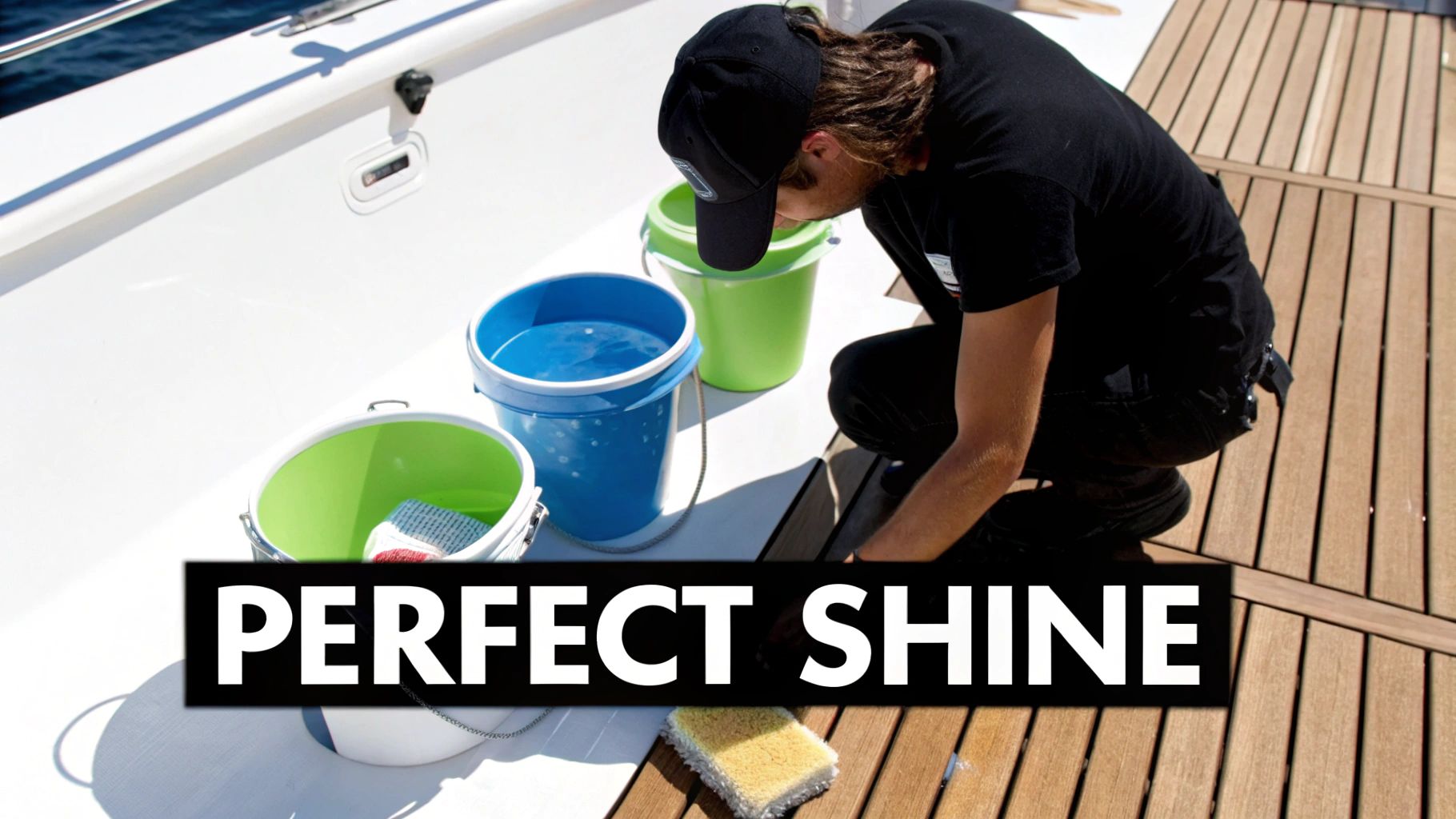
Knowing what products to use is half the battle. The other half is knowing how and when to use them. If you want that flawless, marina-ready look, you need a proven workflow that saves you time and delivers great results every time.
This isn’t a random list of chores; it’s a top-to-bottom system that pros use. It’s a logical process designed to keep you from washing away your wax or leaving frustrating streaks. Follow these steps, and you’ll take your boat from grimy to gleaming.
Step 1: Start With a Thorough Pre-Rinse
Before a sponge ever touches your boat, grab the hose. A solid pre-rinse is your secret weapon against scratches. The goal is simple: knock off all the loose debris clinging to the surface, like sand, salt crystals, and dust.
Why is this so critical? If you skip it, your wash mitt will grab those tiny abrasive particles and drag them all over your gelcoat, causing fine swirl marks and light scratches. Think of it like rinsing dinner plates before they go in the dishwasher—you’re getting rid of the easy mess so your soap can focus on the real grime.
Step 2: Wash the Hull and Deck From the Top Down
Now you’re ready for the suds. The golden rule is simple: always work from the highest point of your boat downwards. This lets gravity work for you. As you clean the tower or top deck, the dirty, soapy water runs down over areas you haven't touched yet.
If you start at the waterline and work up, you'll constantly be dripping dirty runoff onto your clean sections, which means streaks and re-washing.
Pro Tip: Use the Two-Bucket Method. Fill one bucket with your boat soap solution and a second with plain, clean water. Dunk your wash mitt in the soapy water, wash a small section, then rinse the mitt thoroughly in the clean water bucket before going back for more soap. This simple trick keeps the dirt you just removed from getting back into your clean wash water.
Step 3: Detail the Interior Surfaces
With the exterior sparkling, move inside. The interior has its own unique grime—sunscreen smudges, spilled drinks, and general wear. Grab your dedicated interior cleaner and start wiping down all the vinyl seats, dashboards, and plastic consoles.
For the best results, spray the cleaner onto a microfiber towel first, not directly onto the surface. This prevents overspray from misting up your freshly cleaned glass and gives you more control. A cleaner like Boat Juice Interior is perfect here because it cleans, conditions, and adds UV protection all in one go, which is a huge time-saver.
Step 4: Clean Glass and Brightwork
Save the glass for the tail end of your interior detailing. This way, you’ll wipe away any overspray that might have landed on it from other cleaners. Make sure you’re using an ammonia-free glass cleaner to avoid damaging any acrylic windscreens.
Here’s a trick for a streak-free finish: spray the cleaner onto a clean microfiber towel and wipe the glass in one direction (e.g., horizontally). Then, grab a second dry towel and buff it in the opposite direction (vertically). This two-towel technique is the closest thing to a guarantee against streaks.
Step 5: Apply a Protective Sealant
This is the final, most important step to protect all your hard work. After the exterior is completely dry, apply a high-quality wax or spray sealant. This creates a tough, invisible barrier that shields your gelcoat from UV rays, makes future cleanups easier, and adds that incredible, deep gloss.
A modern spray sealant like Boat Juice Exterior makes this part fast and easy. You just spray it on a small section and wipe it off to get a powerful ceramic coating that repels water and grime. You can learn more about the benefits of a good sealant and see how it locks in that shine. This step is your boat's best defense against the elements.
Why Eco-Friendly Cleaners Matter for Our Waterways
As boaters, we have a responsibility to be good stewards of the water we love. Think about it: every time you wash your boat at the dock or in the water, whatever you're using eventually ends up in the ecosystem.
This is where your choice of cleaning products becomes so much more than just getting a good shine. Traditional cleaners are often loaded with harsh chemicals that can harm the delicate ecosystems beneath your hull. Choosing eco-friendly formulas is one of the most important things you can do to protect our waterways for the future.
Decoding Eco-Friendly Labels
You've probably seen terms like "biodegradable" or "phosphate-free" on cleaning products, but what do they actually mean for the fish and plants? Let's break it down.
- Biodegradable: This means the ingredients can be broken down naturally by microorganisms into simple, harmless substances like water and carbon dioxide. Non-biodegradable chemicals can linger in the environment, posing a long-term threat to aquatic life.
- Phosphate-Free: Phosphates act like fertilizer for algae. When they wash into a lake, they can cause explosive algae blooms that suck all the oxygen out of the water, creating "dead zones" where fish can't survive.
By picking cleaners that avoid these ingredients, you're actively preventing pollution every single time you clean your boat.
The Problem with Harsh Chemicals
Many old-school cleaners get their power from some pretty nasty stuff—ammonia, bleach, and heavy petroleum solvents. Sure, they might lift a stain, but they do it at a huge cost to the environment.
These chemicals are often directly toxic to fish and damage the sensitive plant life that forms the base of the aquatic food chain. The temporary gleam isn't worth the lasting damage. For more on this, we've got a ton of great info in our boat care guides and tips.
Why make the switch? Modern, green cleaners are incredibly effective, using powerful yet safe ingredients to cut through grime without harming the environment. You don't have to sacrifice performance for responsibility.
Powerful Cleaning Without the Pollution
The best part is that you don't have to choose between a sparkling clean boat and a clear conscience anymore. The marine industry has seen a massive shift as boaters demand better, more sustainable options. In fact, there's been a 30% increase in consumer preference for sustainable options in 2024 alone.
This demand has fueled amazing innovation, leading to powerful formulas that use ingredients like natural citrus extracts to cut through grime without poisoning the water. By choosing products designed to be safe for marine life, you become part of the solution. It's a simple, responsible choice that helps ensure the waterways we enjoy today will be just as vibrant for the next generation.
Common Questions About Boat Cleaning Products
Even after dialing in your routine, a few questions are bound to pop up. Let's tackle some of the most common things we hear from boat owners like you to help you clean with total confidence.
How Often Should I Wash My Boat?
This really depends on where you do your boating. The rules change based on whether you're in salt or fresh water.
If you're out on the saltwater, you need to give your boat a good freshwater rinse after every single trip. Salt is incredibly corrosive, and a simple rinse is your best defense. Then, plan on a full, sudsy wash every 2-4 weeks to get the grime and salt buildup off, especially during peak season.
For freshwater boaters, you can relax a bit. A thorough wash every 4-6 weeks will usually do the trick. The one universal rule, though, is to clean up messes like bird droppings or spilled drinks the moment you see them. The longer they sit, the harder they are to remove.
Can I Use Car Wash Soap on My Boat?
It's tempting to use what's already in the garage, but you should avoid it. Car soaps are designed to battle road tar and oily grime, which means they are often too harsh for your boat's gelcoat. They can strip off your protective wax layer in a single wash.
Boat cleaning products are pH-balanced specifically for marine surfaces. They're formulated to be tough on salt and algae but gentle on the wax and sealants that protect your hull. Always stick with a dedicated marine soap for the best results.
What Is the Difference Between a Polish and a Wax?
This is a great question, as people often use the terms interchangeably. They actually do completely different jobs. Here’s the simplest way to think about it: polish corrects, and wax protects.
-
Polish contains tiny abrasives that buff out light oxidation, swirl marks, and other minor flaws in your gelcoat, restoring its shine. You use polish when your finish looks dull or hazy.
-
A wax or sealant is a purely protective layer with no abrasives. You apply it after polishing to seal that freshly perfected surface. This creates a slick barrier that shields your gelcoat from UV rays and makes water bead right off.
How Do I Remove Stubborn Black Streaks on My Hull?
Ah, the dreaded black streaks. They're usually caused by rain washing oxidized residue from window seals, rub rails, or deck hardware down the side of your boat.
Your first action step is to try tackling them with your regular boat soap and a medium-bristle brush. Often, that's enough. If they’re putting up a fight, you may need a dedicated black streak remover. The real secret, though, is prevention. Keeping a good coat of wax or sealant on the hull makes the surface too slick for the grime to get a good grip in the first place.
Ready to get a perfect shine every time without all the guesswork? Your next step is to assemble the right toolkit. Boat Juice has everything you need, from powerful exterior cleaners to interior formulas that keep things fresh and protected.
Explore the complete Boat Juice collection and find the perfect kit for your boat!
Article created using Outrank