


· By Boat Juice Team
Your Guide on How to Remove Mildew from Boat Seats
If you're going to get mildew off your boat seats for good, you need a game plan. It’s not just about scrubbing away the spots you can see; it's about eliminating the hidden spores and making sure they don't come right back. The best way to do this involves a quality cleaner made for the job, a soft brush that won't damage your seats, and making absolutely certain everything is bone dry when you're done.
Why Mildew Keeps Showing Up on Your Boat Seats
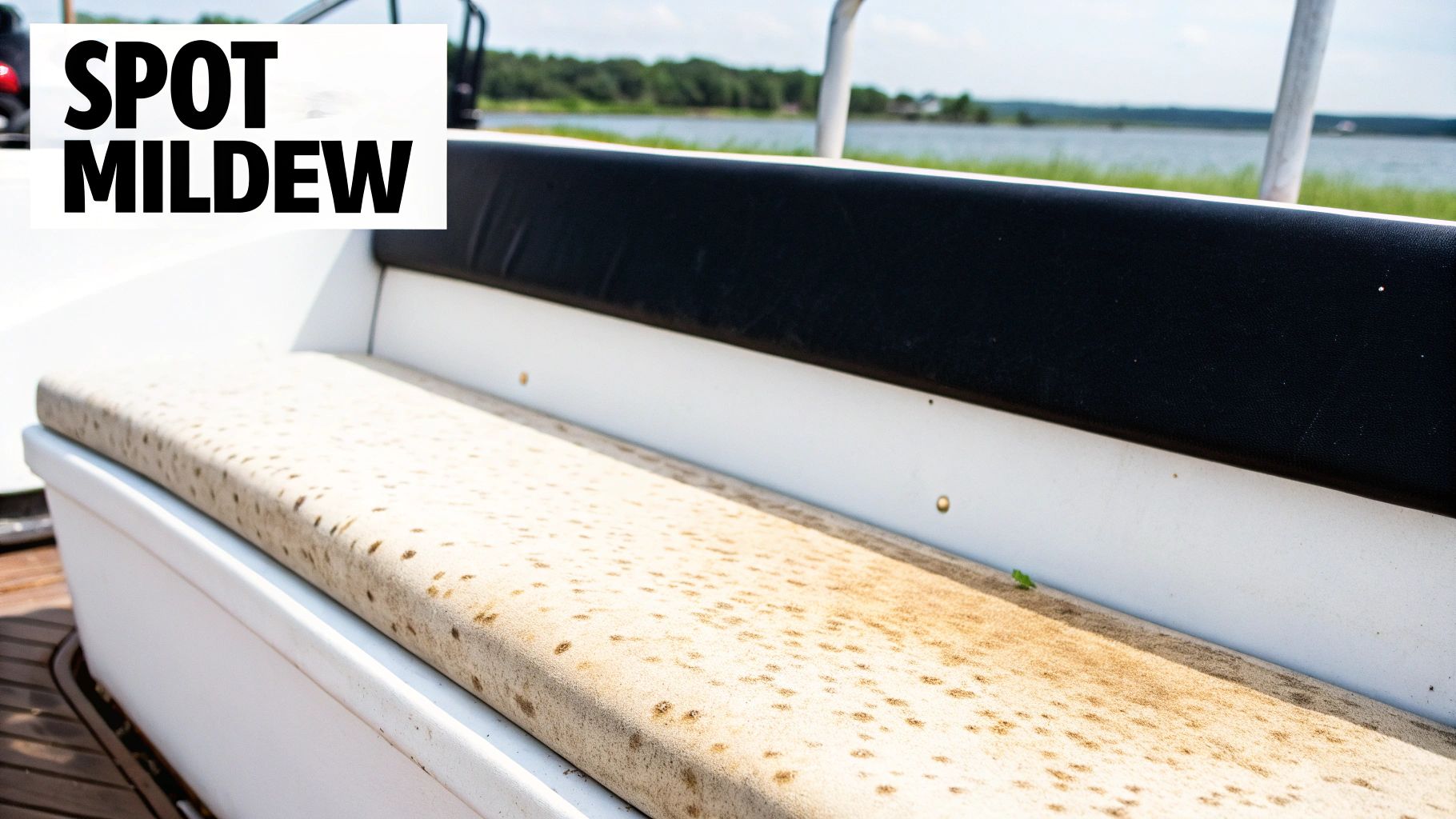
Ever feel like you're fighting a losing battle with those ugly black spots on your boat seats? You clean them off, and a week later, they’re back. It's a common headache for boat owners, and it’s because your boat is basically a five-star resort for mildew. It has everything mildew needs to thrive, all in one convenient package.
This frustrating combination creates the perfect habitat for mildew spores to settle in and multiply, especially during those warm, humid months you love to be out on the water. Getting a handle on this environment is the first step in winning the war against mildew.
The Perfect Breeding Ground
Mildew doesn't just show up by chance. It's a living fungus that's always looking for a home with three specific things, and unfortunately, your boat seats check all the boxes.
- Moisture: This is the big one. Think about it—wet towels, damp life jackets, morning dew, rain, and even just the high humidity in the air create the perfect dampness mildew craves.
- Warmth: When the sun beats down on your boat cover or vinyl, it creates a cozy, incubator-like environment inside, which supercharges mildew growth.
- A Food Source: Mildew isn’t picky. It happily feeds on all the tiny organic stuff that lands on your seats: dirt, dust, sunscreen lotion, spilled drinks, and even dead skin cells.
That’s why mildew can seem to pop up overnight. One day your seats look pristine, and the next, you're spotting the first signs of an invasion.
Why this matters: Mildew isn't necessarily a sign that your boat is dirty. It's a sign that the environment is perfect for it to grow. The real key to keeping it away for good is to disrupt that environment by controlling moisture and keeping the seats clean.
Catching It Before It Gets Out of Hand
Spotting mildew early makes getting rid of it a hundred times easier. Before you see those big, dark patches, there are usually subtle clues. Get in the habit of sniffing around when you first pull the cover off—you might notice a faint, musty smell. Look closely at the stitching for any slight discoloration or tiny, pinpoint-sized black dots. That’s your signal to act now.
A really interesting test by Practical Sailor on mildew removers showed just how fast these spores can take over. They found that mildew goes wild in the 70-90% relative humidity that’s so common on boats. While soap and water might work on a tiny spot you just found, their study confirmed that you need a dedicated cleaner for anything more serious.
Gathering Your Mildew-Fighting Toolkit
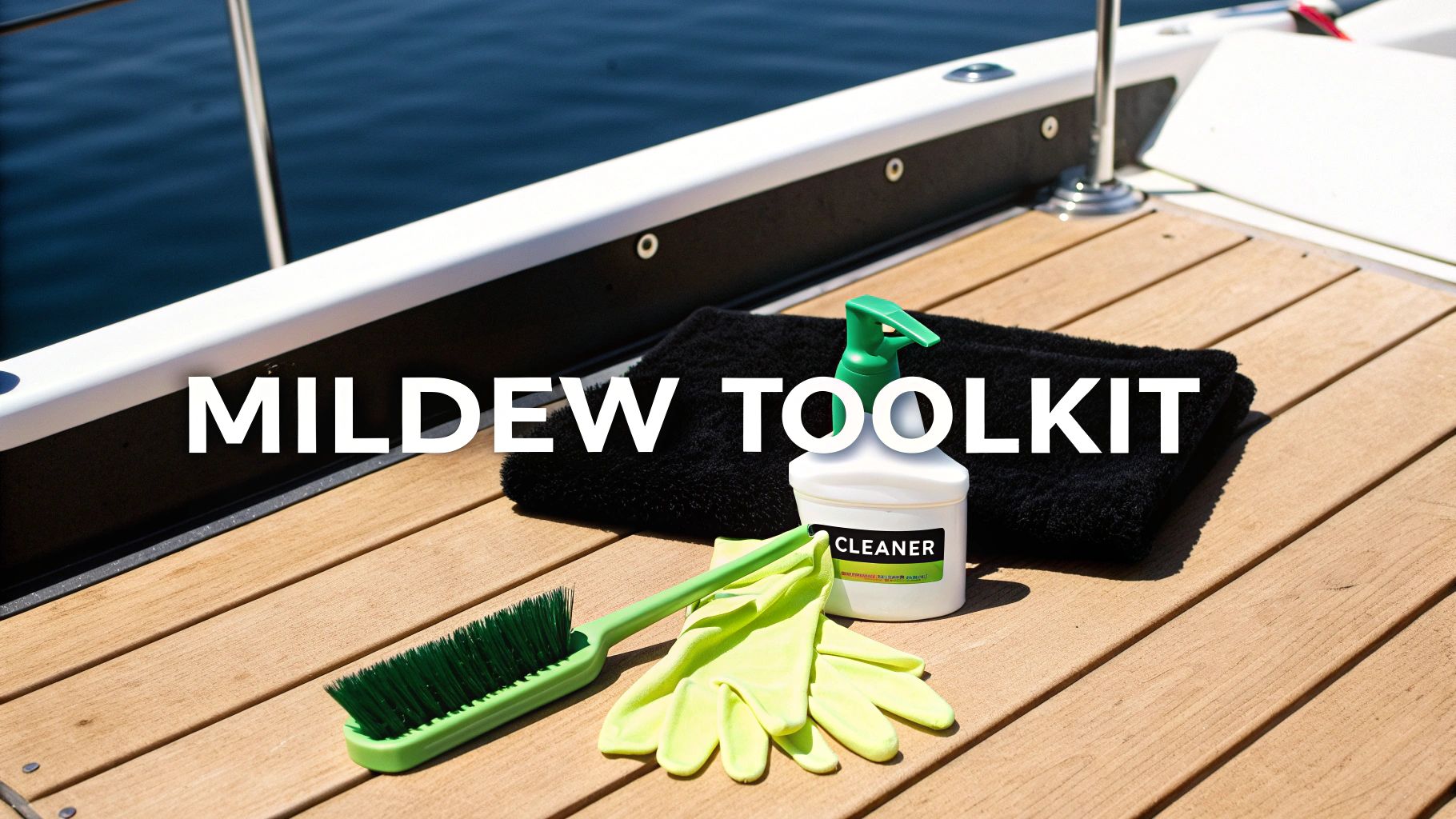
As any seasoned boater knows, starting a job unprepared is a recipe for frustration. Tackling mildew is no different. A few minutes spent gathering the right gear now will make the whole process faster, easier, and way more effective. Let's get you set up for a win before you even start scrubbing.
First things first: safety. Before you even think about cleaners, protect yourself. Mildew spores can be nasty irritants, and even gentle cleaning solutions can be tough on your skin and eyes. Grab a pair of waterproof gloves and some safety glasses. It's a simple step that makes a big difference.
Your Cleaning Arsenal
With your safety gear on, it’s time to build your cleaning kit. Using the right tools is the key to getting rid of mildew without accidentally damaging your expensive upholstery. You want to attack the mildew, not the vinyl itself.
Here’s what you’ll need:
- Soft-Bristle Brushes: This is non-negotiable. Stiff brushes will scratch and wear down your vinyl's protective finish. A soft brush has enough muscle to get into the grain and lift stains without causing any harm.
- Microfiber Towels: Have a good stack of these on hand. They’re fantastic for applying cleaners, wiping up the gunk you loosen, and—most importantly—getting the seats completely dry when you're finished.
- A Bucket of Fresh Water: You'll need this for rinsing. Leaving cleaner residue behind can leave your seats feeling sticky and actually attract more dirt. A clean rinse is a must.
Choosing the Right Cleaner
This is the most critical decision you'll make. While you might have some luck with homemade concoctions on tiny, fresh spots, those stubborn, set-in stains need a product that’s actually built for the job. You’re looking for something that eliminates mildew at its source without being too harsh on your vinyl, fabric, or stitching.
For those ugly black specks that seem to pop up every season, a dedicated product like Boat Juice Mildew Stain Remover is a total game-changer. It’s formulated to break down deep-set mildew stains without the harshness of straight bleach, saving you a ton of elbow grease. Keeping a bottle on board lets you zap new spots the moment they appear.
To round out your supplies, you can explore the full range of the best boat cleaning products and build a complete detailing kit that keeps your entire boat looking its best.
Pro Tip: Always test a new cleaner on a small, hidden area first, like the underside of a cushion. This quick check ensures it won't discolor or damage your specific material before you go all-in.
Getting Mildew Off Your Vinyl Boat Seats for Good
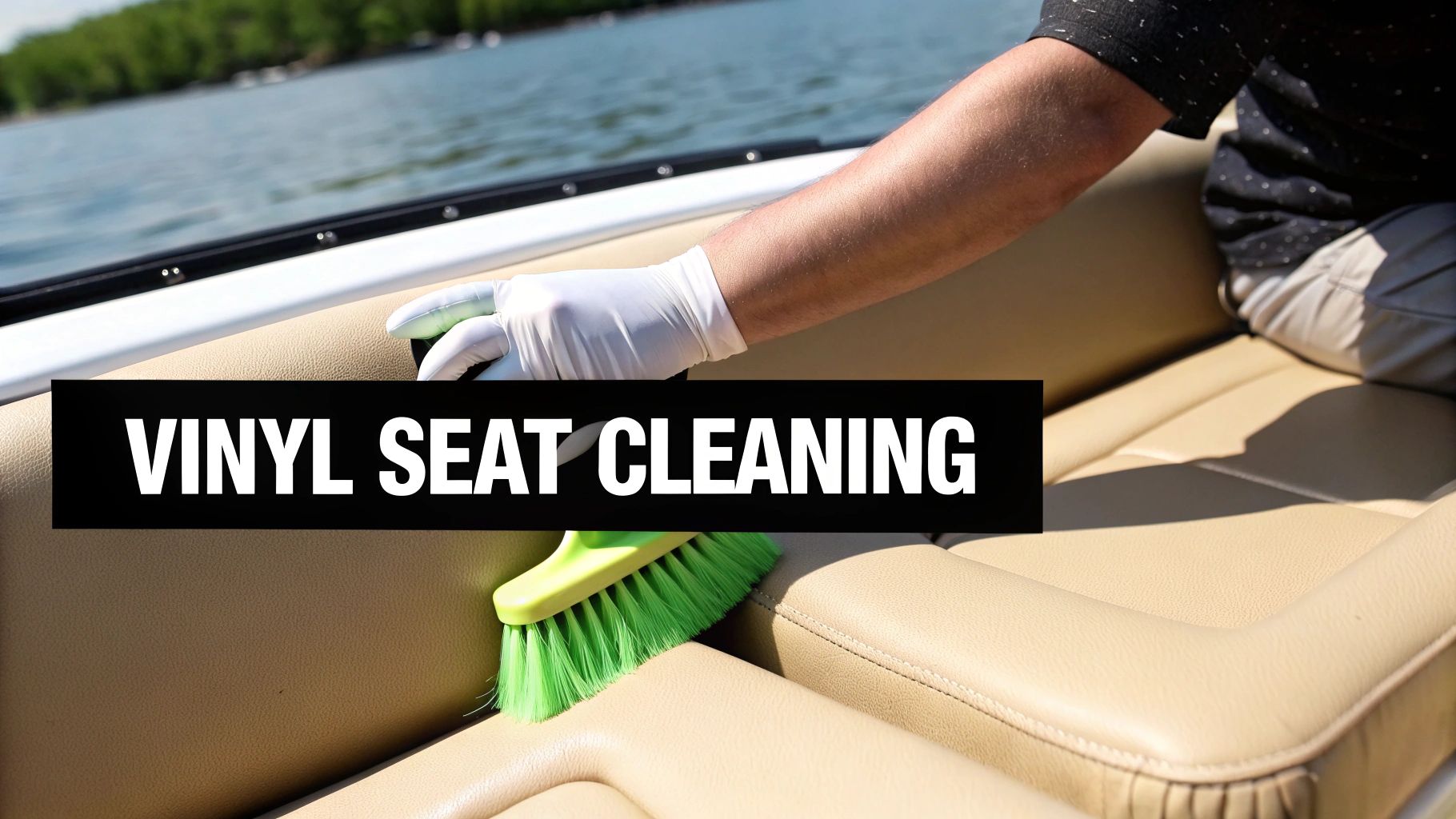
Your vinyl boat seats are made to withstand the elements, but mildew is a persistent enemy. It loves to settle into the textured grain and can be incredibly stubborn to get out. The secret isn't just about scrubbing harder; it's about using the right technique to lift the stains and eliminate the spores without harming the vinyl.
Before you reach for any cleaner, do yourself a favor and give the seats a quick vacuum. Use a brush attachment to get into the seams and crevices to pull out loose dirt and sand. This simple step stops you from grinding that grit into the vinyl when you start scrubbing, which can save your seats from scratches.
Applying Your Cleaner the Right Way
With the prep work done, it's time to go after those stains. Grab your cleaner and spray it directly onto the mildew spots. Go ahead and be generous—you need to saturate the surface so the solution can get to work breaking down the mildew.
Now, take your soft-bristle brush and start scrubbing in gentle, overlapping circles. This motion is key because it works the cleaner into the vinyl's grain from all directions, lifting out the embedded grime far better than just going back and forth. You’ll see the dark spots begin to fade as the mildew lifts away.
Key Takeaway: The rinse is just as critical as the scrub. If you leave cleaner residue behind, it becomes a sticky magnet for dirt, sunscreen, and moisture—the perfect recipe for another mildew outbreak. Always rinse thoroughly with fresh water.
Tackling Those Deep, Stubborn Stains
Every boat owner has faced them: those frustrating, shadowy spots that laugh at your first cleaning attempt. These are deep-set stains where the mildew has penetrated the vinyl, and they require a more focused attack.
This is where a product designed specifically for this battle, like the Boat Juice Mildew Stain Remover, really shines. Apply it directly to the stubborn area and let it sit for a few minutes. That dwell time is everything. It gives the formula time to work its way into the vinyl and break down the stain from the inside out. After it’s had time to work, give it another gentle scrub and a final, complete rinse.
Some of the most effective historical methods relied on powerful chemical mixtures. One report detailed a formula that could penetrate porous boat seat vinyl up to 2mm deep, killing an impressive 99.9% of both surface and subsurface spores. This highlights why a simple wipe-down often falls short. For those interested in the science, West Marine offers a deep dive into combating mildew that's worth a read.
Tackling Mildew on Fabric Seats and Cushions
Fabric seats give a boat a comfortable style that vinyl can't match. The trade-off? They're a whole different beast when it comes to fighting mildew. Unlike non-porous vinyl, fabric is a welcoming home for spores. They don't just sit on the surface; they dig deep into the weave and work their way into the foam cushion underneath.
If you’ve ever cleaned the outside of a cushion only to have that musty smell return, you know what I'm talking about. That smell is a dead giveaway that the mildew colony is thriving inside the foam. To truly win this battle, you have to get to the core of the problem.
Getting to the Source of the Problem
First things first: you need to get the fabric covers off the foam cushions. Most quality boat cushions have a zipper or velcro strip to make this possible. Go slow and be gentle here, especially if the zippers are old. You don't want to add "seam repair" to your to-do list.
Once you have the foam free, take a good, hard look. You'll likely see dark, discolored patches or even little black spots. And that smell? It's going to be a lot stronger now. This is ground zero for the mildew.
Why This Matters: Think of that foam core as a giant sponge. It soaks up every bit of moisture from rain, humidity, or even a wet swimsuit. This creates the perfect dark, damp playground for mildew to grow, completely shielded from the sun and fresh air.
Deep Cleaning the Foam and Fabric
Okay, with the cover and the foam separated, you can launch a two-pronged attack. This is the only way to be sure you're wiping out the mildew for good.
For the Foam Core:
- Haul the foam cushions outside where you've got plenty of fresh air.
- Get a spray bottle and mix up a 50/50 solution of plain white vinegar and water. Liberally spray the entire cushion, hitting the top, bottom, and all the sides.
- Let the foam sit in direct sunlight for a few hours. The vinegar helps kill the spores, while the sun’s UV rays act as a powerful natural sterilizer.
For the Fabric Covers:
- Always check the care tag before you do anything. If it's machine washable, use a gentle cycle with your normal detergent. Add a cup of white vinegar to the rinse cycle for an extra punch against any lingering spores.
- If you have to hand-wash, a soft brush and a simple mild soap solution will do the trick.
The Most Crucial Step: Drying
I can't stress this enough: do not rush the drying process. If you wrestle those covers back onto even slightly damp foam, you’ve basically just served the mildew a welcome-back party. The foam needs to be 100% bone dry, all the way through.
To be sure, press down hard in the thickest part of the cushion. If you feel any hint of moisture or coolness, it needs more time. Prop the foam up on its edge so air can get to all sides. This could take a full day or even two, but the patience you show here will save you from having to do this whole job again in a month.
Keeping Your Boat Seats Spotless All Season Long
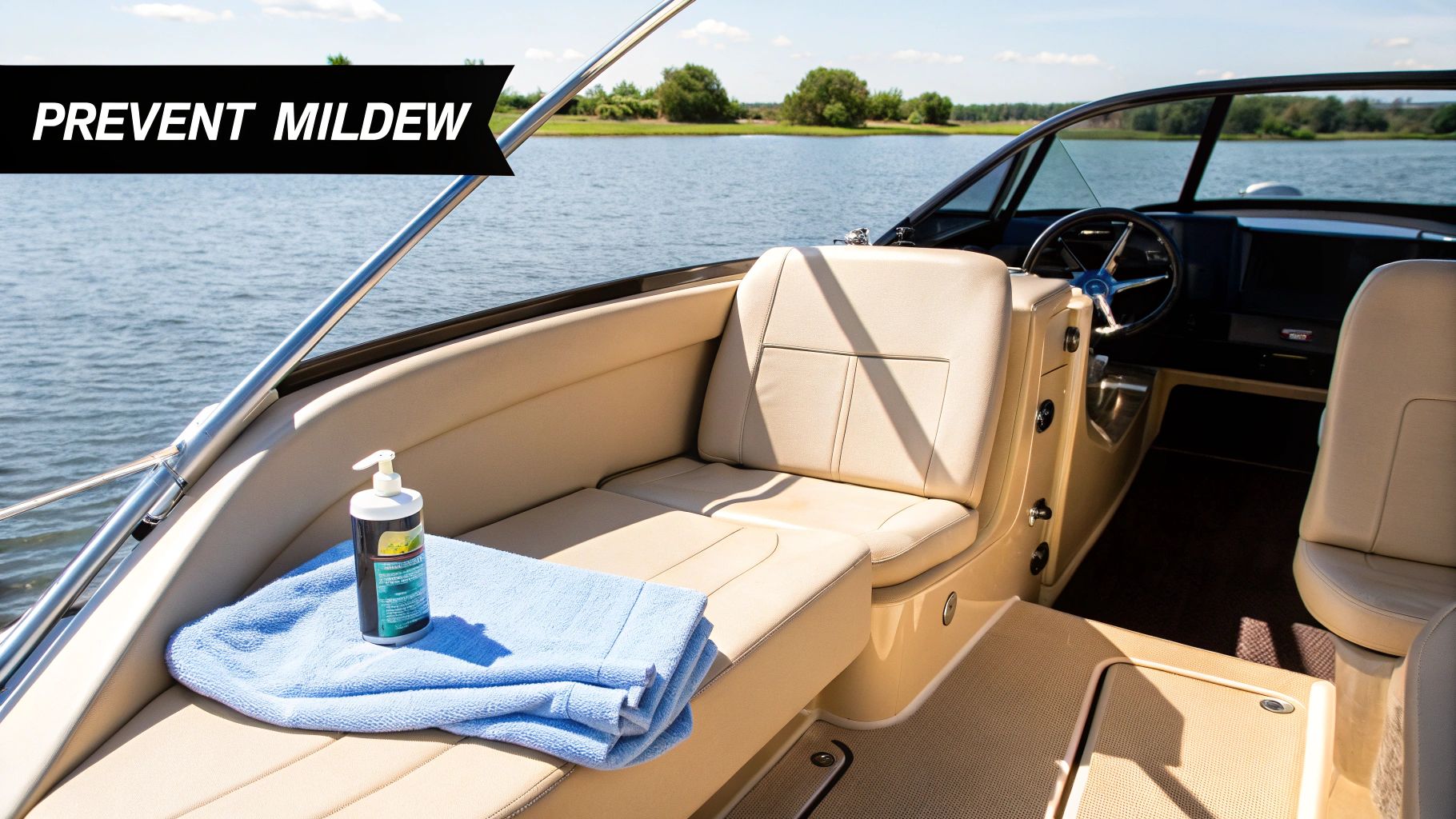
You’ve put in the elbow grease to get your seats looking brand new, and the last thing you want is to do it all over again. The great news? Preventing mildew is a whole lot easier than removing it. It really just comes down to building a few simple habits into your regular boating routine.
Think of it as playing defense. Mildew needs moisture and a food source. Your goal is to take away both. This isn't about adding hours of work to your day; it’s about being smart and proactive. A few minutes of prevention after each trip will pay off all season.
Create a Dry Environment
Your number one enemy is moisture. The single most effective habit you can build is to wipe down your seats with a clean, dry microfiber towel after a day on the water. Make sure to get into the seams and any little crevices where water loves to hide.
Another amazing tool in your arsenal is completely free: sunshine. On a dry, sunny day, pull that boat cover off for a few hours. Let the air circulate and allow the sun’s rays to naturally bake away any lingering dampness. This small act disrupts the dark, humid home that mildew is looking for.
Your Post-Boating Checklist: Make these two steps a non-negotiable part of wrapping up your day. A five-minute wipe-down and regular air-out sessions are the foundation of a mildew-free boat.
Apply a Protective Barrier
Keeping your seats dry is crucial, but adding a protective layer is your secret weapon for long-term defense. It’s a lot like waxing your car—you're creating a shield that repels the bad stuff. After you’ve done a deep clean, this is the most important next step you can take.
This protective coating does more than just make your seats look shiny. It creates a hydrophobic barrier that helps the surface resist moisture and stains. Even better, it blocks the damaging UV rays that weaken your vinyl and make it more susceptible to problems down the road.
A Boating Magazine analysis found that the factory-applied antimicrobials on new boat vinyl often wear off after just one year. Once that’s gone, mildew growth can spike by an incredible 300%. Their tests showed that applying a quality protectant after cleaning can slash mildew regrowth by as much as 90%, even in super humid areas.
This is where a product like Boat Juice Interior comes in. It’s a cleaner and UV protectant in one, and it's super easy to apply. Using it regularly doesn't just keep your seats looking clean—it rebuilds that essential barrier against the grime and moisture that mildew feeds on. This one proactive step makes future cleanups a breeze. You can find the Boat Juice Interior Cleaner & UV Protectant here.
Answering Your Top Questions About Mildew
When you're dealing with mildew on your boat seats, a few questions always seem to pop up. Let's tackle some of the most common ones I hear from fellow boat owners, so you can clean with confidence and get back on the water.
Can I Just Use Bleach on My Vinyl Seats?
You can, but it should be your absolute last resort. Think of it as the nuclear option. While a heavily diluted bleach solution will kill mildew, it's incredibly harsh on both the vinyl and the stitching. Over time, it'll make them brittle, cause discoloration, and pretty much guarantee they'll fail sooner.
It's always a smarter move to start with a dedicated marine mildew cleaner specifically designed for boat upholstery.
If you're in a real bind and have nothing else, stick to a very weak mix—no more than one part bleach to ten parts water. Apply it carefully only to the stain, let it sit for just a minute, and then rinse the area thoroughly with fresh water immediately.
What's the Real Difference Between Mold and Mildew Anyway?
It’s easy to get these two mixed up. The simplest way to think about it is that mildew is just a specific type of mold. On boat seats, what you're usually seeing are the tell-tale flat, powdery, black or gray spots of mildew. Other molds might look fuzzy or slimy and can pop up in different colors like green or orange.
From a cleaning standpoint, you can pretty much treat them the same. The most important thing is to get it cleaned off as soon as you see it. Both will damage your boat's interior and create that gross, musty smell nobody wants.
A Quick Tip: If you ever see pinkish-orange stains, you're likely dealing with a bacteria called Serratia marcescens. It loves to feed on soap residue in damp spots. The good news? You can get rid of it using the same cleaning methods you'd use for mildew.
Is It Okay to Use a Magic Eraser on My Boat Seats?
Tread very, very carefully here. Magic erasers can feel like a miracle cure, but there’s a catch. They work because they're a micro-abrasive—basically, they're like ultra-fine sandpaper. While they might scrub off that tough stain, they're also scrubbing away the protective topcoat of your vinyl.
Once that protective layer is gone, your seats are wide open to future staining, cracking, and—you guessed it—even more mildew. If you absolutely have to use one, do it as a final option and be incredibly gentle. Always follow up with a high-quality vinyl protectant to restore that crucial barrier.
How Can I Stop Mildew from Coming Right Back?
Victory is sweet, but preventing a comeback is the real goal. The whole game is about keeping your boat's interior clean and dry. After you've done a deep clean, the single best thing you can do is apply a quality marine vinyl protectant. This creates a barrier that makes it much harder for mildew to get a foothold.
Get into these simple habits:
- Wipe down seats with a dry towel after they get wet from rain or a swim.
- If you use a boat cover, make sure it's a breathable one. A non-breathable cover just traps moisture, creating a perfect greenhouse for mildew.
- On sunny, low-humidity days, open up the boat! Let the fresh air and sunshine do their natural disinfecting work.
For those stubborn mildew stains that seem to laugh at your other cleaners, trust Boat Juice Mildew Stain Remover to knock them out for good. It’s formulated to attack mildew at the source without the damaging effects of straight bleach, bringing your seats back to life. Shop Boat Juice Mildew Stain Remover Now.
Article created using Outrank