


· By Boat Juice Team
Finding the Best Mildew Remover for Your Boat
When you're looking for the best mildew remover for your boat, you need something that does more than just bleach the surface. A truly effective marine formula gets to the root of the problem, killing the mildew spores without relying on harsh chemicals like bleach that can wreck your boat's vinyl and stitching. Protecting your investment means choosing a product built for the tough marine environment to get rid of those ugly black spots for good.
Why Mildew Keeps Coming Back on Your Boat
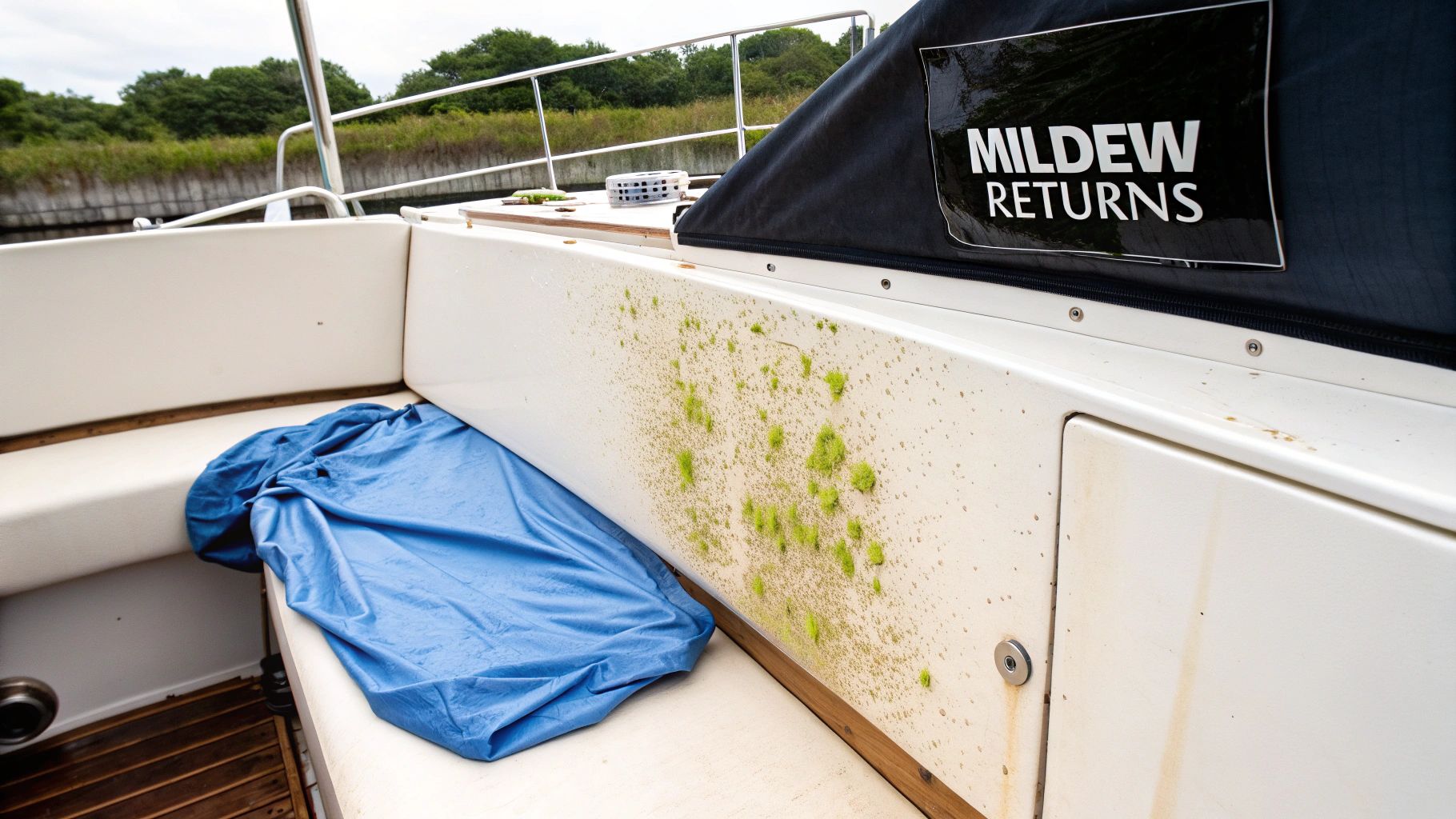
That musty smell. Those stubborn black spots that seem to appear out of nowhere. If you own a boat, you know the constant battle against mildew. But have you ever wondered why your boat seems to be a magnet for it? It's not just a string of bad luck—your boat is practically a five-star resort for mildew.
The marine environment provides the perfect storm of conditions for this fungus to thrive. Understanding what makes your vessel so inviting is the first step in winning this war and keeping your vinyl, canvas, and fiberglass looking clean and fresh.
The Ideal Conditions for Mildew Growth
Mildew, which is just a type of mold, only needs three things to set up shop and flourish on your boat's surfaces. Unfortunately, your boating life serves them all up on a silver platter.
-
Moisture: This one’s a given. Between spray, rain, morning dew, and simple condensation, your boat is rarely completely dry. Moisture loves to get trapped in seat cushions, underneath covers, and deep in the pores of your vinyl upholstery.
-
Warmth: Mildew growth kicks into high gear in warm weather, which is why you've probably noticed it gets way worse during the hot, humid summer months. A boat baking under a cover in the sun basically turns into a floating greenhouse—a perfect incubator for fungus.
-
A Food Source: This is the secret ingredient most people forget about. Mildew has to eat, and it feeds on organic material. That includes everyday dirt, dust, pollen, sweat, sunscreen residue, and any little food or drink spills you might have missed.
Imagine pulling off your boat cover after a few rainy days. All that trapped humidity and warmth created a perfect breeding ground. The tiny bit of dirt and sunscreen left on the seats from your last trip out? That just became a feast for mildew spores, and suddenly, you've got those all-too-familiar black specks popping up everywhere.
Why Surface Wipes Are Not Enough
When you spot mildew, your first reaction is probably to grab a rag and wipe it off. While that might make the surface look better for a moment, it doesn't solve the real problem. Mildew grows with tiny roots, called hyphae, that dig deep into porous materials like your vinyl seats and the stitching holding them together.
Simply wiping the surface is like mowing over a weed—you haven't touched the root system. It’s guaranteed to grow back, and often, it comes back even angrier than before. This is exactly why you need a cleaner that does more than just hide the stain. You need the best mildew remover for boats that can penetrate the surface and kill the spores at their source.
Key Takeaway: Getting rid of mildew for good isn't about scrubbing harder; it's about killing it at the root and removing the conditions that help it grow. That means tackling moisture, getting some air flowing, and cleaning away its food source.
If you don't address these core issues, you'll be stuck in that frustrating cycle of cleaning the same spots over and over again all season long. The real goal isn't just to clean the mildew you see today—it's to make your boat a place it never wants to come back to.
How to Choose a Mildew Remover That Is Safe for Your Boat
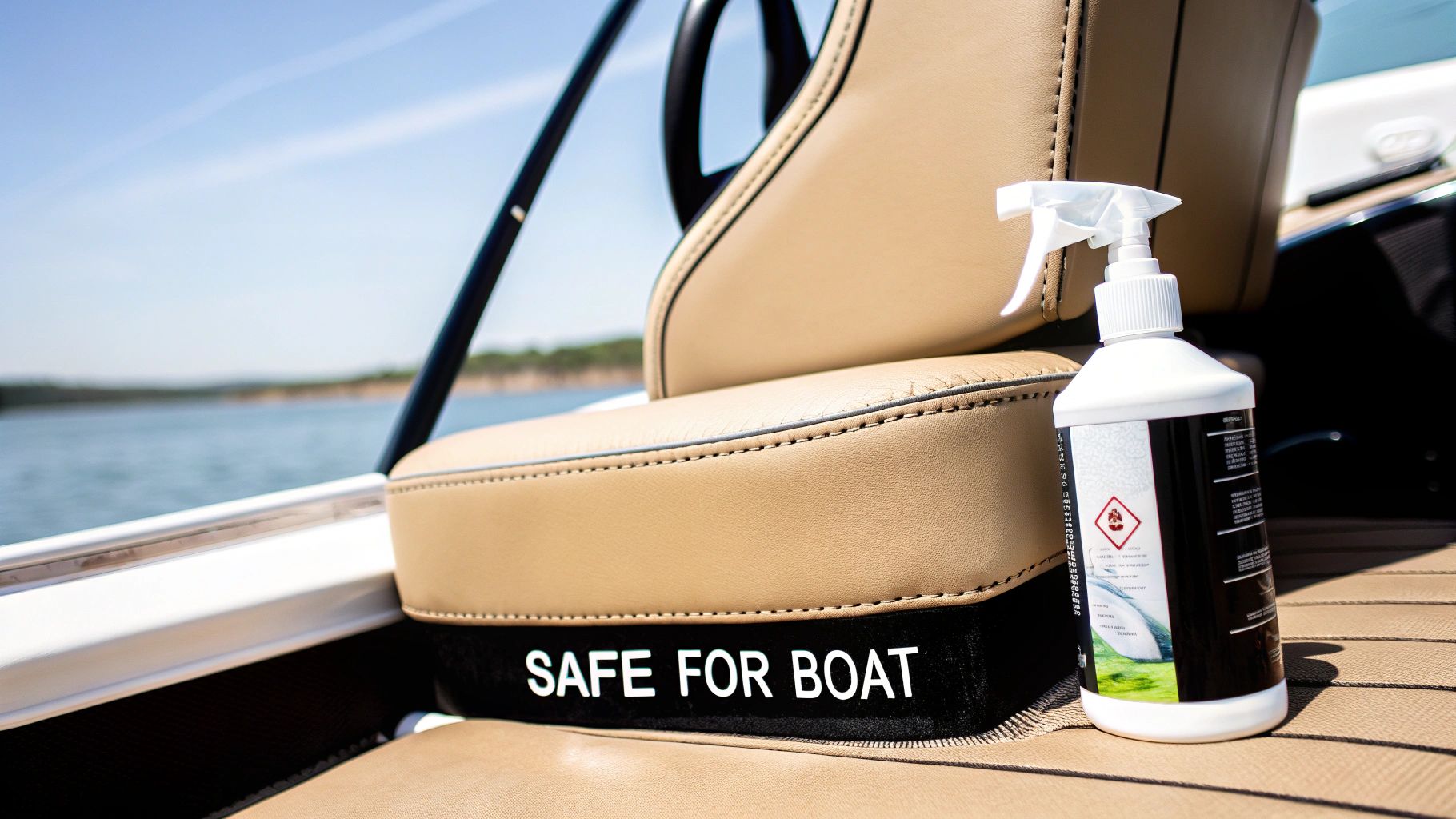
Walking down the cleaning aisle can be completely overwhelming. You're faced with dozens of products all promising to obliterate mildew, but here’s the thing: grabbing the wrong one for your boat can lead to a real disaster. Your boat's surfaces—especially its vinyl, stitching, and gelcoat—are surprisingly sensitive and can be permanently ruined by the wrong chemicals.
Using a harsh household cleaner might seem like an easy, quick fix, but trust me, it's a shortcut you'll end up regretting. To protect your investment and actually get rid of the problem for good, you need to understand what makes a mildew remover both safe and effective for the unique world of boating.
The Big Problem with Bleach and Harsh Chemicals
When faced with those ugly black spots, your first instinct might be to reach for bleach (sodium hypochlorite). It’s famous for whitening things, so it must be good for mildew, right? Wrong. On a boat, bleach almost always causes more harm than good.
Your marine vinyl has a special protective topcoat designed to fend off harsh UV rays and moisture. Bleach is a caustic chemical that literally strips this protective layer away, leaving the vinyl exposed and vulnerable. Over time, this leads to yellowing, brittleness, and eventually, cracking that you simply can't repair.
Even worse, bleach is absolutely devastating to the thread used in your boat's upholstery. It chemically eats away at the fibers, making your stitching weak and brittle. One day you might sit down and hear that dreaded rip as a seam gives way—all because the wrong cleaner silently destroyed the threads holding it all together.
Pro Tip: Never use magic erasers or other abrasive scrubbers on your boat’s vinyl. They act like fine-grit sandpaper, scraping away the protective topcoat and ironically making it easier for mildew to grow back in those tiny scratches.
What to Look For in a Boat-Safe Formula
So, if bleach is off the table, what should you be looking for? The best mildew removers for boats will be specifically formulated for marine use. These products are engineered to be tough on mildew spores while being gentle on your boat's delicate materials.
Here are the key things to look for on the label:
- Chlorine-Free: This is non-negotiable. A chlorine-free formula won't yellow your vinyl or weaken your stitching.
- pH-Neutral or Balanced: Cleaners that are too acidic or too alkaline can etch and dull your gelcoat. A balanced formula is much safer for all-around use.
- Safe for Marine Vinyl & Upholstery: The bottle should clearly state that it's safe for these specific materials. This means it won't dry them out or strip away their protective coatings.
The mildew remover market is changing fast, with new formulations that are a huge help to boat owners. Innovative science, like peroxide-based chemistries, is creating products that work incredibly well without the collateral damage of old-school, bleach-heavy options.
Comparing Mildew Remover Types for Boat Surfaces
Not all mildew cleaners are created equal, especially when it comes to your boat. The table below breaks down the most common types so you can see why choosing a marine-specific option is so important.
| Remover Type | Effectiveness on Mildew | Safety for Vinyl | Safety for Stitching | Key Consideration |
|---|---|---|---|---|
| Bleach (Chlorine) | High | Very Low - Causes yellowing & cracking | Very Low - Degrades threads | Damages most boat surfaces over time. |
| Ammonia-Based | Moderate | Low - Can dry out and dull vinyl | Low - Can weaken fibers | Harsh fumes and not ideal for upholstery. |
| Abrasive Cleaners | Low to Moderate | Very Low - Scratches the protective topcoat | Low - Can fray stitching | Creates micro-scratches where mildew can hide. |
| Hydrogen Peroxide | High | High - Safe on topcoats | High - Gentle on modern threads | Fights stains through oxidation, not harsh chemicals. |
As you can see, what works in your shower is likely a terrible choice for your boat seats.
Why Specialized Formulas Matter
So why can’t you just use that bathroom tile cleaner you have under the sink? Because your boat isn't a bathroom. Marine products are engineered from the ground up to tackle mildew that’s feeding on a unique cocktail of sunscreen residue, sweat, and environmental grime, all while being baked in the sun and doused with water.
A dedicated marine product like Boat Juice Mildew Stain Remover is a perfect example of this specialized approach. It's formulated without harsh chlorine, so it targets the mildew stains at their source without compromising the integrity of your vinyl or thread. This means you can confidently spray it on your seats, let it work its magic, and wipe away the stains without that nagging worry about long-term damage.
To build out a solid detailing arsenal, check out our full guide on the best boat cleaning products. Ultimately, picking the right mildew remover comes down to prioritizing your boat's health. By ditching bleach and choosing a marine-specific, chlorine-free formula, you’re not just cleaning a stain—you’re preserving the value and longevity of your pride and joy.
The Right Way to Tackle Stubborn Boat Mildew
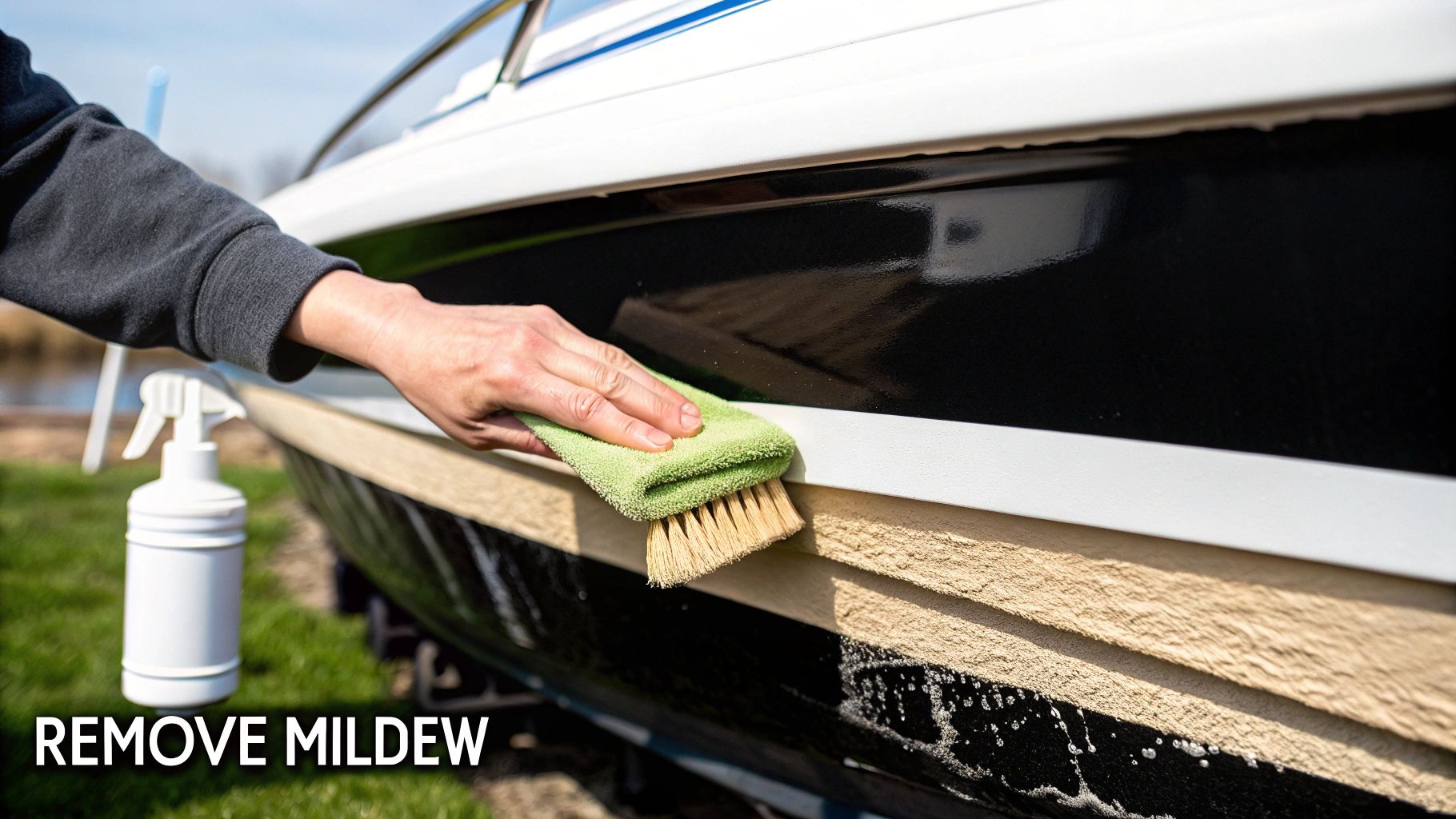
Alright, so you’ve picked out a cleaner that won’t bleach your vinyl or eat away at your stitching. Now for the fun part. Getting rid of stubborn mildew isn’t just about a quick spray-and-wipe. To really knock out those ugly black spots for good, you need a smart approach that gets to the root of the problem.
This isn’t about scrubbing until your arms fall off. It’s about letting the right product do the heavy lifting. Let's walk through the exact steps you can follow to get your boat’s interior looking sharp again.
Step 1: Prep Your Boat and Gear
Before you even think about popping the top on that cleaner, a little prep work goes a long way. Trust me, setting yourself up for success is half the battle.
First, try to work on a cool, overcast day if you can. Direct sun is your enemy here—it can make cleaners evaporate before they have a chance to work their magic. If you have to work in the sun, just tackle the job in smaller, manageable sections.
Next up, gather your tools. You don’t need a whole garage full of stuff, just these essentials:
- Your mildew remover: A specialized, chlorine-free formula like Boat Juice Mildew Stain Remover.
- A soft-bristle brush: A detailer’s brush or even a soft toothbrush works wonders for getting into tight seams and textures.
- Several clean microfiber towels: You'll want a few for wiping and a few for drying.
- A bucket of fresh water: For rinsing your brush and towels so you aren't just pushing grime around.
- Safety gear: Always a good idea to throw on some gloves and protective eyewear.
One last pro-tip: give the area a quick vacuum. Sucking up all that loose dirt and debris lets your mildew remover focus its full strength on the stains.
Step 2: The Application and Dwell Time Strategy
With your gear ready, it’s time to apply the cleaner. Start by spraying a generous amount of your mildew remover directly on the affected area. Don't be shy with it—you want to completely saturate those spots.
Now for the most important part of the entire process: let it dwell. Just let the product sit on the surface for a few minutes. Check the label for the recommended time, but it’s usually around 3-5 minutes.
Why Dwell Time Is Crucial: During this waiting period, the cleaner is actively breaking down the mildew's structure and lifting the stain out of the vinyl's pores. It’s a chemical reaction, not a physical one. Skipping this step is like trying to nuke a frozen burrito for 10 seconds—you just haven’t given it enough time to do its job.
Step 3: Gentle Agitation and Wiping Away the Grime
Once the cleaner has had time to sit, it’s time for some gentle agitation. Notice I said gentle. You're not trying to scrub the finish off. The goal is simply to help lift the mildew that the cleaner has already loosened.
Take your soft-bristle brush and lightly work the solution into the vinyl, focusing on textured spots and seams where mildew loves to hide. Use small, circular motions. You should start to see the black spots literally dissolving and lifting away. For really stubborn areas, you might need a second application and another round of dwell time.
After agitating, grab a clean, damp microfiber towel and wipe the area down. You’ll see the gunk transfer right from your seat to the towel. Be sure to rinse your towel out often in that bucket of fresh water to avoid smearing mildew back onto a clean surface.
Step 4: The Final Rinse and Dry
You're in the home stretch, but don't cut corners here. This last phase is what guarantees a perfect, non-sticky finish. Leaving cleaner residue behind can actually attract more dirt and become food for new mildew growth.
If you can, give the whole area a good rinse with a hose. If a hose isn't an option, just use a fresh microfiber towel soaked in clean water and wipe everything down a couple of times. You want to be sure all traces of the cleaner are gone.
Finally, get everything completely dry. Use a few dry microfiber towels to blot up as much water as you can. Then, let it all air-dry before you close up the boat or throw the cover on. I like to prop cushions up or open compartments to get the air flowing—it speeds up drying and is one of the best ways to keep mildew from coming right back.
For a deeper dive into cleaning upholstery, you can learn more about how to remove mildew from boat seats in our specialized guide. By following this system—prepare, apply, dwell, agitate, and dry—you're not just cleaning a stain; you're doing a proper restoration that will keep your boat looking fresh all season.
How to Protect Your Boat and Prevent Mildew from Returning
You’ve put in the hard work to get your boat’s interior looking brand new, and the last thing you want is for those ugly black spots to make a comeback. Honestly, winning the war on mildew isn’t about one massive cleaning session; it's about shifting your mindset from being reactive to being proactive.
Trust me, keeping mildew away for good is way easier than battling it every few weeks.
The secret is to make your boat a terrible place for mildew to live. That means cutting off its life support system: moisture, warmth, and a food source. By building a few simple habits into your regular boating routine, you can pretty much guarantee you won’t have to deal with those stubborn stains again.
Master Your Boat’s Airflow and Ventilation
Mildew absolutely loves stagnant, damp air. It’s the exact environment you create when you seal up a boat, especially under a tight cover. Getting air moving is probably the single most powerful weapon you have in preventing its return.
When your boat is stored or covered, you have to give that trapped moisture an escape route. It’s amazing what a little bit of airflow can do to lower the humidity inside.
Here are a few simple but incredibly effective tricks you can start using today:
- Use Boat Cover Vents: If your cover doesn’t have vents, add some. They’re easy to install. These little mushroom-shaped vents let hot, moist air out without letting rain in.
- Try a Dehumidifier: For those of you in humid climates, a small, passive dehumidifier bucket can pull a shocking amount of water out of the air in your cabin or storage lockers.
- Prop Up Your Cushions: This is a big one. When you put the boat away, never leave seat cushions lying flat. Stand them on their sides or prop them up so air can circulate all the way around them. This stops moisture from getting trapped underneath, which is prime real estate for mildew.
Create a Protective Barrier on Your Vinyl
Once your vinyl is sparkling clean, the next move is to apply a protective coating to help it fight off moisture and UV rays. Think of it like waxing your car—you're adding a shield that makes it much harder for dirt, grime, and mildew to get a foothold.
A good marine protectant creates a hydrophobic barrier on the surface. When water beads up and rolls right off instead of soaking in, mildew has a much tougher time getting started. This is a crucial step that a lot of boat owners skip, but it makes the results of your cleaning efforts last so much longer.
To keep your vinyl in top shape, you need the right tools. For some expert advice on this, check out our guide on finding the best marine vinyl cleaner and protectant for your setup.
Get Into the Post-Outing Wipe-Down Habit
Mildew needs a food source to survive, and on a boat, that food is everywhere—sunscreen, sweat, spilled drinks, crumbs, you name it. A quick wipe-down after every single trip is the easiest way to starve it out before it can get established.
This doesn't have to be a deep clean. Just take five minutes at the end of the day to go over the high-traffic areas with a quality interior cleaner. A product like Boat Juice Interior is perfect for this because it’s pH-balanced and safe enough for daily use on all your boat’s interior surfaces. It just lifts away the fresh grime that mildew loves to eat.
Here’s Why This Works: By removing all the organic stuff left behind after a day on the water, you're basically taking all the food off the mildew buffet table. A clean surface gives spores nothing to grab onto, stopping an outbreak before it even begins.
Prep Your Boat for the Seasons
Your routine should change with the seasons. What you do before putting the boat away for the winter or getting it ready for spring is critical for long-term mildew prevention.
Before you cover your boat for winterization, give the interior a really thorough cleaning and make sure every single surface is bone dry. Trapping even a little moisture under a cover for months is a guaranteed recipe for a full-blown mildew disaster come springtime.
This kind of awareness is growing among boat owners. The global mildew remover market saw a compound annual growth rate of 6.8% between 2019 and 2023, largely because people are more concerned about health in damp environments. You can discover more insights about this trend on Fact.MR.
At the end of the day, preventing mildew is all about being consistent. Your next step? Create a simple "end-of-day checklist" for yourself that includes a quick wipe-down and propping up those cushions. It’s a small habit that pays off big time.
Common Mistakes to Avoid When Cleaning Mildew
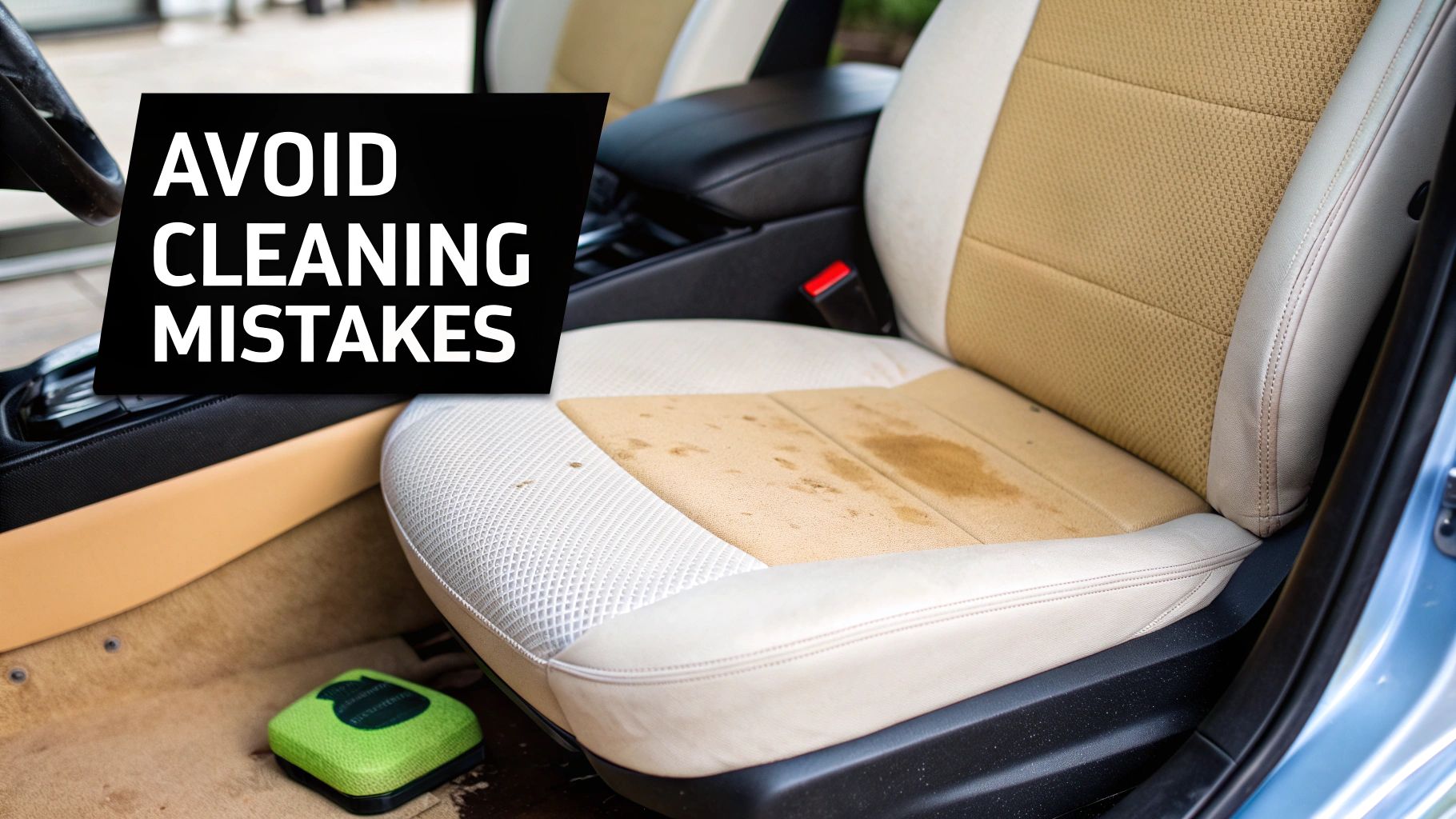
Sometimes, doing a job right is less about what you do and more about what you don’t do. When it comes to tackling mildew, I’ve seen countless well-meaning boat owners make simple mistakes that end up hurting their boat or, even worse, making the mildew problem come back with a vengeance.
Learning how to sidestep these common pitfalls will not only make your cleaning more effective but also protect your investment in the long run. Let's walk through the most frequent errors I see so you can clean like a pro and avoid some serious headaches.
Reaching for Abrasive Tools and Scrubbers
When you’re staring down a stubborn black spot, the instinct is to grab something tough and just scrub it away. This is probably one of the most damaging things you can do to your boat's vinyl upholstery.
Things like magic erasers, scouring pads, and stiff-bristled brushes are the enemy here. They essentially act like fine-grit sandpaper. Sure, they might lift the surface stain, but they do it by literally scraping off the protective topcoat of your vinyl. That invisible layer is the only thing standing between your seats and the harsh marine environment.
The Aftermath of Abrasion: Once that topcoat is compromised, the vinyl gets dull, porous, and even a little sticky to the touch. Instead of repelling dirt and moisture, it now soaks it all up, creating an even better breeding ground for future mildew. You've just traded a small, fixable problem for a much bigger, permanent one.
Mixing Your Cleaning Chemicals
This next mistake goes beyond just damaging your boat—it can be downright dangerous. It's tempting to play chemist and think that combining a couple of cleaners will create some kind of super-powered solution. In reality, you could be concocting a toxic nightmare.
A classic and dangerous example is mixing a bleach-based cleaner with an ammonia-based one. This creates chloramine gas, a toxic vapor that can cause serious respiratory damage. The rule is simple: stick to one high-quality product at a time and follow its instructions to the letter.
Leaving Cleaner Residue Behind
So, you've sprayed, scrubbed, and wiped away the mildew. Job done, right? Not quite. One of the most critical and overlooked steps is the final rinse. If you don't get all the cleaning solution off the surface, you're just setting the stage for mildew’s comeback tour.
Any cleaner left behind dries into a tacky film. This residue is a magnet for dust, dirt, pollen, and all the other organic stuff floating around. You’re essentially leaving out a fresh buffet for the next round of mildew spores to feast on.
My Simple Three-Step Cleanup Rule:
- Clean: Apply your chosen mildew remover and gently agitate the area.
- Rinse: Use a clean, damp cloth and fresh water to wipe the surface down, removing every last trace of the cleaner.
- Dry: This is non-negotiable. Make sure the area is completely dry before you put the cover on or close up any compartments.
By avoiding these three all-too-common errors, you'll ensure your hard work actually pays off. Your boat’s interior won't just look cleaner; it will stay that way for a whole lot longer.
Got Questions About Boat Mildew? We’ve Got Answers.
Even with the best game plan, questions always pop up when you're dealing with mildew. Let's face it, every boat and every situation is a little different. Here are some of the most common things we hear from boat owners, with real-world answers to help you get the job done right.
Can I Just Use Household Bleach On My Boat Seats?
I get this one a lot, and the answer is a hard no. Please don't use household bleach on your boat's vinyl. It might seem like a quick fix, but bleach is incredibly harsh and will absolutely wreck your marine upholstery over time.
That vinyl has a special protective topcoat, and the stitching is designed to withstand the elements. Bleach eats away at that protection, causing the material to turn yellow, get brittle, and eventually crack. You'll end up with a much bigger problem than a few mildew spots.
Stick with a dedicated marine mildew remover. The best mildew remover for boats is always going to be one that’s formulated to kill the mildew without destroying the expensive material it's growing on.
How Often Should I Clean to Keep Mildew Away?
The best defense is a good offense. If you're in a humid climate, getting into the habit of a quick wipe-down after every single outing makes a huge difference. Just use a pH-neutral interior cleaner to remove the day's sunscreen, sweat, and spilled drinks. This literally takes five minutes and starves the mildew before it can even start growing.
As for a deeper clean with a mildew-specific product, hit it at the very first sign of trouble. Don't let it spread. It’s also smart to build this into your spring prep and fall winterization checklists. That way, you’re starting and ending each season with a clean slate.
Pro Tip: Consistency is everything. A few minutes of preventative cleaning after each trip is way less work than a massive mildew remediation project later in the season. Trust me on this.
What’s the Real Difference Between Mold and Mildew Anyway?
Think of mildew as mold's annoying cousin. On a boat, what you're seeing is almost always mildew. It tends to grow flat on surfaces and looks like powdery patches of black, gray, or sometimes even white spots. Mold, on the other hand, can be fuzzy or slimy and comes in a wider variety of colors.
But here's the good news: you treat them both the same way. The cleaning and prevention tactics work for both types of fungal growth. The most important thing is to act fast and be thorough before it gets out of hand.
Can I Use the Same Mildew Cleaner On My Boat Cover?
Usually, yes. A high-quality marine mildew cleaner is often safe for boat covers, but you absolutely have to check the product's label first. And before you spray the whole thing down, find a small, inconspicuous spot to test it on. The last thing you want is a discolored cover.
Don’t forget to clean the underside of the cover! This is a classic rookie mistake. Mildew loves to grow there, and it will transfer right back onto your seats the next time you cover the boat. Just be 100% certain the cover is completely dry before you put it back on. Trapping even a little bit of moisture underneath is like rolling out the welcome mat for mildew.
Ready to get rid of mildew without worrying about damaging your boat? Boat Juice is made for this. Our Mildew Stain Remover is a chlorine-free formula that’s tough on stains but safe for your vinyl, stitching, and hardware.