


· By Boat Juice Team
Cleaning Boat Seats Mildew: A Step-by-Step Guide for Boat Owners
Let’s be honest, tackling mildew on your boat seats can feel like a never-ending battle. The plan is simple: you need to kill the mildew spores, give the seats a gentle but firm scrub, and rinse everything away. The secret is using a product that destroys the mildew without wrecking your vinyl, giving you a clean that protects your expensive seats for the long haul.
Why Your Boat Seats Are a Magnet for Mildew
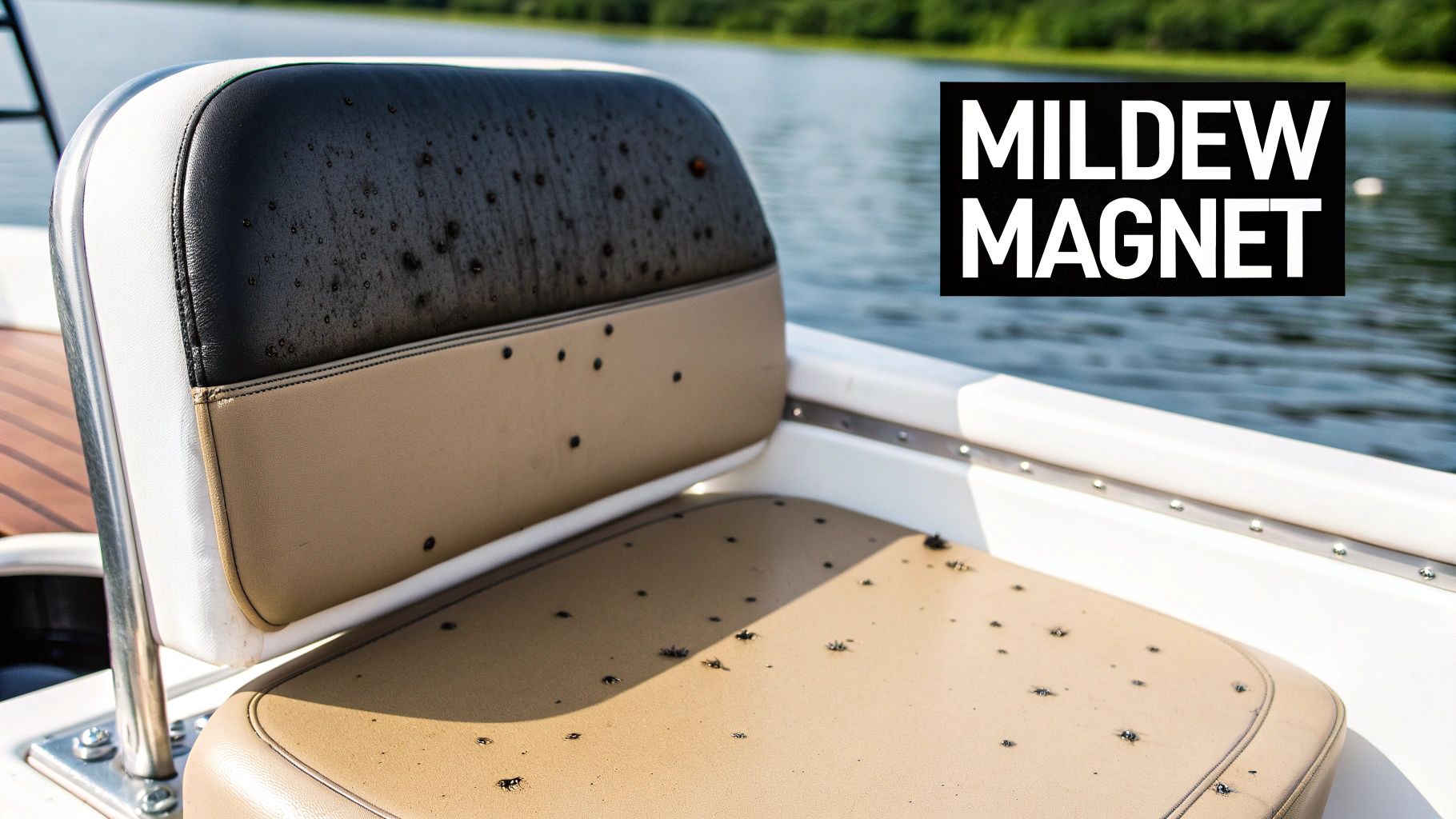
Have you ever pulled back the boat cover after a rainy week, only to find those awful black specks all over your pristine seats? It's a frustrating moment every boat owner knows. Your boat is basically a five-star resort for mildew, offering up the three things it needs to thrive.
This is more than just an ugly stain. When you're cleaning boat seats mildew, you’re fighting a living organism that can permanently discolor and even damage your upholstery if you let it get out of hand.
The Perfect Mildew-Growing Machine
Mildew isn’t picky, but it does have a few non-negotiables to set up shop, and your boat happily provides them all. Understanding this trio is your first step to winning the war.
- Moisture: This is public enemy number one. Think about it—spray from the lake, damp towels, wet life vests, and rain all keep your seats in a constant state of dampness.
- Warmth: That sun beating down on your boat cover? It’s turning the cockpit into a cozy, humid greenhouse. This creates the perfect incubator for mildew spores to multiply.
- Lack of Airflow: Once you put the cover on, the air just sits there. Stagnant, humid air traps moisture right against the vinyl, never giving it a chance to fully dry out.
This combination is why mildew can appear seemingly overnight, especially during those hot, sticky summer months or when your boat has been sitting for a while.
Why This Matters: Remember, you're not just cleaning a stain; you're getting rid of a living organism. Just wiping away the black spots only removes what you can see. The microscopic spores get left behind, waiting for the right conditions to bloom all over again.
This constant fight has created a huge market. The global demand for boat vinyl cleaners, mostly mildew removers, is on track to hit around USD 750 million by 2025. It’s a big deal because ignoring mildew can speed up how fast your vinyl breaks down by 30-50%, turning what should be a simple cleaning job into an expensive reupholstery project. You can dig deeper into the numbers in this full market analysis.
Common Mildew Hotspots On Your Boat
Mildew is sneaky and loves to hide in the least convenient places. Knowing where to look is half the battle. This quick guide will help you spot trouble areas before they become major headaches.
| Hotspot Area | Why Mildew Grows Here | Your Action Step |
|---|---|---|
| Under Seat Cushions | Trapped moisture from wet swimmers and poor airflow make this a prime breeding ground. | Prop cushions up after each use to let the underside breathe and dry out. |
| Stitching & Seams | Water pools in the threads and crevices, staying damp long after the surface is dry. | Pay extra attention to seams when drying, using a microfiber towel. |
| Storage Compartments | Dark, damp, and rarely opened. The perfect home for mildew to grow undisturbed. | Leave compartments cracked open when the boat is covered to improve airflow. |
| Behind Backrests | The tight space against the fiberglass hull traps condensation and prevents drying. | Periodically pull seats away from the hull to wipe down and air out. |
| Cup Holders | Spilled drinks and rainwater create a constant source of sugary moisture. | Wipe them out completely at the end of every trip. |
By regularly checking these key spots, you can catch mildew early and keep your boat looking its best all season long.
Assembling Your Mildew-Fighting Toolkit
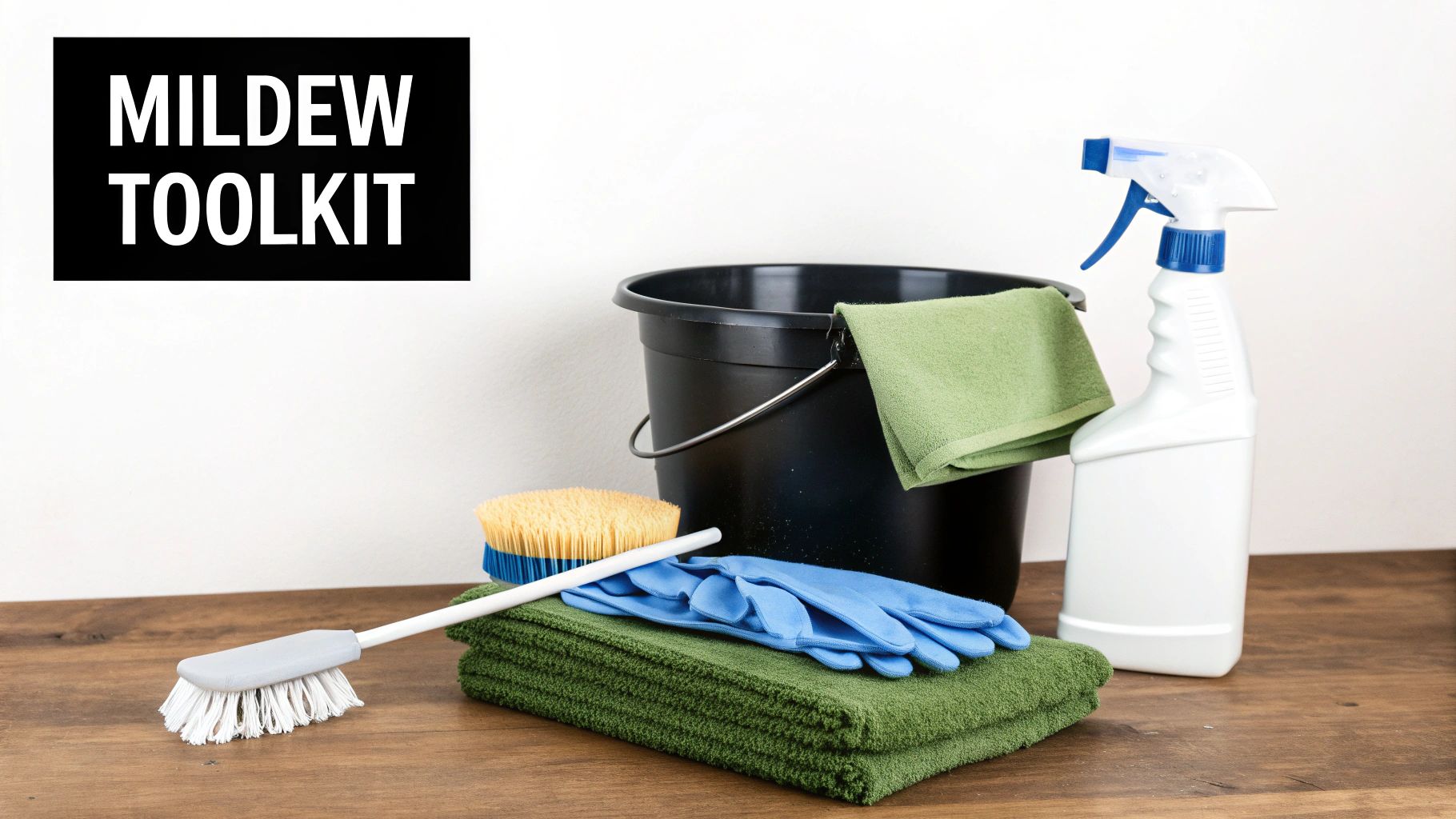
Before you start scrubbing, let's get your gear in order. Having the right tools on hand makes for a successful and surprisingly pain-free cleaning day. This isn’t about buying out the marine supply store; it’s about having a few key items that make all the difference.
Think of this as your essential, no-fluff mildew-busting kit. You probably already have most of these items, and the rest is a small investment that will pay off big time.
The Must-Have Cleaning Gear
Getting these basics together sets you up for success from the start. Each piece plays a specific role in getting those seats looking brand new without causing any unintended damage.
- Soft-Bristle Brush: Your goal is to lift the mildew, not scratch the vinyl. A brush with soft, flexible bristles is perfect for getting into the texture of the seat material without being too aggressive.
- Microfiber Towels: You can never have too many of these. They’re incredibly absorbent for drying and won’t leave behind lint like old cotton towels. I always keep a few separate stacks—one for cleaning, one for rinsing, and a fresh one for the final wipe-down.
- Bucket and Water: A simple bucket of clean, fresh water is essential. You'll need it for rinsing your brush and towels to avoid spreading grime from one seat to another.
- Safety Gloves: Do your hands a favor and protect them. A simple pair of disposable nitrile or rubber gloves will keep the gunk and cleaners off your skin.
Choosing The Right Cleaner
This is where the real battle is won. While soap and water can handle light surface dirt, those stubborn mildew spores need something more powerful. A word of caution: stay away from harsh household chemicals like straight bleach. It’s a huge mistake that will dry out, yellow, and eventually crack your expensive vinyl.
You need a cleaner that's tough on mildew but gentle on your boat's upholstery. This is exactly why a dedicated, marine-specific product is always your best bet.
For this job, Boat Juice Mildew Stain Remover is the perfect weapon. It’s formulated to kill mildew at the root, so the stains don't just pop back up a week later. More importantly, it does this without damaging the delicate vinyl or stitching.
If you really want to get into the weeds on what makes a great cleaner, check out our guide on choosing the best mildew remover for boats.
With your toolkit ready, you’re all set to take on whatever mildew mess comes your way.
Getting Your Hands Dirty: Cleaning Mildew From Any Boat Seat
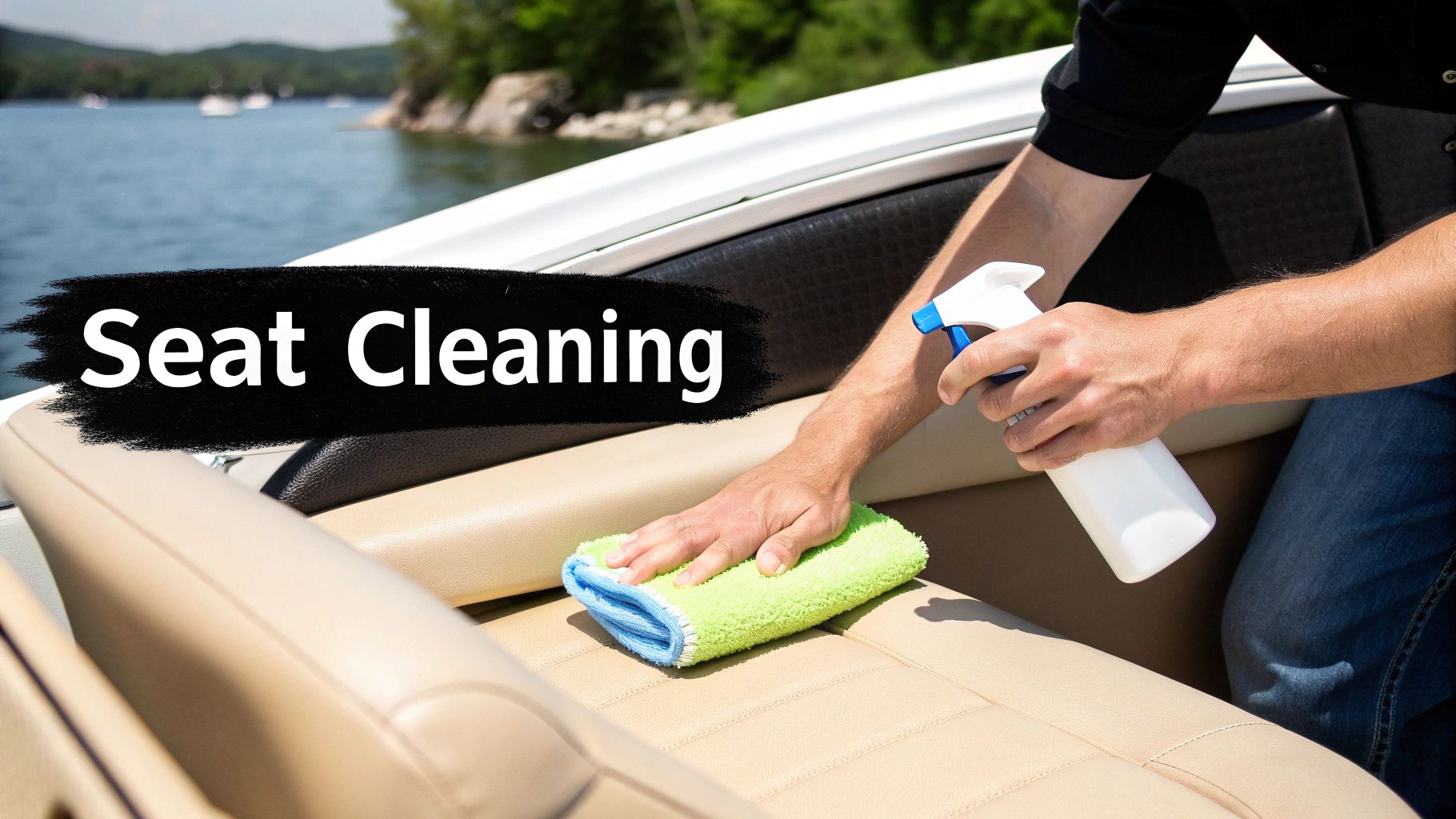
Alright, your cleaning arsenal is ready to go. Now for the action. Boat upholstery isn’t one-size-fits-all, so your game plan has to be smart. We’ll spend most of our time on vinyl, since that's what you’ll find on most boats, but we’ll also cover the right way to handle marine fabric.
The secret to success is matching your cleaning method to the material. A technique that works wonders on tough vinyl can absolutely wreck a woven fabric seat. Let's get into the specifics for each.
Cleaning Mildew From Vinyl Boat Seats
Vinyl is the king of marine upholstery for a reason—it's incredibly durable. But even the toughest materials need the right touch. If you come in too hot with an aggressive brush or a harsh chemical, you can easily cause permanent damage.
Before you attack the mildew, you have to get rid of the surface-level grime first. Think sunscreen, dirt, and salt spray. This clears the deck so you can see what you’re really up against and lets your mildew cleaner work directly on the stains.
- Step 1: Start with a Quick Wipe-Down: Grab a good interior cleaner like Boat Juice Interior and give a section of the seat a light spray. It’s pH-balanced, so it’s perfectly safe for vinyl and won't harm the stitching.
- Step 2: Loosen the Grime: With your soft-bristle brush, gently work the cleaner into the material using small, circular motions. You’ll feel it lifting the gunk right out of the vinyl's grain.
- Step 3: Wipe and Assess: Use a clean microfiber towel to wipe the area clean. Now you can clearly see the stubborn mildew spots that need special attention.
With the surface dirt gone, it’s time to focus on the mildew itself. This is where a dedicated mildew stain remover really shines.
Spray Boat Juice Mildew Stain Remover directly onto those leftover black and gray spots. Here’s the single most important tip: let it sit. Seriously, don’t just spray and wipe. Give the product a solid 3-5 minutes to work its magic. This allows it to penetrate deep into the vinyl and kill the mildew at its source, not just bleach the surface.
After letting it dwell, give the area another gentle scrub with your soft-bristle brush and wipe it clean with a fresh, damp microfiber towel. If you want a more detailed look at this process, check out our full guide on how to clean boat vinyl seats.
Tackling Mildew On Marine Fabric Seats
If your boat has fabric seats or inserts, you need to dial back the aggression. Marine-grade fabrics are tough, but their woven texture can trap mildew spores much deeper than vinyl, and over-scrubbing can easily cause fraying.
The overall process is similar—clean, treat, rinse—but the way you do it is different.
- Step 1: Vacuum First: Before you get anything wet, always vacuum your fabric seats thoroughly. This pulls out all the loose dirt and debris that would otherwise turn into a muddy mess.
- Step 2: Gentle Cleaning: You can mix a little mild soap with water or, even better, use a cleaner specifically designed for marine fabrics. Spray it on lightly, making sure not to completely soak the cushion and saturate the foam underneath.
- Step 3: Blot, Don't Scrub: This is key. Instead of scrubbing, use a clean microfiber towel to blot the mildewed area. This lifts the stain up and out of the fibers. For really tough spots, you can use a soft brush, but be incredibly gentle.
- Step 4: Rinse Thoroughly: Don't skip this step! Any soap residue you leave behind will become a dirt magnet and a breeding ground for new mildew. Use a clean, damp cloth to repeatedly blot the area with fresh water until every last sud is gone.
Why This Matters: With more people enjoying boating than ever before, mildew has become a huge headache for owners. Professional detailers will tell you that untreated mildew causes permanent stains in about 70% of cases in just a few months, which can tank your boat's resale value.
Cleaning Method At A Glance: Vinyl vs. Fabric
Sometimes, seeing things side-by-side makes all the difference. This table breaks down the key differences in how you should tackle mildew on each material.
| Cleaning Step | Vinyl Seats | Fabric Seats |
|---|---|---|
| Initial Prep | Wipe with a general interior cleaner. | Thoroughly vacuum to remove loose debris. |
| Agitation Method | Use a soft-bristle brush in circular motions. | Gently blot with a microfiber towel; use a brush sparingly. |
| Mildew Treatment | Apply a targeted mildew remover and let it dwell. | Use a fabric-safe cleaner; avoid oversaturating. |
| Rinsing | Wipe clean with a damp microfiber towel. | Repeatedly blot with a clean, damp towel until all soap is gone. |
| Drying | Dry completely with a clean towel. | Allow to air dry completely, using fans to speed up the process. |
No matter what material you're working with, the final step is absolutely critical: the seats must be 100% dry before you even think about putting the boat cover back on. Trapping even a tiny bit of moisture is like rolling out the welcome mat for mildew, and you’ll find yourself right back where you started.
Tackling Tough Mildew Stains That Won't Quit
So, you’ve followed all the steps, but a few stubborn, shadowy spots are staring back at you. Don't throw in the towel just yet—this is a normal part of the battle, especially with stains that have been setting in for weeks or even months.
Those lingering marks are a sign that the mildew has worked its way deep into the pores of the vinyl. Scrubbing harder at this point won't help. What you need is a different strategy, one that lets the cleaner go deeper. This is where patience really pays off.
Your Next Step: Reapply and Wait
For those stubborn stains that survived the first cleaning, the answer is usually a second, more focused application. The key is to give the cleaner more time to do its job.
Grab your mildew remover again. If you're using a product like Boat Juice Mildew Stain Remover, spray it directly onto those lingering spots. But this time, instead of scrubbing right away, just let it sit. Give it a good 10-15 minutes to really soak in. This extra "dwell time" lets the active ingredients penetrate the vinyl and break down the stain from the inside out.
Pro Tip: Resist the urge to scrub stubborn stains into submission. You can easily scratch or damage the vinyl's protective topcoat. The real secret is letting a quality cleaner do the heavy lifting for you.
Busting Destructive Cleaning Myths
When you're frustrated with a stain, it’s tempting to reach for something "stronger" from under the kitchen sink. This is where many well-meaning boat owners make expensive mistakes. Let's bust a couple of common myths.
- The Bleach Myth: Using straight household bleach is one of the fastest ways to ruin your upholstery. Sure, it might make the stain disappear for a bit, but it also dries out the vinyl, rots the stitching, and can cause permanent yellowing over time. It's a short-term fix that causes long-term damage.
- The Abrasive Scrubber Myth: Reaching for a magic eraser, a stiff brush, or a scouring pad is a definite no-go. These tools are abrasive by design. They'll scratch and wear down the surface of your vinyl, creating a dull, rough patch that actually attracts future dirt and mildew.
Knowing When to Call It a Day
Sometimes, a stain has been there so long that it has permanently discolored the material. Think of it as a "mildew scar"—the mildew itself is gone, but a faint gray shadow remains. If you’ve tried a couple of patient applications with a good cleaner and the spot has faded but won't vanish completely, it's time to stop.
Continuing to attack it will only risk damaging your seats. At this point, the best move is to accept the small imperfection, make sure the area is clean and protected, and double down on your prevention strategy. Your seats will still look fantastic, and you’ll have saved them from any further harm.
How To Keep Mildew From Coming Back
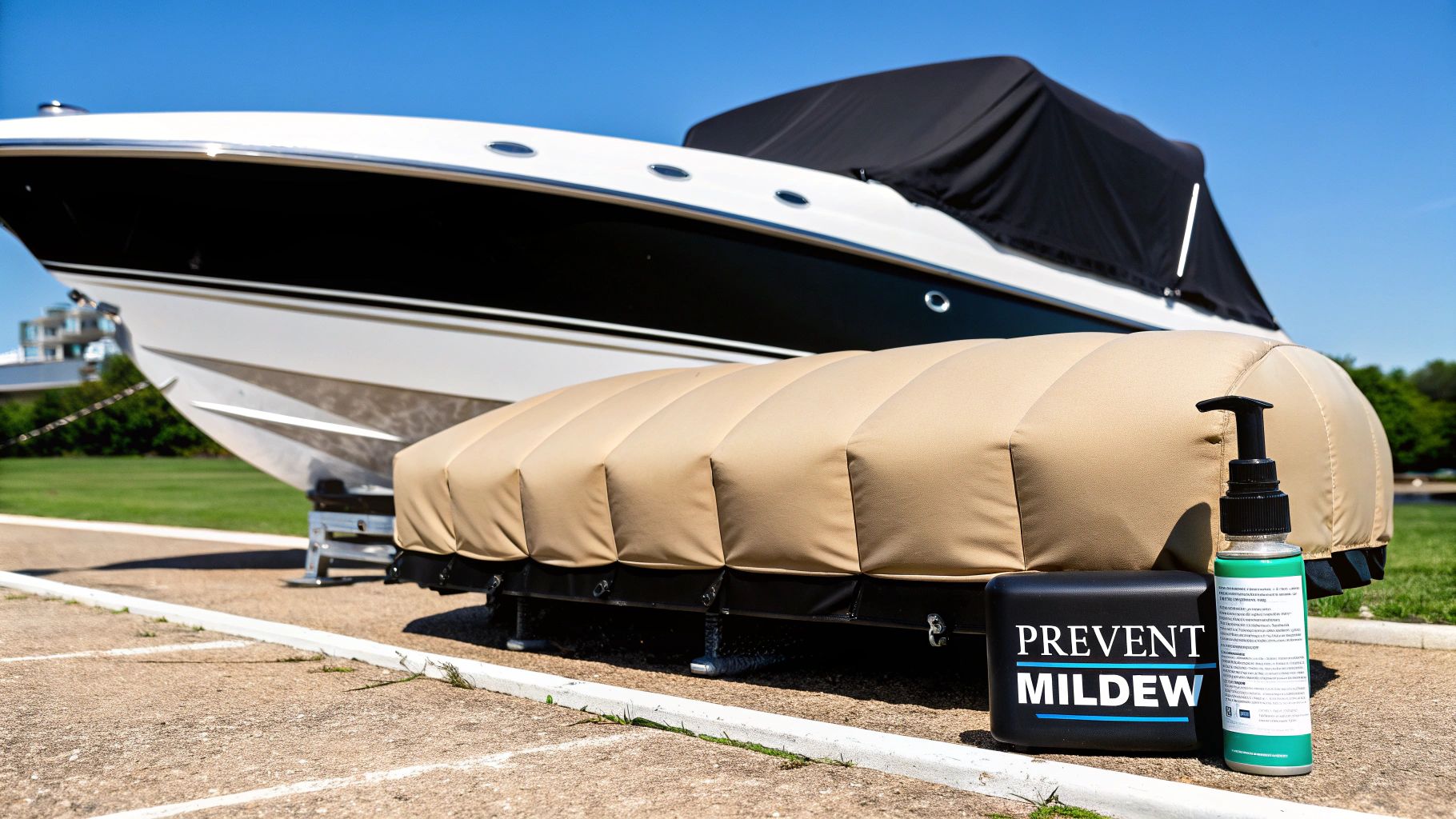
You’ve put in the work and scrubbed those ugly mildew stains into submission. Awesome. Now, let’s make sure they stay gone for good. The best way to deal with mildew is to create an environment where it can’t grow in the first place.
This comes down to building a few simple habits into your routine. Think of it as an insurance policy against hours of future scrubbing. A few minutes of prevention after each trip saves you from a massive cleaning project later on. It’s all about working smarter, not harder.
Build Your Post-Boating Routine
The most critical time for mildew prevention is the moment you pull your boat out of the water. If you can lock in a consistent end-of-day routine, you’ve already won half the battle.
Your main goal is to get rid of moisture—the number one thing mildew needs to thrive. A quick, five-minute wipe-down can make all the difference.
- Dry Everything Immediately: Grab a clean, dry microfiber towel and wipe down every inch of your vinyl seats. Get into the seams, creases, and underneath the cushions where water loves to hide.
- Remove Wet Gear: Don't leave damp towels, life vests, or tow ropes sitting on the seats. Get that stuff out of the boat to dry somewhere else.
- Wipe Down Spills: Clean up any spilled sodas or dropped snacks right away. Those sugary residues are basically a buffet for mildew spores.
This simple process starves mildew of its fuel source before it can ever get started.
The Power Of Airflow And Protection
Once your boat is dry, the next step is to think about airflow and creating a protective barrier. A covered boat can quickly turn into a humid greenhouse, which is pretty much a five-star resort for mildew.
Proper ventilation is essential, especially during storage. If air can't circulate, any trapped humidity will condense on your seats and start the whole ugly cycle all over again.
The most common mistake boat owners make is throwing the cover on a slightly damp boat. This traps moisture and creates a perfect incubator for mildew, guaranteeing you'll find a fresh crop of black spots the next time you go out.
Try using a vented boat cover or some support poles to "tent" the cover, allowing air to move freely underneath. You can even prop up the seat cushions or leave storage compartments slightly ajar to encourage some cross-ventilation.
Finally, add a layer of defense. Applying a quality UV protectant after cleaning does more than just shield your seats from the sun. Many formulas also create a hydrophobic barrier that repels water, making it much harder for moisture—and mildew—to take hold. For more ideas on putting together a solid maintenance kit, our guide to the best boat cleaning products can point you in the right direction.
By making these simple habits part of your boating life, you'll stop reacting to mildew and start preventing it altogether.
A Few Common Questions From the Dock
Even with the best instructions, you're bound to have a few questions when you're dealing with mildew. Here are some of the questions I hear most often from fellow boat owners.
Can I Just Use a Household Cleaner?
I get it. You're on the boat, you see a spot, and that bottle of all-purpose cleaner from the kitchen is right there. It’s tempting, but please don't do it.
Most household cleaners are packed with harsh chemicals like ammonia and aggressive degreasers. On marine vinyl, these are a disaster waiting to happen. They strip away the protective topcoat, leaving your seats brittle and prone to cracking. Plus, they often just bleach the surface stain without actually killing the mildew spores, meaning it'll be back in a week or two. Always stick with a marine-specific cleaner.
How Often Do I Really Need to Deep Clean the Seats?
For a full, deep-down scrub, think seasonally. A thorough cleaning in the spring as you're getting the boat ready and another in the fall before you put it away for winter is a solid routine. This handles any sneaky mildew that tried to move in during storage.
But the real game-changer is the quick wipe-down after every single trip. Taking a few minutes to dry the seats is the best way to prevent mildew in the first place. If you boat in a humid climate, you might need to spot-treat more often, but that post-outing wipe-down makes the big seasonal jobs way less of a chore.
What’s the Deal With Those Annoying Pink Stains?
Ah, the dreaded "vinyl pinking." If you see a pink or reddish stain on your seats, you're not dealing with mildew. That’s actually a byproduct from a specific type of bacteria that gets into the vinyl and releases a stubborn red dye. It's notoriously tough to get out.
Unfortunately, your go-to mildew remover won't make a dent in these pink stains. While there are specialty products out there, this is one area where an ounce of prevention is worth a pound of cure. Keeping your seats clean and, most importantly, dry is your best defense against the bacteria that causes it.
My Two Cents: The biggest difference between a quick clean and a weekend-long project is consistency. A five-minute wipe-down after each trip is the single most effective thing you can do. You're stopping mildew before it even has a chance to start.
This simple habit doesn't just keep things looking sharp—it's about protecting your investment for the long haul.
Ready to get the right tool for the job? The Boat Juice Mildew Stain Remover is made to kill mildew at its source without being harsh on your marine vinyl. Give your boat the TLC it deserves and make cleanup a whole lot easier.