


· By Boat Juice Team
Your Guide to Eco-Friendly Boat Cleaning Products That Really Work
As a boat owner, you know the pride of seeing your vessel gleam in the sun. But what you use to get that shine matters. The best eco friendly boat cleaning products are tough on grime but gentle on the environment, using biodegradable, non-toxic, and phosphate-free formulas to protect the very water you love.
Why Your Cleaning Routine Matters to Our Waterways
Every time you wash your boat, everything you use—the soap, the wax, the degreaser—eventually finds its way into the lake or ocean. Think of it like pouring your cleaning bucket right into a fish tank, because that's essentially what happens. Those chemicals don't just disappear.
This runoff can disrupt the delicate balance of life thriving just below the surface. Many traditional cleaners are packed with harsh chemicals toxic to fish, aquatic plants, and the tiny organisms that form the foundation of the food web. Choosing a safer alternative is one of the most direct ways you can protect your favorite spot on the water.
The Hidden Impact of Harsh Chemicals
Many boat soaps and all-purpose cleaners you find on hardware store shelves contain ingredients that cause serious, lasting damage. They might make your hull sparkle, but the environmental price is steep.
Here’s a look at the usual suspects you need to avoid:
- Phosphates: These are like super-fertilizer for algae. When phosphates wash into the water, they can cause massive algal blooms that suck all the oxygen out of the water, creating "dead zones" where fish and other marine life can't survive.
- Ammonia and Chlorine: These are powerful cleaners, but they are incredibly toxic to aquatic life. Even small amounts can damage fish gills, disrupt their ability to reproduce, and poison smaller organisms.
- Petroleum-Based Solvents: While great for cutting through grease, these ingredients don't break down easily. They stick around for a long time, contaminating water and sediment for years to come.
Choosing eco friendly boat cleaning products isn't about sacrificing performance. It’s about using smarter chemistry that cleans just as well without poisoning the playground you cherish. Small changes in your routine create a huge positive ripple effect.
A Better Way to Clean
The great news is you don't have to pick between a spotless boat and a healthy ecosystem. By choosing biodegradable formulas, you're using products designed to break down into harmless natural components once they do their job.
This isn’t about guilt. It’s about being a good steward of the amazing natural resources we all get to enjoy. Your cleaning routine is a powerful tool, and this guide will show you exactly how to use it for good.
How to Read Labels and Choose Truly Green Products
Walking down the cleaning aisle can feel overwhelming. Every bottle seems to scream "natural" or "eco-friendly," but how can you be sure you're not just buying marketing hype? The key is to become a smarter shopper by flipping the bottle around and looking at the ingredients—that's where the real story is.
Think of yourself as a detective for your dock box. Your mission is to figure out what's really inside that spray bottle before it touches your boat or, more importantly, the water. Once you learn to spot a few key ingredients and red flags, you’ll make better choices for the environment.
Decoding Common "Green" Buzzwords
Marketers love using words that sound great but often mean very little. Understanding what these common terms actually mean is your first step to cutting through the noise and finding truly eco friendly boat cleaning products.
Here are the big ones you'll see and what they should mean to you:
- Biodegradable: This is the most important one. It simply means the ingredients can be broken down by bacteria and other organisms into harmless elements like water and carbon dioxide. A truly biodegradable cleaner won’t linger in the ecosystem causing problems.
- Non-Toxic: This means the product isn't poisonous to people or pets when used correctly. For boat cleaners, this promise must extend to aquatic life, so it doesn't harm the fish, plants, and other critters living in the water.
- Phosphate-Free: As we mentioned, phosphates are like steroids for algae, causing those nasty blooms that choke out marine life. A "phosphate-free" label is non-negotiable for any product you use on or near the water.
The Chemical Hit List: What to Avoid
Knowing what to look for is half the battle; knowing what to avoid is the other half. Many heavy-duty cleaners are loaded with chemicals that are brutal for marine life. When you’re scanning an ingredient list, keep your eyes peeled for these culprits.
Here's a quick reference table to help you tell the good guys from the bad guys.
Eco-Friendly Ingredients vs. Harsh Chemicals to Avoid
| Ingredient to Look For | Why It's a Good Choice | Chemical to Avoid | Why It's Harmful to Waterways |
|---|---|---|---|
| Plant-Derived Surfactants | These create the suds and lift dirt but are made from sources like coconut or corn, so they break down easily. | Chlorine Bleach | Extremely toxic to fish, invertebrates, and other aquatic organisms. |
| Citric Acid or Vinegar | Natural acids that are great for cutting through mineral deposits and soap scum without harming the environment. | Ammonia | Very toxic in water, it can burn the gills of fish and cause long-term damage. |
| Hydrogen Peroxide | A fantastic whitener and disinfectant that breaks down into just oxygen and water. | Petroleum Solvents | These don't break down easily, lingering in the water and sediment for years. |
| Essential Oils | Provide natural fragrance and some have cleaning properties, all without synthetic chemicals. | Formaldehyde | A known carcinogen that is also incredibly harmful to aquatic ecosystems. |
Seeing any of the chemicals in the right-hand column is your cue to put the bottle back on the shelf and find a safer alternative. It’s that simple.
Your choices are making a difference. The global boat cleaner market was valued at USD 4.8 billion in 2024 and is growing fast, largely because boaters like you are demanding better, safer products.
Spotting "Greenwashing" in Action
Have you ever seen a product with a green leaf on the label and vague claims like "earth-friendly"? That might be "greenwashing"—a marketing trick to make a product seem more environmentally friendly than it is.
Don't let pretty packaging fool you. A truly eco-conscious company will be transparent about what's in their products. If a label feels vague, it probably is.
One of the best ways to vet products is to look at expert roundups that have already done the homework for you. For a deeper look, our guide on the best boat cleaning products breaks down exactly what makes a formula both tough on grime and gentle on the water.
Building Your Essential Eco-Friendly Cleaning Toolkit
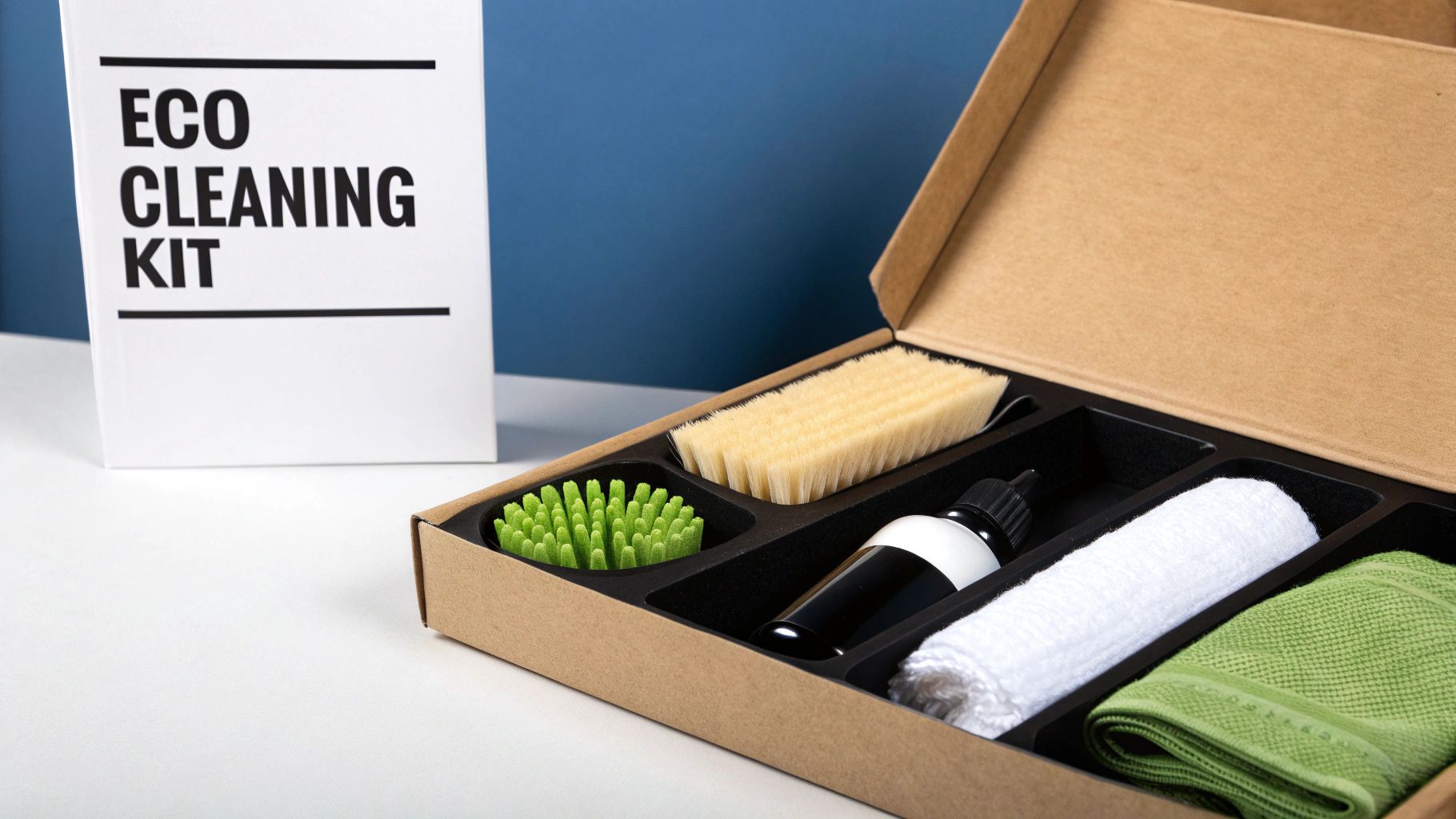
Having the right cleaners on hand is the difference between a quick wipe-down and an all-day scrubbing marathon. A great toolkit isn't about one "magic" bottle; it's about having the right tool for the right job. After all, your gelcoat, vinyl seats, and metal hardware all have different needs.
Stocking your dock box with specialized eco-friendly boat cleaning products is the secret to getting pro-level results yourself. It means you’re ready for any mess while protecting your boat and the water. Let’s put together your perfect green cleaning arsenal.
For Your Hull and Deck
The outside of your boat takes a beating from the sun, salt, and grime. You need a cleaner that can cut through that tough film without stripping your wax or damaging the gelcoat. This is where a pH-balanced, marine-specific soap is a must-have.
A great exterior cleaner like Boat Juice Exterior is built for this exact challenge. Its pH-balanced formula is tough on dirt but gentle on your boat's finish. It lifts away scum and rinses clean, leaving behind a great shine—and no harmful chemicals in the water.
Think of your boat's gelcoat like your skin. Using a harsh, generic cleaner is like washing your hands with abrasive dish soap—it gets them clean but also strips away protective oils. A pH-balanced cleaner works with your gelcoat, not against it.
For Your Vinyl Seats and Interior Surfaces
The inside of your boat is a magnet for sunscreen streaks, spilled drinks, and mildew. You need a cleaner that’s powerful enough to lift stains out of porous vinyl but is still safe for you and your guests. The last thing you want is a cleaner that causes your seats to fade or crack over time.
For this, you need a dedicated interior cleaner with UV protection to fight sun damage. A product like Boat Juice Interior is ideal because it cleans deep and leaves behind a protective coating that helps resist future stains and sun-fading, keeping your upholstery looking new.
Your Specialty Cleaning Crew
Beyond daily dirt, you'll encounter tougher problems. Keeping a few specialized problem-solvers in your kit will save you frustration. You won't use these every weekend, but when you need them, you'll be glad you have them.
Your specialty team should include:
- A Hard Water Spot Remover: Stubborn white spots left by mineral deposits are impossible for regular soap to tackle. An acid-based, marine-safe remover is the only way to get your hull, engine, and glass spotless.
- A Mildew Stain Remover: Mildew is a fact of life in a damp marine environment. A dedicated, bleach-free mildew stain remover is essential for keeping vinyl seats and canvas free from ugly black spots.
- A Protective Sealant: After cleaning, a quick spray of a protective sealant adds a hydrophobic (water-repellent) layer. This is a game-changer, making future cleanups a breeze because water and dirt bead up and roll right off.
With these key products ready, you’re equipped to handle any cleaning job. You’ll have a complete system that delivers a fantastic shine and aligns with your commitment to keeping our waterways clean.
Your Step-by-Step Guide to a Greener Boat Wash
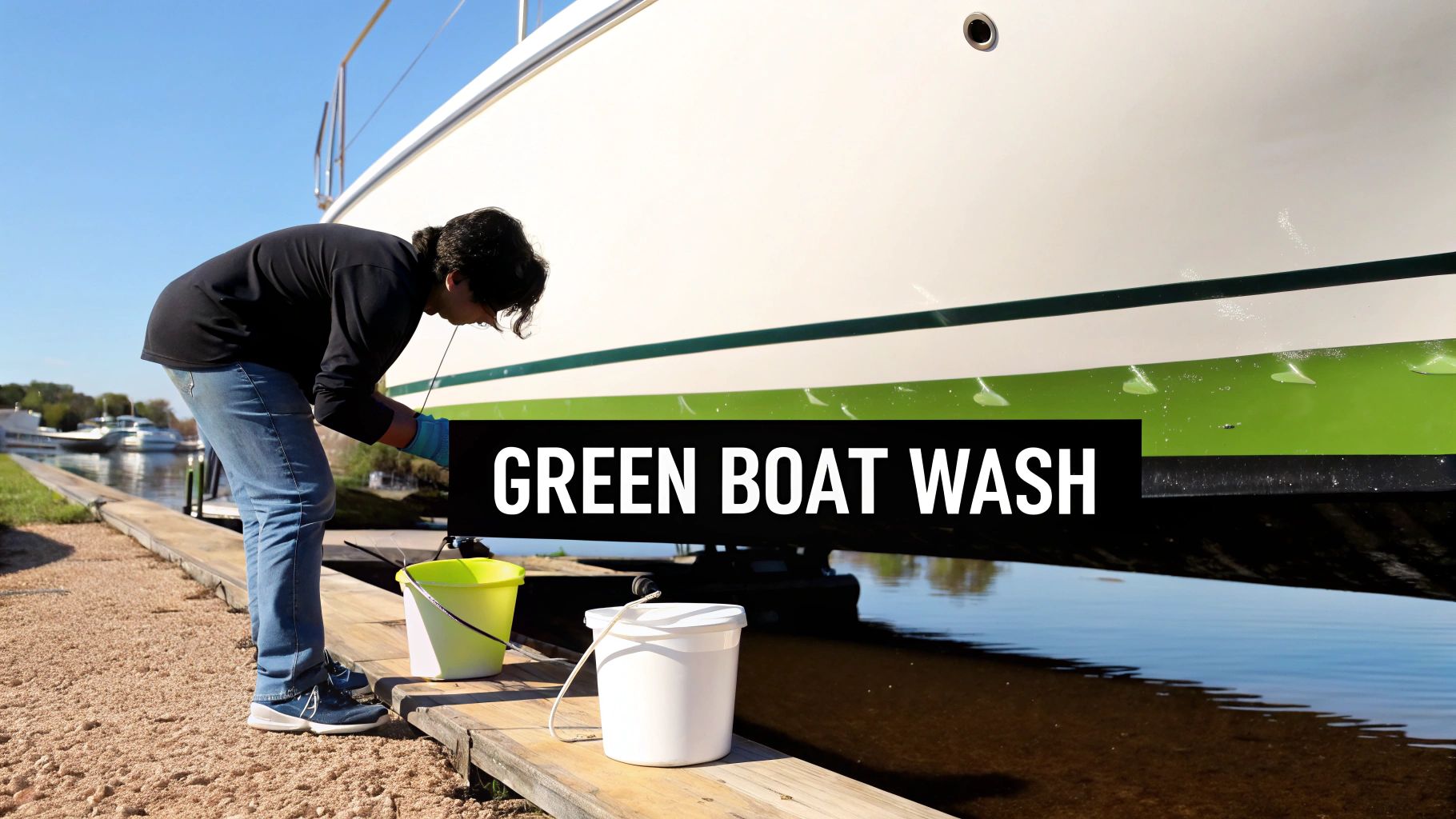
You've got your eco-friendly toolkit ready. Now for the fun part. A great wash is all in the technique. Following the right steps is key to getting a brilliant, streak-free shine without wasting water or scratching your boat’s finish.
Think of this as your hands-on guide to a greener boat wash. We'll walk through everything from the first rinse to the final wipe-down, giving you a repeatable process for a perfect, eco-safe clean every time. Let's get to it.
Step 1: Start with a Smart Pre-Rinse
Before you dunk a mitt in a bucket of soap, give your boat a thorough rinse with fresh water. The goal is to knock off all the loose stuff—surface dirt, salt crystals, and grime. This is a non-negotiable first step for one simple reason: it prevents scratches.
Dragging a sponge loaded with gritty dirt across your gelcoat is like taking sandpaper to it. By rinsing first, you wash away those abrasive particles, making the whole process safer for your boat's finish. Use just enough water to dislodge the debris.
Step 2: Master the Two-Bucket Wash Method
This pro detailing trick makes a world of difference, especially on dark-colored hulls where every swirl mark shows. The two-bucket method is designed to keep your wash water from turning into a bucket of liquid sandpaper.
Here’s the simple breakdown:
- Prep Your Buckets: Fill one bucket with your eco friendly boat cleaning products and water solution (your "Soap Bucket"). Fill the second with plain, clean water (your "Rinse Bucket").
- Wash a Section: Dip your clean microfiber wash mitt into the Soap Bucket and gently wash a small section of your boat, always working from the top down.
- Rinse the Mitt: Before getting more soap, dunk and swirl your dirty mitt in the Rinse Bucket. This removes all the grit and grime you just picked up.
- Reload with Soap: With a clean mitt, go back to the Soap Bucket for a fresh load of suds.
- Repeat: Continue this rhythm—wash, rinse the mitt, reload with soap—until the boat is clean.
This simple technique stops you from rubbing dirt from one part of the boat all over another. It's the #1 way to prevent the fine scratches and swirl marks that dull your finish over time.
Step 3: Tackle Tough Spots the Right Way
You'll always find stubborn spots that regular soap won't touch. This is where your specialty cleaners come in, but the key is to be strategic. Spot-treat only the areas that need extra help.
For frustrating white water spots on your hull and engine, use a targeted product. A cleaner like Boat Juice Extreme Water Spot Remover uses a mild, safer acid-based formula to dissolve the mineral deposits soap can’t handle. Just spray it on, let it sit for a moment, and wipe it off.
The same idea applies to mildew. Hit it directly with a dedicated, bleach-free remover instead of a harsh, all-purpose cleaner that could damage your vinyl. This targeted approach is more effective and much gentler on your boat and the water.
Pro Tip: Always use high-quality microfiber towels. Ditch old cotton rags. Microfiber is engineered to trap dirt particles deep within its fibers, lifting them away from the surface instead of just pushing them around. This dramatically reduces the risk of scratching and leaves a better, lint-free shine.
The demand for cleaners that are both effective and safe is exploding. The market for eco-friendly boat hull cleaners is expected to hit $500 million in 2025 and climb to $866 million by 2033. This growth is driven by boat owners like you who demand better, biodegradable options.
After tackling tough spots, give the entire boat a final, thorough rinse. Now you have a repeatable, eco-friendly process for a perfect wash. The final step is drying it properly to prevent water spots from forming all over again.
Smart Runoff Management and Disposal Practices
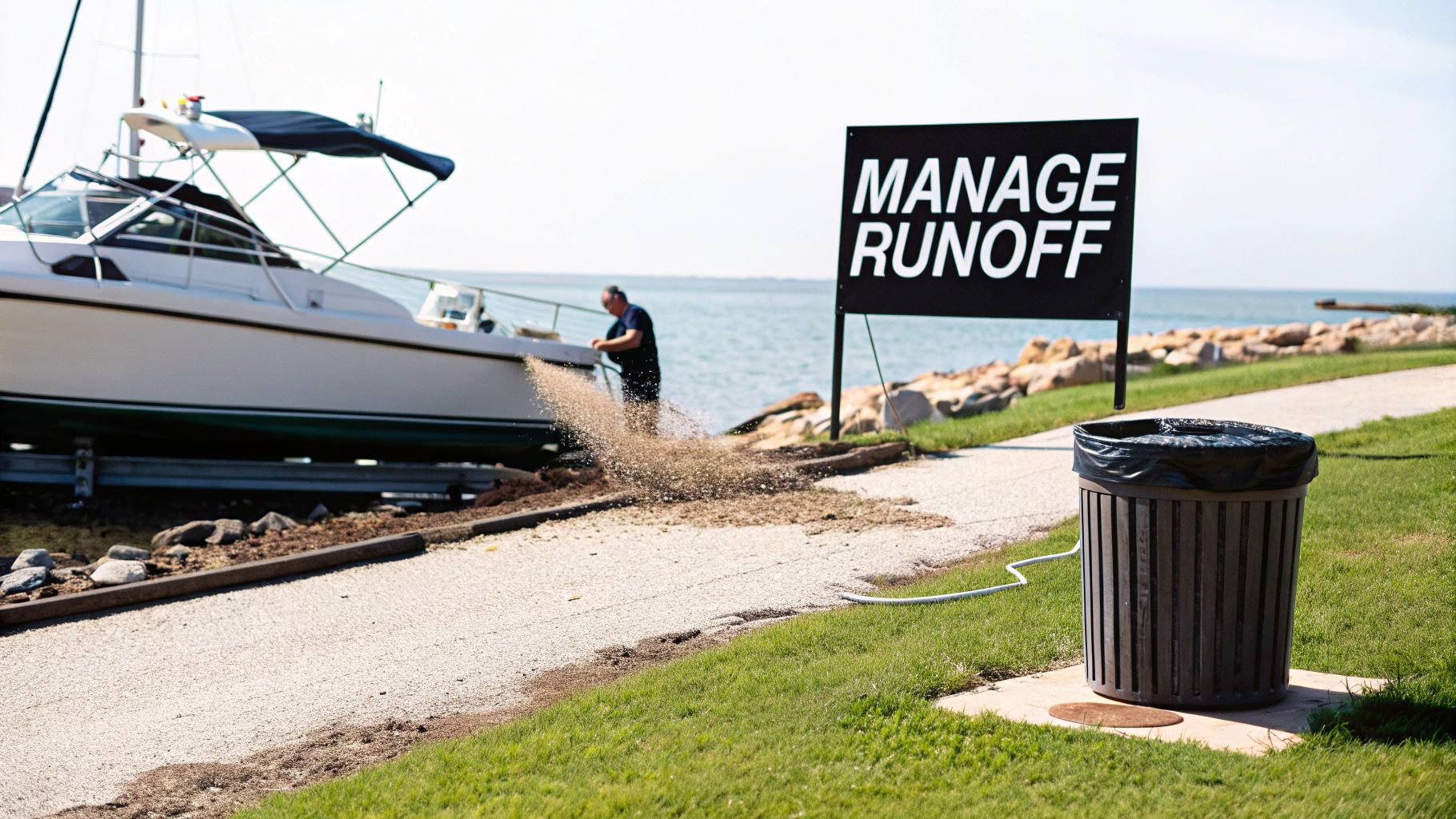
Your role as a steward of the water doesn’t end when the last bit of grime is wiped away. What happens after the cleaning is just as critical. Even when using the best eco friendly boat cleaning products, managing wastewater is a crucial step in protecting our waterways.
The goal is to keep as much cleaning residue—even the biodegradable kind—out of the water as possible. This gives the ingredients time to break down naturally on land instead of being dumped into a sensitive aquatic ecosystem. A few small habits here complete your role as a guardian of the lakes and oceans you love.
Choosing Your Wash Location Wisely
Where you wash your boat makes a massive difference. If you're washing it on a trailer, pick a porous surface like grass or gravel, well away from any storm drains or the water's edge.
Why does this work so well? The ground acts as a natural filter.
- Grass and Soil: The root systems and soil microorganisms are fantastic at trapping contaminants, giving them a chance to break down the biodegradable soap.
- Gravel: A gravel pad allows water to seep slowly into the ground below, filtering it long before it can run off into a nearby stream or lake.
The absolute worst place to wash is a paved driveway that slopes directly toward a storm drain. Those drains are often a direct pipeline to local waterways.
Using Marina and Wash-Down Facilities
Many marinas now offer designated wash-down stations, and using them is one of the smartest moves you can make. These facilities are specifically designed to capture and treat wastewater before it's released.
These facilities are equipped with special drainage systems that collect all the runoff. The water is then filtered to remove contaminants, ensuring that only clean water is returned to the environment. It’s the most surefire way to prevent any cleaning residue from reaching the water.
This is especially important if you’re doing a more intensive cleaning, like pressure washing. You can learn more about how to safely and effectively pressure wash your boat in our detailed guide.
Disposing of Your Cleaning Materials
That responsible mindset should extend to your tools, too. Old sponges, dirty towels, and empty product bottles all need to be handled with care.
- Towels and Sponges: Always rinse your microfiber towels and sponges in a sink or utility tub—never in the lake or ocean. Let them air dry completely before storing them to prevent mildew.
- Empty Bottles: Most plastic bottles from cleaners like Boat Juice are recyclable. Just give them a quick rinse and check your local recycling guidelines to dispose of them properly.
By making smart runoff management part of your routine, you complete the eco-friendly cycle. It ensures your efforts have the maximum positive impact, helping to keep your favorite waters pristine for years to come.
A Year-Round Routine to Keep Your Boat Gleaming
A boat that turns heads isn't the result of a single, back-breaking cleaning session. It comes from a smart, consistent routine that works with the seasons. Breaking down your cleaning into a simple year-round schedule keeps your boat looking its best and ready for the water.
This isn’t just about pride; it’s a sound financial move. The market for marine cleaning products topped USD 100.1 billion in 2023 and is expected to double by 2030. Why the boom? Boaters are realizing that simple maintenance, like a clean hull, can boost fuel efficiency by 20-30%. You can dive deeper into these trends in this recent industry analysis.
Spring Prep: The Big Reset
After a long winter's nap, your boat needs a top-to-bottom refresh. This is your most intensive cleaning of the year, designed to blast away the grime and mildew that settled in during storage. Think of it as hitting the reset button.
Your spring checklist should look like this:
- The Full Exterior Wash: Grab your two buckets and give the hull, deck, and topsides a thorough cleaning to get rid of storage dust.
- A Deep Dive Inside: Clean the vinyl seats, carpets, and empty all storage compartments. This is the prime time to tackle any mildew spots that might have cropped up.
- Inspect and Protect: Once everything is sparkling, apply a fresh coat of a protective sealant. This will make your summer cleanups a breeze.
Summer Maintenance: The "Wipe and Go"
Summer is for enjoying the water, not endless scrubbing. If you nailed your spring deep clean, summer maintenance is all about quick wipe-downs after each trip. The idea is to stop new messes from setting in, which only takes a few minutes as you’re packing up for the day.
Keep a good interior and exterior spray cleaner on board. A quick spray and a wipe are all it takes to handle fresh water spots, sunscreen smudges, and spilled drinks before the sun bakes them on.
Pro Tip: Applying a ceramic protectant like Boat Juice Protection is a game-changer for summer upkeep. It creates an incredibly slick, water-repellent barrier on your boat's surfaces. Water and dirt just bead up and roll away, cutting your end-of-day wipe-down time in half.
Fall and Winterization: Tucking It In Clean
As the season winds down, one last thorough cleaning is crucial before storage. Tucking your boat away clean prevents dirt and moisture from causing real damage over the winter, like deep stains, mildew blooms, and gelcoat deterioration.
Your winterization cleaning should mirror your spring deep clean. Wash the exterior, detail the interior, and—this is key—make sure every surface is bone dry before you put the cover on. This ensures that when you pull the cover off next spring, your boat will be in the same great shape you left it.
Got Questions About Eco-Friendly Boat Cleaning? We've Got Answers.
Switching up your cleaning routine is a great move, but it’s normal to have questions. You want to know you’re making the right call for your boat and the environment. Let's tackle some of the most common concerns so you can feel good about going green.
Are eco-friendly boat cleaners as good as the traditional stuff?
This is the big question on every boat owner’s mind. The answer is a confident yes. Modern eco-friendly boat cleaning products have evolved. The days of "green" meaning weak are long gone. Today's formulas use powerful, plant-derived ingredients to cut through grime just as well as their harsh chemical cousins.
The best products are engineered specifically for the marine environment. You absolutely do not have to give up a spotless shine to protect the waterways you love.
Can I just use my "green" household cleaner on the boat?
It’s tempting, but it's not a great idea. While those cleaners are better than conventional ones, they aren't built for the unique challenges your boat faces. They can't handle stubborn salt spray, baked-on hard water spots, or the specific mildew that loves to grow on marine vinyl.
More importantly, they aren't designed or tested for direct release into aquatic ecosystems. To get the best results for your boat and truly protect the water, always stick with a cleaner specifically made for marine use.
A truly eco-friendly marine product isn't shy about what's inside. It won't hide behind vague buzzwords like "natural." Good brands are proud to tell you what's in their formula—things like plant-based surfactants and biodegradable agents—and explain why it's a smarter choice for your boat and the environment.
How can I tell if a product is really eco-friendly?
This is where you need to be a savvy shopper and look beyond the label. "Greenwashing" is when brands use fuzzy language and nature-themed pictures to seem more environmentally conscious than they are.
To find a genuinely green product, just flip the bottle over and read the ingredients.
- Look for: Clear terms like "plant-based surfactants," "phosphate-free," and "readily biodegradable."
- Be wary of: Vague buzzwords like "earth-friendly" that don't have specific ingredients to back them up.
Choosing the right products and building a smart, sustainable routine is what responsible boating is all about. You get a pristine boat and the satisfaction of knowing you’re protecting the very water you live to explore.
Ready to build your perfect eco-friendly cleaning kit? Boat Juice makes it simple with powerful, USA-made formulas designed to make your boat shine without harming the environment. From our pH-balanced Exterior wash to our protective Interior detailer, we've got you covered.
Your next step is to choose the right products for your boat. Explore the complete Boat Juice collection and start your greener cleaning routine today!