


· By Boat Juice Team
A DIY Guide to Cleaning Your Boat Interior Like a Pro
A great day on the water rarely ends with a clean boat. But before you can get that sparkling interior, you need a strategy. The real key to a brilliant result isn't just aggressive scrubbing; it's a smart plan that makes the whole process faster and way more effective.
Taking just a few minutes to map out your attack is the difference between a frustrating chore and a satisfying project.
Your Pre-Cleaning Game Plan
Before grabbing a single spray bottle, let's pause. A successful interior cleaning session begins with a solid plan. This is all about working smarter, not harder, so you have a clean slate to work with before you get down to the details.
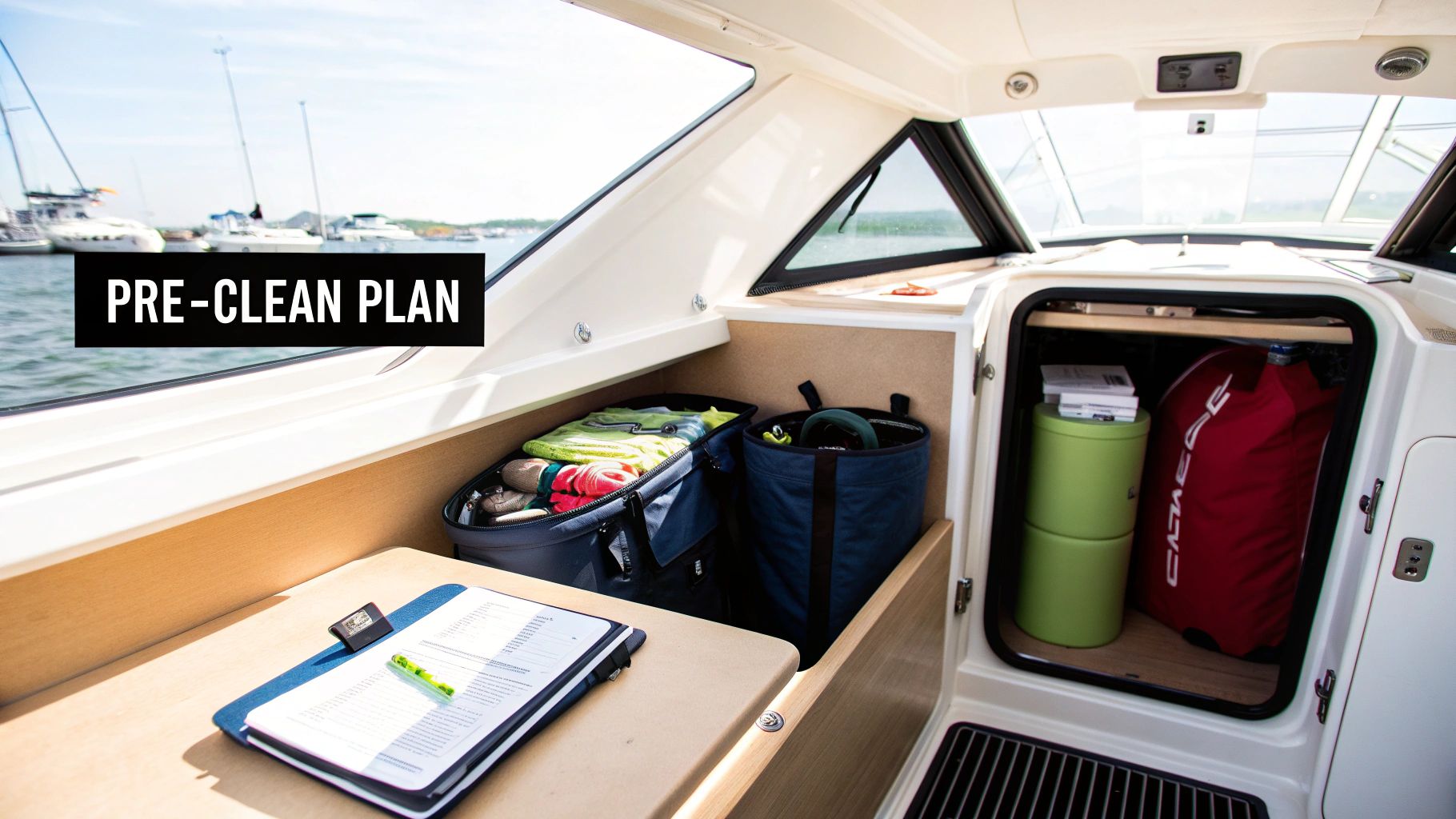
Step 1: Empty Everything Out
First things first: get everything out that isn't bolted down. Life jackets, towels, fishing gear, coolers, stray flip-flops—it all has to go. This isn't just about making space to work. When you clean around clutter, you miss spots, and those hidden nooks become breeding grounds for mildew.
Why does this matter? By creating a completely empty canvas, you guarantee you can reach every single surface, preventing moisture from getting trapped under gear and starting a mildew problem. This is the only way to ensure a truly deep clean.
Step 2: Assess Every Surface
With the boat cleared out, it's time to play detective. Do a quick walkthrough to take stock of what you're up against. Make a note of high-traffic areas that will need extra attention, like the helm, cabin steps, and your favorite lounging spot.
This is your chance to spot minor issues before they become major headaches.
- Hunt for mildew: Check for those tell-tale little black or gray specks in corners, along seam stitching, and under cushions.
- Know your materials: Identify all the different surfaces you'll be dealing with—vinyl, carpet, glass, wood, canvas. Each one needs a different approach.
- Spot specific stains: Is that a coffee ring on the carpet? A greasy sunscreen smudge on the vinyl? Knowing what you're fighting helps you grab the right tools.
Proper maintenance is a huge deal, especially with the global boat market projected to hit $87.77 billion by 2033. Yet, while many boaters are good about post-trip cleanups, a surprising number admit to neglecting the interior. That neglect is costly—it can cause vinyl to degrade up to 25% faster each season. You can learn more about these boating industry maintenance trends.
Step 3: Pick the Right Day
Finally, check the weather forecast. Trying to deep clean your boat on a blistering hot, sunny day is a recipe for frustration. Why? Cleaning products will evaporate almost instantly, leaving streaks and residue behind, especially on your vinyl and glass.
The perfect day for this job is overcast, mild, and not too windy. This gives your cleaners enough time to work their magic before drying out. It also means you can comfortably open all the hatches for maximum airflow—which is critical for getting everything properly dry later.
By taking these few simple steps before you start, you’ve turned a potential mess into an organized project, setting yourself up for an efficient and satisfying clean.
Gathering Your Essential Boat Cleaning Arsenal
Anyone who's spent time on the water knows that having the right tools can make or break a day, and the same goes for cleaning. Trying to tackle boat grime with household supplies is frustrating. Assembling a dedicated cleaning kit transforms a dreaded chore into a satisfying project because you're protecting your investment.
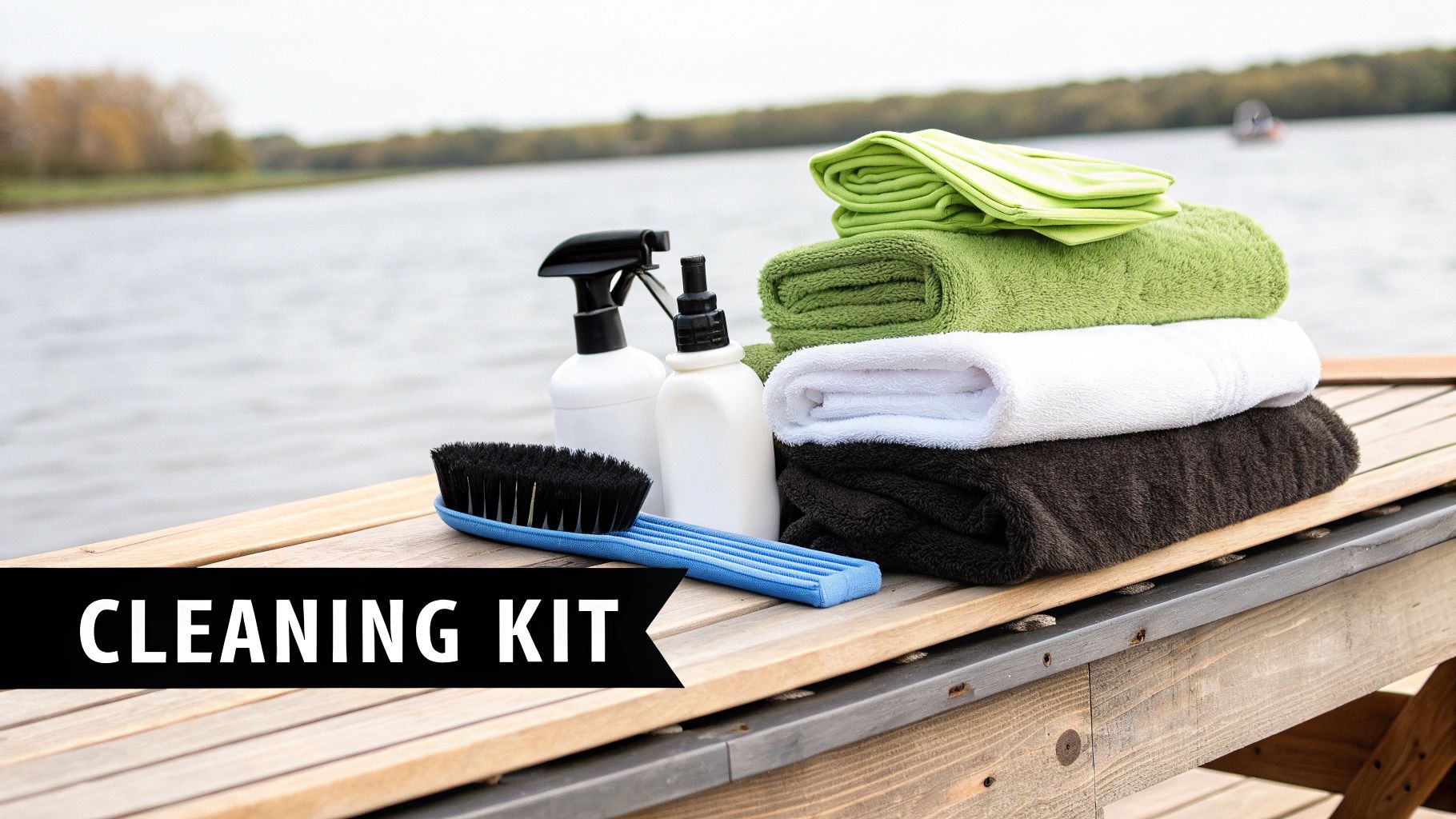
Before grabbing a spray bottle, let's talk about microfiber towels. Using an old bath towel can leave behind more lint and fuzz than you started with. A smart strategy is to keep a few different types on hand, even color-coded, so you don’t accidentally wipe your windows with the same towel you used on a greasy hinge.
Here’s a simple system that works:
- Plush, All-Purpose Towels: Your go-to for wiping down vinyl seats, dashboards, and side panels.
- Waffle-Weave Glass Towels: Specifically designed for a streak-free shine on glass and mirrors.
- Older "Utility" Towels: Keep a separate stack for the truly dirty jobs—soaking up spills or wiping down bilges.
Use Brushes for Agitation
For dirt that’s settled into textured vinyl or ground into the carpet, a simple spray-and-wipe won’t cut it. You need something to gently agitate the surface and lift the dirt out. This is where a couple of good brushes are worth their weight in gold.
A soft-bristle brush is perfect for working cleaner into vinyl upholstery without being too aggressive. For tougher jobs like carpets or non-skid flooring, step it up to a medium-stiff bristle brush to get deep into the fibers. The brush isn't meant to scrub the dirt away with brute force; its job is to work the cleaning solution into the material, letting the product's chemistry do the heavy lifting.
Your Go-To Cleaning Products
It’s tempting to grab an all-purpose cleaner from under the kitchen sink, but please don't. Household cleaners often contain harsh chemicals like ammonia or bleach that can strip the UV protectants right off your vinyl, causing it to crack and fade. Investing in a few marine-specific products is one of the smartest things you can do for your boat's longevity.
Here’s a quick checklist of the essentials you'll want to have on hand.
Your Boat Interior Cleaning Toolkit
| Tool or Product | Primary Use | Why It Works |
|---|---|---|
| Microfiber Towels (3 Sets) | General wiping, glass, and dirty jobs | Different weaves are designed for specific tasks, preventing streaks and lint. |
| Soft-Bristle Brush | Gently scrubbing vinyl, upholstery | Lifts dirt from textures without scratching or damaging the material. |
| Medium-Stiff Brush | Scrubbing carpets and non-skid flooring | The stiff bristles get deep into fibers to dislodge ground-in dirt. |
| pH-Balanced Interior Cleaner | All-purpose cleaning for vinyl, plastic, carpet | A pH-balanced formula safely cleans without stripping protective coatings. |
| Dedicated Mildew Remover | Targeting and eliminating mildew stains | Specifically formulated to kill mildew spores without harming sensitive marine fabrics. |
| Ammonia-Free Glass Cleaner | Cleaning windows and electronic screens | Ammonia can damage window tint and anti-glare coatings over time. |
Your go-to product for most interior jobs should be a great pH-balanced interior cleaner. A product like Boat Juice Interior Cleaner is a fantastic choice because it’s safe for virtually every surface inside your boat—vinyl, plastic, foam flooring, and carpet. It cuts right through sunscreen residue and food spills without leaving a greasy, slippery feeling behind.
For a deeper dive into what makes certain products stand out, check out our guide on the best boat cleaning products for a full breakdown.
Your Surface-by-Surface Cleaning Method
With your boat prepped and your cleaning arsenal ready, it's time to get down to business. We’re going to hit every major surface inside your boat, one by one, with the right technique for each material. This isn't just aimless scrubbing; it's about using a proven process to get that pro-level look safely and efficiently.
Tackling Your Vinyl Seats and Trim
Your boat's vinyl upholstery is the star of the show, but it takes a beating from sun, sunscreen, and spills. Your goal is to get it truly clean without stripping away its protective layers or drying it out, which is what leads to cracking and fading.
The biggest mistake boaters make is spraying cleaner directly onto hot vinyl. On a sunny day, that cleaner evaporates almost instantly, leaving behind a sticky film. Instead, always spray your interior cleaner directly onto a clean microfiber towel, not the surface itself. This gives you total control and ensures the product works on the grime.
Wipe down the vinyl in manageable sections. For areas with textured grain or ground-in dirt, grab your soft-bristle brush. After applying cleaner with your towel, lightly agitate the spot in a circular motion. You'll see the grime lift right out. Follow up with a separate, clean microfiber to wipe away any residue.
This method results in a deep clean that leaves your seats feeling fresh and non-greasy. A quality pH-balanced formula like Boat Juice Interior Cleaner is perfect for this job because it’s specifically designed to break down oils and sunscreen without any harsh chemicals.
Restoring Your Boat Carpet and Flooring
Boat carpet is a magnet for sand, dirt, and moisture, making it a perfect breeding ground for musty smells. The secret to cleaning it right is to lift the dirt out without oversaturating the carpet, which is a fast track to mildew problems.
Always start with a thorough vacuuming, using a brush attachment to dig into corners. For a general clean, lightly mist your interior cleaner over a section of carpet—don't soak it! Let the cleaner dwell for about a minute, then use your medium-stiff brush to agitate the area, working from the outside of a stain inward to keep from spreading it. To finish, blot the area with a clean, dry microfiber towel to soak up both the cleaner and the grime.
If you’re dealing with a specific spill:
- Blot, don't rub: For a fresh spill, immediately blot with a dry towel to absorb as much as possible.
- Target the stain: For a set-in stain, apply your cleaner directly to the spot.
- Agitate and lift: Work the cleaner in with your brush, then use a clean, damp towel to blot the area. This helps "rinse" the spot without flooding the carpet padding.
Achieving Crystal-Clear Glass and Gauges
There’s nothing more frustrating than streaky glass. The problem is, most household glass cleaners contain ammonia, a chemical that can damage your window tint and electronic screens over time. You have to use an ammonia-free glass cleaner.
The process is simple if you follow these steps:
- Grab two towels. You'll have one for cleaning ("wet") and one for drying and buffing ("dry").
- Spray the towel, not the glass. Just like with the vinyl, spray the glass cleaner onto your first microfiber to prevent drips.
- Wipe, then buff. Clean the glass with the wet towel to break up fingerprints and water spots. Immediately follow up with your clean, dry towel to buff the surface to a perfect, invisible finish.
This two-towel method is foolproof. It works every time, whether you're cleaning the windshield, cabin windows, or the delicate screens on your fish finder and GPS units.
How to Conquer Mold and Mildew for Good
If you’ve owned a boat, you've probably faced the ultimate enemy of a pristine interior: mildew. Those nasty black specks aren't just ugly; they can permanently damage your vinyl and create that musty smell. Winning this battle is about understanding why mildew shows up and creating an environment where it can't survive.
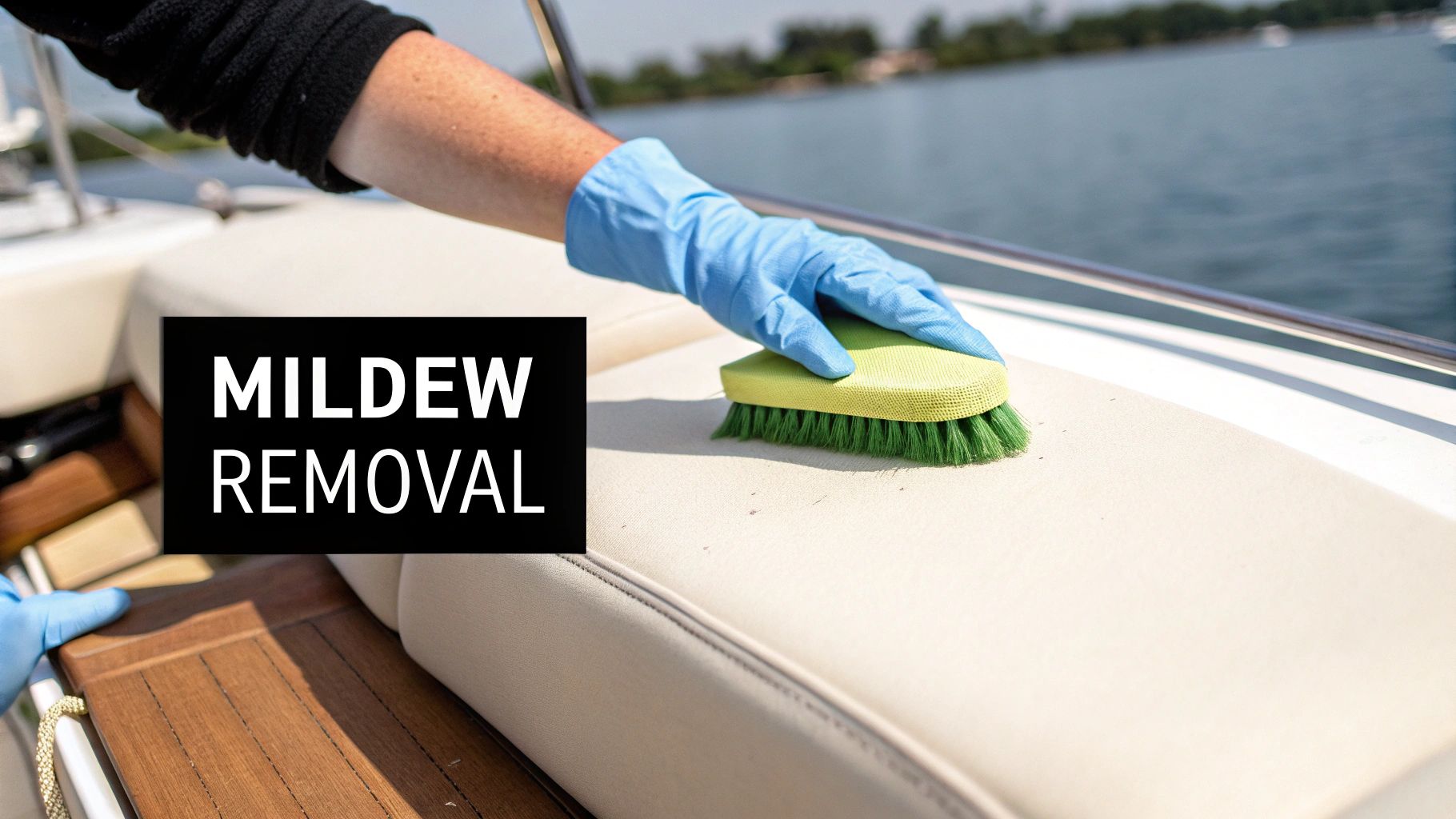
Mildew is a fungus that needs three things to thrive: moisture, warmth, and stagnant air. Unfortunately, a boat cabin closed up after a hot day is basically a five-star resort for mildew spores. This is why proper ventilation is your most powerful weapon.
The Right Way to Bust Those Stains
When you spot those black dots, your gut reaction might be to grab bleach. This is a critical mistake. Bleach is too harsh for marine upholstery; it can destroy stitching, strip color, and make the vinyl brittle, leading to cracks.
You need a product specifically formulated to kill mildew without collateral damage. A dedicated product like Boat Juice Mildew Stain Remover is your best weapon because it's engineered to break down the fungus without harming your boat's surfaces. Before you start, open every hatch and port to get fresh air moving.
Here’s your action plan:
- Spray It On: Hit the mildew spots directly with the remover, making sure the area is well-covered.
- Let It Work: Give the product a few minutes to do its thing. You’ll see the stains start to disappear.
- Get in There: For stubborn stains, use a soft-bristle brush to gently agitate the area.
- Wipe It Clean: Grab a clean, damp microfiber towel and wipe away the cleaner and dissolved mildew.
This is a massive issue for boaters everywhere. Marine research shows that untreated mildew on vinyl can spread 30% faster in humid lake environments, making an effective remover absolutely essential.
Prevention Is Your Best Defense
Getting rid of mildew is satisfying, but making sure it never comes back is the real win. Preventing mildew is all about controlling moisture and promoting airflow. After a day out, take five minutes to wipe down wet surfaces, especially where people sat in wet swimsuits.
The single most effective thing you can do is create airflow. When your boat is in storage or under a cover, prop open seat cushions and storage lockers. This simple trick keeps air circulating and stops moist, stagnant pockets from forming. For humid climates, consider a moisture absorber like Dri-Z-Air to pull excess humidity from the air.
For a deeper dive on tackling persistent issues, this guide to black mold identification and remediation can be a helpful resource. If you're looking for the right product, our breakdown of the best mildew remover for boats can point you in the right direction.
The Final Touch: Applying a Layer of Protection
You’ve put in the work. The vinyl is sparkling, and there’s not a hint of mildew in sight. Now for the step that makes all that effort last: applying a protectant. Skipping this is like washing your car and driving off without waxing it—you're leaving the surfaces exposed.
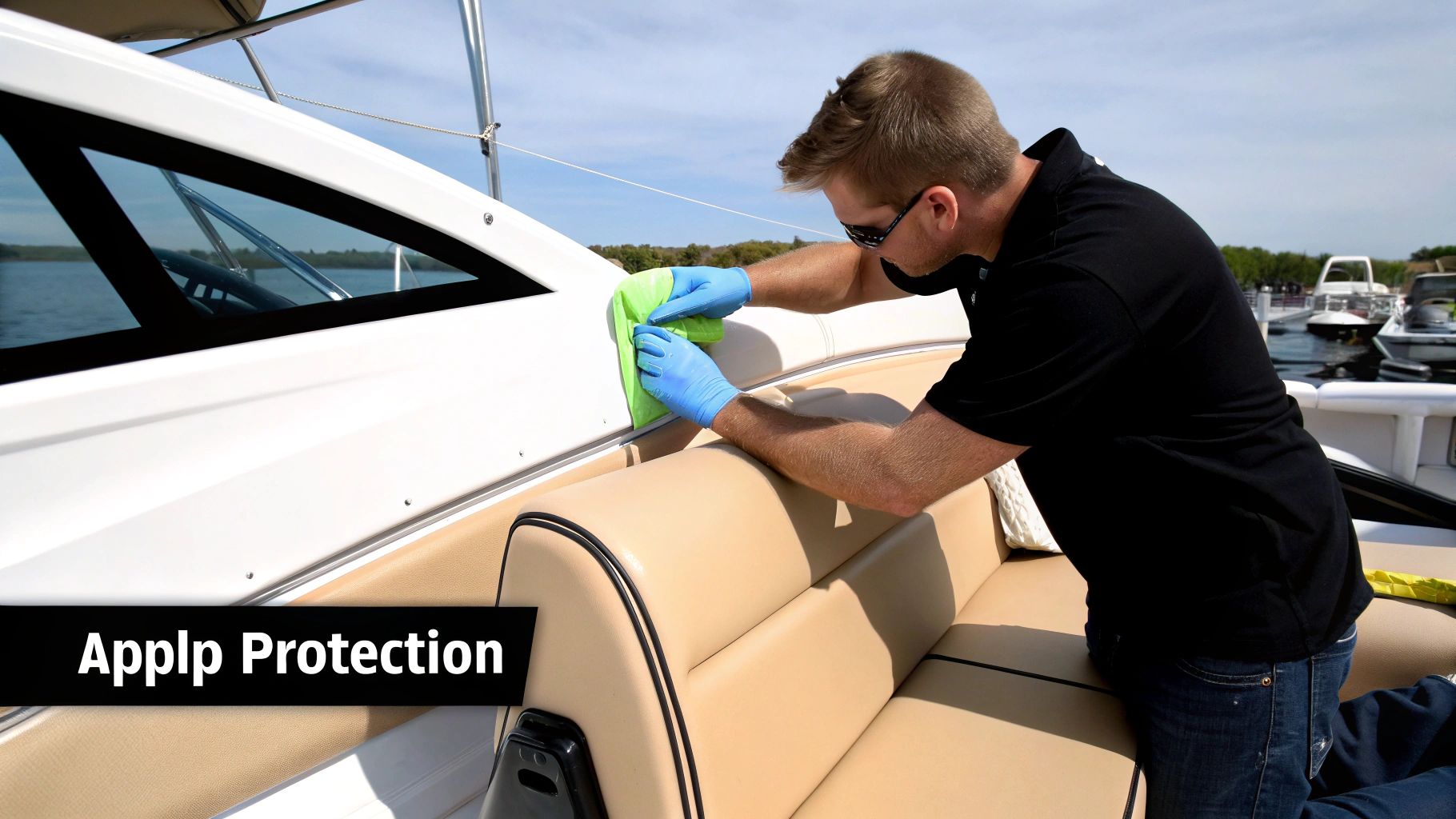
Think of this final step as a defensive shield. A good protectant is sunscreen for your boat's vinyl, dashboard, and plastic trim. It guards these materials against the sun's brutal UV rays—the number one cause of fading and cracking. It also adds a slick layer that repels dirt and water, making your next cleanup significantly easier. For a detailed guide on this crucial surface, check out our article on how to clean your boat upholstery properly.
How to Apply Protectant for a Flawless Finish
Applying a protectant isn’t complicated, but technique matters for even, streak-free results. First, make sure every surface is 100% clean and completely dry. Applying a protectant over dirt just seals the grime in.
Here’s the best way to do it:
- Spray the product onto your applicator, not the boat. Grab a clean microfiber applicator and mist the protectant onto it. This prevents overspray from landing on your glass or floors.
- Wipe it on using a crosshatch pattern. Work in manageable sections. First, wipe up and down, then immediately go back over the same area side-to-side to ensure even coverage.
- Buff away any excess. With a separate, clean, dry microfiber towel, gently buff the surface to remove extra product and leave a rich, clean finish without a greasy feel.
Not all protectants are the same. You need something with serious UV blockers that doesn't leave a greasy, slippery residue. A marine-specific formula like Boat Juice Protection is your best bet because it was born for this environment. It delivers critical UV defense and creates a water-repellent barrier, all while drying to a clean, satin finish.
Your Top Boat Interior Cleaning Questions, Answered
Even with the best plan, you might run into a few questions. Don't worry, most boat owners hit the same snags. Let's tackle some of the most common ones so you can finish the job with total confidence.
How Often Should I Really Deep Clean My Boat's Interior?
The honest answer is: it depends on how you use your boat. A great rule of thumb is to give it a full, top-to-bottom deep clean twice a year: once at the start of the season as part of your spring prep, and again at the end before winterization.
However, if you use your boat heavily every weekend, a mid-season deep clean is a good idea to keep grime from building up. The real game-changer is a quick wipe-down after every trip. Spending just five minutes with an interior cleaner and a microfiber prevents sunscreen and dirt from baking in, making your big cleaning days so much easier.
Can I Just Use My Kitchen Cleaner on the Vinyl Seats?
Please, don't do it. It’s tempting to grab that all-purpose spray, but it’s one of the quickest ways to ruin your upholstery. Most household cleaners contain harsh chemicals like bleach or ammonia that destroy marine-grade vinyl by stripping its protective topcoat and drying it out. This leads to the faded, cracked seats you see on neglected boats.
Always use a pH-balanced cleaner made specifically for marine interiors. These formulas are designed to break down things like sunscreen and body oils without damaging the materials they're meant to clean.
What's the Secret to Getting Rid of That Musty "Boat Smell"?
That stubborn "boat funk" is almost always caused by hidden moisture that's become a breeding ground for mildew. To kill the odor, you have to find and eliminate the source.
Check these usual suspects for dampness:
- Under seat cushions
- Inside storage lockers (especially where wet life jackets are kept)
- The bilge
- Any forgotten damp towels or gear
Once you’ve found and dried out the source, ventilation is your best friend. After a good cleaning, prop open every hatch, door, and cushion to let things air out. Running a small fan or a boat-specific dehumidifier can work wonders.
Help! My Boat Carpet Has a Nasty Stain. What Now?
Carpet stains can be intimidating, but a methodical approach usually works. Avoid frantic scrubbing—that just frays the carpet fibers and can make the stain permanent. First, blot the stain with a clean, dry microfiber to lift as much of the spill as possible.
Next, spray a marine interior cleaner directly on the spot and let it sit for a minute to break down the stain. Then, use a medium-stiff brush to gently agitate the area, working from the outside-in. Finally, take a clean, damp towel and blot repeatedly to pull both the cleaner and the dissolved stain out of the carpet.
A clean and protected interior doesn't just look good—it makes every moment on the water that much better. Your next step is to put this plan into action. Start by gathering your supplies and scheduling a mild, overcast day for the project. With the right approach, you can keep your boat looking, feeling, and smelling amazing all season long.
Ready to make your interior spotless? Check out the full line of interior care products at https://shopboatjuice.com and get the pro-level results your boat deserves.