


· By Boat Juice Team
How to Clean Boat Upholstery: A DIY Guide
Keeping your boat’s upholstery clean is about more than just making it look good. It's about protecting your investment from the damage that sun, salt, and moisture can cause. A little bit of consistent cleaning is the secret to avoiding faded vinyl, split seams, and the nasty mildew that seems to pop up out of nowhere.
Why Your Upholstery Needs Regular Attention
Think about it—your boat’s interior is constantly battling the elements. Every time you're out on the water, your vinyl seats are taking a beating from intense sunlight, salt spray, and humidity. Ignoring this leads directly to a costly restoration project down the road.
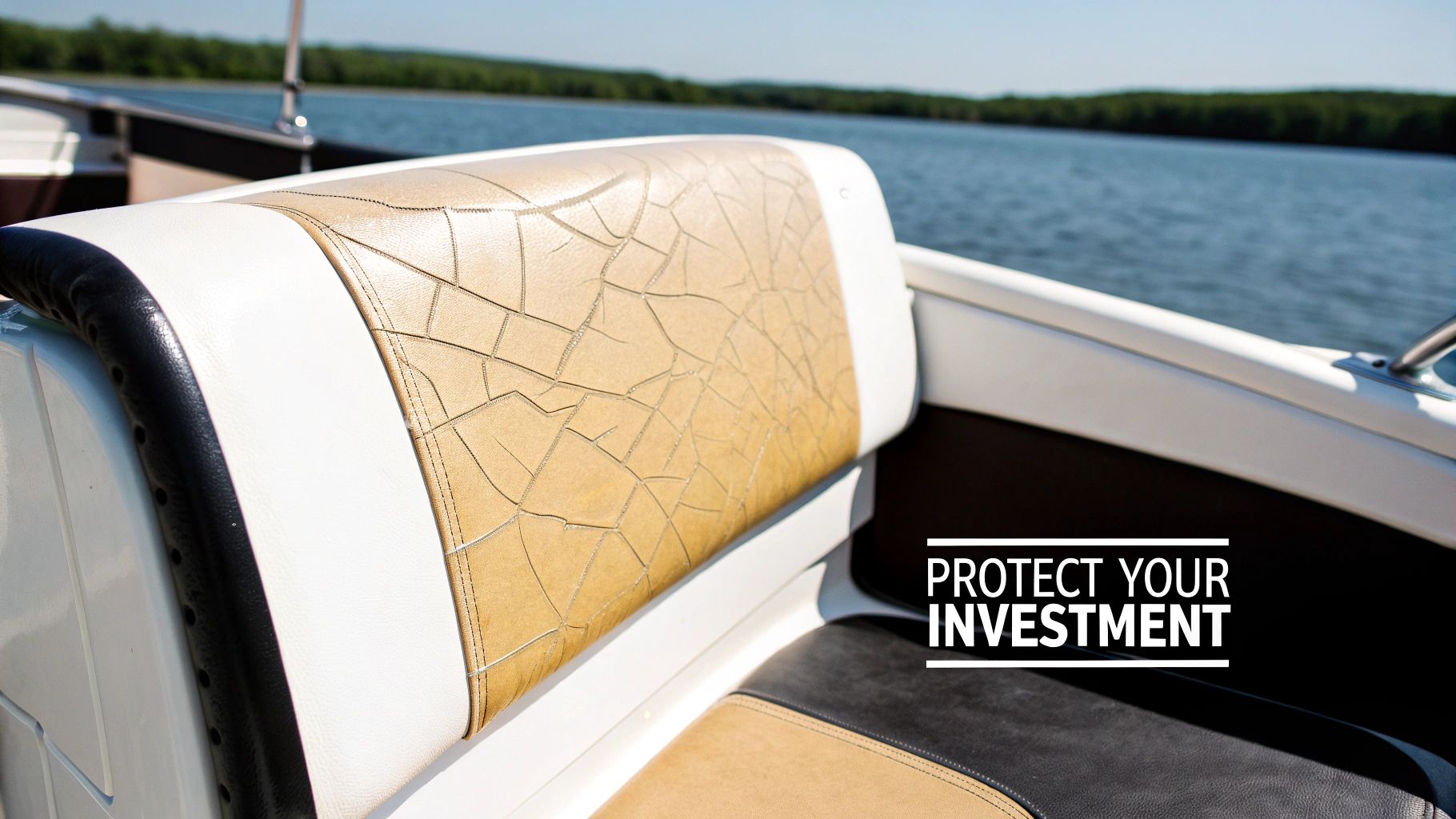
The Unseen Damage From Sun and Salt
The sun's UV rays are brutal. They slowly break down the essential oils that keep your marine vinyl soft and pliable, causing it to become brittle and crack. The sun's reflection off the water accelerates this process, making it even more damaging than on your car’s dashboard.
Then you have saltwater. As salt crystals dry on your seats, they act like tiny magnifying glasses, intensifying the sun’s rays and "baking" the vinyl. Salt also pulls moisture out of the material, speeding up the drying and cracking process even further.
The Real Cost of Putting It Off
We've all been there—tired after a long day on the water, thinking, "I'll clean it later." But that procrastination can hit your wallet hard. The marine environment is a perfect breeding ground for mold and mildew, which can permanently stain your upholstery and weaken the stitching if not dealt with quickly.
The numbers don't lie. Industry data shows that constant exposure to sun and salt can slash the lifespan of marine vinyl by a shocking 30–60% if you aren't regularly cleaning and protecting it. On the flip side, boat owners who stick to a simple cleaning routine reduce the need for premature upholstery replacement by an estimated 25–40%. That’s a savings of thousands of dollars over the life of your boat. You can read more about boat cleaner market trends and see just how much proper care matters across the industry.
Key Takeaway: Think of cleaning as preventative maintenance, not just a chore. A few minutes wiping down seats after each trip protects the material, prevents expensive repairs, and preserves your boat's resale value.
Spending a few minutes cleaning after each trip pays off big time. It keeps your boat looking sharp and ready for the next adventure without a massive deep-cleaning project hanging over your head.
Gathering Your Boat Cleaning Arsenal
Before you start scrubbing, let's get you set up for success. Having the right tools makes the difference between a frustrating chore and a satisfying project. Using the wrong products can cause more damage than the original stain.
Let’s get your toolkit sorted so you can achieve professional results without harming your upholstery.
The Essentials for Gentle Yet Effective Cleaning
You don’t need a giant bucket overflowing with random products. A few carefully chosen items will tackle almost anything the boating season throws at you.
-
Soft-Bristle Brushes: Your boat's vinyl has a grain designed to look and feel like leather. A soft-bristle brush gets into those crevices to lift out dirt, sunscreen, and grime without scratching the surface. Never use a stiff brush, as it creates tiny abrasions that dull the finish and attract more dirt.
-
High-Quality Microfiber Towels: Retire those old cotton bath towels. Microfiber towels are incredibly absorbent and designed to trap dirt within their fibers, meaning you’re actually lifting the grime, not just smearing it around. Have several clean ones ready: some for cleaning and a few perfectly dry ones for the final wipe-down.
Choosing the Right Marine Cleaner
This is where many boat owners make a crucial mistake. Household cleaners with bleach, ammonia, or harsh degreasers are the enemy of your vinyl. They strip away the plasticizers that keep the material soft, leading directly to premature cracking and fading.
You need a cleaner formulated specifically for marine upholstery. Look for a pH-neutral formula, which means it's gentle enough for regular use but strong enough to break down sunscreen and grime. This is why a product like Boat Juice Interior is so effective; it safely lifts stains without harsh chemicals that dry out stitching or ruin your upholstery's protective topcoat.
A marine-specific, pH-neutral cleaner isn't just a suggestion—it's the single most important product in your toolkit. It protects the integrity of your seats while getting them spotlessly clean.
Your Upholstery Cleaning Toolkit
This table covers the non-negotiables for your boat cleaning kit. Each item plays a specific role in getting the job done right.
| Tool or Product | Primary Use | Why It's Essential |
|---|---|---|
| Boat Juice Interior Cleaner | General cleaning of vinyl & fabric | Safely removes dirt and stains without harsh chemicals, preventing cracking and drying. |
| Soft-Bristle Brush | Agitating cleaner on textured surfaces | Lifts grime from vinyl grain without causing scratches or damaging the material's finish. |
| Microfiber Towels (Multiple) | Wiping, cleaning, and drying | Highly absorbent and non-abrasive, ensuring a streak-free and scratch-free result. |
| Bucket with Clean Water | Rinsing towels and diluting cleaner | Prevents cross-contamination and ensures you're always working with clean tools. |
With these items ready, you're prepared for any mess. For a deeper dive into why we recommend these products, check out our guide to the best boat cleaning products.
Alright, you've got your gear and you're ready to tackle that grimy upholstery. This is the fun part, where we take those tired-looking seats and make them look bright and fresh again.
I'm going to walk you through an effective method that is completely safe for marine vinyl. The secret isn't brute force; it's about letting the right products and techniques do the heavy lifting for you.
Step 1: Start with Smart Preparation
Before you spray any cleaner, you need to prep. Your seats are covered in loose dirt, sand, and salt crystals. If you just start scrubbing, you'll grind that grit into your vinyl, creating tiny scratches that dull the finish.
First, vacuum everything using a soft brush attachment to get into nooks and crannies. If you don't have a vacuum, a dry microfiber towel or a soft brush will work just fine to sweep away all the loose debris.
Pro Tip: Always test a new cleaning product on a small, hidden area first, like the underside of a cushion. This 10-second test ensures the product won't discolor or damage your material.
Step 2: The Gentle Art of Agitation
Now it's time to bring in the cleaner. Work in small, manageable sections, about 2x2 feet at a time, to prevent the cleaner from drying before you can work it in and wipe it off.
Give your chosen section a light, even mist of a pH-neutral cleaner like Boat Juice Interior. You don't need to drench it.
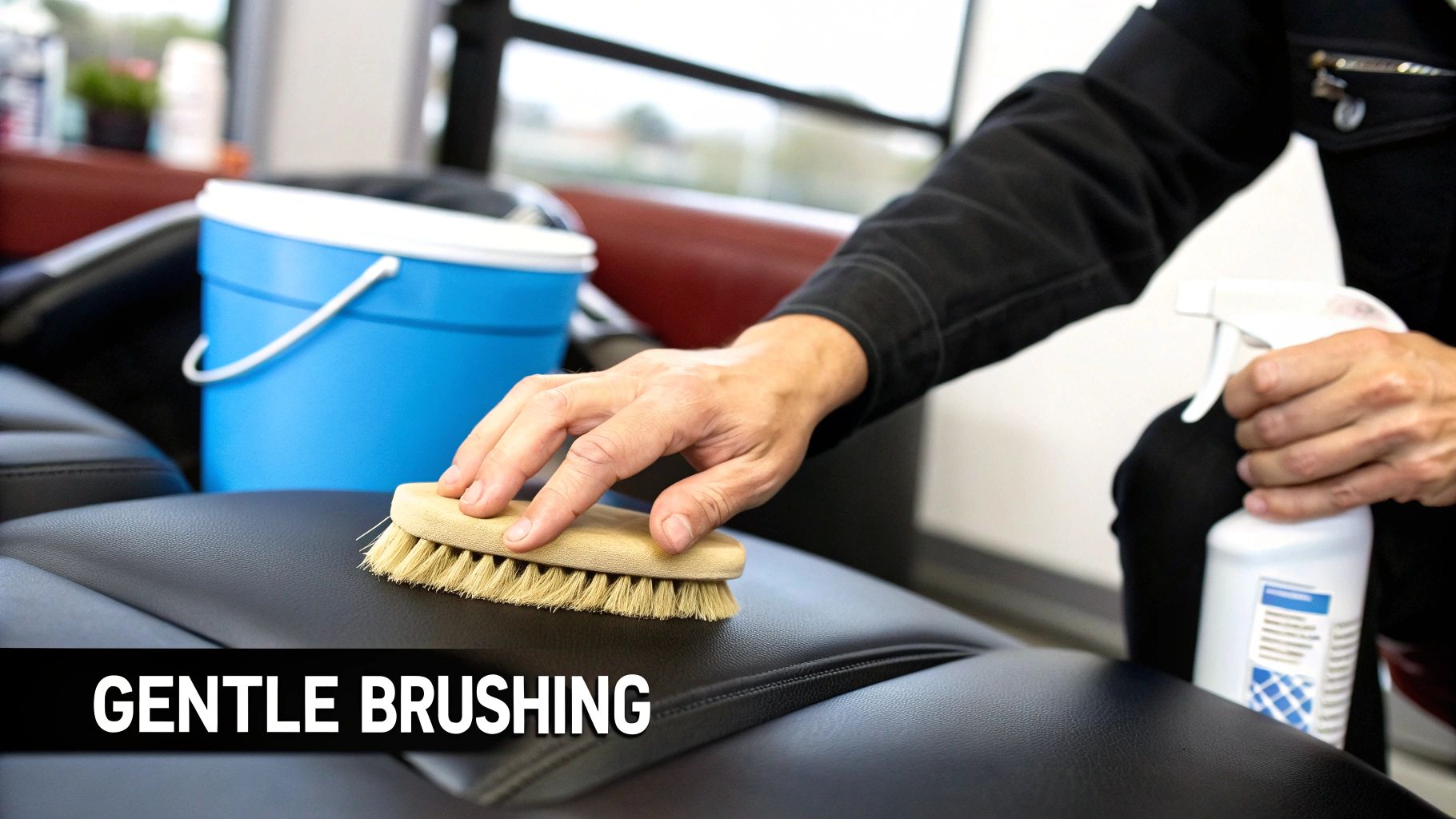
Next, grab your soft-bristle brush. Your goal is agitation, not abrasion. Gently work the cleaner into the surface with small, overlapping circular motions. This lifts ground-in dirt from the vinyl's texture and loosens grime without scratching the material’s protective top coat.
You should see a light foam form. That’s a great sign! It means the cleaner is breaking down the gunk and pulling it to the surface, making it easy to wipe away.
Step 3: The Perfect Wipe-Down Technique
Now that the dirt is lifted, it's time to remove it. Grab a clean, slightly damp microfiber towel and wipe the area using straight, overlapping passes. The most important part is to constantly flip and fold your towel to a clean side.
Wiping with a dirty section of the towel just smears grime back onto the upholstery. A fresh towel surface ensures you are completely removing the dirt.
Once the section is clean, take a second, completely dry microfiber towel and give it a final pass. This picks up any leftover moisture and cleaner residue, preventing streaks and water spots for a flawless, non-greasy finish.
Step 4: The Final Rinse and Dry
This last step is vital for the long-term health of your upholstery. Even the best cleaners can leave a tiny, invisible residue that can attract more dirt over time.
To prevent this, give the entire cleaned area a final wipe-down with a new towel dampened with only clean, fresh water. Think of it as a final rinse. It neutralizes any remaining cleaning solution and takes only an extra minute.
Finally, let everything air dry completely. Airflow is your best friend in the fight against mildew. Open seat compartments and prop cushions up to get air circulating. Never put your boat cover on until the interior is 100% dry, as trapping moisture invites mildew.
Step 5: Creating a Consistent Routine
Knowing the right technique is half the battle; consistency is what protects your investment. Marine care pros emphasize the importance of a routine, from a quick rinse after a day in the salt to deeper cleanings a few times a season.
While about 60-70% of boaters wash their boats, only 30-40% stick to a regular deep-cleaning schedule for their upholstery. You can see how professional detailers approach these standards and why it makes such a difference.
Here’s a simple schedule you can follow:
- After Every Outing: A quick wipe-down with a towel and fresh water to get salt and dirt off before it bakes in.
- Weekly (During Peak Season): Spot-treat any new spills or smudges with your marine cleaner.
- Monthly: Give the whole interior a proper cleaning using the steps above to prevent dirt buildup.
- Seasonally: A thorough deep clean at the beginning and end of the season is non-negotiable. This is the perfect time to apply a UV protectant.
Make this a habit, and you won't just be cleaning your boat—you'll be actively preserving its value and appearance for years to come.
Dealing With Stubborn Stains and Mildew
Even with great cleaning habits, you'll eventually face a stubborn mildew patch or a greasy sunscreen smudge. Knowing how to handle these specific stains is key to keeping your boat looking its best.
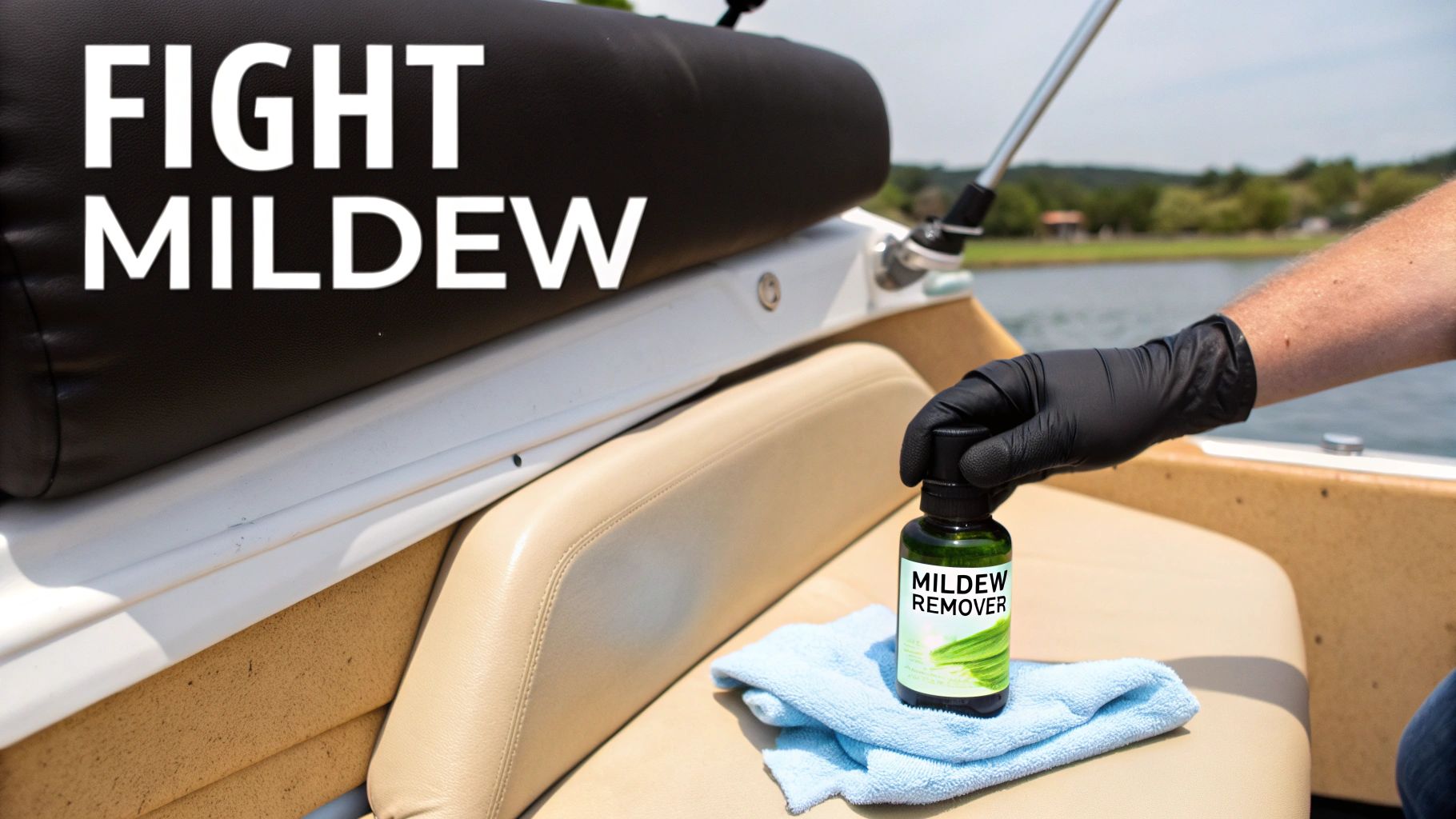
Scrubbing harder isn't the answer. You need a targeted approach. Different stains require different solutions—a greasy stain needs something to cut through oil, while an organic problem like mildew needs a product that kills the spores at their source.
Conquering Mildew Spots for Good
Mildew is the number one enemy of any boat interior. Those ugly black spots aren't just an eyesore; they are a fungus that can permanently stain your vinyl and eat away at the stitching.
To eliminate it, you need a dedicated mildew stain remover formulated to kill the spores without using harsh bleach. Straight bleach is a huge no-no—it strips the essential plasticizers from your vinyl, making it brittle and causing it to crack. A marine-specific mildew remover is the safer, more effective choice.
We have a complete guide that goes deep on this exact problem, and you can learn more about how to remove mildew from boat seats here: https://shopboatjuice.com/blogs/boat-care/how-to-remove-mildew-from-boat-seats. After treating the area, always do a final wipe-down with a clean, damp cloth to neutralize any residue.
A quick pro tip: Mildew thrives in damp, stagnant air. The best defense is a good offense. Make sure your boat's interior is bone dry before you put the cover on, and always use a well-ventilated cover.
Tackling Oily and Greasy Stains
Sunscreen, food spills, and engine grease are common oily stains. They can smear and get deep into the texture of the vinyl. The key is to act fast with a cleaner that can break down the oil.
For fresh spills, your go-to pH-neutral interior cleaner will usually work. For tougher grease stains, let the cleaner sit on the spot for a minute or two to penetrate and lift the oil before you gently agitate it with a soft brush. Your goal is to lift the oil out of the vinyl, not just spread it around.
Common Boat Stain Treatment Guide
Here’s a quick-reference chart for common boat stains.
| Stain Type | Recommended Solution | Pro Tip |
|---|---|---|
| Mildew & Algae | A dedicated marine mildew stain remover. | Apply it, let it sit for a few minutes, then gently scrub. Never use straight bleach—it wrecks vinyl and stitching. |
| Sunscreen & Lotion | A pH-neutral cleaner like Boat Juice Interior. | Get on this ASAP. Sunscreen can literally "bake" into the vinyl in direct sunlight, making it a nightmare to remove later. |
| Ink or Marker | Isopropyl alcohol on a clean cloth. | Dab the stain gently; never rub, or you'll spread it. Always test on a small, hidden spot first to be safe. |
| Bird Droppings | A pH-neutral cleaner and plenty of water. | Scrape off the solid stuff first. Then spray the area and let the cleaner soften the stain before you wipe it away. |
| Food & Drink Spills | A pH-neutral cleaner. | Clean these up immediately. Sugary drinks turn into sticky magnets for dirt and grime if you let them dry. |
This cheat sheet can be a lifesaver when you're in a pinch.
The Power of Prevention
Once you’ve removed a tough stain, you want to prevent it from returning. Applying a quality protective sealant after a deep clean puts an invisible barrier on your upholstery's surface.
A modern, ceramic-infused product like Boat Juice Protection creates a hydrophobic layer, meaning water and other liquids bead up and roll right off instead of soaking in. This shield makes it much harder for future stains from dirt, sunscreen, and mildew to take hold.
Think of it like waxing your car. You don't just wash it—you apply wax to protect the paint and make the next wash easier. Sealing your boat's upholstery does the same thing.
Protecting Your Upholstery So It Lasts
Getting your boat's interior sparkling clean feels amazing, but that’s only half the battle. Now we shift from cleaning to preservation—the step that shields your hard work from the elements.
This is the ultimate defensive play in your boat care playbook.
You wouldn’t spend hours in the sun without sunscreen, and your boat’s vinyl deserves the same protection. A top-notch UV protectant is non-negotiable. It acts as a shield against the harsh ultraviolet rays that fade colors and bake the oils out of the material, which eventually leads to cracking.
Applying a Modern Protective Shield
Today's formulas do more than just block the sun. Modern ceramic-based products like Boat Juice Protection create a durable, hydrophobic barrier on the surface.
In the real world, this means water beads up and rolls right off instead of soaking in, taking dirt with it. This protective layer is your new best friend against stains, water spots, and mildew.
Here’s how to apply it correctly:
- Always start clean. A protectant should only go on a freshly cleaned and completely dry surface. Applying it over dirt just traps the grime.
- Use a quality applicator. Lightly mist the protectant onto a microfiber applicator pad, not directly onto the vinyl. This prevents overspray and ensures an even coat.
- Wipe on, then level off. Gently wipe the product onto a small section at a time using overlapping, straight lines. Immediately follow up with a separate, clean, dry microfiber towel to buff away any excess for a smooth, non-greasy finish.
Here's a pro tip: That second "leveling" buff is what separates a good application from a great one. It removes high spots and ensures the protective layer is perfectly even, giving you consistent protection without a slick, oily residue.
Beyond the Bottle: Covers and Airflow Are Key
A protective spray works best as part of a complete strategy. Nothing beats a well-fitting boat cover for protecting your interior from sun, rain, and debris. Using your cover consistently is one of the most effective things you can do to extend the life of your upholstery.
Ventilation is just as important, especially for preventing mildew. Before you snap that cover on, be positive your seats and carpets are 100% dry. Trapped humidity is a breeding ground for mildew.
If your cover has built-in vents, keep them open. If not, consider using a support pole system to create a tent-like shape. This allows air to circulate and moisture to escape, making a huge difference.
This proactive care is why the global market for marine cleaning supplies is expected to reach USD 8.2 billion by 2033—people want products that actually work. To learn more about protectants, check out our guide on finding the best marine vinyl cleaner and protectant.
Keeping Your Upholstery Looking New: A Simple Maintenance Plan
You've worked hard to get your boat’s interior spotless, so let's keep it that way. The key isn't spending hours scrubbing every weekend. It's about building quick, simple habits that prevent grime from getting a foothold in the first place.
Think of it as a three-part strategy: frequent wipe-downs, an immediate action plan for spills, and a seasonal deep clean and protect. This simple rhythm will protect your investment and keep your boat looking fantastic.
Your Go-Forward Game Plan
Consistency is what separates a boat that looks good for one season from one that looks pristine a decade later. Here’s a straightforward routine you can stick to:
- After Every Outing: Before heading home, give the seats a quick wipe with a damp microfiber towel. This removes fresh salt and sunscreen before it bakes in.
- Weekly: Do a quick walkthrough. Look for any new spots or smudges and tackle them immediately.
- Monthly: Set aside time for a more thorough cleaning with a marine cleaner to prevent grimy buildup.
- Seasonally: Twice a year—during spring prep and fall winterization—is the perfect time for a deep clean. Finish by applying a quality UV protectant like Boat Juice Protection to shield it from the elements.
What’s the next step? Get it on your calendar. Seriously, schedule your next cleaning day right now and make sure you have your supplies ready to go. No more excuses!
If you want to make it easy to get started, the Boat Juice Interior Kit has everything you need in one box. It’s the perfect way to kick off your new routine and take pride in a boat that looks as good as it performs.
Got Questions? We've Got Answers.
You've got the game plan, but you might still have a few questions. That's normal. Here are some of the most common questions we hear from fellow boaters.
How Often Should I Really Clean My Boat Upholstery?
The best habit is giving everything a quick wipe-down with fresh water after each trip, especially in saltwater. A little rinse goes a long way.
For a proper deep clean with a marine-specific cleaner, aim for every 2-4 weeks during peak season. At a minimum, do a thorough cleaning and apply a UV protectant twice a year—once when getting it ready for the season, and again before winter storage.
Can I Just Use Household Cleaners Like Bleach on My Vinyl?
Please don't. We can't stress this enough. Household cleaners like bleach and ammonia are too aggressive for marine vinyl. They strip the natural oils from the material, leaving it brittle and prone to cracking.
It's not just the vinyl you have to worry about. Harsh chemicals will also eat away at the thread in your stitching, causing seams to fail. Stick with a pH-neutral cleaner made for boats to keep everything intact.
What's the Best Way to Keep Mildew from Coming Back?
This is all about moisture control and airflow. The number one rule is to make sure your seats are bone dry before you put the cover on. Trapping moisture under the cover is a welcome mat for mildew.
A vented boat cover is a great investment as it lets the interior breathe. To step up your game, apply a quality sealant like Boat Juice Protection. It creates a barrier that sheds water, making it incredibly tough for mildew to get a foothold.
Is It Okay to Use a Magic Eraser on My Boat Seats?
Nope. Using a magic eraser on your vinyl is a short-term fix that can cause long-term damage. It acts like super-fine sandpaper, scrubbing off stains by literally sanding away the protective topcoat of your vinyl.
Once that layer is gone, the finish will be permanently dulled. Worse, that spot is now wide open to future stains, sun damage, and cracking. It's just not worth the risk.
Ready to make your boat's interior look, feel, and smell incredible? Boat Juice has everything you need to get professional results.