


· By Boat Juice Team
Your Complete Guide to Using a Boat Upholstery Cleaner
When you're looking for the best boat upholstery cleaner, you need something built for the tough life on the water. A dedicated marine formula is your best bet because it's designed to cut through salt, grime, and mildew without being so harsh that it damages delicate vinyl or fabric. Unlike a typical household cleaner, these products often pack in UV inhibitors to shield your seats from the sun's damaging rays.
Why Your Boat Upholstery Needs Special Attention
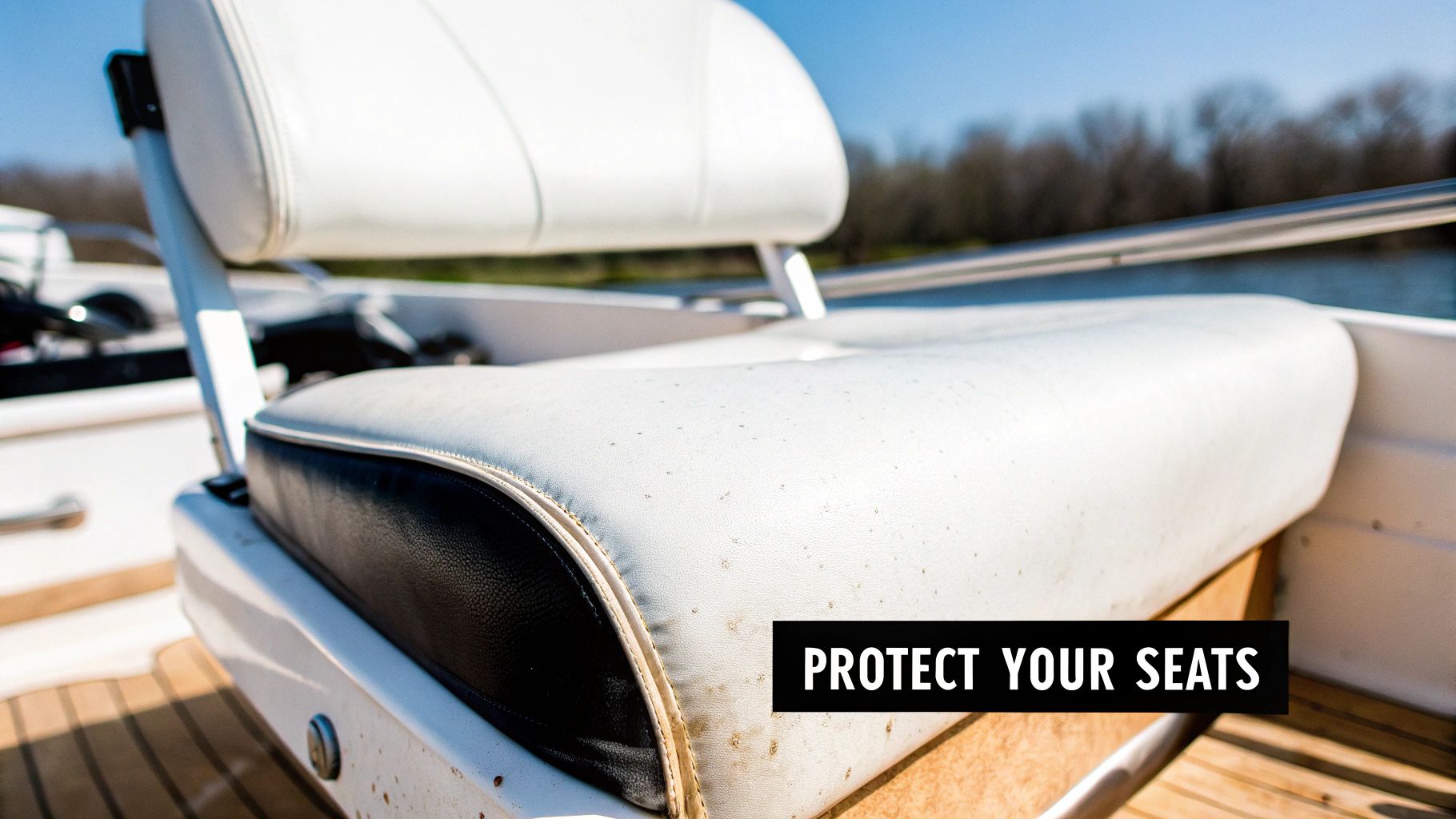
Ever feel like your boat seats collect dirt faster than anything else you own? You're not imagining things. Your boat’s interior endures a constant assault from the elements. Understanding these unique challenges is the key to keeping your boat looking sharp season after season.
The marine environment is just plain brutal on materials. Your upholstery is caught in a never-ending battle against intense sun, gritty salt spray, and inescapable moisture. It's a combination that practically begs for deterioration if left unchecked.
The Triple Threat: Sun, Salt, and Moisture
First up is the sun. Its UV radiation is a silent killer for marine vinyl, relentlessly breaking down the protective top layer. This is what leads to faded, brittle, and cracked seats that can make an otherwise great boat look old and neglected.
Then you have saltwater. As it dries on your seats, the salt crystals left behind are abrasive, slowly grinding away at the vinyl's surface. Worse yet, salt is hygroscopic, meaning it attracts and holds onto moisture, creating a perpetually damp breeding ground for mildew.
The constant cycle of getting soaked and then baked by the sun is what really sets marine upholstery apart from anything on land. This is why a simple soap-and-water scrub often falls short of preventing long-term damage.
Finally, there’s moisture in general. Whether it’s from rain, splashes over the side, or just plain old humidity, water gets trapped in the seams and foam of your cushions. This dampness is an open invitation for mold and mildew to move in, leaving you with those ugly black spots and a musty smell.
Choosing Your Defense Wisely
This is exactly why grabbing a dedicated boat upholstery cleaner isn't just a suggestion—it's a necessity. Many household cleaners contain aggressive chemicals like bleach or ammonia that can strip away vital UV protectants and even eat away at the vinyl’s stitching over time.
A quality marine-specific cleaner is formulated to do the job right:
- Gently lifts away contaminants like salt residue, sunscreen oils, and everyday grime.
- Kills mildew and helps prevent its return without harming the upholstery itself.
- Maintains the material’s suppleness to keep it from cracking.
Once you understand why your boat's interior needs this level of care, you're in a much better position to clean it effectively. Your goal isn't just a temporary shine for this weekend; it's about protecting your boat for all the seasons to come.
Assembling Your Upholstery Cleaning Toolkit
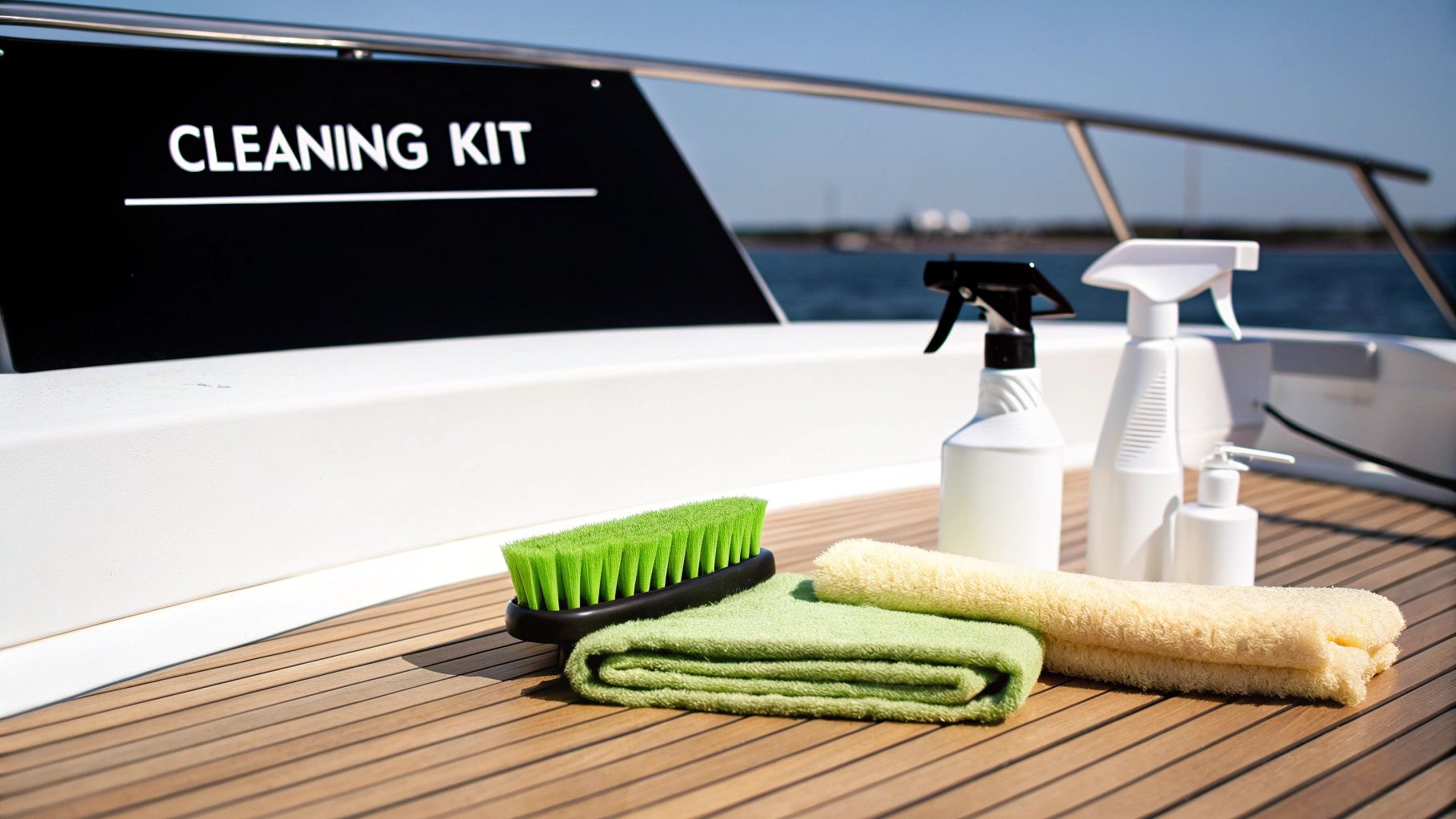
Before you start scrubbing, taking a few minutes to get your tools together will make the entire job go faster and turn out so much better. A great cleaning session starts with having everything you need within arm's reach.
This isn't about having a garage full of gear, but having the right gear. Think of it like cooking a meal: good prep work sets you up for a fantastic result. Here’s a quick checklist of everything you'll need for a thorough cleaning.
Your Essential Boat Upholstery Cleaning Kit
| Item | What It's For | Insider Tip |
|---|---|---|
| Soft-Bristle Brush | Agitating dirt from textured vinyl and seams without scratching. | Get a small one for tight corners and a larger one for big seat cushions to speed things up. |
| Microfiber Towels | Wiping, drying, and polishing surfaces without leaving lint. | Have at least 5-6 clean ones ready. You’ll use more than you think. |
| Vacuum | Removing loose sand, dirt, and crumbs before you start scrubbing. | A cordless shop vac with a soft brush attachment is a boater's best friend for this. |
| Interior Cleaner | General wipe-downs of sunscreen, spills, and everyday grime. | We use Boat Juice Interior Cleaner for this. It's gentle enough for frequent use. |
| Mildew Stain Remover | Targeting and eliminating stubborn mold and mildew spots. | Boat Juice Mildew Stain Remover is our go-to for those pesky black specks. |
| UV Protection Spray | Shielding vinyl and fabric from sun damage, fading, and cracking. | Apply Boat Juice Protection Spray last. It’s like sunscreen for your upholstery. |
With these essentials on deck, you're ready to tackle pretty much anything your seats throw at you.
Choosing the Right Cleaners
This is where you can make a huge difference in the longevity of your boat's interior. You must use a compatible boat upholstery cleaner to protect your investment, as using the wrong stuff can damage the fabric and could even void your warranty.
Your cleaning arsenal should really boil down to three key products for handling 90% of what you'll encounter:
- A great all-purpose interior cleaner: For routine wipe-downs of sunscreen, spills, and general grime, a quality product like Boat Juice Interior Cleaner is perfect. It's safe for marine vinyl and effective for daily upkeep.
- A dedicated mildew stain remover: For those stubborn black spots that inevitably appear, you need something with more punch. A targeted solution like Boat Juice Mildew Stain Remover is formulated to zap mildew without harming the material underneath.
- A UV protection spray: This is your final, and arguably most important, step. After everything is clean and dry, applying a protectant like Boat Juice Protection Spray creates a barrier against the sun's harsh rays.
For a deeper dive into picking the right formulas, check out our guide on the best boat cleaning products to see what fits your specific boat. Now that your toolkit is assembled, you're ready to get to work.
A Practical Guide to Cleaning Vinyl Boat Seats
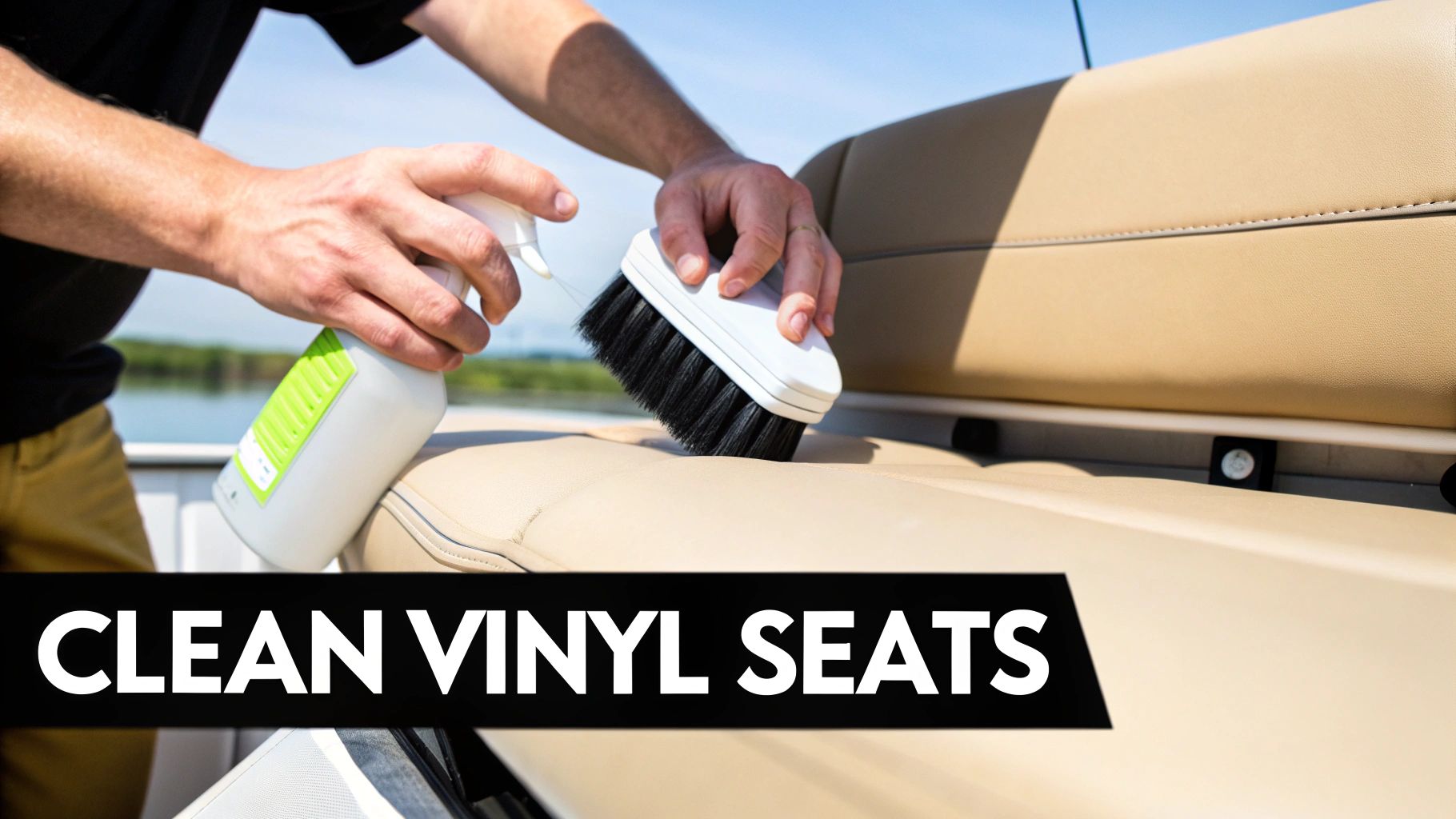
Alright, with your gear all lined up, it’s time to tackle that grimy vinyl. This isn't just about a quick wipe-down; we’re talking about a deep clean that gets rid of the gunk that can cause permanent damage. The goal here is to be tough on dirt but gentle on your upholstery.
The best way to do this is to work in small, manageable areas—think one cushion at a time. This approach lets you concentrate your efforts and prevents the cleaner from drying on the surface before you can wipe it off, which can leave a sticky residue.
Step 1: Start With a Clean Slate (Vacuum First!)
Before a single drop of cleaner touches that vinyl, you need to get rid of all the loose debris. Grab your shop vac with a soft brush attachment and go over every single inch of the upholstery, especially in these common trouble spots:
- Seams and Stitching: These are magnets for sand, dirt, and caked-on sunscreen.
- Underneath Cushions: Lift every cushion—you'd be surprised what you find hiding under there.
- Around Seat Bases: This is where snack crumbs and other debris end up.
Don't skip this initial vacuuming. If you just spray cleaner onto a sandy surface, you’re basically creating a liquid sandpaper. As you scrub, you’ll grind that grit right into the vinyl, creating tiny scratches that dull the finish and make it easier for dirt to stick later on.
Step 2: Apply and Agitate the Cleaner
Now for the main event. Take a good boat upholstery cleaner, like our Boat Juice Interior Cleaner, and give your working section a light mist. An even coat is all you need to get the process started.
Let the cleaner dwell for about a minute. This pause is crucial because it gives the formula time to penetrate the vinyl’s texture and start breaking down the grime. Then, grab your soft-bristle brush and gently agitate the area with small, overlapping circular motions.
Pro Tip: Don't go crazy with the pressure. You're not trying to scrub the finish off. The idea is to let the bristles work the cleaner into the grooves of the vinyl. The cleaner should be doing most of the hard work for you.
You'll see the dirt begin to lift, creating a satisfyingly dirty lather. That's how you know it's working. For stubborn dirt caught in the stitching, use the tip of your brush to work along the seam lines.
Step 3: The Final Wipe-Down and Finish
Once you've scrubbed the section, it's time to get all that gunk off. Grab a clean, dry microfiber towel and wipe away the cleaner and the dirt it has lifted. Always wipe in a single direction to avoid smearing the grime around.
This last step is the secret to getting a professional, streak-free look. If you leave cleaner residue behind, it gets tacky and becomes a dirt magnet. Make sure the surface is totally dry and clean to the touch before moving on.
It’s this kind of careful, effective cleaning that has caused the market for specialized marine cleaners to explode. The global market for boat cleaners recently blew past USD 1.9 billion, driven by boat owners looking for effective, safe formulas to protect their investment. You can read more about the growth of marine cleaning products on Wise Guy Reports.
Now, just move on to the next section and repeat the process. Before you know it, all of your vinyl will be looking fresh and restored.
How to Defeat Tough Stains and Stubborn Mildew
Even with a solid cleaning routine, some messes just refuse to play nice. We've all been there—that guest who spills red wine, the greasy handprint from sunscreen, or the dreaded creep of tiny black mildew dots.
This is where you shift from general maintenance to targeted attack mode. Your everyday cleaner is great for wiping down dust and light grime, but for the tough stuff, you need to bring in the specialists. Having the right boat upholstery cleaner for specific problems is a must for any boat owner.
Tackling Common Boat Stains
Life on a boat is messy, and your upholstery is front and center for all of it. Here’s how you can deal with a few of the usual suspects:
- Sunscreen & Lotions: These oil-based stains leave behind a nasty, yellowish film. Hit the spot with a quality interior cleaner, let it sit for a minute to break down the oils, then gently work it in with a soft brush before wiping clean.
- Food & Drink Spills: Speed is your best friend here. Blot the spill immediately with a clean towel—don't rub it in! Once you've soaked up the excess, treat the remaining spot with your interior cleaner.
- Ink or Marker: This one is a real pain. Carefully dab the stain with a microfiber towel dampened with isopropyl alcohol (rubbing alcohol). Work from the outside of the stain inward to avoid spreading it. Seriously, test this on a hidden spot first!
The War Against Mildew
Ah, mildew. The ultimate nemesis for every boat owner. Those little black specks are a fungus that loves the exact environment your boat offers: moisture, warmth, and not a lot of airflow. Once it gets a foothold, it can stain your vinyl and create that musty "boat" smell.
This is a job for a dedicated mildew stain remover. Products like Boat Juice Mildew Stain Remover are specifically formulated to kill the mildew spores and lift those ugly black stains. Just spray it directly on the affected areas, let it sit for a few minutes, then give it a gentle scrub with a soft brush and wipe clean.
Please, don't reach for household bleach. I know it seems like a quick fix, but it's one of the worst things for your boat. Bleach is incredibly harsh and will eat away at the threads in your upholstery's stitching. It can also cause the vinyl itself to yellow permanently.
After treating the mildew, always rinse the area thoroughly with a clean, damp cloth to neutralize the cleaner. By using the right product for the right problem, you can take on any mess with confidence.
It's not just us boaters getting smarter about cleaning; the whole industry is shifting. The global upholstery cleaner market is now worth around USD 1.3 billion, largely because people are demanding safer, more effective products. You can see more cleaner market trends on Verified Market Reports.
Protecting Your Upholstery for The Long Haul
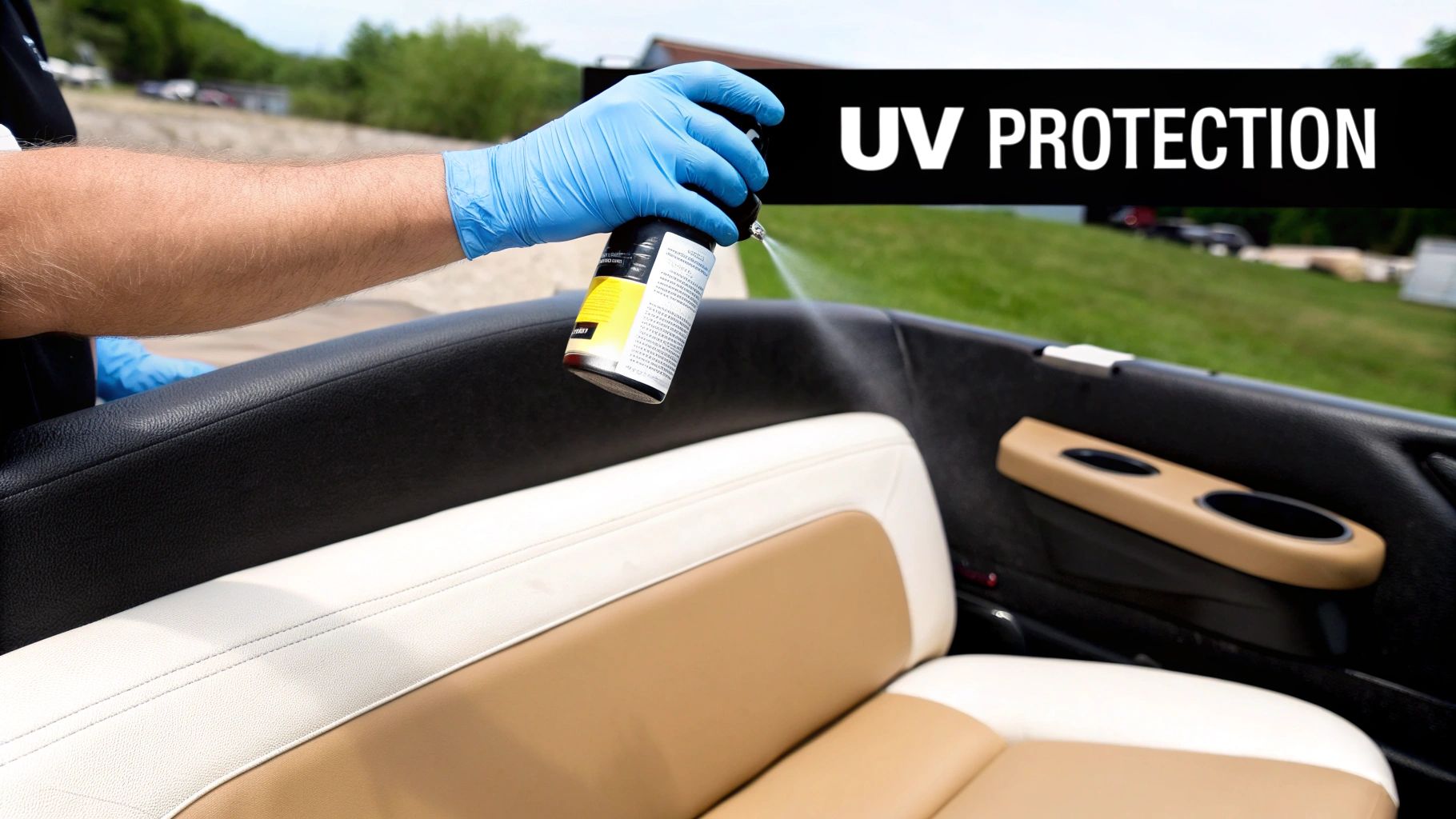
Getting your boat seats perfectly clean is a fantastic feeling, but keeping them that way is the real victory. The hours you just spent scrubbing can be undone in a few short weeks by the sun alone. This is why protection is the most important part of your entire cleaning routine.
Once your seats are spotless and 100% dry, it's time to shield them from future damage. Don't think of this as an extra chore—think of it as insurance for all your hard work. Applying a high-quality UV protectant is simply non-negotiable if you want your upholstery to last.
Why UV Protection is a Game-Changer
The sun’s ultraviolet rays are the number one enemy of marine vinyl. They relentlessly attack the material, breaking down its chemical bonds in a process called photodegradation. This is what makes vinyl brittle, faded, and cracked, making your boat look years older than it really is.
A good protectant creates an invisible barrier that absorbs or reflects these harmful rays before they can do any damage. It's the exact same principle as putting on sunscreen for your skin. Without it, you’re just leaving your seats completely exposed to the elements.
How to Apply a Protectant for Maximum Coverage
Applying a protectant is quick and easy, but following these steps will ensure you get even, long-lasting coverage.
- Find Some Shade: Always try to apply your protectant out of direct sunlight. This keeps the product from evaporating too quickly, giving you enough time to work it in properly.
- Spray and Spread: Lightly mist a small section of the vinyl at a time. Grab a clean microfiber applicator pad or towel and immediately spread the product evenly, using overlapping motions.
- Wipe, Don't Rub: The goal here is a thin, uniform layer. A gentle, even wipe is all it takes to make sure the entire surface is coated.
A product like Boat Juice Protection Spray is designed for exactly this. It delivers that crucial UV defense and also adds a hydrophobic (water-repellent) layer, making future cleanups way easier. You'll notice spills bead up right on the surface instead of soaking in.
Making this a regular part of your routine—ideally once a month during peak season—means you're not just cleaning, you're actively preserving. This simple habit will dramatically extend the life of your upholstery.
If you want to stock up on both a powerful boat upholstery cleaner and a protectant, you can grab something like the 1 Gallon Interior Cleaner with UV Protectant to keep your boat’s interior looking sharp all season long.
Your Top Boat Upholstery Cleaning Questions, Answered
You've got questions, and after years of helping fellow boaters, we've pretty much heard them all. Here are answers to some of the most common things people ask about keeping their boat's interior looking sharp.
How often should I clean my boat seats?
For the best results, give your seats a quick wipe-down with a solid boat upholstery cleaner after every single trip. This simple 5-minute habit stops fresh sunscreen, salty spray, and food spills from setting in and becoming a real problem.
When it comes to a proper deep clean, aim for at least two or three times a season:
- Spring Prep: Start the season by getting rid of all the dust and grime that settled in while the boat was in storage.
- Mid-Season Refresh: This is the perfect time to tackle the buildup from all those peak-season lake days.
- Winterization: Before you put the boat away for the winter, a deep clean and a good protection treatment are non-negotiable to prevent mildew from taking hold while it's covered.
If you boat in a super hot and humid area, you may need to deep clean more often to keep mildew at bay.
Is it okay to use a Magic Eraser or bleach on my seats?
Please, don't do this. It might seem like a genius shortcut, but grabbing a magic eraser or household bleach is one of the quickest ways to ruin your upholstery. We see people make this costly mistake all the time.
A magic eraser is basically super-fine sandpaper. It cleans by literally scraping away the top layer of whatever you're rubbing. On marine vinyl, that means it strips off the crucial protective topcoat, leaving the material exposed to UV rays and leading to cracking and fading.
Household bleach is equally destructive. It’s too aggressive for marine-grade materials, making the vinyl brittle and turning it a dingy yellow over time. Worse, it eats away at the threads in the stitching, causing your seams to eventually fall apart. Stick to cleaners that are actually made for boats.
What's the best way to clean the fabric upholstery in the cabin?
The fabric in your cabin needs a much gentler touch than the vinyl on deck. First, vacuum the fabric with a soft brush attachment to get all the loose dirt, crumbs, and dust out of there.
When it's time to clean, reach for a mild interior cleaner that's been diluted. The golden rule here is to always test it on a small, hidden spot first to make sure it won't affect the color. Be careful not to completely soak the material; you're just trying to lift the stain, not create a swamp in the foam cushion underneath.
Once you're done cleaning, drying is everything. Open up the cabin, get some fans going to create good airflow, and let it all air out completely before you close it up.
Ready to get your boat's interior looking, feeling, and smelling incredible? Your next step is to grab the right tools for the job. Boat Juice has the professional-grade, easy-to-use cleaners and protectants you need for a perfect finish every time.
Shop the Boat Juice Interior Kit Now and See the Difference for Yourself