


· By Boat Juice Team
Finding the Best Cleaners for Boat Seats That Actually Work
When it comes to the best cleaners for boat seats, you have to go with something made for the job. Marine-specific formulas are designed to cut through the exact stuff you deal with—mildew, caked-on sunscreen, and general grime—all without harming your vinyl or stripping away its protective layers. Grabbing a generic household cleaner is a shortcut to trouble, as those harsh chemicals can lead to cracking and fading. For proper boat care, a purpose-built cleaner isn't just a suggestion; it's essential for keeping your investment looking great.
Why Your Boat Seats Deserve More Than Soap and Water
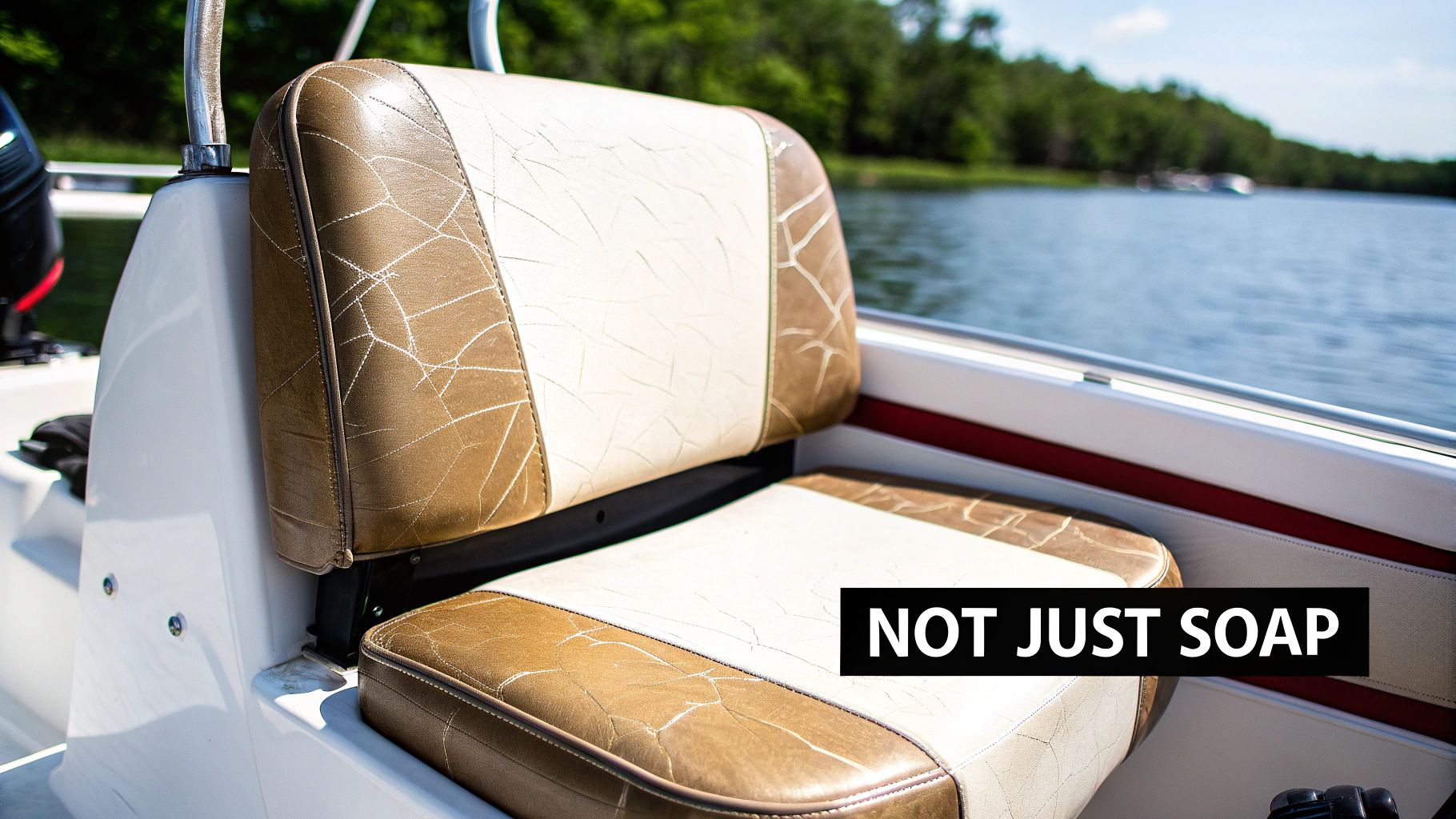
Your boat seats take a beating. They're constantly exposed to a tough mix of intense UV rays, corrosive salt, and damp air that’s just begging for mildew to show up. That’s before you even get to the sunscreen stains and spilled drinks. It’s easy to think an all-purpose cleaner from under your sink will work, but that’s one of the quickest ways to destroy your upholstery.
The problem is that most home cleaners are packed with harsh detergents, ammonia, or even bleach. These ingredients might work wonders on a kitchen counter, but they’re absolute murder on marine vinyl. Using them is a fast track to expensive repairs or replacements.
The Problem with Household Cleaners
Using the wrong stuff on your boat seats does more than just a bad cleaning job—it actively wrecks the material. Those aggressive chemicals pull out the plasticizers that keep vinyl soft and pliable, which is why your seats dry out and crack way too soon. They can also eat away at the stitching and dissolve the factory topcoat, leaving your seats wide open to future stains and sun damage.
This is why a dedicated cleaner is so critical. It’s like putting the right fuel in your engine; you wouldn't pour diesel into a gas motor and expect it to run. The same principle applies right here in your boat's interior, and using the right products saves you money in the long run.
Key Takeaway: The goal isn't just getting rid of today's stain. It's about cleaning the seat in a way that protects it for years of use. A proper marine cleaner does both.
Thankfully, as more people get serious about boat care, the products have gotten a lot better. The global market for boat cleaners has been growing, which means more specialized and effective options are hitting the shelves. This has pushed companies to create advanced formulas like pH-balanced vinyl cleaners and biodegradable solutions that are tough on grime but safe for your investment. If you're curious, you can find more details about this market growth and what it means for boat care products.
At the end of the day, choosing one of the best cleaners for boat seats is about picking a product that was born for the marine environment. It's a small investment that pays off big in your boat’s longevity and resale value, keeping those seats looking sharp season after season.
First, Know Your Fabric: Identifying Your Boat Seat Material
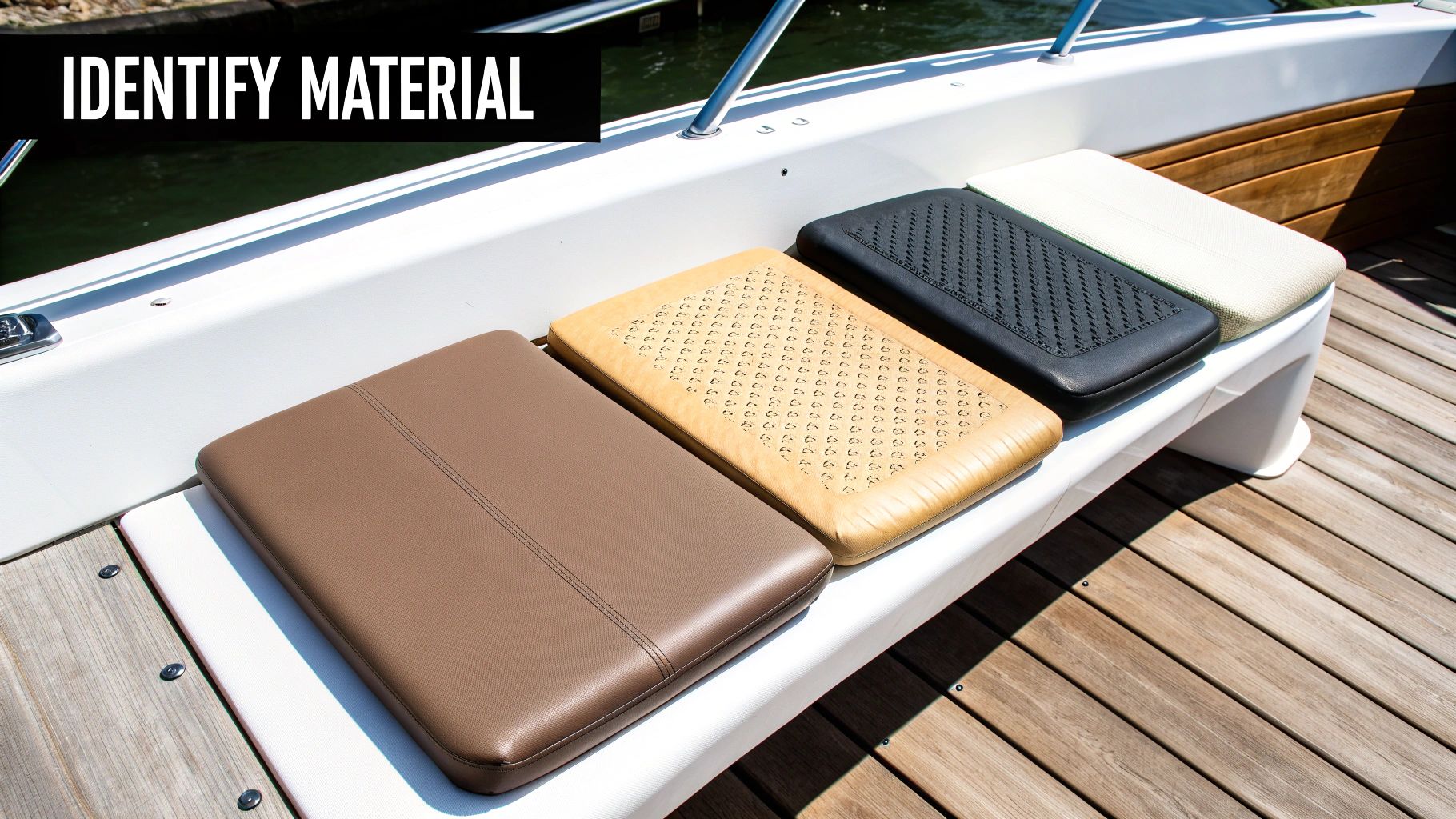
Before you even think about grabbing a bottle of cleaner, hold on. The most important first step is figuring out exactly what your seats are made of. This isn't just busywork—using the wrong product is the fastest way to permanently damage your upholstery, so this step will save you a major headache.
Most boats you see out on the water are fitted with marine-grade vinyl, but plenty of others use woven fabrics or even genuine marine leather on higher-end models. Each one needs a totally different approach. What cleans vinyl beautifully might stain fabric or dry out leather, so taking a moment to identify the material is your first win.
Quick Ways to Tell What You've Got
Don't worry, you don't need a degree in materials science for this. A simple look and touch test is usually all it takes. Here's what to look for with the most common boat upholstery types you'll encounter.
-
Marine Vinyl: This is the undisputed king of boat seating for a reason. It has a smooth, slightly rubbery feel, and if you look closely, you’ll often see a faint texture stamped into it to look a bit like leather grain. It’s built to repel water, which is why it's the standard for most manufacturers.
-
Woven Fabric: If your seats look and feel like high-end patio furniture cushions, you've got woven fabric. You can see the distinct threads creating a pattern. The downside? That weave is a magnet for dirt, sunscreen, and grime, so it needs a special cleaning technique.
-
Marine Leather: You'll typically only find this on premium or custom boats. It looks and feels just like the leather in a luxury car—incredibly soft and supple compared to vinyl. It’s beautiful, but it demands special care to keep it from cracking under the sun’s relentless abuse.
A good rule of thumb: Vinyl's biggest enemy is mildew working its way into the tiny pores and seams. For fabric, the main battle is getting dirt out from deep within the weave. Knowing this from the get-go helps you pick the right cleaner and technique.
Once you know your material, you can confidently choose one of the best cleaners for boat seats specifically designed for it. That's how you get a deep clean without accidentally causing more harm than good.
The Definitive Guide to Cleaning Vinyl Boat Seats

Let's get right into it. Marine-grade vinyl is the go-to material for most boat seats, so knowing how to care for it is non-negotiable for any boat owner. It's tough stuff, no doubt, but its porous surface is a magnet for everything from sunscreen and bug spray to the early stages of a mildew bloom.
The trick is cleaning smart, not hard. Reaching for abrasive tools or harsh, all-purpose chemicals is the quickest way to strip the vinyl's protective top coat. Once that's gone, you're looking at accelerated UV damage, fading, and eventually, cracking. A proper cleaning technique, on the other hand, lifts the grime out of the vinyl’s tiny pores instead of just pushing it around.
Your Essential Cleaning Process
Before you start spraying a cleaner, give the seats a quick rinse with fresh water. This simple step knocks off all the loose stuff—sand, dirt, pretzel crumbs—and keeps you from accidentally grinding those particles into the upholstery and causing micro-scratches as you clean.
Now, grab a cleaner made specifically for marine interiors. It's a good idea to have a pH-balanced cleaner like Boat Juice - The Original on hand because it’s tough on grime but won't harm your vinyl or stitching.
Mist a small section of the seat; you don't need to drown it. The most important (and most often skipped) step is to let the cleaner sit for about 60 seconds. This dwell time is critical because it allows the formula to break down the oils and dirt, which means a lot less scrubbing for you.
Once it's had a minute to work its magic, take a soft-bristled brush and gently agitate the surface in small, circular motions. You’ll see the grime start to lift right out of the vinyl's texture. Finish by wiping the area clean with a fresh microfiber towel.
Tackling Stubborn Stains Like Mildew and Sunscreen
When you’re up against tougher stains like mildew spots or that stubborn, chalky sunscreen residue, the process is the same—it just requires a little more patience. You might need to agitate the area a bit more with your soft brush after letting the cleaner dwell.
Whatever you do, resist the temptation to grab a stiff brush or a magic eraser. I know it seems like a quick fix, but those are way too abrasive and will cause permanent damage to the vinyl's finish, leaving it looking dull and worn out.
There's a reason purpose-built marine cleaners are the way to go. Testing shows that specialized vinyl cleaners can safely remove 80-95% of common contaminants while maintaining over 90% of the vinyl’s original tensile strength. Compare that to harsh household products, which can degrade that strength by up to 30% over time.
Pro Tip: If you're dealing with deep-set mildew stains that a standard cleaner can't handle, it may be time for a dedicated mildew remover. Always follow up with a regular interior cleaner to neutralize any harsh chemicals before applying a protectant.
Matching the Cleaner to the Vinyl Stain
To take the guesswork out of it, here’s a quick-reference guide for matching the right solution to the most common vinyl stains you'll encounter.
| Stain Type | Recommended Cleaner | Key Technique |
|---|---|---|
| General Grime & Dirt | Boat Juice - The Original | Spray, dwell for 60 seconds, agitate with a soft brush, wipe clean. |
| Mildew Spots | Boat Juice - The Original (or mildew remover for severe cases) | Dwell time is critical. Agitate thoroughly but gently. Follow up with a neutral cleaner. |
| Sunscreen & Lotion | Boat Juice - The Original | Focus on breaking down the oils. May require a second application. |
| Food & Drink Spills | Boat Juice - The Original | Clean immediately. Let the cleaner penetrate the stain before wiping. |
| Water Spots | Boat Juice - The Original | A quick spray and wipe is often enough to lift mineral deposits. |
Using the right product for the job not only saves you time and elbow grease but also ensures you're protecting your investment for the long haul.
The Critical Final Steps: Rinsing and Protecting
After all that cleaning, you need to get any leftover residue off the seats. A light rinse with fresh water or a thorough wipe-down with a clean, damp microfiber towel will do the trick. If you skip this, the leftover cleaner can dry into a sticky film that actually attracts more dirt.
And now for the final step, which is absolutely mandatory: protecting your freshly cleaned seats.
Once the vinyl is completely dry, apply a quality UV protectant spray like Boat Juice - Interior. Think of it as sunscreen for your vinyl. It creates a barrier against the sun's harsh rays while also helping to repel future stains, water, and oils. This is the step that keeps your vinyl looking brand new for years, not just for the next weekend on the water.
If you want to go even deeper, check out our guide on finding the best marine vinyl cleaner and protectant combo for your specific needs.
What About Fabric and Leather Seats? A Different Game Plan
While most boats are decked out in tough-as-nails vinyl, you'll definitely see plenty with premium fabric or even luxurious leather seating. If that's your boat, you need to toss the standard vinyl cleaning playbook out the porthole. These materials demand a completely different—and much more delicate—approach.
Think about it: blasting fabric with a heavy-duty vinyl cleaner will leave a sticky, soap-like residue that actually attracts more dirt. And trying that on leather? You’ll strip all the natural oils right out, leaving it dry, brittle, and prone to cracking. It all comes down to using the right tool for the job.
How to Safely Clean Woven Fabric Seats
Fabric seats feel great and look high-end, but that woven texture is like a magnet for dirt, spilled sodas, and the dreaded mildew. The biggest trick here is cleaning the fabric without soaking the foam cushion underneath. A wet cushion is a perfect incubator for mold and that musty smell nobody wants.
Here’s an actionable, step-by-step process that works wonders:
-
1. Start Dry. Before you even think about a liquid cleaner, grab a soft-bristled brush and give the dry fabric a good, vigorous scrub. You’d be shocked at how much loose dirt, sand, and old cracker crumbs will come flying out from deep in the weave.
-
2. Vacuum It Up. Now, take a shop vac or a powerful vacuum with a brush attachment and go over everything. This step is critical. It pulls up all the debris you just loosened, so you don't end up just making mud when you introduce a cleaner.
-
3. Mist, Don't Drown. Lightly mist the fabric with an upholstery-safe cleaner. The key word here is lightly. A pH-balanced interior cleaner like Boat Juice - The Original is perfect for this because it won't leave behind any harsh residue that makes fabric feel stiff.
-
4. Blot, Don't Scrub. This is important. Instead of scrubbing the wet fabric, which can damage the fibers, grab a clean microfiber towel and just blot the area. Press down firmly and you’ll see the grime transfer right from the seat onto your towel.
-
5. Let It Air Out. Once you're done, let the seats dry completely. Open air and a little sun are your best friends here. Don't even think about putting the boat cover on until you are 100% positive those cushions are bone-dry all the way through.
And if you're up against some really stubborn mildew on any of your seats, we've got a whole guide dedicated to that fight. Check out our deep dive on how to remove mildew from boat seats.
The Right Way to Care for Marine Leather
Nothing looks quite as sharp as leather, but it needs consistent care to survive the boating life. Sun and salt are its biggest enemies, as UV rays will fade the color and dry it out until it cracks. For this reason, you should never use a generic all-purpose cleaner or vinyl cleaner on your leather seats.
My Two Cents: Always, and I mean always, use a dedicated, pH-neutral leather cleaner. These are specifically designed to clean without stripping away the essential oils that keep the leather soft and prevent it from aging prematurely.
The process itself is simple. Just put a small amount of leather cleaner onto a microfiber cloth or applicator—never directly onto the seat itself. Work in small, manageable sections with a gentle wiping motion. Immediately after, wipe the same area with a separate, clean, and dry microfiber towel to pick up any excess.
But the most important step comes after the cleaning: conditioning. A quality marine leather conditioner is non-negotiable. It puts back the oils that keep the hide supple and adds a layer of crucial UV protection. This simple two-step routine is your best defense against the elements.
Long-Term Protection and Maintenance Habits
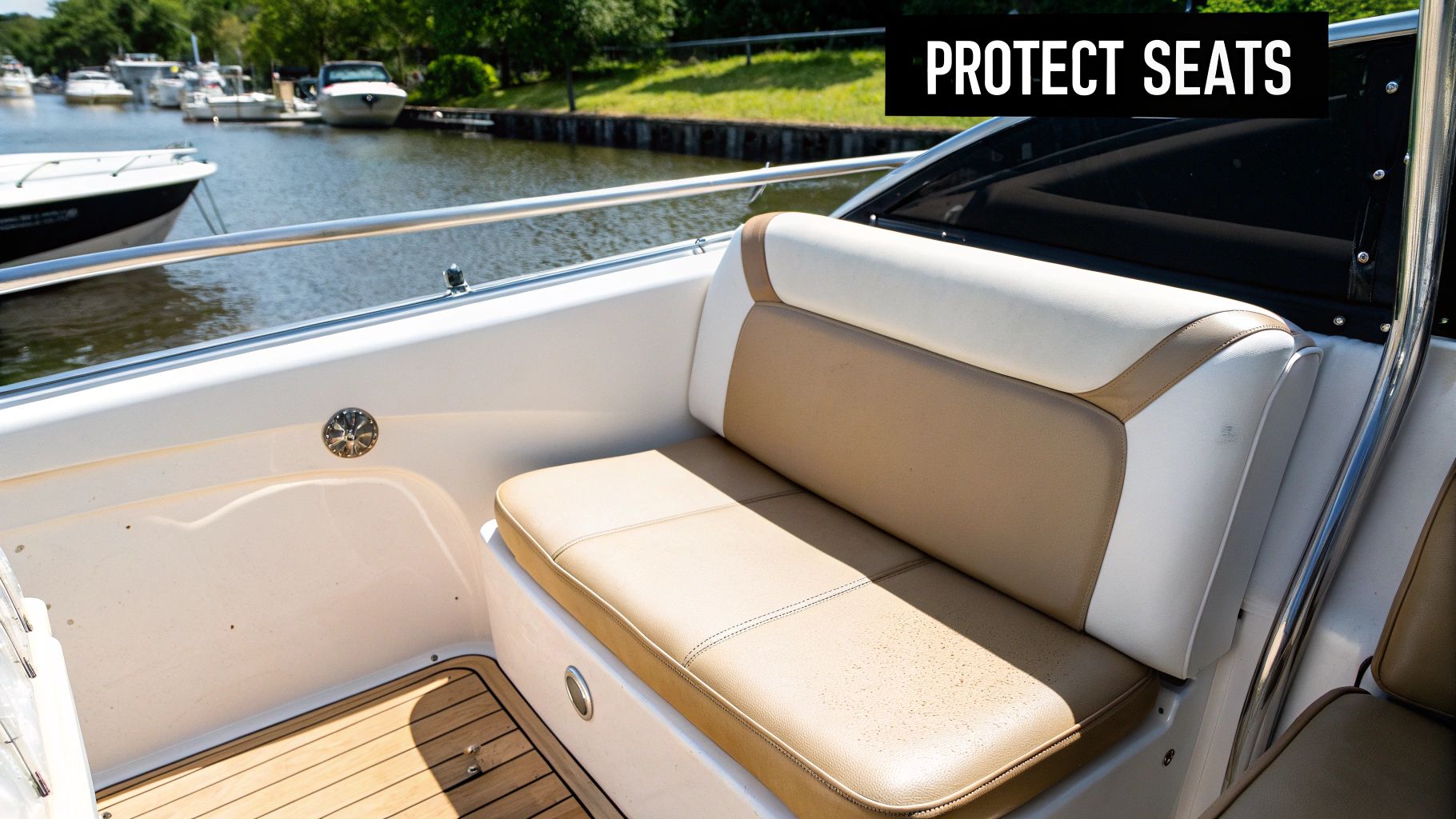
Getting your seats sparkling clean is a great feeling, but the real victory is keeping them that way. This is where you shift from a reactive mindset—cleaning up messes—to a proactive one of protecting your investment. A few simple habits can make all the difference, saving you hours of scrubbing down the road.
Think of it like this: cleaning removes existing dirt and stains, but proper protection stops that damage from ever happening in the first place. This approach not only keeps your upholstery looking sharp but also extends its life significantly.
The Power of UV Protection
Your boat's vinyl is a lot like your skin—it needs serious protection from the sun. Unrelenting UV exposure is the single biggest enemy of your upholstery, causing it to fade, dry out, and eventually crack. Applying a dedicated UV protectant is basically like slathering your seats in a high-SPF sunscreen.
A quality spray like Boat Juice - Interior creates a durable, invisible shield that deflects or absorbs those harmful rays before they can bake the life out of your vinyl. It also adds a hydrophobic (water-repelling) layer. This is huge, as it means water beads up and rolls right off instead of soaking in, which is your best line of defense against mildew.
Applying a protectant isn't just an optional "extra step." It's the most important thing you can do for the long-term health of your seats. It keeps the vinyl soft, stops the color from fading, and makes future cleanups way easier because dirt and grime just can't stick as well.
It turns out most boat owners are already on board with this. Market research shows that 60-75% of recreational boaters see regular cleaning and maintenance as a top priority for protecting their boat’s resale value. They're actively looking for products with UV-stabilizing additives because they know they work.
Your Simple Maintenance Schedule
You don't need some complex, military-grade routine to make a huge impact. Being consistent with a few simple tasks is way more effective than a single, back-breaking cleaning marathon at the end of the season.
Here’s a simple but effective game plan you can start today:
-
After Every Single Trip: This is my non-negotiable tip. Before you put the cover on, grab a damp microfiber towel and give all the seats a quick wipe-down. It takes less than five minutes and gets rid of fresh spills, sunscreen lotion, and salt spray before they can bake in and cause real trouble.
-
Monthly Check-In: Once a month during the season, give your seats a quick wash with a pH-balanced cleaner. Right after, re-apply your UV protectant spray. This small step refreshes that protective barrier and keeps your seats looking and feeling brand new, especially during the peak summer months.
This simple schedule turns a dreaded chore into a quick, easy habit. If you want a full rundown of the best tools for every job on your boat, check out our guide to the best boat cleaning products. By making protection a habit, you’re not just cleaning—you’re preserving.
Your Boat Seat Cleaning Questions, Answered
Alright, let's get into some of the real-world questions I get asked all the time. Think of this as our dockside chat, where we tackle those specific, nagging problems that pop up when you're trying to keep your boat looking its best.
You've got the basics down, but what about those tricky situations? Having the right answers ready to go means you can handle whatever your seats throw at you with confidence.
Can I Use a Magic Eraser on My Vinyl Boat Seats?
I'm going to be blunt: absolutely not. While it might seem like a quick fix for a stubborn scuff, using a magic eraser on your boat's vinyl is one of the worst things you can do.
That "magic" is just a super-fine abrasive, basically like scrubbing your seats with microscopic sandpaper. It doesn't just lift the stain; it physically strips away the vinyl's protective topcoat. This leaves the material dull, porous, and wide open to UV damage, future stains, and cracking. Just don't do it. Stick with a quality marine cleaner and a soft-bristled brush.
How Often Should I Deep Clean and Protect My Seats?
This one really comes down to your boating habits and where you live. For most boat owners, a solid deep clean followed by a fresh coat of protectant at the beginning and end of each season is a great baseline. Think of it as part of your spring prep and winterization routine.
But if you're out on the water every weekend or live in a place where the sun is relentless (like Florida or Arizona), you'll want to be a bit more proactive.
My advice? Make it a habit to re-apply a quality UV protectant like Boat Juice - Interior every 4-6 weeks during your prime boating months. It takes just a few minutes, but it makes a huge difference in preventing sun fade and makes routine wipe-downs a breeze.
What Is the Best Way to Remove Stubborn Mildew Stains?
Ah, the dreaded black spots. Mildew that’s worked its way deep into the vinyl can be tough. Your first line of attack should always be a solid cleaner like Boat Juice - The Original, which knocks out light mildew without any trouble.
If you’ve got a really persistent stain that won't budge, you may need to bring in a dedicated marine-grade mildew stain remover.
- 1. Test first! Always try it on a small, out-of-the-way spot to make sure it doesn't mess with your vinyl's color.
- 2. Follow Directions. Follow the directions on the bottle to the letter—these are potent cleaners.
- 3. Neutralize and Protect. After the mildew is gone, it's critical to clean the area again with your regular interior cleaner to neutralize any harsh chemicals. Then, immediately apply a UV protectant to seal the vinyl and help stop it from coming back.
My White Vinyl Seats Are Turning Yellow. What Can I Do?
Yellowing white vinyl is a classic, frustrating problem. It's usually caused by one of two culprits: long-term sun damage burning the vinyl, or a specific bacteria that leaves behind a pinkish-yellow stain (often called "vinyl pinking").
First thing's first: give the seats a deep clean with a great marine vinyl cleaner to get rid of any surface grime that could be causing the discoloration.
If the yellow tint is still there, you're likely dealing with UV damage or bacteria. Honestly, prevention is your best tool here. Consistently using a high-quality UV protectant is the single best way to slow down sun-induced yellowing. For the bacterial stuff, keeping your seats as clean and dry as possible is the only real defense.
Your next step is simple: grab the right cleaner and protectant and build these easy habits into your boating routine. The entire line of interior cleaners and protectants from Boat Juice was made by boaters, for boaters, to handle the toughest messes and protect your investment for years of fun on the water.
Shop the full collection of Boat Juice interior care products today!