


· By Boat Juice Team
How to Clean Your Boat Windshield for a Streak-Free View
A few minutes spent cleaning your boat windshield is a small chore with a massive payoff. The secret is simple: always use a dedicated marine glass cleaner and soft microfiber towels. This combination cuts through salt and grime without scratching, giving you a crystal-clear view and protecting your investment.
Why a Spotless Windshield Is Your Most Important Safety Gear
Let's be real—a clean windshield is more than just a nice cosmetic touch. It’s your primary line of sight when you're on the water. While we all think about life jackets and flares, that slab of glass or acrylic in front of you is just as critical for navigating safely. Over time, it gets hammered by everything from salt spray to bird droppings, creating a hazy, dangerous film.
Imagine you're cruising through a busy channel as the sun starts to dip. That low-angle glare hits a grimy windshield and can instantly blind you to other boats, channel markers, or debris in the water. What was a minor annoyance a few hours ago has suddenly become a serious safety hazard.

More Than Just a Clear View
Beyond immediate safety, keeping your windshield clean directly impacts your boat's longevity and value. Those water spots and bird droppings might seem harmless, but they can cause real damage if you ignore them.
- Permanent Etching: When mineral deposits from hard water or the acid in bird droppings are left to bake in the sun, they can permanently etch both glass and acrylic surfaces. This damage is often irreversible.
- Reduced Visibility: That stubborn salt film creates a haze that scatters light, making it incredibly difficult to see, especially during the tricky light conditions at dawn and dusk.
- Lower Resale Value: A cloudy, scratched, or etched windshield is one of the first things a potential buyer will notice. It suggests neglect and could mean an expensive replacement down the road.
The need for clear marine glass isn't just a hunch. Foggy windshields contribute to a significant percentage of on-water visibility mishaps each year. The growing focus on high-performance marine materials in recent market analysis further underscores why proper maintenance is so important.
Pro Tip: Make a quick windshield wipe-down part of your post-trip routine, right alongside flushing the engine. A two-minute spray and wipe after each outing prevents the stubborn, caked-on buildup that requires serious elbow grease to remove later.
Knowing how to clean your boat windshield the right way isn't just about keeping up appearances. It's a fundamental skill that protects you, your passengers, and your boat, ensuring every trip is as safe as it is fun.
Gathering Your Essential Cleaning Toolkit
Before you start spraying and wiping, let's get your gear in order. Using the wrong products won't just give you a mediocre result—it can cause expensive damage. Grabbing a random household cleaner and a roll of paper towels is the fastest way to permanently scratch or cloud up a boat's windshield.
Your boat windshield is usually made of one of two materials: tempered glass (like a car's) or an acrylic like Plexiglas. An ammonia-based window cleaner, for instance, is a death sentence for acrylic. It will make the material cloudy and brittle, eventually causing a web of tiny stress cracks called crazing.
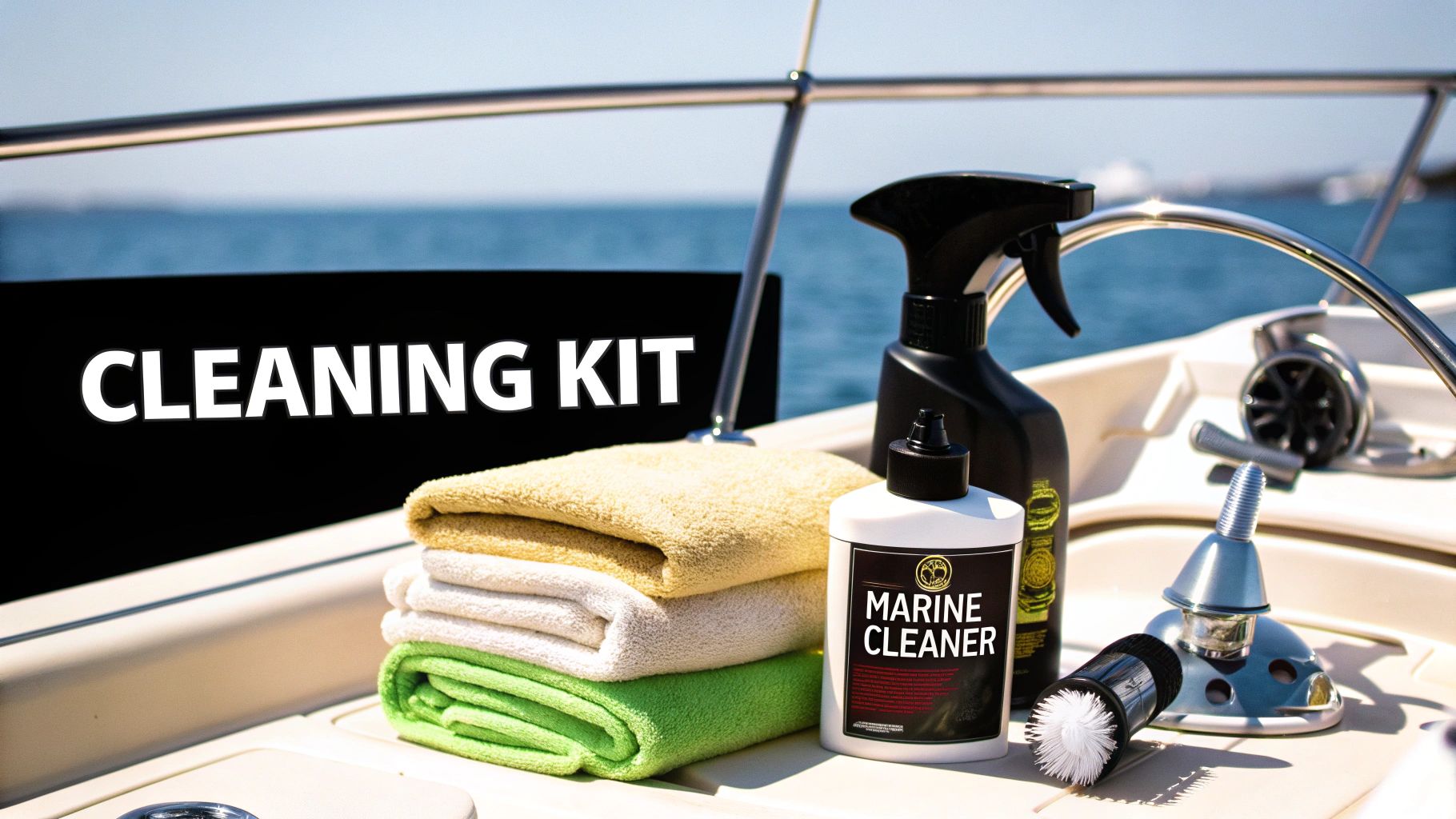
The Right Stuff for the Job
Your cleaning arsenal doesn't need to be huge, but every item has to be the right one for the job. Here’s a quick look at what you'll need to get started.
| Tool or Product | Best For | Why It's Essential |
|---|---|---|
| Two Buckets | Initial wash & rinse | Prevents you from dragging salt and grit back onto the glass. One bucket is for soapy water, the other for clean rinse water. |
| Marine-Safe Cleaner | Glass and acrylic | Ammonia-free, pH-neutral formulas won't damage sensitive materials. They are designed to cut through tough salt spray. |
| Microfiber Towels | Washing & drying | Their fine fibers trap and lift dirt away, preventing micro-scratches that cotton rags and paper towels almost always cause. |
| Gentle Wash Mitt | Loosening heavy grime | A soft microfiber wash mitt gets into corners and lifts off dirt without being abrasive. |
With these items ready, you have a simple but effective kit that protects your investment while giving you that crystal-clear view you're after.
Your Go-To Cleaning Crew
Let's break down the non-negotiables for a perfect, streak-free shine every time.
- The Two-Bucket System: It’s simple but brilliant. One bucket holds your soapy wash water, and the second is just for clean freshwater to rinse your mitt. This method stops you from dunking a dirty mitt back into your clean water and dragging abrasive grit right back onto your windshield.
- A Solid, Safe Cleaner: This is where a dedicated marine formula proves its worth. You need something that’s pH-neutral and ammonia-free to be safe for both glass and plastics. A product like Boat Juice Glass Cleaner is a great choice because it's engineered to slice through stubborn salt film without harming any of your boat's surfaces.
- Plenty of Microfiber Towels: Ditch paper towels and old t-shirts for good. High-quality microfiber is a must. The tiny fibers are designed to grab onto dirt particles and lift them away, not just smear them around and cause scratches.
A Pro Tip: Keep Your Towels Separated
Here’s a small trick that makes a massive difference: always use separate towels for washing and drying. Designate one set of towels for the initial cleaning and have a second, totally clean and dry set ready for the final buff. This simple habit is the key to avoiding those frustrating streaks that show up after you thought you were finished.
By keeping your "dirty" wash towels and "clean" drying towels separate, you guarantee that the final wipe-down is only polishing the surface, not redistributing the microscopic grime you just worked so hard to remove. It’s a tiny step that delivers a flawless, professional look.
Once you’ve got this simple toolkit together, you’re all set to tackle the job safely and get it done right. You have the right products to break down the grime and the right tools to wipe it all away without leaving a single scratch behind.
Step-by-Step: The Perfect Cleaning Method
Alright, you've got your gear ready, so let's get that windshield so clear you'll forget it's even there. Getting a professional, streak-free finish isn't about secret formulas or complicated tricks; it’s all about a simple, smart process. Follow these steps, and you'll nail it every time.
First, before you touch that windshield with a cleaner, give it a gentle freshwater pre-rinse. Never start scrubbing a dry windshield. It's covered in abrasive salt crystals, dust, and fine sand that act like sandpaper under your cloth, leaving a web of permanent micro-scratches. A quick spray with a hose is all it takes to lift that grit off safely.
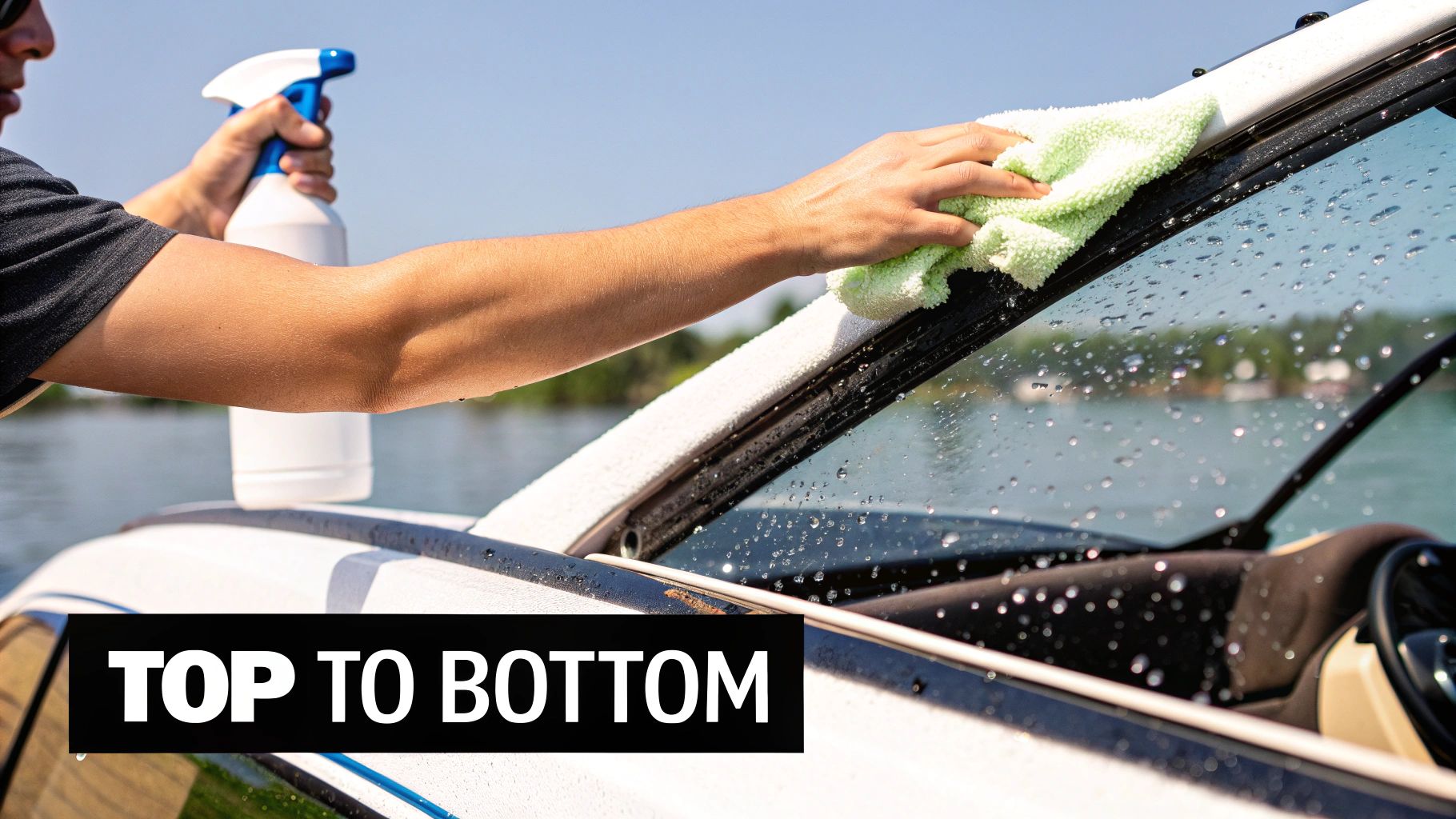
Seriously, this one-minute rinse is your best defense against accidental damage. It's a tiny bit of effort that saves you from a massive headache later.
Work in Small Sections
After the rinse, here’s the next pro tip: don’t try to clean the whole windshield at once. Instead, work in small, manageable sections, about two-foot by two-foot. This keeps your cleaner from drying on the surface before you can wipe it away, which is exactly what causes stubborn streaks—especially if you're cleaning in direct sunlight.
For each section, give it a light mist of your marine glass cleaner. You don't need to drench it; a fine, even layer is perfect. This is where a quality product like Boat Juice Glass Cleaner really shines, as its ammonia-free formula cuts through salt film and bug guts but is completely safe for acrylic and special glass coatings.
The Secret to a Streak-Free Wipe
This is where the magic happens. The real secret to a perfectly clear, non-streaky finish lies in a simple two-pass wipe that ensures you’re actually removing the dirt, not just pushing it around.
- First Pass (The Grime Lifter): Grab a clean, damp microfiber towel and wipe the section with overlapping horizontal strokes. Start at the top and work your way down. This pass does the heavy lifting, picking up the gunk your cleaner just dissolved.
- Second Pass (The Finisher): Now, flip your towel to a clean, dry side (or grab a fresh one). Wipe that same section again, but this time, use overlapping vertical strokes. This second pass removes any leftover moisture and cleaner residue, completely eliminating any potential for streaks.
By wiping in two different directions, you get 100% coverage and lift away any film a single-direction wipe would have missed.
Why this pattern works: Think about painting a wall. One coat often leaves faint lines or spots you missed. The second coat, applied in a different direction, covers those imperfections. It’s the exact same principle here. The horizontal and vertical passes work together to create a flawless, invisible finish.
Final Inspection and Drying Details
Once you've worked your way across the entire windshield, take a step back and check your work from a few different angles. The sun will reveal any smudges you might have missed. If you see anything, a quick buff with a clean, dry microfiber is all it takes to make it disappear.
Using a dedicated drying towel, like a super-absorbent, waffle-weave Boat Juice Glass Towel, is the final piece of the puzzle. These towels are designed to be lint-free and soak up every last drop, giving you that final buff for a sparkling, crystal-clear view.
How to Remove Stubborn Water Spots and Salt Film
Ever finish cleaning your boat, step back to admire your work, and see your windshield is still covered in those ghostly outlines? That’s the classic sign of stubborn hard water spots or a baked-on salt film. It’s frustrating, and no amount of regular cleaner or elbow grease seems to make a dent.
The secret isn't scrubbing harder; it's using the right product for the job. Those spots are mostly calcium and magnesium deposits left behind when water evaporates. A standard cleaner just slides right over them, but a dedicated water spot remover is designed to break those mineral bonds, dissolving them so you can simply wipe them away.
Tackling Hard Water Spots
When you're dealing with tough, almost etched-in water spots, you need a specialist. This is exactly where a dedicated product like Boat Juice Water Spot Remover becomes your best friend. Its formula is made specifically to target and dissolve these mineral deposits without harming your glass or acrylic surfaces.
Here's how to get the best results:
- First, make sure the windshield is clean, dry, and cool to the touch. It’s always best to work in the shade if you can.
- Spray the remover directly onto a small section where the spots are worst.
- Let it sit for about 30-60 seconds. This is the most important part—you have to give the formula time to work and break down the minerals.
- Gently work the product in with a soft microfiber applicator pad, then wipe the area clean with a fresh, dry microfiber towel. You'll see the spots lift right off.
If you have really stubborn buildup, you might need a second pass. Just be sure not to let the product dry on the surface. For more info on this, check out our guide on finding the best water spot remover for boats.
Why This Works: Think of water spots as tiny mineral rings left behind after water evaporates. A water spot remover uses a targeted formula to dissolve these rings at a molecular level. You aren't just scrubbing them off; you're chemically breaking them down so they can be wiped away effortlessly.
Conquering Salt Film and Bug Residue
Salt spray creates a thick, hazy film that can feel impossible to remove, while bug residue has a nasty habit of baking onto the glass in the sun. The game plan here is similar, but the focus is on dissolving the organic and saline crud. If you're really struggling, you can find great advice on how to remove hard water stains that also applies well to salt film.
Your first move should always be a pre-rinse with fresh water. This simple step prevents the micro-scratches that come from grinding abrasive salt crystals into the glass with a towel. After the rinse, use a quality marine-specific cleaner. A formula like Boat Juice Glass Cleaner can dissolve bugs and bird droppings quickly without leaving streaks behind.
Keeping That Crystal-Clear View
Alright, you've put in the work and your windshield is spotless. How do you keep it looking that way for more than a single trip? The final step, and arguably the most important for the long haul, is adding a layer of protection.
Think of it just like waxing your hull. It’s not about the initial clean—it’s about defending that finish against everything the water throws at it. Cleaning gets you back to a perfect surface, but a good protectant is what keeps it that way.
Creating a Water-Repellent Shield
The goal here is to create a hydrophobic surface. That's a fancy word for a simple concept: it makes water bead up and roll right off. When you apply a quality protectant, it bonds to the glass or acrylic, creating an incredibly slick, invisible barrier.
Instead of smearing across your view, water forms into tight droplets and zips away. As those beads roll off, they pull salt, dirt, and other gunk along with them. This "self-cleaning" effect drastically cuts down on buildup, meaning stubborn water spots never get a chance to form.
By making the surface repel water, you’re not just keeping it clean—you're making your next cleaning job significantly easier. The grime just can't get a good grip, so a quick wipe is often all it takes to get back to perfect.
Applying Your Protective Coat
This is the easiest part of the whole process. A simple spray-on protectant is the perfect finisher. Something like our Boat Juice Protection Spray is made for exactly this. It's formulated to provide UV protection and create that all-important hydrophobic layer without leaving a greasy film behind.
Applying it is a breeze:
- Start with a clean, dry surface. Make sure there’s no leftover cleaner or dust on the windshield.
- Spray a light mist. A little goes a long way. Lightly coat one section at a time.
- Buff it out. Grab a fresh, dry microfiber towel and gently buff the area until it’s perfectly clear and streak-free.
This quick final step is your secret weapon for a season of clear views. It’s a two-minute job that saves you hours of future scrubbing and helps protect your windshield from the elements.
A Simple Maintenance Schedule for a Perfect View
Putting all this into practice is what separates a quick chore from a frustrating project. A simple, consistent routine is your best defense against the stubborn grime, salt film, and water spots that want to ruin your view.
After Every Single Trip
This is the golden rule of boat care. Before you cover the boat or head home, give your windshield a quick freshwater rinse. This five-minute job is the most important habit you can build. It washes away the day's salt spray and loose crud before it has a chance to bake on, making your next proper cleaning a thousand times easier.
Once a Month
About once a month (or more often in saltwater), you'll want to do a more thorough job. This is when you'll go through the full deep-cleaning process we talked about earlier.
- Start with a good freshwater pre-rinse to get rid of any loose debris.
- Give it a complete wash with a quality marine cleaner, like our Boat Juice Glass Cleaner.
- Use that two-pass wiping method (horizontal, then vertical) to get a truly streak-free finish.
Start and End of the Season
Twice a year—when you're prepping the boat in the spring and winterizing it in the fall—it’s time to give the windshield some extra love. This is the perfect time for a full "clean and protect" session. A deep clean before winter storage is non-negotiable, as it stops trapped moisture and grime from causing mold or corrosion over the offseason.
After this seasonal deep clean, apply a protectant. A quick mist and wipe-down with a product like Boat Juice Protection Spray adds that awesome hydrophobic layer. This preps your windshield for the season ahead or guards it during its long winter nap, making sure it’s crystal clear and ready to go when you are.
Ready to get started? Your next step is to make sure you have the right tools for the job. Boat Juice has everything you need to get that perfect, streak-free shine, every single time.