


· By Boat Juice Team
The Best Water Spot Remover for Boats: A Complete Guide
When you're looking for the best water spot remover for boats, you need something that gets the job done without creating a bigger problem. It has to dissolve those stubborn mineral deposits without stripping your wax or damaging the gelcoat, vinyl, and other sensitive surfaces. For most jobs, a good pH-balanced spray formula is the perfect tool for regular cleanups and tackling fresh to moderate spots.
Your Guide To A Spotless Boat Finish
Let's be honest—nothing ruins the look of your beautiful boat faster than a coat of chalky, stubborn water spots. They're more than just an eyesore. If you let them sit, those mineral deposits can actually etch into your gelcoat, glass, and chrome, causing permanent damage that's a real headache to fix.
This guide is your complete game plan for winning the war against water spots. We’ll break down what causes them in the first place, show you how to choose the right remover, and give you a simple, step-by-step process to bring back that showroom shine. You'll walk away knowing not just how to get rid of spots, but why a certain method is the right one for your boat.
What This Guide Covers
Our mission is to arm you with the knowledge to pick the right water spot remover and use it like a pro. We’ll also share some practical, real-world tips to keep those spots from coming back, so you can spend less time cleaning and more time on the water.
If you're building out your full cleaning arsenal, be sure to check out our list of the best boat cleaning products for more essential gear.
Here’s a quick look at what we'll cover:
- The Science Behind the Spots: We'll dig into why water spots form and the real damage they can do to your boat.
- Choosing Your Weapon: A look at different types of removers and the best situations to use each one.
- The Perfect Polish: Clear, actionable steps to get a flawless, spot-free finish every time.
- Smarter Boating, Not Harder Cleaning: Simple habits to prevent water spots from ever taking hold.
Understanding the difference between products is key. A heavy-duty acid-based cleaner might be tempting for tough, baked-on stains, but it could wreak havoc on your vinyl graphics. On the flip side, a gentle spray is perfect for a quick wipe-down after a day on the lake but won't stand a chance against spots that have been there for weeks.
| Feature | Why It Matters for You | The Bottom Line |
|---|---|---|
| Surface Safety | Crucial | You need a formula that's tough on minerals but gentle on your gelcoat, graphics, and glass. The wrong product can cause irreversible damage. |
| Ease of Use | Very High | Your time at the dock is precious. A simple spray-on, wipe-off application means less work and more time enjoying your boat. |
| Effectiveness | Essential | It has to actually work. A good remover will dissolve and lift mineral deposits, not just push them around or hide them. |
| Versatility | Helpful | A single product that can safely clean the hull, windows, and chrome hardware saves you space and money in your dock box. |
Why Water Spots Are More Than Just an Eyesore
It’s tempting to glance at a few white spots on your hull and think, "I'll get to that later." But what looks like a minor cosmetic issue is actually the first warning sign of a problem that can permanently wreck your boat's finish.
When water evaporates off your boat, it leaves behind whatever minerals it was carrying—usually calcium and magnesium from the lake or corrosive salt from the ocean. These deposits don't just sit there. They immediately start a chemical assault on your boat's protective gelcoat.
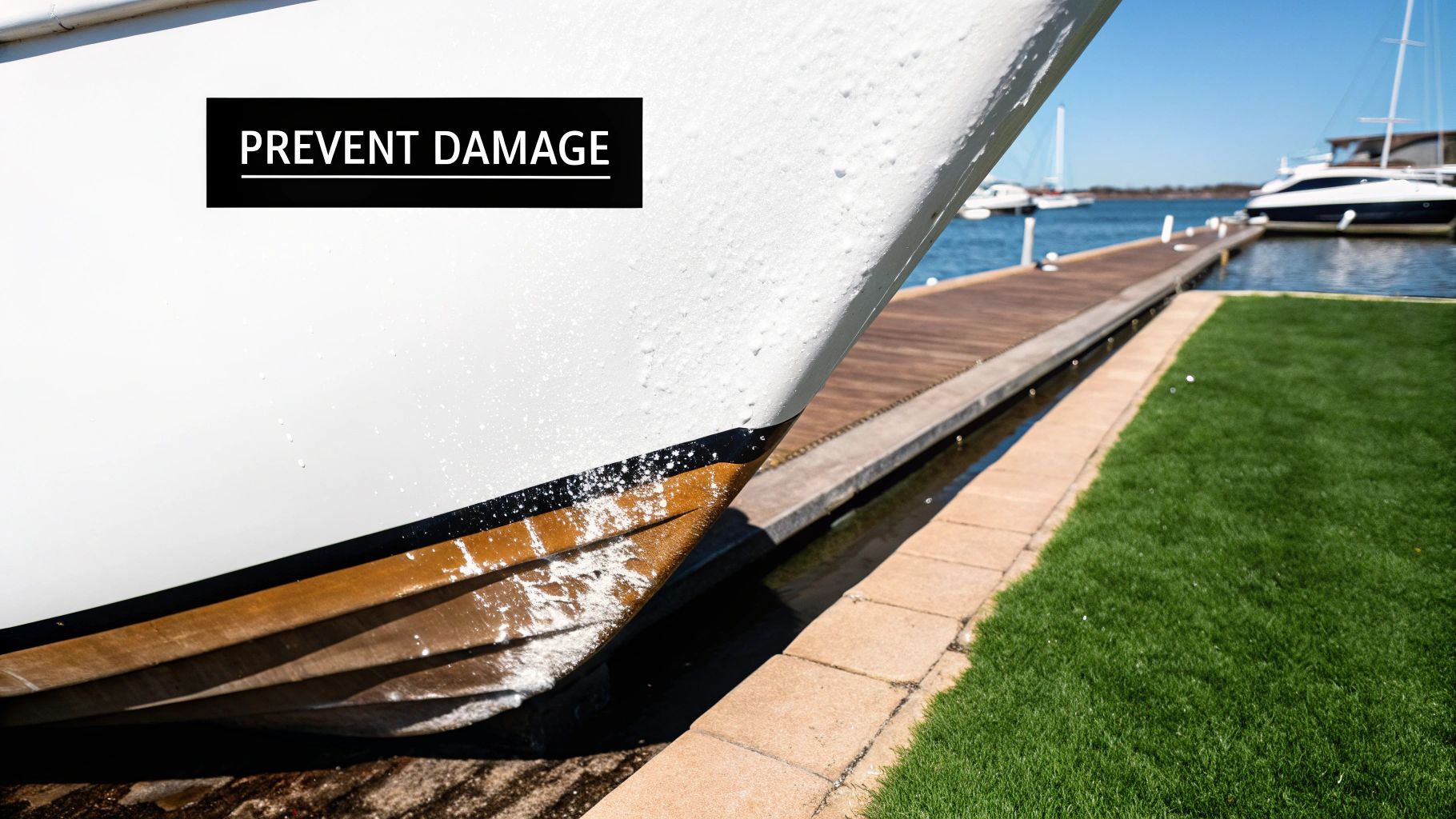
This process is called etching. The minerals literally eat into the surface, creating tiny pits that catch and scatter light. That’s why a boat covered in water spots looks dull and chalky instead of having that deep, wet shine you love.
From Stains to Surface Damage
When they first appear, water spots are just mineral deposits resting on the surface, making them easy to remove with the right cleaner. The real trouble starts when the sun gets involved. The heat bakes those minerals right into the gelcoat, speeding up the etching process and making them a nightmare to remove.
Let that go for a season, and those microscopic pits can become deep enough to catch your fingernail. Now you’re not just cleaning a stain; you're dealing with physical damage. Fixing that level of etching often means heavy compounding or even wet sanding—a headache you'd rather avoid.
Here's the bottom line: Water spots are a progressive problem. The longer they sit, the more damage they do, and the harder they are to fix. A quick spray and wipe today saves you from a massive restoration project tomorrow.
The Growing Demand for Specialized Cleaners
If you're fighting this battle, you're not alone. Keeping a boat looking its best has created a huge industry. The global market for boat cleaning products is already valued at nearly USD 1.95 billion in 2024 and is expected to climb by 5-6% every year.
This growth is fueled by boat owners like you who are looking for specialized solutions, not one-size-fits-all cleaners. A dedicated, pH-balanced formula is crucial for protecting your investment. You can learn more about the marine cleaning market trends to see why performance-driven products are quickly becoming the new standard.
For products like Boat Juice Extreme Water Spot Remover, this trend proves what we already know: you want something that’s both effective and safe. You expect a remover that can neutralize stubborn mineral deposits without stripping off your wax or damaging sensitive surfaces like seats and decals.
Comparing The Different Types Of Water Spot Removers
Staring at the boat care aisle can make your head spin. You’ve got a dozen bottles all claiming they’re the best water spot remover on the market. The secret is that they aren’t all created equal. They generally fall into three categories, each with a different way of tackling the problem.
Grabbing the wrong one won’t just waste your time and money—it could actually damage your boat's finish. So, let's cut through the marketing noise and look at the real players: aggressive acidic removers, corrective abrasive compounds, and smart, maintenance-focused pH-balanced sprays. Knowing when to use each is the key to a spotless boat.
Acidic Removers: The Heavy Hitters
Acidic removers are the big guns. They work through a powerful chemical reaction, using a low-pH formula to dissolve stubborn mineral deposits. This makes them incredibly effective on ugly, baked-on spots that have been lingering for weeks or months.
But all that power comes with serious risks. Using a harsh acid on your boat is like using a sledgehammer to hang a picture frame—it’s overkill for most jobs and can cause real damage. These formulas can easily dull your gelcoat, discolor vinyl graphics, and completely strip off any wax or sealant you've worked so hard to apply.
Real-World Example: You just bought a used boat that’s been sitting neglected, and it has a thick, crusty mineral line caked onto the hull. After gentler methods fail, a very carefully applied acidic remover might be your last shot before resorting to heavy machine polishing.
Your Action Step: Never use acidic products for your regular wipe-downs. They are a last-resort corrective tool, not a maintenance product. Keep them far away from sensitive surfaces like decals, vinyl seats, and certain metals.
Abrasive Compounds: The Surface Correctors
Unlike chemical removers, abrasive compounds work mechanically. They're packed with tiny particles that physically scrub away a microscopic layer of your gelcoat. This process levels the surface, removing the etched-in spot right along with it. It’s the same basic idea as using a polish to remove swirl marks.
The big advantage here is that abrasives can fix spots that are literally etched into the surface—the kind you can feel with your fingernail. The downside? You’re permanently removing a bit of your boat’s protective finish. If you use a compound that’s too gritty or use it with the wrong technique, you’ll trade water spots for a nasty haze of swirl marks.
Real-World Example: During your spring cleanup, you notice faint spots on the transom that last season's sun baked into the gelcoat. This is the perfect time to grab a fine-cut polish and a dual-action polisher to gently level the surface and bring back that deep, glossy shine.
Your Action Step: Don’t reach for a compound to clean up fresh spots from your last lake trip. That’s like getting out the sander to dust a table. Always start with the least aggressive method that gets the job done.
The fact is, water spots are a seriously persistent and costly headache for boat owners. Professional marine detailers estimate that severe water spots can add 15–40% more labor time to a standard exterior detail. This is exactly why prevention is so critical; regular maintenance can lead to a 30% lower incidence of deep, hard-to-remove spots over a season. You can discover more insights about marine maintenance costs and see how using the right products saves boatloads of time and money.
pH-Balanced Sprays: The Smart Solution
This is the sweet spot for everyday boaters. A pH-balanced spray is engineered to be tough on mineral deposits but incredibly gentle on everything else. These formulas use advanced cleaning agents to safely break the bond between the minerals and your boat’s surface, allowing you to simply wipe them away.
The best part? They do this without stripping your wax or harming your gelcoat, vinyl, or graphics. This makes them the perfect tool for your regular cleaning routine. A quality spray is designed for simple spray-on, wipe-off use, getting you back on the water instead of spending hours detailing.
The Boat Juice Approach: This is precisely why we created Boat Juice Extreme Water Spot Remover. It’s formulated to deliver the chemical muscle needed to dissolve frustrating mineral deposits but is perfectly balanced to be safe for every sensitive surface on your boat. It strikes the ideal balance between power and safety, making it the go-to solution for 95% of the water spot issues you'll ever face.
How Water Spot Remover Types Compare
To make it even clearer, here’s how these different approaches stack up for situations you'll actually face. Choosing the right tool for the job is everything when it comes to keeping your boat looking its best.
| Remover Type | How It Works | Best For These Situations | Key Risks and Considerations | The Boat Juice Solution |
|---|---|---|---|---|
| Acidic Removers | Chemical reaction dissolves mineral deposits using a low-pH formula. | Severe, old, and crusty mineral buildup on durable surfaces like bare gelcoat. | Can dull gelcoat, strip wax/sealants, and damage vinyl, decals, and sensitive metals. Use with extreme caution. | Boat Juice is not an acidic formula, as we prioritize surface safety for routine use. |
| Abrasive Compounds | Mechanically removes a micro-layer of the surface, leveling out etched spots. | Water spots that are physically etched into the gelcoat and can be felt with a fingernail. | Removes a small amount of your boat's finish. Risk of creating swirl marks or haze if used improperly. | Use an abrasive polish only for deep correction, then maintain the finish with Boat Juice. |
| pH-Balanced Sprays | Safely breaks down fresh to moderate mineral deposits without harsh chemicals. | Routine wipe-downs after each use; removing fresh or recently formed water spots. | May not be strong enough for severely neglected or deeply etched spots that require physical abrasion. | Boat Juice Extreme Water Spot Remover. Our pH-balanced formula designed for maximum effectiveness and total surface safety. |
For the vast majority of your needs, a high-quality, pH-balanced spray is the smartest and safest choice for keeping water spots at bay all season long.
Your Step-By-Step Guide To Flawless Water Spot Removal
Alright, now that you know what you’re up against, let’s get to work. Getting that perfect, spot-free shine isn't about scrubbing harder—it's about using the right technique. Follow these steps to safely and effectively get rid of those frustrating spots and nail it on the first try.
This isn't just a list of instructions. It's a complete game plan designed to protect your boat's valuable finish while delivering a shine you can be proud of. We'll cover everything from prep work to the final protective wipe-down, leaving no room for error.
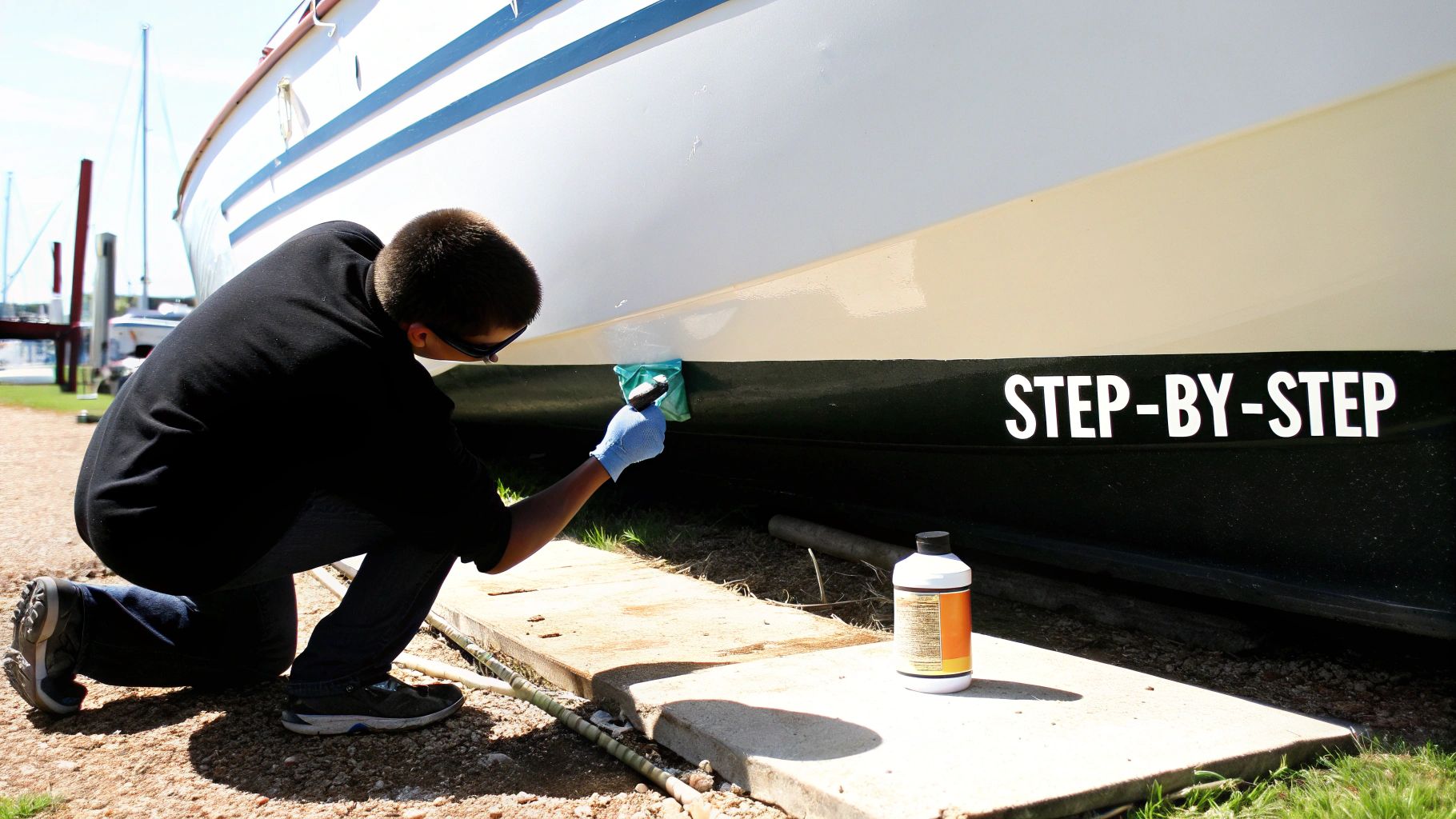
Step 1: Start With A Clean Foundation
Before you even think about reaching for a water spot remover, you need to wash your boat. Trying to remove spots on a dirty surface is a surefire way to make things worse. You’ll just end up grinding all that loose dirt and grit into your gelcoat, creating a mess of fine scratches and swirl marks.
A thorough wash with a good boat soap gets all the loose grime off. This simple but critical step ensures your water spot remover can go to work directly on the mineral deposits without anything getting in its way.
If you want a full rundown on washing your boat the right way, check out our guide on how to clean fiberglass boats.
Step 2: Find The Right Environment
Where you work is almost as important as how you work. The golden rule is to always work on a cool surface and, if possible, in the shade. If you spray any cleaning product onto a hot, sun-baked hull, it’s going to evaporate almost instantly.
When the product dries that fast, it doesn't have time to dissolve the minerals. Instead, you're often left with a streaky residue that’s even harder to remove than the original spots. A cool, shaded spot gives the formula the time it needs to do its job.
Step 3: Gather Your Essential Tools
Having the right gear on hand makes the whole process smoother and guarantees a better result. You don’t need a giant toolbox, just these key items.
- A Quality Water Spot Remover: A pH-balanced formula is your best friend. Something like Boat Juice Extreme Water Spot Remover is perfect because it’s strong enough to break down mineral stains but is safe for your gelcoat, wax, and graphics.
- Microfiber Applicator Pad: An applicator gives you a firm, even surface to apply the product. This allows you to gently work on the spots without scratching the finish.
- Multiple Clean Microfiber Towels: You’ll need at least two. One for the initial wipe-off and a second, bone-dry one for the final buff. Using dirty towels just smears grime around and causes streaks.
Step 4: Apply The Remover Correctly
Okay, time for the main event. The key is to be methodical and work in small, manageable sections. Don't try to tackle the entire hull at once.
- Work in Small Sections: Break the surface down into two-foot by two-foot sections. This keeps you in control and ensures you can treat and buff each area before the product dries.
- Apply to the Applicator: Lightly mist your water spot remover directly onto your microfiber applicator pad, not the boat. This prevents overspray and gives you much better control.
- Use Gentle, Overlapping Motions: Gently wipe the product onto the spotted area using straight-line, overlapping passes. Let the chemicals do the heavy lifting—no aggressive scrubbing needed.
- Let It Dwell Briefly: Give the product about 30 seconds to sit on the surface. This "dwell time" is when the active ingredients break down those stubborn mineral deposits.
Pro Tip: For really tough, layered spots, you might need a second pass. Don't just add more pressure. Simply repeat the process. Patience is far more effective—and a whole lot safer for your gelcoat—than brute force.
Step 5: Wipe And Buff To Perfection
Once the remover has had a moment to work, it's time to reveal that shine. This two-towel wipe-down is the secret to a streak-free finish.
Take your first clean microfiber towel and wipe away the product and the dissolved minerals. Make sure to flip the towel to a clean side often so you aren't just spreading the residue around.
Then, immediately grab your second, completely dry microfiber towel. Buff the area with light pressure until it’s crystal clear and glossy. This final buff removes any lingering moisture and is what really brings out that flawless, reflective surface.
Step 6: Protect Your Hard Work
You did it—the water spots are gone and your boat looks amazing. But don't stop now. The final, and arguably most important, step is to protect that finish. A good layer of protection makes future cleanups a breeze and helps stop new water spots from forming in the first place.
A high-quality spray wax or sealant, like Boat Juice Protection Spray, creates a hydrophobic barrier. This makes water bead up and roll right off, taking the minerals with it instead of letting them dry on the surface. Protecting your finish is the key to keeping that spot-free shine all season long.
How to Build a Proactive Boat Maintenance Routine
Getting rid of water spots is great, but what if you could prevent them from showing up in the first place? A simple, proactive maintenance routine is the best way to keep your boat looking sharp all season long. This isn't about adding hours of work; it's about building a few smart habits that save you from a major cleaning headache later.
The best defense is a good offense, and that starts the second you pull your boat out of the water. Just a few minutes after each trip can stop those mineral deposits from ever getting a chance to bake into your gelcoat.
The Five-Minute Wipe-Down Ritual
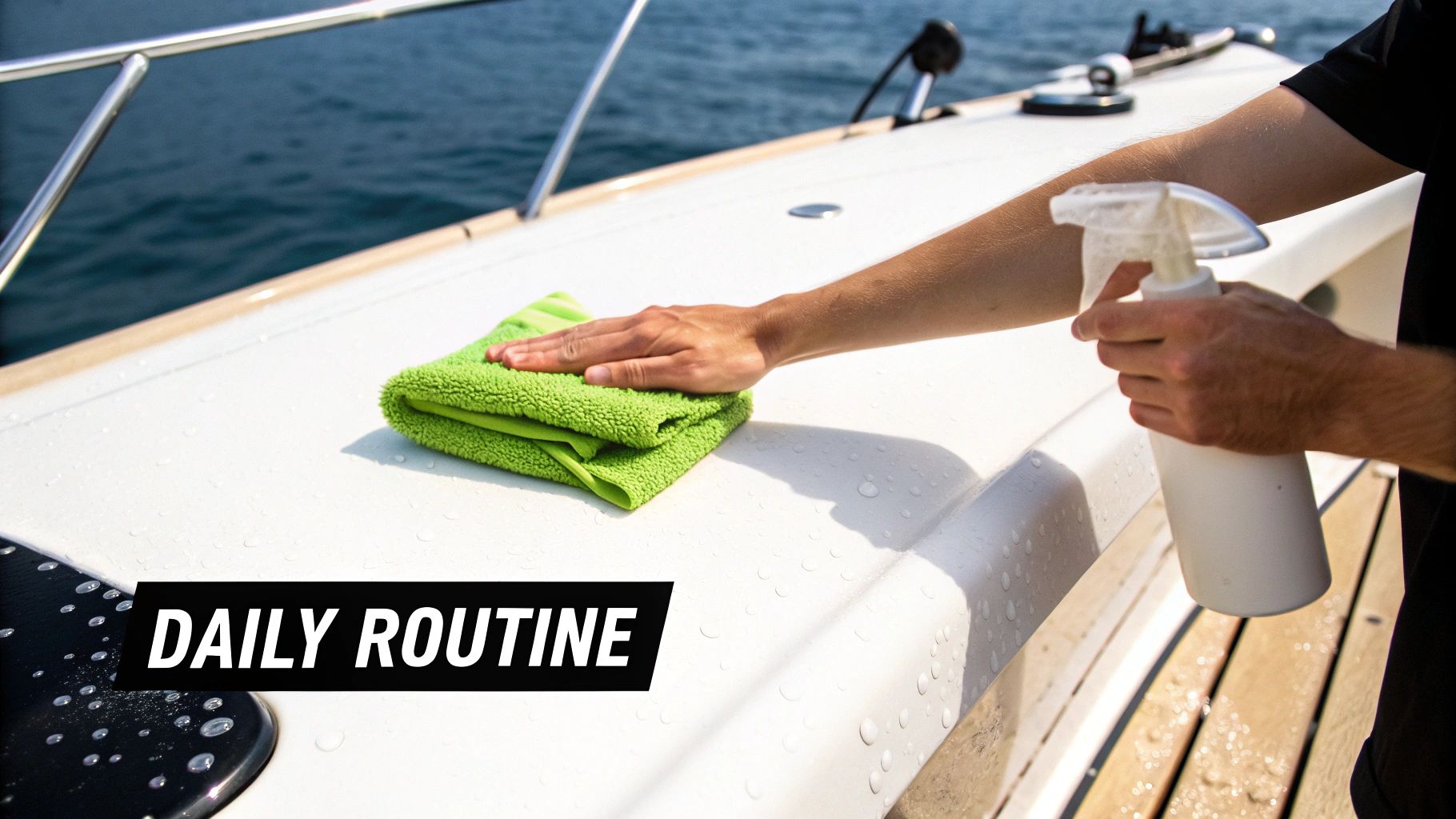
Your most powerful tool is a simple wipe-down after every single trip. When water evaporates, it leaves minerals behind. If you wipe the water away before it dries, you physically remove the problem at its source. This one habit can prevent over 90% of new water spots from forming.
Your Actionable Post-Boating Checklist
A good routine is all about consistency. Make these quick steps the final part of every trip to the lake or ocean.
- Quick Rinse: If possible, give the hull a quick rinse with fresh water to wash away salt or lake minerals right away.
- Dry Thoroughly: Grab a large, absorbent microfiber drying towel and wipe down the hull, windows, and any chrome surfaces.
- Spot-Treat as Needed: Keep a bottle of Boat Juice Extreme Water Spot Remover and a microfiber towel handy. See a few spots starting to form? A quick spray and wipe will knock them out before they can set in.
The Power of Protective Coatings
Wiping down your boat is crucial, but the secret to making it effortless is a good protective layer. Applying a quality sealant or wax creates a hydrophobic (water-repellent) barrier that completely changes how water behaves on the surface.
Instead of sitting in flat puddles that slowly evaporate, a protected surface makes water bead up into tight droplets. These beads barely touch the surface and just roll right off, taking the minerals with them. A hydrophobic coating also makes your entire boat easier to clean, as dirt and grime can't stick as easily to a slick surface.
Integrating Protection into Your Routine
Applying protection isn't a one-and-done deal. For the best results, you'll want to refresh that protective layer regularly, especially on high-exposure areas like the hull sides.
Using a product like Boat Juice Protection Spray is perfect for this. After you’ve washed your boat and cleared any existing spots, a quick application adds a tough layer of ceramic sealant. This not only gives your boat an amazing gloss but also reinforces that all-important hydrophobic barrier. If you ever have to correct deeper damage before sealing, understanding the basics of boat compounding and polishing will help you restore the surface perfectly.
This proactive cycle—clean, spot-treat, protect—is the ultimate strategy for a flawless finish. It turns boat care from a reactive chore into a simple, rewarding part of owning your boat.
Got Questions About Water Spots? We've Got Answers
Even with the best gear, a few questions always pop up. Let's run through some of the most common ones we hear from fellow boaters. Getting these details right is what makes the difference between a decent shine and a head-turning finish.
We'll give you straight, no-nonsense answers to help you handle any issues and get the most out of your hard work.
Can I Just Use Vinegar or Other Household Cleaners?
We hear this one a lot. While it's true that vinegar's acidity can break down some mineral deposits, it really belongs in your kitchen, not your boat cleaning kit. The problem is that vinegar is an uncontrolled acid. Its strength can be inconsistent, and it's notorious for dulling your gelcoat, stripping away your wax, and even damaging vinyl decals and rubber seals over time.
You're always better off with a product made for the job. A pH-balanced formula like Boat Juice Extreme Water Spot Remover is designed from the ground up to attack the specific minerals left by hard water without causing collateral damage to your boat's surfaces.
How Often Should I Be Using a Water Spot Remover?
Use it whenever you see spots that a normal wash won't touch. Your best line of defense is a quick wipe-down of wet areas after every trip—this will stop most spots from ever getting a foothold.
Think of a dedicated remover as your secret weapon. When you see spots starting to build up after a few outings or at the end of a long weekend, that's the perfect time to grab the bottle. Treating fresh spots is a simple wipe-down; waiting until they're baked on by the sun turns a small chore into a major project.
Will a Spray Remover Get Rid of Old, Etched-In Spots?
For most water spots, even ones that have been sitting for a little while, a good quality spray remover will knock them right out. But once those spots have physically etched into the gelcoat—meaning you can actually feel the little craters with your fingernail—the problem has gone from a surface stain to surface damage.
At that point, a spray cleaner won't cut it. You'll need to step up to a polishing compound and a machine polisher to physically level the surface and remove that pitting. This is precisely why using a remover and a protective sealant is so critical; it stops spots from ever getting to that stage.
Ready to make water spots a thing of the past? Equip your boat with the best. The Boat Juice Extreme Water Spot Remover is engineered for power and safety, ensuring a flawless finish every time.