


· By Boat Juice Team
Best Spray Wax for Boats: Your Guide to a Lasting Shine & Protection
If you've ever found a great spray wax, you know it's a total game-changer for keeping your boat looking its best. A top-notch product like Boat Juice Protection Spray gives you a quick and surprisingly tough shield against the harsh marine world. It packs powerful UV protection and a slick, water-repelling finish into one easy-to-use bottle, making your cleanup after a day on the water almost effortless.
This guide will walk you through exactly why spray wax is so crucial, what to look for when choosing one, and how to apply it for a professional-looking finish. After reading, you'll have the actionable steps you need to protect your boat and keep it shining all season long.
Why Your Boat Needs a Quality Spray Wax
Think of your boat's gelcoat like your own skin. When you're out on the water, it’s constantly bombarded by intense sun, saltwater, and grime. You wouldn't spend a day in the sun without sunscreen, and your boat needs its own high-performance, waterproof "sunscreen" too. That's exactly what a quality spray wax provides.
This protective layer is so much more than just a shine-booster. It’s a critical barrier standing between your boat's finish and its biggest enemies. Without it, you’re inviting damage that builds up season after season, leading to a dull, chalky look and potentially expensive gelcoat repairs down the road.
The Science of Gelcoat Protection
The number one enemy of your boat's finish is oxidation. This is a slow chemical process where the sun’s UV rays break down the resins in the gelcoat. The result? That faded, hazy surface that makes a boat look ten years older than it is. A good marine spray wax is specifically formulated with powerful UV inhibitors that block or reflect those damaging rays before they can do any harm.
On top of that, these formulas create a hydrophobic surface. That’s a technical term that simply means it makes water bead up and roll away. Instead of water sitting flat and leaving ugly mineral deposits (water spots) as it evaporates, it forms tight little beads that slide right off, taking dirt with them.
This water-beading magic isn't just for show. It makes your post-trip wipe-down ridiculously fast and stops grime, salt, and scum from getting a foothold on your hull.
Benefits Beyond the Shine
Sure, we all love that deep, wet-look shine, but the real value of using the best spray wax for boats is in the long-term protection. Making this a regular part of your routine is one of the easiest and most effective things you can do to protect your investment.
Here’s what you get from this simple maintenance step:
- Essential UV Defense: It’s the best way to stop that chalky, faded look from sun damage, keeping your colors bright and vibrant.
- Effortless Cleanup: The slick, protected surface means less scrubbing. Salt spray, fishy messes, and lake scum wipe away with ease.
- Water Spot Prevention: That hydrophobic shield means water can't cling to the surface, which drastically cuts down on annoying water spots.
- Enhanced Value: A glossy, well-kept boat doesn't just look better on the water—it also holds its resale value far more effectively.
Using a spray wax isn't just about looking good. It's smart, preventative care that saves you a ton of time and keeps your boat looking incredible all season long.
Choosing the Right Spray Wax for Your Boat
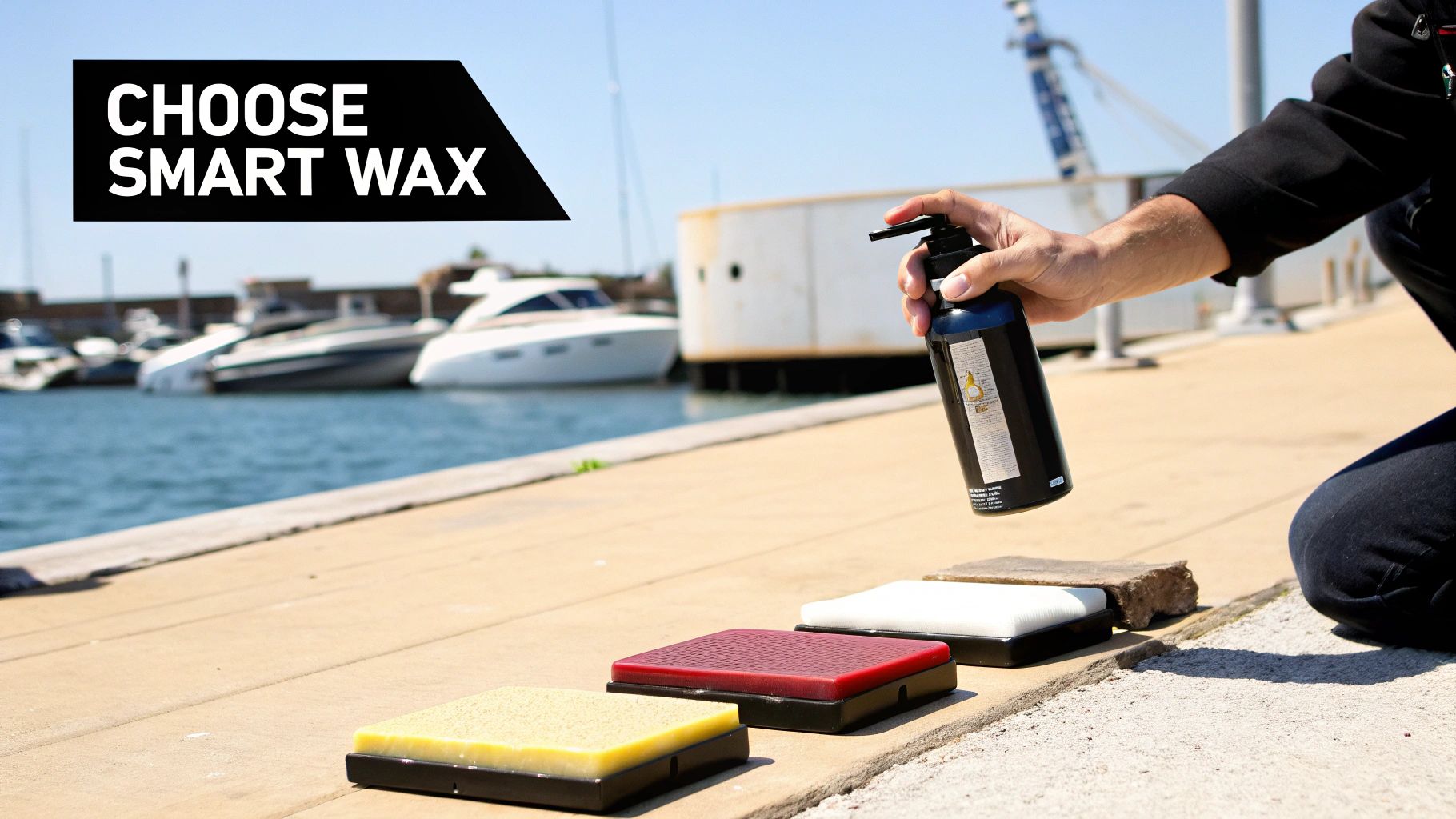
Walking down the marine care aisle can feel overwhelming. You're faced with a wall of bottles, all promising a mirror-like shine and unbeatable protection. But here's a secret: not all spray waxes are created equal.
Choosing the right one is the difference between a quick, temporary gloss and real, lasting protection that saves you work down the line. It's like picking tires for a truck; you wouldn't just grab the cheapest set. You'd get the ones designed for the terrain you’ll be driving on. The same logic applies on the water.
Let’s cut through the marketing noise and look at the four critical features that really matter.
Uncompromising UV Protection
The sun is your boat’s number one enemy. Its relentless UV rays are the main cause of oxidation—that chalky, faded mess that makes a beautiful hull look tired and old. A spray wax without serious UV blockers is like sunscreen that only moisturizes; it might feel nice, but it’s failing at its most important job.
When you're comparing products, look for phrases like "UV inhibitors," "UV blockers," or "UV protection" on the label. This tells you the formula has specific ingredients designed to absorb or deflect those harmful rays before they can damage your gelcoat. Think of it as your boat’s first line of defense.
There’s a reason the global marine coatings market is valued at USD 4.28 billion and climbing. Savvy boat owners know that with UV degradation potentially affecting up to 80% of gelcoat annually, proper protection isn't a luxury—it's essential maintenance. You can dig deeper into these trends and the science over at Coherent Market Insights.
Powerful Hydrophobic Properties
Next up is hydrophobicity. It sounds technical, but it just means the ability to repel water. A great spray wax creates an incredibly slick surface that forces water to bead up into tight little balls and roll right off. So why is this so important for you?
It's all about keeping your boat cleaner, for longer, with less effort. When water spreads out and dries on a surface, it leaves behind minerals, salt, and grime, creating water spots. A hydrophobic surface kicks the water off before it has a chance to evaporate, taking the dirt with it.
A truly hydrophobic finish means less time scrubbing, faster wipe-downs after a day on the lake, and a boat that looks freshly washed even when it isn’t. It’s the ultimate work-smarter-not-harder feature.
Multi-Surface Compatibility
Your boat isn't made of just one material. You’ve got gelcoat, vinyl seats, plexiglass windscreens, stainless steel rails, and probably some non-skid decking. The last thing you want is to buy a dozen different bottles for every surface.
The best spray waxes are versatile. Look for a formula that explicitly says it’s safe for multiple surfaces. A top-tier product can be used on:
- Gelcoat and Paint: For that glossy shine and crucial UV shield.
- Vinyl and Upholstery: To protect against sun damage, fading, and stains.
- Glass and Plexiglass: To help water bead up and roll away for better visibility.
- Metals and Chrome: To add a final pop of shine and a layer of protection.
This kind of versatility saves you time, money, and valuable storage space. When you have a product that can do it all, like our Boat Juice Protection Spray, you can protect almost every part of your boat’s exterior with one simple step.
Ease of Application
Let's be honest, a spray wax is useless if it’s a chore to apply. The whole point of a spray-on product is speed and simplicity. The ideal formula should be a quick "mist-on, wipe-off" job that doesn't require hours of buffing or perfect weather conditions.
Look for a wax that buffs off clean without leaving behind frustrating streaks or a cloudy haze, even in a bit of sun or humidity. It should glide on effortlessly and wipe away with a clean microfiber towel, leaving only a slick, glossy finish. If a product’s instructions read like a science experiment, it defeats the purpose.
To help you make a smart choice, use this checklist to compare different products you're considering.
Spray Wax Feature Comparison Checklist
Use this table to evaluate different spray wax options based on the key performance factors that matter most for boat protection and ease of use.
| Feature | What to Look For | Why It Matters for Your Boat |
|---|---|---|
| UV Protection | Explicit mentions of "UV blockers" or "UV inhibitors" on the label. | This is your primary defense against gelcoat oxidation, fading, and chalking caused by sun exposure. |
| Hydrophobicity | Language like "water-beading," "hydrophobic," or "water-repellent." | Prevents water spots, makes cleaning easier, and keeps your boat looking cleaner between washes. |
| Multi-Surface Use | A clear list of compatible surfaces (gelcoat, vinyl, glass, metal, etc.). | Saves you time and money by letting you use one product for multiple jobs instead of buying several. |
| Ease of Application | "Spray-on, wipe-off" instructions; claims of "no streaking" or "no residue." | Ensures you can get a professional-looking finish quickly without a ton of effort or buffing. |
By keeping these four key features in mind, you'll be able to confidently select a spray wax that not only delivers a brilliant shine but also provides the durable, long-lasting protection your boat deserves.
How to Apply Spray Wax for a Professional Finish
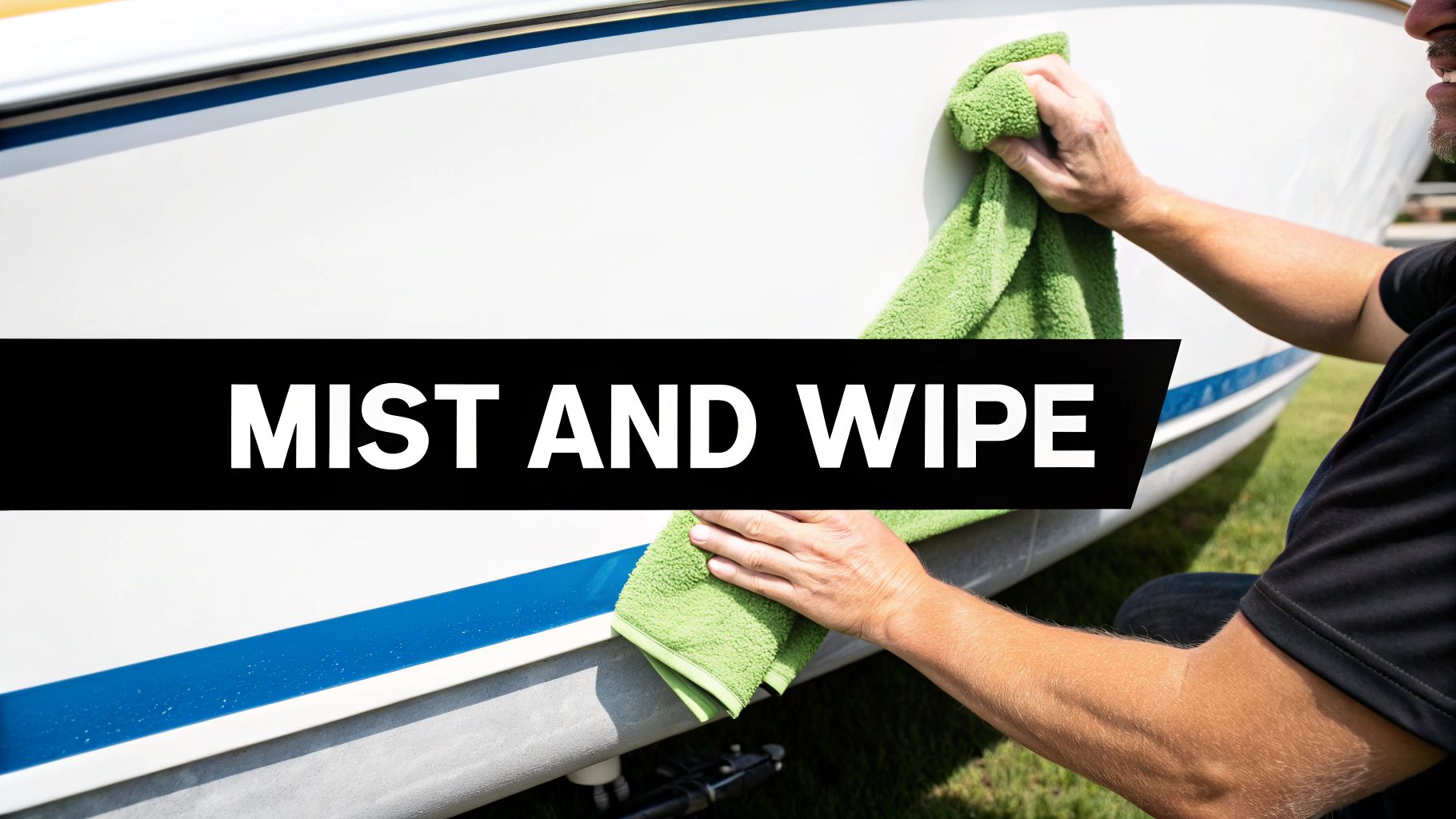
Alright, you've picked out a great spray wax and you're ready to get that slick, glossy shine. The application is where you lock in the protection and killer look, and the good news is, it's incredibly simple. By following a few key steps, you can get a finish that looks like a pro did it.
This isn’t about being overly meticulous; it’s about making sure the wax does its job properly so you get the most out of your effort. You wouldn't paint a dirty wall and expect a perfect result. The same logic applies here—good prep is everything for a lasting, streak-free shine.
Step 1: Start With a Perfectly Clean Surface
Before a single drop of wax touches your boat, the surface must be spotless. Any dirt, salt, or grime left on the hull will just get trapped underneath the wax. This not only ruins the finish but also prevents the wax from bonding properly, which means its protective power will be significantly reduced.
Start with a thorough wash using a pH-balanced boat soap. The right soap will lift away grime without stripping any existing layers of wax. Rinse it completely and dry it thoroughly with a clean, high-quality microfiber towel.
If your boat's gelcoat is looking a bit dull or chalky, a simple wash might not be enough. This is a sign of oxidation, and you'll want to polish the gelcoat first to restore its luster. For a deep dive into bringing that shine back, check out our guide to boat compounding and polishing. A clean, smooth surface is the perfect canvas for your spray wax.
Step 2: Gather Your Tools and Check the Conditions
The right gear makes any job easier, and this is no different. The best part? You only need two things.
- Your Spray Wax: Have the bottle ready to go. Give it a good shake to ensure the formula is properly mixed.
- Two High-Quality Microfiber Towels: Why two? It's the secret to a perfect, streak-free finish. You'll use one towel to apply and spread the wax, and the second, completely dry towel to buff it off.
Now, take a look at your surroundings. One of the biggest mistakes people make is trying to wax a boat in direct, blazing sunlight. The heat causes the wax to dry almost instantly, turning it into a streaky, hazy mess that's a pain to buff out. Always try to work in the shade or during a cooler time of day, like early morning or late afternoon.
Pro Tip: Place the back of your hand on the hull. If it feels hot to the touch, it’s too hot to wax. Let it cool down first. This one simple check will save you a ton of frustration.
Step 3: Master the Mist and Wipe Method
Here's where the magic happens. The trick to getting a perfect finish is to work in small, manageable sections. Don't spray down the entire side of your boat at once. Focus on one small area at a time, about 3x3 feet. This keeps you in control and prevents the product from drying before you're ready.
Just follow this simple rhythm for each section:
- Mist the Product: Lightly mist the 3x3-foot section with your spray wax. You’re not trying to soak it; two or three sprays is usually all you need. Using too much is the fastest way to get streaks.
- Spread with Your First Towel: Take your first microfiber towel and gently wipe the product across the surface. Use straight, overlapping passes to get nice, even coverage.
- Flip and Buff: Immediately switch to your second, completely dry towel and buff the area to a brilliant shine. This final wipe removes any excess haze and activates the wax, leaving behind that slick, water-beading finish.
- Repeat the Process: That's it! Just move to the next 3x3-foot section and repeat until the whole boat is shining and protected.
This mist-and-wipe technique is fast, easy, and practically foolproof. It ensures the wax bonds directly to the gelcoat, giving you that awesome shine and durable protection you're after.
Common Boat Waxing Mistakes to Avoid
Spray wax is one of the quickest ways to get a killer shine on your boat. But even with a simple process, a few small missteps can leave you with a frustrating mess of streaks and haze. The good news is these common blunders are super easy to avoid once you know what to look for.
Think of it like grilling a steak. You can have the best cut of meat, but if you get the heat wrong or skip a step, you won't get the result you want. By avoiding these slip-ups, you’ll ensure your effort pays off with a flawless, tough shine every single time.
Mistake 1: Using Way Too Much Product
When it comes to spray wax, more is not better. It's a common trap to think that slathering on a thick coat means more protection, but it actually has the opposite effect. Over-applying the wax floods the surface, making it impossible to buff off cleanly and leaving behind an oily, streaky mess.
Remember, a quality spray wax is highly concentrated. You only need a light, even mist to do the job. For a 3x3 foot area, just two or three spritzes is plenty. That thin layer is all it takes to bond to the gelcoat and give you full protection without a greasy film.
Mistake 2: Applying Wax to a Hot Surface
This is the number one cause of frustrating streaks and a hazy finish. If your boat's hull has been baking in direct sunlight, that gelcoat can get incredibly hot. When you spray wax onto a hot surface, it dries almost instantly—long before you have a chance to spread it evenly.
This flash-drying leaves a chalky, stubborn residue that's a headache to remove. The fix is simple: always work in the shade or during cooler parts of the day, like early morning or late afternoon. If you're not sure, just place your hand on the hull. If it feels warm, let it cool down first.
Quick Tip: Pay attention to how your microfiber towel feels. If you feel it dragging or getting "grabby" as you wipe, the surface is probably too hot. The wax is becoming tacky instead of staying slick.
Mistake 3: Forgetting the Prep Wash
Waxing a dirty boat is like putting on a clean shirt after working out without showering first—it just doesn't make sense. Any salt, dust, or grime left on the hull gets trapped underneath the wax. This not only creates a gritty, uneven finish but also prevents the wax from bonding properly with the gelcoat.
This mistake not only looks bad, but it also dramatically shortens the life of your protective coat. Always start with a thorough wash using a good boat soap to remove all surface contaminants. If you're fighting stubborn mineral spots, our guide on the best water spot remover for boats will help you get the surface perfectly prepped before waxing.
Mistake 4: Using Dirty or Cheap Towels
Your microfiber towels are just as critical to the final result as the wax itself. If you grab a dirty towel, you're just dragging old dirt and dried wax particles all over your clean boat, which is a recipe for scratches and streaks. Similarly, a cheap, low-quality towel can't absorb the excess product effectively, leaving a hazy film behind.
Do yourself a favor and always use clean, high-quality microfiber towels. The secret is the two-towel method: use one to spread the wax and a second, completely dry one for the final buff. It’s a game-changer for achieving that perfect, streak-free shine.
This growing focus on smarter DIY solutions isn't just a hunch. The vehicle wax market, valued at USD 3.5 billion in 2024, shows just how much people care about this stuff, and boat spray waxes are riding the same wave of innovation. In fact, DIY detailing trends have jumped 25% globally since 2022 as boat owners look to protect their investments. And it pays off—boats that are regularly waxed can fetch 10-15% higher resale prices. You can dig into more of this data over at Verified Market Reports.
Weaving Spray Wax into Your Boat Care Routine
Keeping your boat looking sharp isn't about one exhausting, all-day detailing session a year. The secret is building simple, consistent habits that keep your boat protected all the time. Working a quality spray wax into your schedule is the easiest way to make this a reality.
Think of it this way: a little effort on a regular basis is far more effective than one massive, overwhelming job. By creating a simple seasonal plan, you turn a major chore into a quick, satisfying task. This approach keeps your boat looking its best and shields it from the elements, no matter the season.
Spring Commissioning: Laying the Foundation
When you pull your boat out of storage, you have the perfect opportunity to build a strong foundation of protection for the sunny months ahead. Your first step should be a thorough cleaning to wash away all the dust and grime from the off-season. This gives you a fresh canvas to work with.
Applying a fresh coat of spray wax during your spring prep is like giving your boat its first layer of high-performance sunscreen. It establishes a critical barrier of UV protection right before the sun's rays get really intense. This initial layer does the heavy lifting, fighting off oxidation and fading from the very start of the season.
This isn't just a "nice-to-have" step. A solid base coat in the spring makes every other application more effective and your summer cleanups a whole lot faster.
Summer Maintenance: The Quick Boost
Summer is when your boat is in constant use—facing sun, water, and fun. The goal here isn't to do a full wax job every weekend. Instead, you're looking to maintain and boost the protection you already applied. This is where spray wax becomes your best friend.
The smartest summer strategy is using your spray wax as a drying aid after each trip. Once you've rinsed the boat down, just mist a light coat of wax onto the wet surface and wipe it dry with a microfiber towel. Here's why this works so well:
- No More Water Spots: The wax helps the water sheet right off the surface, taking minerals with it and stopping those frustrating spots from ever forming.
- A Protection Refresh: This quick wipe-down reinforces the existing wax layer, topping off any protection that wore down while you were on the water.
- Saves You Time: You're drying the boat anyway. This method adds virtually no extra time to your routine but delivers huge protective benefits.
Fall Winterization: The Final Shield
As the boating season wraps up, your final maintenance task is one of the most important. Getting your boat ready for storage isn't just about the engine; your gelcoat needs one last, tough shield to get it through the long, quiet months.
Before that cover goes on, give your boat one last, deep clean. Getting every bit of grime, salt, and scum off is critical. For a full rundown on getting your hull spotless, check out our guide on how to clean fiberglass boats.
After it's clean and bone-dry, apply a final, generous coat of spray wax. This isn't just for looks; think of it as a protective blanket. This last layer will shield your gelcoat from moisture, dust, and dirt that can settle in during storage, preventing stains and damage. When you pull the cover off next spring, your boat will be clean, protected, and ready to go.
Your Next Step: Put This Knowledge to Work
You now know what really matters in a spray wax, how to apply it like a pro, and the common pitfalls to avoid. You have a clear roadmap to achieving a flawless, long-lasting finish on your own.
The next move is yours. Starting a simple, consistent waxing habit is the single best thing you can do to keep your boat looking brand new and protect its value. The difference between a boat that looks weathered and one that still turns heads at the dock often comes down to this one simple step.
If you're looking for a product that nails all the key features we've discussed—serious UV blockers, incredible water-beading, and an application process that's almost too easy—we stand behind our Boat Juice Protection Spray. It was formulated to solve the real-world problems boaters face, from beating back sun damage on gelcoat to stopping vinyl seats from fading.
Your boat deserves protection that works as hard as you play. A quality spray wax isn't just about making it shiny; it's smart, preventative care that pays you back every time you launch.
So, your next step is clear. Don't let another season chip away at your boat's finish. Grab a quality spray wax, get into a simple routine, and enjoy a cleaner, shinier, and better-protected boat for years to come.
Got Questions About Boat Spray Wax? We've Got Answers.
Let's tackle some of the most common questions we hear from boat owners. Getting these details right can make all the difference in your boat care routine, so let's clear things up.
How Often Should I Be Using This Stuff?
For the best results, a good rule of thumb is to reapply your spray wax every 3-4 weeks during peak boating season. This keeps that protective UV barrier strong and ensures water continues to bead up and roll right off.
If you're out on the water a lot, especially in intense sun or saltwater, consider using it more often. A great habit is to use it as a drying aid every time you wash the boat. A quick mist-and-wipe reinforces the protection and is a fantastic way to stop those annoying water spots in their tracks.
Can I Use Boat Spray Wax on More Than Just the Gelcoat?
You bet. A top-quality marine spray wax is designed to be a multi-tasker. You can safely use it on your vinyl seats, plexiglass windscreens, and even shiny metal hardware like stainless steel.
It's not just about the shine, either. Using it on these surfaces adds a layer of UV protection to your vinyl, which helps prevent it from fading and cracking over time. Plus, it makes water fly off your windscreen, giving you a much clearer, safer view.
Do I Have to Strip Off the Old Wax Before Putting on a New Coat?
For the most part, no. That’s one of the great things about modern spray waxes—they're designed to be layered. As long as the boat is clean, you can just spray a fresh coat right over the old one to boost the protection.
The main exception is if you're doing a full, deep annual detail. You might also want to start with a completely fresh surface if you're switching from a heavy, old-school carnauba paste wax to a new spray sealant. This ensures the new product can bond perfectly to the gelcoat for maximum performance.
Ready to see just how easy great protection can be? Boat Juice has you covered with our Protection Spray. It’s formulated for a super-simple application while delivering the tough, multi-surface UV defense your boat deserves.