


· By Boat Juice Team
How to Choose the Best Boat Cleaner for Fiberglass and Restore Your Boat's Shine
When you ask what the best cleaner for a fiberglass boat is, the answer is always the same: you need something made specifically for marine use. It has to tackle the gunk that comes from being on the water without stripping away your boat's protective gelcoat. A solid choice, like our own Boat Juice Exterior Cleaner, is designed to be pH-balanced, which is just a technical way of saying it's tough on grime but gentle on your boat's finish.
Why Your Fiberglass Boat Needs a Specialized Cleaner
You know that brilliant shine your boat has? That's not just for looks—it’s the sign of a healthy, well-protected hull. But keeping that fiberglass looking fresh takes more than hosing it down with dish soap. Picking the right cleaner is the make-or-break first step in any real maintenance routine you do yourself.
Think of that shiny outer layer on your boat as its skin. In the marine world, we call this the gelcoat. It’s a porous resin that gives the boat its color and, more importantly, acts as the first line of defense against the elements. It’s what stands between the structural fiberglass and everything the sun, water, and salt can throw at it.
The Hidden Dangers of Using the Wrong Soap
I get it. It’s tempting to grab a bottle of car wash soap or some all-purpose cleaner from the garage. But those products can do more harm than good on your boat. Most of them are packed with harsh detergents designed to strip away everything—including the essential waxes that keep your gelcoat healthy and shielded from the sun.
Using the wrong stuff can cause some serious headaches down the road:
- Accelerated Oxidation: When you strip those protective layers, you're leaving the porous gelcoat naked and exposed to UV rays. This is what causes that chalky, faded look we all dread, known as oxidation.
- Increased Staining: As the gelcoat breaks down, it gets even more porous. It becomes a magnet for everything in the water, from ugly scum lines to algae and mineral stains.
- Costly Future Repairs: Letting this slide doesn't just make your boat look old. It can lead to much bigger problems that require expensive professional restoration work later on.
For fiberglass owners, neglecting cleanup means oxidation and marine growth can slash your boat's resale value by up to 20-30% within just a few years. You can read more insights on protecting your investment from Better Boat.
Protecting Your Investment Starts with the Right Cleaner
At the end of the day, using a cleaner specifically formulated for fiberglass is all about protecting your investment. A quality marine cleaner is carefully pH-balanced to lift grime, salt, and scum without doing a number on that delicate gelcoat. It’s a completely different approach and absolutely fundamental to long-term care.
By choosing the best boat cleaner for fiberglass, you aren’t just washing your boat—you’re preserving its structural integrity, its looks, and its value. This simple choice ensures your boat spends more time looking great on the water and less time in the shop for intensive repairs. Everything else, from polishing to waxing, starts right here.
Matching the Right Cleaner to the Job
Walking into a marine supply store can feel overwhelming. The shelves are packed with bottles, all promising a mirror-like shine. How do you know if you need a simple all-purpose wash, a serious heavy-duty restorer, or something in between? Choosing the right cleaner isn't about finding one magic bottle—it's about building a small, effective arsenal for any situation your boat gets into.
I like to think of it like my toolbox at home. You wouldn't use a sledgehammer to hang a picture frame, right? The same logic applies here. You don’t need an aggressive oxidation remover for a quick wipe-down after a few hours on the lake. Getting familiar with the main types of cleaners will give you the confidence to grab exactly what you need, every time.
The Everyday Wash for Routine Upkeep
This is your workhorse, the cleaner you'll reach for most often. After a day on the water, your boat is coated in a fine layer of salt spray, lake scum, and light grime. The goal here isn't a massive restoration project; it's simply to stop that daily buildup from turning into a much bigger headache down the road.
A good all-purpose boat wash is perfect for this job. These cleaners are pH-balanced, so they’re gentle on your gelcoat and won’t strip away any wax you’ve already applied. A quality product like Boat Juice Exterior is made to be sprayed on and wiped off, lifting away fresh gunk without harsh scrubbing. This quick clean-up after each trip is genuinely the single best thing you can do to keep your boat's finish looking great.
A simple, consistent cleaning routine is your best defense. By getting the grime off before it has a chance to bake in the sun, you drastically cut down on the need for more aggressive, time-consuming deep cleans later.
Heavy-Duty Cleaners for Deeper Issues
So, what about when your boat has been sitting for a while, or you're tackling that first big spring cleaning after winter storage? This is where you bring in the bigger guns. A more powerful cleaner is formulated to handle the stubborn stuff that a general wash just can't touch.
Heavy-duty cleaners are your go-to for:
- Tough Stains: Think of those annoying black streaks from dock bumpers, diesel exhaust residue near the stern, or that yellowish waterline stain that never seems to budge.
- Light Oxidation: If your gelcoat is starting to look a little dull or chalky, a stronger cleaner can help cut through that oxidized top layer to bring back the shine underneath.
- Embedded Grime: Dirt that gets ground into non-skid surfaces or has been sitting for weeks needs a formula with more muscle to lift it out.
These cleaners use more aggressive surfactants—the active ingredients that break down dirt—but are still formulated to be safe on fiberglass when you follow the directions. They perfectly bridge the gap between a routine wash and a full-on compounding and polishing job. For a more detailed breakdown of different formulas, check out our guide on the best boat cleaning products for every need.
Targeted Solutions for Specific Problems
Finally, you have the specialists. These are the products you pull out for one specific, nagging problem. Instead of a general-purpose formula, these cleaners are hyper-focused on a single type of stain, which makes them incredibly effective.
For example, you might need a dedicated mildew stain remover for those ugly black spots on your vinyl seats or a powerful water spot remover to dissolve baked-on mineral deposits that look like little white rings. Using a targeted product is almost always better and safer than just scrubbing harder with an all-purpose cleaner, which can easily damage the gelcoat. Keeping one or two of these on hand can save you a world of frustration.
Fiberglass Cleaner Selection Guide
Feeling a little overwhelmed by the options? Don't be. This quick table breaks it down, helping you match the right cleaner to the right job so you can get back on the water faster.
| Cleaning Task | Recommended Cleaner Type | Best For | Boat Juice Solution |
|---|---|---|---|
| Post-Outing Wipe-Down | All-Purpose Boat Wash | Removing fresh water spots, salt spray, and light daily grime. | Boat Juice Exterior |
| Annual Spring Cleaning | Heavy-Duty Cleaner | Tackling stubborn stains, light oxidation, and months of built-up dirt. | Boat Juice The Purps |
| Removing Hard Water Spots | Targeted Water Spot Remover | Dissolving mineral deposits that leave white rings on the hull. | Boat Juice The Purps |
| Fighting Mildew on Vinyl & Fiberglass | Targeted Mildew Remover | Eradicating black mildew spots from seats, cushions, and compartments. | Boat Juice Mildew |
| Prepping for Wax or Ceramic | Surface Prep Cleaner | Stripping old wax and contaminants to ensure a clean bonding surface. | Boat Juice Prep Spray |
Think of this table as your cheat sheet. When you see a problem, a quick glance here will point you to the exact tool you need for the job. It's all about working smarter, not harder.
A Practical Guide to a Showroom-Worthy Clean
Alright, let's roll up our sleeves and get your boat looking brand new. A flawless, showroom-worthy clean isn't about scrubbing until your arms fall off; it’s all about smart technique and having the right products in your corner. This is a process you can easily master yourself.
First, a quick but important tip: always try to work in the shade or during cooler parts of the day, like the morning or evening. Cleaning a hot hull is a losing battle because the sun will bake your cleaner right onto the surface before it has a chance to work, leaving you with a streaky, frustrating mess.
Step 1: Prep the Surface with a Good Rinse
Before you grab a bottle of cleaner, give your entire boat a solid rinse with fresh water. You want to knock off all the loose stuff first—salt, dust, sand, and any other surface-level grit. This simple prep step is crucial because it stops you from dragging those abrasive particles across your gelcoat when you start washing, which can cause tiny scratches.
Think of it like sweeping a floor before you mop. You're getting the big debris out of the way so your cleaner can focus on the stubborn, embedded dirt. This is especially true if you boat in saltwater; those dried salt crystals act like fine sandpaper.
Pro Tip: Use the Two-Bucket Method To keep your gelcoat pristine, use two buckets. Fill one with your cleaning solution and the other with plain water for rinsing. Dip your wash mitt into the soap, wash a small section, and then rinse the dirty mitt in the clean water bucket before you ever put it back in the soap. This one trick keeps the grit you just removed from going right back onto the hull.
Step 2: Apply Your Cleaner the Right Way
Now for the main event. For a routine wash, a product like Boat Juice Exterior is a game-changer because you can just spray it on and wipe it off in sections, no bucket required. Just spray it directly onto a manageable area, maybe a 4x4 foot section, and let it sit for a moment to start breaking down the grime.
Grab a soft-bristle boat brush for the big hull sides and a microfiber wash mitt for anywhere you can reach by hand. Use gentle, overlapping motions and let the cleaner do the heavy lifting, not your muscles. With fiberglass boats making up 65% of all polish and cleaner applications, it's clear how vital it is to use products designed specifically for gelcoat. You can see more on the boat cleaner market and how it's grown.
Step 3: Tackle Tricky Non-Skid Decks
Non-skid surfaces are great for keeping your footing, but they're a magnet for dirt. That textured surface needs a slightly different approach than the smooth parts of your hull.
- Apply Liberally: Don't be shy with the cleaner here. Spray it generously over the non-skid and let it dwell for a minute or two. This allows the formula to work its way into all those little crevices where grime loves to hide.
- Use the Right Brush: A medium-stiffness deck brush is your best friend for this job. You need bristles that are firm enough to get into the texture without being so stiff they damage the gelcoat.
- Scrub Across the Grain: Work the brush side-to-side and then front-to-back to pop the dirt out from every angle of that textured pattern.
- Rinse Thoroughly: This is key. Use a strong stream of water to flush everything away. Any soap residue left behind can make the deck surprisingly slippery, so be meticulous about rinsing.
Step 4: Dry for a Spot-Free Finish
Once you’ve washed and rinsed a section, take a moment to dry it with a high-quality microfiber drying towel. This is the secret to preventing those annoying water spots that can ruin an otherwise perfect job. This step gives you a truly professional, streak-free finish.
Tackling Tough Stuff: How to Beat Oxidation and Stubborn Stains
So you’ve given your boat a good wash, but something’s still not right. You're left staring at that chalky film, ugly black streaks, or a stubborn waterline stain that just won't budge. This isn't just dirt; it's a sign of a deeper issue that regular soap isn't built to handle. The good news? You can absolutely fix these problems yourself.
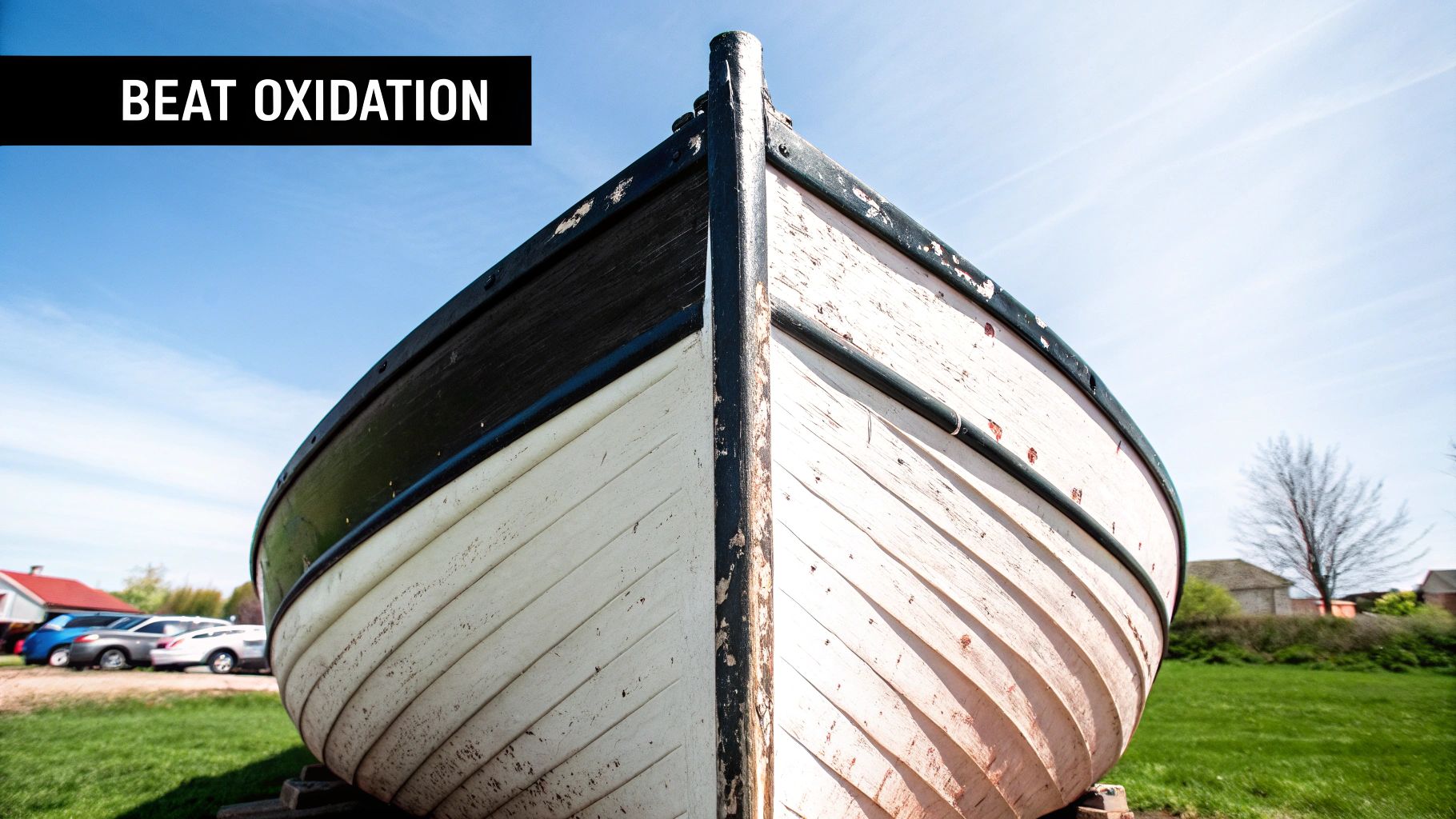
Half the battle is knowing your enemy. That dull, chalky residue is oxidation—it's what happens when the sun’s UV rays break down the protective oils in your boat's gelcoat over time. Those tough waterline marks are usually mineral deposits baked right onto the hull. Each one needs its own battle plan.
Step 1: Identify and Fight Oxidation
First, you need to see how bad the oxidation really is. Grab a clean, dark-colored cloth and wipe it across a section of the hull. If the cloth comes back with a light, powdery dusting, you’re looking at mild to moderate oxidation. But if it’s caked in a thick, dense layer of chalk, you’ve got a more serious case.
- For Mild Oxidation: A quality liquid oxidation remover or a heavy-duty cleaner is usually all you need. These products contain chemical agents that gently dissolve that top oxidized layer, bringing back the shine underneath.
- For Heavy Oxidation: This calls for a bigger gun. You’ll need to step up to a rubbing compound. This is a more involved process because you're physically removing the damaged top layer of gelcoat. If you're heading down this road, check out our guide on boat compounding and polishing.
My advice is to always start with the least aggressive method first. You can always escalate to a stronger product if the first one doesn't cut it, but you can’t undo damage from going too hard, too soon.
Step 2: Banish Water Spots and Nasty Streaks
Those stubborn, ring-like spots that just won’t wipe away are almost always hard water mineral deposits. They happen when water evaporates, leaving behind calcium and magnesium that actually etches into your gelcoat. Brute force scrubbing won't work and can damage the finish.
This is where a targeted cleaner becomes your best friend. A dedicated product like Boat Juice Extreme Water Spot Remover is your secret weapon here. It’s formulated with mild acids that are specifically designed to dissolve those mineral deposits without harming the fiberglass. Just spray it on, let it sit for a moment to work its magic, and wipe it away.
The same logic applies to other common stains:
- Black Streaks: These are often from dock bumpers or exhaust. A good heavy-duty cleaner and a little focused effort will usually lift them right off.
- Mildew Dots: See those little black dots that pop up in humid weather? You need a dedicated mildew cleaner to not only remove them but also kill the spores to keep them from coming back.
Protecting Your Shine for the Long Haul
You've put in the elbow grease, and your fiberglass is gleaming. But here's the thing: that brilliant shine won't last on its own. This final step—protecting it—is what separates a temporary clean from a long-lasting one. Think of it as armor for your gelcoat, shielding it from everything the water and sun can throw at it.
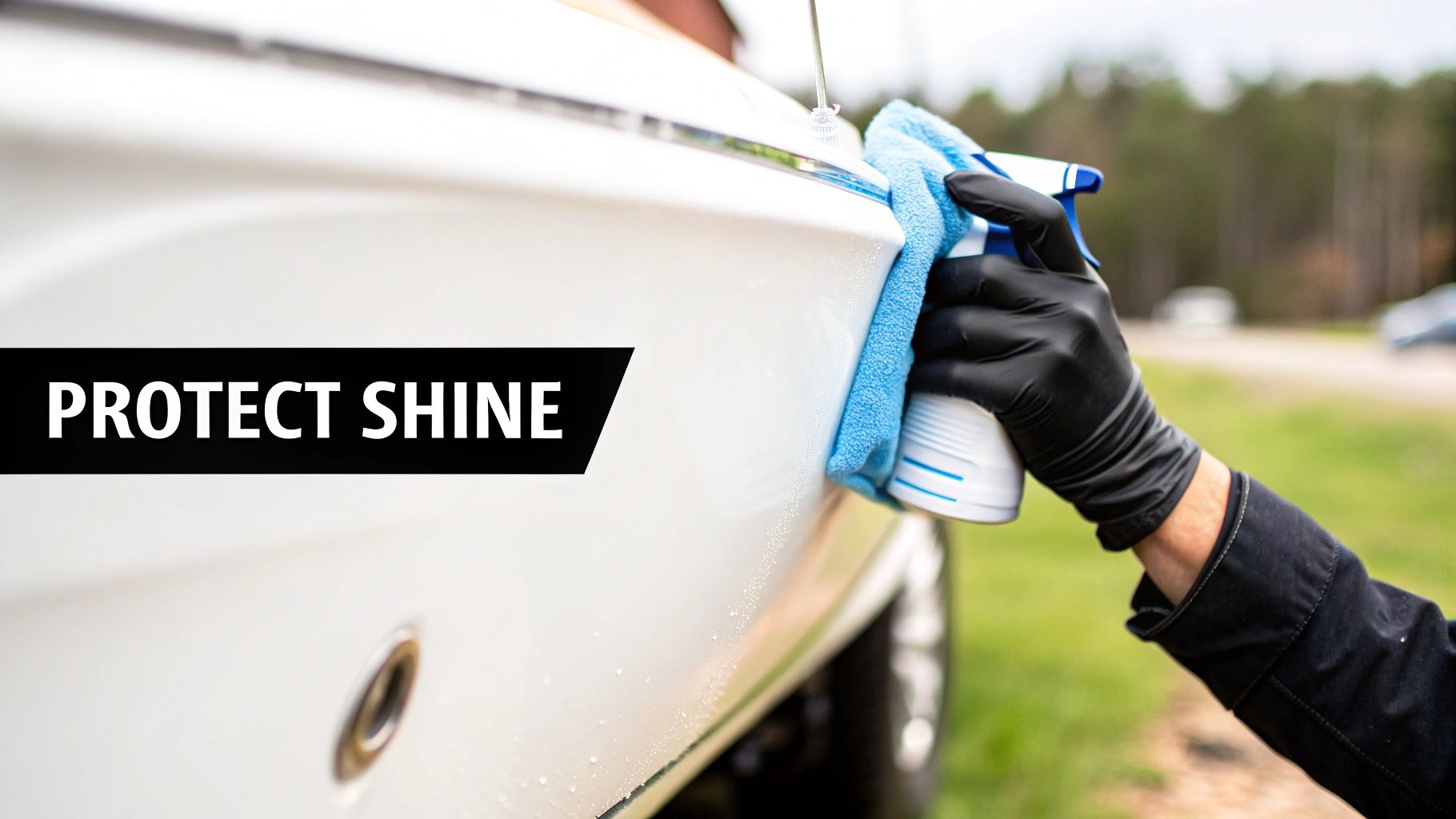
This protective barrier does more than just look pretty. It actively blocks damaging UV rays that cause oxidation and makes water bead up and roll right off, preventing stubborn spots. Best of all, it creates a slick surface that keeps grime from getting a foothold, so your next cleanup will be a breeze.
Choosing Your Shield: Wax vs. Sealants
When it comes to protection, you've got a few great options. The best one for you usually boils down to the look you prefer and how much time you're willing to spend.
- Traditional Carnauba Wax: The classic choice for a reason, carnauba wax delivers an incredibly deep, wet-looking shine. It’s a natural product with a long track record, but it does require more frequent reapplication, usually every couple of months.
- Modern Polymer Sealants: These synthetic formulas are all about durability. A good polymer sealant actually bonds with your gelcoat, creating a tough, long-lasting shell that can often hold up for a full season. The shine is typically sharper and more reflective than wax.
- Ceramic Sprays: A newer option, ceramic sprays offer a fantastic mix of easy application and serious performance. They give you top-tier UV protection and that amazing water-beading effect with a simple spray-and-wipe process.
For a solution that gives you durable protection without a whole weekend of buffing, a modern spray sealant is hard to beat. Take Boat Juice Protection, for example—it’s a ceramic sealant made for this exact job. You just mist it onto a clean, dry surface, wipe it off with a microfiber towel, and you've created a tough, slick shield in minutes.
Your goal after every deep clean should be to lay down a fresh layer of protection. This single step extends the life of your gelcoat more than anything else, turning a weekend of hard work into a season of shine.
A Simple Maintenance Schedule You Can Actually Follow
Keeping that shine doesn't mean you're chained to a buffer every weekend. A simple, consistent routine is all you need to keep your boat looking its best all season long.
Once you’ve applied that initial base coat of wax or sealant, maintenance gets a whole lot easier. After a day on the water, give the boat a quick rinse with fresh water and follow up with a wash-and-wax product or a quick detailer spray. To learn more about how these can simplify your routine, check out our insights on the best spray wax for boats.
This quick wipe-down reinforces your main protective layer, lifts away fresh salt and grime before they can stick, and gives the gloss a nice boost. By spending just 10-15 minutes after each outing, you'll spend way less time scrubbing and way more time actually enjoying your boat. And that's the whole point.
Got Questions About Cleaning Fiberglass? We've Got Answers.
Even with the best instructions, questions can pop up when you're in the middle of a project. We've been there. Here are answers to some of the most common things we hear from boat owners like you.
How often should I be washing my boat?
This really depends on where you do your boating.
If you're in saltwater, a thorough freshwater rinse after every single trip is a must. Don't skip this. Salt is relentless and will go to work corroding your gelcoat, metal, and vinyl if you let it sit. A proper wash-down with a quality boat cleaner every 2-3 outings is a great goal to shoot for.
For you freshwater boaters, you can relax a little. A good, soapy wash every 3-4 outings, or at least once a month, is usually enough to keep that lake scum and general grime from getting out of hand.
The secret is just being consistent. A quick 15-minute wipe-down after you pull the boat out is way better than letting it all bake on for a month and then spending a whole Saturday scrubbing. It's all about preventing small messes from becoming giant headaches.
Can I just use dish soap or other household cleaners?
Please don't. This is one of the most common mistakes we see, and it can be a costly one.
While dish soap is great at cutting grease in the kitchen, it's way too aggressive for your boat's gelcoat. It will completely strip off any wax or sealant you've applied, leaving the porous fiberglass naked and exposed to the sun's UV rays. This is the fast track to oxidation and fading. Always stick with a pH-balanced formula made specifically for marine use.
What’s the trick to cleaning those stubborn non-skid decks?
Non-skid surfaces are great for grip but notorious for trapping every speck of dirt. Cleaning them right is all about the right tools and technique.
- First, get the deck good and wet.
- Spray your cleaner generously over the surface and let it sit for a minute or two. This gives it time to penetrate the texture and start breaking down the grime.
- Now, grab a medium-stiff bristle brush and scrub in multiple directions—side-to-side, then front-to-back. This forces the bristles into all the little crevices to lift the dirt out.
- Finally, give it a powerful rinse to flush all that lifted dirt and soap residue away, leaving nothing behind.
Ready to give your boat the shine it deserves? Your next step is to grab the right tools. The Boat Juice Triple Threat Exterior Bundle has everything you need to clean, decontaminate, and protect your fiberglass for a brilliant, season-long gleam.