


· By Boat Juice Team
Your Complete Guide to the Perfect Boat Washdown Hose
If you want to keep your boat looking its best, a proper boat washdown hose isn't just a nice-to-have—it's your first line of defense. This isn't the time to grab that old garden hose from the garage. A real marine-grade hose is built to handle the harsh realities of sun, salt, and onboard pump pressure, turning what could be a dreaded chore into a quick, satisfying task.
The Secret Weapon for a Spotless Boat
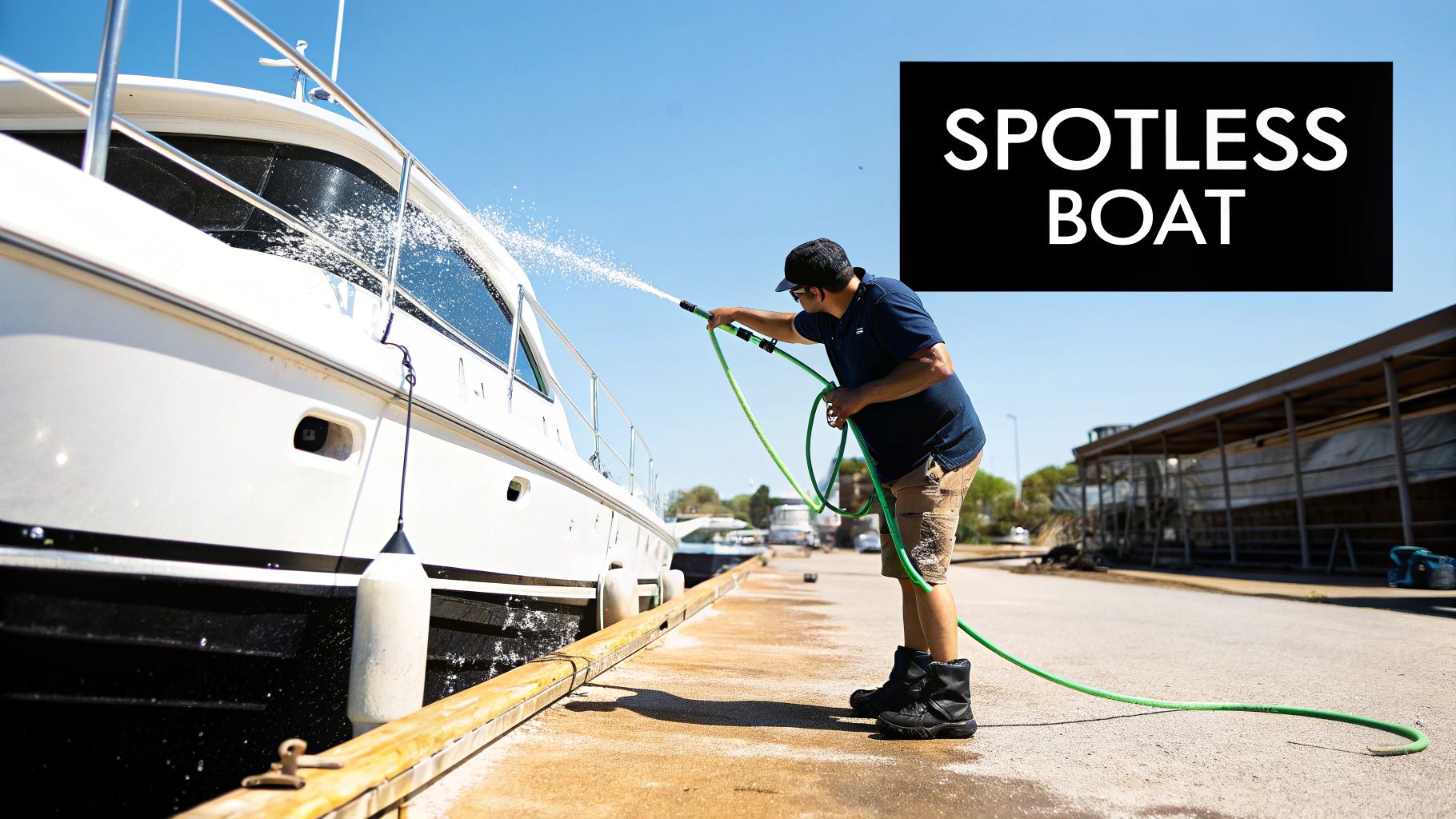
Picture this: You’ve just had a perfect day on the water. The sun is dipping below the horizon, and the last thing on your mind is spending an hour scrubbing down the deck. This is where a good washdown system becomes a total game-changer. It’s more than just a convenience; it's a fundamental part of your maintenance routine, protecting your investment from corrosive salt and that grimy film that builds up after a day of fun.
That green vinyl garden hose you have lying around? It’s just not cut out for marine life. It kinks if you look at it wrong, the brass fittings will corrode and fuse together in no time, and UV rays will make it brittle and cracked before the season is over. Even worse, it probably can't handle the pressure from a dedicated washdown pump, meaning weak water flow at best and a burst hose at worst.
Why Your Hose Choice Matters
Trust me, using the wrong hose can create some serious headaches. I've seen it happen—a leaky fitting or a small crack in a cheap hose can lead to water seeping into places it shouldn't. More than one boater has learned this lesson the hard way, finding a puddle of mystery water in a storage locker or bilge.
A dedicated marine hose is engineered to prevent these problems from ever starting. Here’s what sets a purpose-built boat washdown hose apart:
- Tough as Nails: They're typically made from materials like polyurethane or hybrid polymers that fight off kinks, abrasion, and sun damage.
- Corrosion-Proof Fittings: Look for stainless steel or nickel-plated connectors. They won't seize up or crumble after a few encounters with saltwater spray.
- Won't Leave a Mark: A quality hose is non-marring, meaning it won't leave ugly black scuff marks all over your pristine white gelcoat.
- Handles the Pressure: These hoses are built to safely manage the 50-70 PSI churned out by most marine washdown pumps without batting an eye.
From Chore to Ritual
At the end of the day, your goal is to make cleanup fast so you can get back to what you love—boating. With a reliable hose delivering a strong, steady stream, cleaning becomes a simple two-step process. First, a powerful rinse blasts away all the loose salt, sand, and grime.
This initial rinse is crucial because it preps the surface for your cleaner. When you follow up with a great product like Boat Juice Exterior, it can get straight to work on the tough stuff like water spots and film, instead of being wasted on surface-level dirt. It's a simple strategy that saves you time, uses less product, and leaves a much better shine, every single time.
How to Choose the Right Boat Washdown Hose
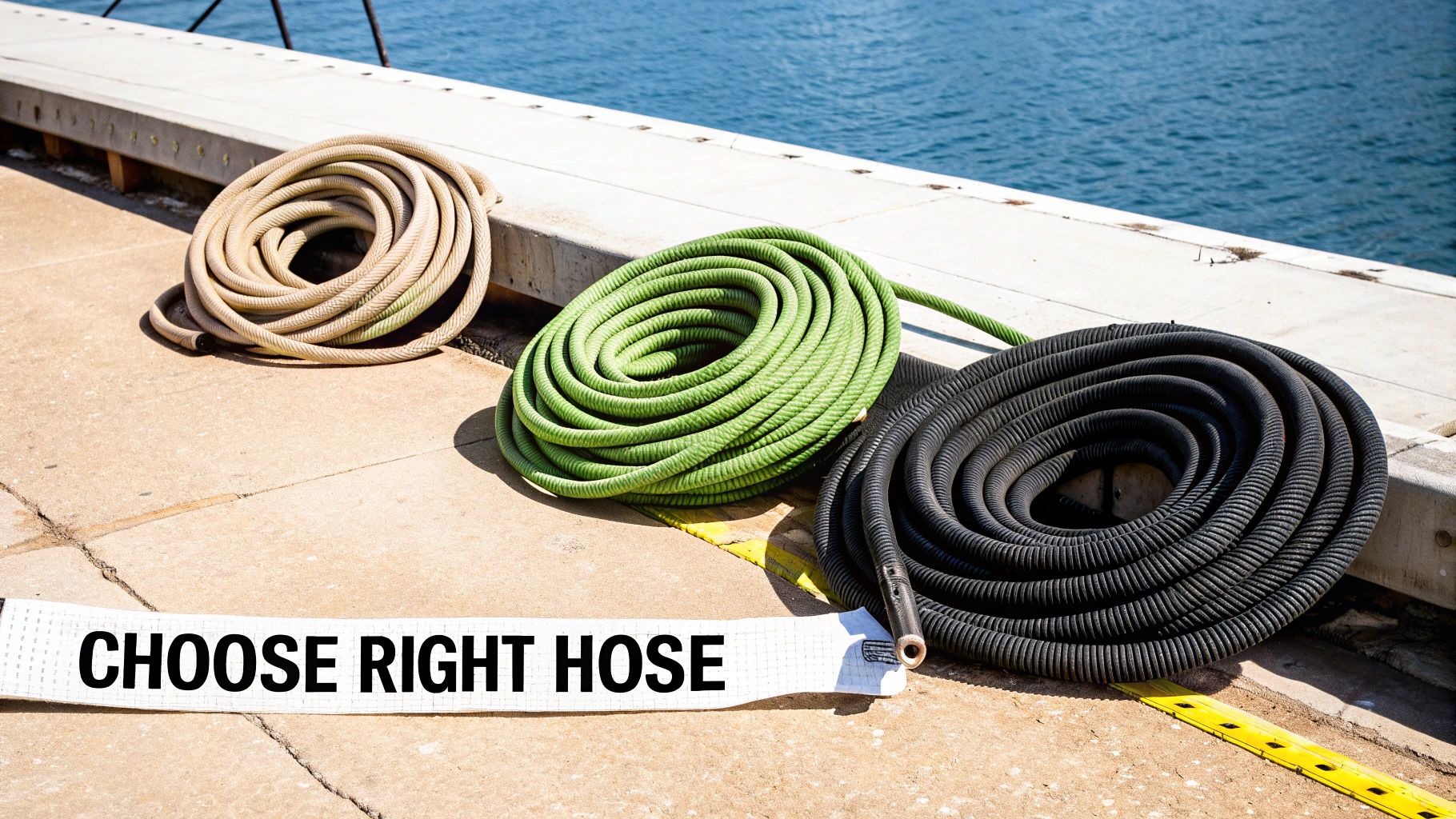
As you know, not all hoses are created equal, especially when they spend their lives soaking up the sun and salt. Picking the right boat washdown hose isn't about grabbing the fanciest one off the shelf; it's about matching the right tool to your boat, your pump, and your own patience level. Let’s walk through what really matters so you can make the right choice.
You might be seeing more marine-specific gear on the market lately, and that's a good thing. Why? Because boaters like us are tired of gear that fails and are demanding better equipment built for the water. This means you have more high-quality options than ever before, making it easier to find a hose that won't let you down.
Hose Materials: The Good, The Bad, and The Kinky
The material of your hose is probably the single most important choice you'll make. It determines everything from how easily it coils in a tight locker to whether it’ll leave ugly black scuff marks all over your beautiful gelcoat.
- Polyurethane: This is the undisputed champ for marine washdown hoses. It's incredibly durable, surprisingly lightweight, and a real pain to kink or abrade. Best of all, it's non-marring and has fantastic UV resistance, meaning it won't get brittle and crack after one season in the sun.
- Hybrid Polymers: A fantastic middle-ground option. These hoses blend rubber and PVC to offer great flexibility, even when the weather gets chilly. They resist kinking much better than standard vinyl and won't break the bank like a pure polyurethane hose might.
- Vinyl/PVC: This is your typical green garden hose. While it's certainly cheap, it’s a terrible choice for a boat. It kinks if you look at it wrong, gets rock-hard in the cold, degrades quickly under the sun, and often leaves frustrating scuffs on your deck. Just skip it.
Boat Washdown Hose Feature Comparison
Use this quick reference to compare common hose materials, diameters, and lengths to find the best fit for your boat and how you use it.
| Feature | Option A | Option B | Best For |
|---|---|---|---|
| Material | Polyurethane | Hybrid Polymer | Polyurethane for maximum durability; Hybrid for a great balance of cost and performance. |
| Diameter | 5/8-inch | 3/4-inch | 5/8-inch for most boats; 3/4-inch for larger vessels or high-volume pumps. |
| Length | 25-foot | 50-foot | A 25-foot hose for smaller boats; 50-foot for boats over 30 feet long. |
This table simplifies the main choices, but remember to measure your boat to get the length just right—it’s the one spec that's unique to your setup.
Diameter and Length: Finding Your Sweet Spot
Size definitely matters here, both for water flow and your own sanity. The wrong diameter or length can lead to either a frustrating trickle of water or a tangled nest of hose cluttering up your deck.
A hose's diameter directly impacts how much water it can deliver. For most of us running a standard washdown pump (which usually puts out 50-70 PSI), a 5/8-inch diameter hose is the sweet spot. It provides plenty of flow for effective rinsing without being too heavy or a pain to handle.
Got a bigger boat or a high-performance pump? You could step up to a 3/4-inch hose to get more volume, but be warned—it's noticeably heavier and bulkier to store.
Pro Tip: Don't buy more hose than you need. A hose that's too long is a constant tripping hazard, a nightmare to coil, and can cause a real drop in water pressure by the time it reaches the nozzle. Measure from your washdown connection to the farthest spot you need to reach (like the anchor locker or swim platform) and add just a few extra feet for good measure.
Pressure Ratings and Fittings: The Final Details
Last but not least, you have to make sure your hose can handle the power of your washdown pump. These pumps create way more pressure than the spigot at your house, so this part is non-negotiable.
Always check the PSI (pounds per square inch) rating. Look for a hose rated for at least 150 PSI to give yourself a safe margin above your pump's output. This ensures it won't burst when the system is under full pressure.
Equally important are the fittings on each end. Do yourself a favor and avoid plain brass fittings—they will corrode and seize up in a heartbeat in a marine environment. Instead, look for high-quality, corrosion-resistant connections:
- Stainless Steel: The best of the best for durability and corrosion resistance, especially in saltwater.
- Nickel-Plated or Chrome-Plated Brass: A solid, more affordable alternative that still offers great protection against rust and seizing.
Getting this right ensures your hose connects smoothly every single time, without any frustrating leaks. A reliable hose, when paired with the right cleaner, becomes a powerhouse for keeping your boat pristine. To learn more about that side of the equation, check out our guide on choosing a great boat wash soap.
Installing Your Onboard Washdown System
So, you're ready to ditch the portable hose and install a proper onboard washdown system? Good call. This is one of those weekend projects that you'll wonder how you ever lived without. It's a game-changer for convenience, giving you instant cleaning power right where you need it. Let's walk through what it takes, from picking the right setup to making sure your connections are bone-dry and built to last.
Having an installed system is about more than just spraying water. It completely transforms your cleanup routine. No more dragging a kinked hose out of a dock box or fumbling with spigot connections every time you need to rinse the anchor. With a dedicated pump and outlet, cleaning becomes a seamless part of your day on the water.
Choosing Your Water Source: Raw Water vs. Freshwater
The first big decision you have to make is where your system will get its water. This choice really comes down to how you plan on using it. You've got two main options, each with its own pros and cons.
- Raw Water Washdown: This is, by far, the most popular setup. The system uses a dedicated pump to pull water directly from whatever you're floating on—be it a lake or the ocean—through a special intake fitting called a thru-hull. You get an unlimited supply of water, which is perfect for the heavy-duty stuff like blasting mud off the anchor, rinsing fish guts from the deck, or washing down a sandy swim platform.
- Freshwater Washdown: This setup taps into your boat’s existing freshwater tank. The big downside is that your supply is limited to whatever your tank holds. But for a final, spot-free rinse on your windows, shiny metal, and gelcoat, it's unbeatable. Using freshwater for the final wipe-down is the secret to avoiding those frustrating water spots left behind by salt and minerals.
Honestly, most boaters find that a raw water system is the most practical workhorse for 90% of their cleaning needs. You can save your precious fresh water for drinking and that final, perfect rinse.
Planning Your System Layout
Before you even think about drilling a hole, take a few minutes to map out where everything is going to go. The placement of your pump and hose outlet is a huge factor in how convenient and safe the system will be. Think about your boat's layout and where you find yourself needing a hose most often.
A really common spot on a center console, for example, is inside the anchor locker. This keeps the hose neatly coiled and out of sight, but it's perfectly placed for washing down the anchor chain and the whole bow area. For a pontoon, mounting the outlet under a seat near the stern swim deck gives you easy access for rinsing off after a swim.
The pump itself needs a dry, accessible home—often in the bilge, inside a console, or in a dedicated mechanical space. Just make sure you mount it high enough that it stays out of any normal bilge water. As you plan the hose route, try to avoid any sharp bends or spots where it could get chafed or crushed by other gear moving around.
A crucial detail people often overlook is the anti-siphon loop. If your hose outlet is anywhere near or below the boat's waterline, you must route the hose up in a high loop that extends well above the waterline before it heads to the outlet. This simple trick prevents water from siphoning back into your boat when the pump is off. It's a non-negotiable safety step.
Making Secure Connections
The difference between a pro-level install and a leaky headache is all in the connections. When you're running plumbing through a bulkhead or the transom, getting a perfect, watertight seal is everything. Using quality components, like a heavy-duty stainless steel bulkhead tank fitting, is one of the best ways to ensure your installation is solid and lasts for years.
Here’s a quick rundown of what you’ll need and the key steps to a leak-free system:
- Get Your Gear: You'll need a drill, the right size bits, a good marine-grade sealant (you can't go wrong with 3M 5200), stainless steel hose clamps, and either PEX tubing or a quality reinforced hose for the plumbing.
- Install the Thru-Hull (for raw water): This is the part you want to get perfect. Drill the hole for your intake, slather a generous ring of marine sealant around the fitting, and tighten it down securely. It has to be 100% watertight.
- Mount the Pump & Strainer: Bolt the pump down to a solid surface. And always, always install an inline water strainer between the thru-hull and the pump. This little filter will save your pump's impeller from getting chewed up by sand, seaweed, and other junk.
- Run and Secure Your Lines: For any connection that sits below the waterline, use two stainless steel hose clamps for peace of mind. As you run your plumbing lines, secure them with clamps or zip ties every 18 inches or so to stop them from vibrating and chafing.
- Wire It Up: Connect the pump to its own fuse-protected switch at your helm. Make sure you use marine-grade tinned wire and heat-shrink connectors on all your connections to keep corrosion at bay.
Take your time with these connections. A little extra care here will save you from a world of frustration down the road and ensure your new washdown system is a reliable tool for seasons to come.
Mastering Your Washdown Technique
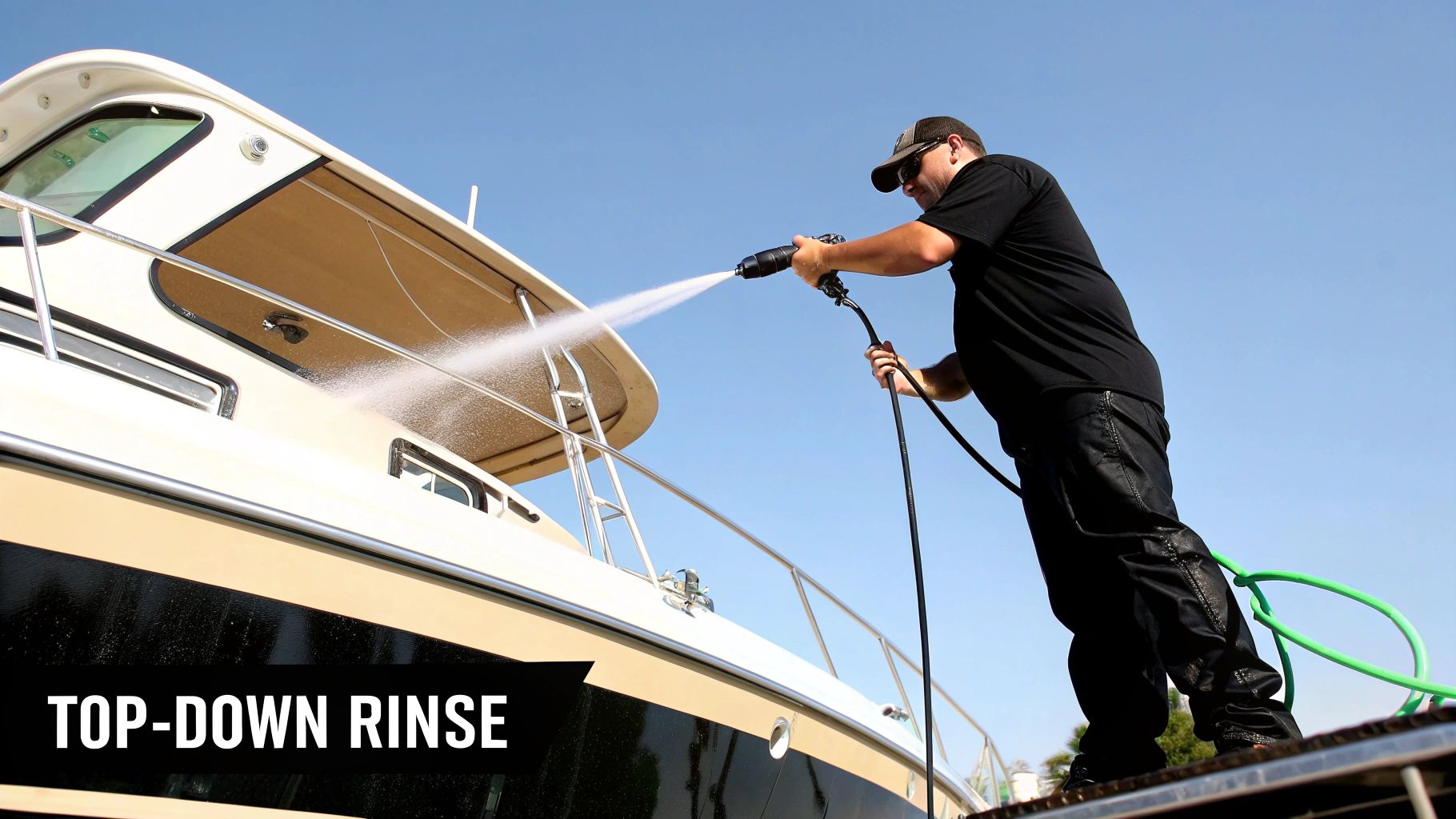
So, you've got a killer boat washdown hose and a pump with plenty of juice. That's a great start, but the real secret to a quick, flawless cleanup isn't just in the gear—it's how you use it. Your technique is what separates a frustrating, spot-filled job from a sparkling finish that gets you back to relaxing faster.
The first and most important rule is one you've probably heard but might not always follow: always wash from the top down. It seems basic, I know, but you’d be surprised how many boaters start blasting away at the waterline first. Let gravity be your ally. Let it pull all that dirty water and grime down and away, so you're not washing filth over an area you just cleaned. Start with the hardtop, then hit the windows, work your way down the gunwales, and save the hull for last.
The Power of the Pre-Rinse
Before a single drop of cleaner hits your deck, give the entire boat a good, thorough pre-rinse. This isn't just about getting it wet. The goal here is to use the pressure from your washdown system to knock off all the loose stuff—salt crystals, dust, bird droppings, you name it.
Why is this so critical? Think about it: all those little particles are incredibly abrasive. If you jump right into scrubbing with a brush or wash mitt, you’re essentially creating a saltwater sandpaper and grinding that grit right into your gelcoat. A solid pre-rinse lifts and removes this debris safely, giving your cleaning products a clean slate to work their magic on the real problem areas.
This simple step saves you a ton of time and elbow grease. Once the loose dirt is gone, a quality cleaner like Boat Juice Exterior can focus its energy on breaking down stubborn water spots and grime instead of getting bogged down by surface-level dust.
The right hose and the right technique make your post-trip wipe-down practically effortless. A high-quality washdown hose is a game-changer for professional mobile detailers, often cutting their cleaning time significantly. For you, it means less time cleaning and more time enjoying your boat.
Match Your Nozzle to the Surface
That adjustable nozzle on your hose is your most versatile tool, but only if you use it correctly. You wouldn't use a paint roller for fine detail work, right? The same logic applies here. Using the right spray pattern for each surface is key to getting things clean without causing damage.
- Gelcoat & Vinyl: Go with a wide fan or cone setting. This gives you broad, even coverage to rinse large areas quickly without focusing too much pressure on one spot, which could peel up decals or harm older, more delicate gelcoat.
- Non-Skid Decks: Here's where you can switch to a more focused jet or flat stream. You need that extra punch to get down into the textured grooves where dirt and grime love to hide.
- Glass & Isinglass: Be gentle. A soft shower or mist setting is perfect. High pressure can stress the seals around your windows and will absolutely scratch sensitive clear vinyl like Isinglass. A light rinse is all you need.
Getting this right is important. While your onboard washdown pump won't have the brute force of a gas-powered pressure washer, you can still do damage if you get too aggressive. If you want to learn more about using high-pressure tools safely, check out our guide on how to properly pressure wash your boat.
Finally, don't forget the final rinse. After applying your cleaner and giving it a gentle scrub, rinse everything thoroughly—again, from the top down. Never, ever let soap dry on the surface. That’s the #1 cause of streaks and spots. A complete and immediate rinse is the final step to leaving behind nothing but a brilliant, satisfying shine.
A Little TLC: Keeping Your Hose in Fighting Shape
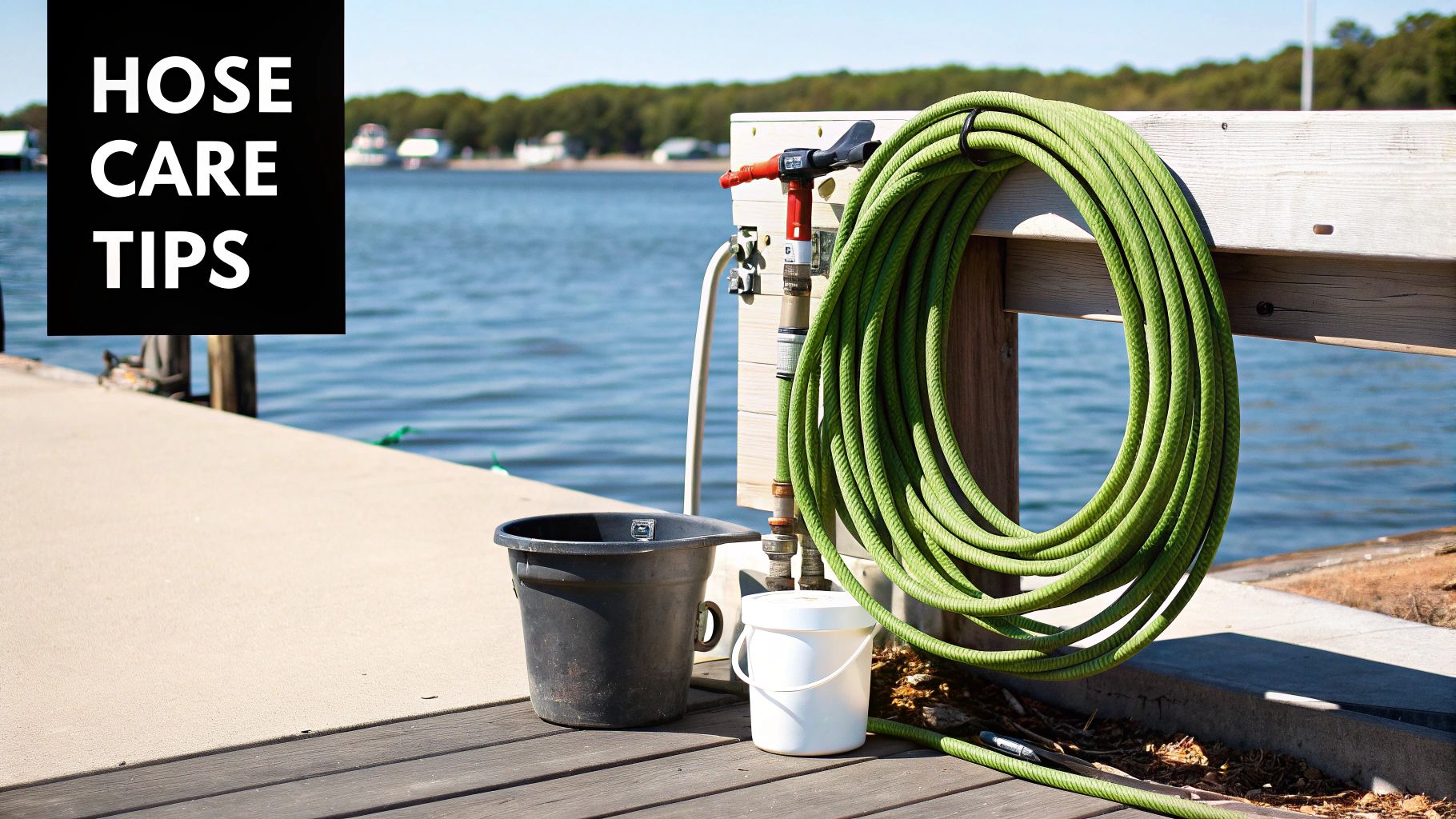
Your washdown hose puts in a ton of work, but it's not indestructible. A little bit of care goes a surprisingly long way in preventing those dreaded cracks, leaks, and failures that always seem to happen at the worst possible moment.
Think of it this way: building a few simple habits now means your entire washdown system will be ready to roll all season long, saving you a ton of frustration down the road.
What to Do After Every Rinse
The most important maintenance happens the second you’re done washing the boat. This quick, five-minute routine is your best defense against the most common problems we see with marine hoses, especially in a saltwater environment.
After every use, you absolutely have to flush the hose with fresh water for at least 30 seconds. This is non-negotiable if you’re in salt. It gets all that corrosive residue out before it can start eating away at your fittings and the hose lining. Seriously, this one simple flush is the #1 thing you can do to prevent premature failure.
Next, coil your hose the right way. Don't fight it and force it into tight little loops—that's a surefire way to create memory and permanent kinks. Let the hose guide you and make big, natural loops. This simple technique prevents stress points that eventually turn into weak spots and, you guessed it, leaks.
Quick Monthly Check-Ups and Smart Storage
Once a month, just take a couple of minutes to give your hose a quick once-over. Being proactive here helps you spot a small problem before it becomes a big, expensive one.
- Eyeball the Fittings: Check the metal ends for any green or white crusty buildup, which is a clear sign of corrosion. Make sure they still thread on and off without a fight.
- Feel for Damage: Run your hand along the entire length of the hose. You're feeling for any weird bulges, cracks, or spots that feel worn down. Pay extra attention to the areas right near the fittings, as that’s where most of the stress happens.
- Leak Patrol: The next time you fire it up, just keep an eye out for any drips or sprays coming from the connections or the hose itself.
When you're putting it away, the golden rule is keep it out of the sun. Even the most UV-resistant hose will eventually get brittle and break down with constant sun exposure. Tucking it away in a locker, under a seat, or even in a canvas hose bag will easily double its lifespan.
Don't Let Winter Wreck Your System
If you live anywhere that sees freezing temperatures, winterizing your washdown system is not optional. It’s critical. When water freezes, it expands with incredible force—more than enough to crack your pump housing, fittings, and the hose itself. Trust me, it’s a very expensive repair to face in the spring.
This isn't just a friendly suggestion; it's a must-do. A single hard freeze can completely destroy a pump that wasn't drained. Taking 20 minutes to winterize in the fall will save you hours of work and hundreds of dollars.
The goal is to get every single drop of water out. Start by disconnecting the intake line and letting the pump run for a minute until it’s dry. Then, unhook the hose, hold one end up high, and let gravity do the work to drain it completely.
For bulletproof protection, you can then run some non-toxic RV/marine antifreeze through the pump and lines. We walk you through the whole process in our comprehensive boat winterization checklist. It's a small chore that ensures your washdown system is ready to go on that first beautiful day of spring.
Your Top Washdown Hose Questions, Answered
If you've got questions, you're in the right place. When you're digging into the nitty-gritty of a boat washdown hose and the pump that drives it, a few questions tend to surface again and again. Let's get you some clear, straightforward answers based on real-world experience, so you can solve problems and make smarter choices for your rig.
Can I Just Use a Regular Garden Hose On My Boat?
Ah, the classic question. Technically, you can, but trust me on this one—you absolutely shouldn't. Grabbing that green garden hose from your garage is one of the most common rookie mistakes, and it almost always ends in frustration. They just aren't built for life on the water.
Here’s why it’s such a bad move:
- Sun Damage: The sun will cook a standard vinyl hose, making it brittle and cracked in as little as one season.
- Corroded Fittings: Those standard brass fittings will practically weld themselves together after a little salt spray, making them a nightmare to get on and off.
- Ugly Scuff Marks: A lot of garden hoses are notorious for leaving black scuff marks all over your beautiful white gelcoat.
- Kinks & Low Pressure: They kink up if you look at them wrong, choking off your water flow, and many can't even handle the 50-70 PSI that a decent marine washdown pump puts out.
A proper marine-grade hose is a small investment that pays for itself almost immediately in performance and durability. They’re built with UV-resistant, non-marring materials and corrosion-proof fittings, which will save you a world of headaches down the line.
What’s the Difference Between a Raw Water and a Freshwater Washdown?
This is a great question because the two systems are designed for completely different jobs. A raw water washdown is your heavy lifter. It uses a pump to pull water directly from whatever lake or ocean you're on, giving you a nearly endless supply for serious cleaning. Think blasting mud off the anchor, rinsing fish guts off the deck, or clearing sand from the swim platform.
A freshwater washdown, on the other hand, is your finishing tool. It's plumbed into your boat's onboard freshwater tank. While your supply is limited, this system is your secret weapon for getting a perfect, spot-free finish. You use fresh water for the final rinse on your windows, chrome, and smooth gelcoat to prevent those annoying water spots left behind by mineral deposits.
The pro move? Use a one-two punch. Do all the heavy cleaning with the unlimited raw water system, then hit the important surfaces with a quick spritz from the freshwater hose for a perfect, streak-free shine.
How Do I Stop My Hose From Leaving Black Scuffs On My Deck?
Those infuriating black streaks are the tell-tale sign of a cheap rubber or vinyl hose. The material is just too soft and breaks down, leaving bits of itself all over your deck, especially on a hot day. Thankfully, the fix is simple: get a hose that is specifically labeled as "non-marring."
These are typically made from better materials like polyurethane or advanced hybrid polymers. They’re designed to be tough but smooth, so they glide right over your boat’s surfaces without leaving a mark. As a bonus, they usually come in colors like white, blue, or gray that won't bleed onto your gelcoat.
What PSI Rating Do I Need for My Washdown Hose?
This is a big one for safety. You have to match your hose's pressure rating to your pump's output. Most dedicated boat washdown pumps push out somewhere in the 50 to 70 PSI range, which is plenty of power to get things clean. The key is to never use a hose that’s rated at or below your pump's maximum pressure.
Always look for a boat washdown hose with a PSI rating well above what your pump can deliver—a 150 PSI rating is a great, safe standard to shoot for. This gives you a serious safety margin, ensuring the hose won't bulge or, in a worst-case scenario, burst when the nozzle is shut off and the system is fully pressurized. It’s all about making sure every part of the system can handle the pressure safely.
Ready to turn your cleanup from a dreaded chore into a satisfying ritual? Now that you know how to choose, install, and maintain the perfect boat washdown hose, your next step is to pair it with the right cleaner. This combination is what truly delivers a faster, better shine with less effort.