


· By Boat Juice Team
How to Clean Your Pontoon Boat Like a Pro
Learning how to clean your pontoon boat is about way more than just appearances. It's one of the best things you can do to protect your investment and keep your boat running like new for years to come. A little bit of consistent cleaning prevents permanent damage, improves your fuel efficiency by cutting down on drag, and keeps your boat’s resale value high.
Why a Clean Pontoon Is Your Best Investment
Before we get into the suds and scrubbing, let's talk about why this is so important. Keeping your pontoon looking sharp isn't just for showing off at the dock; it’s a core part of boat ownership that protects its value, performance, and lifespan. Think of it less like a chore and more like a crucial part of your maintenance routine.
That green-brown film of algae, the chalky mineral lines, and the general grime clinging to your boat are more than just ugly. If you let it sit, it can cause some serious—and seriously expensive—damage.
- Corrosion and Damage: Algae and biofilm trap moisture right up against the aluminum tubes, which can really speed up corrosion. On your vinyl seats, mildew isn't just a stain; it's a living fungus that eats away at the material, weakening the stitches and causing it to crack over time.
- Performance Loss: A dirty hull is not a fast hull. All that algae and scum create a ton of drag in the water, which makes your engine work much harder to get up to speed. That extra strain means you’re burning more fuel every single time you go out.
- Reduced Resale Value: When it's time to sell or upgrade, a pontoon that's been cared for will fetch a much better price. A boat with stained seats and corroded tubes screams "neglect" to any potential buyer, and that will sink its value fast.
The Real Cost of a Dirty Boat
Skipping regular cleanings has a real financial impact. With their big aluminum logs always in the water, pontoons collect that nasty biofilm about 40% faster than a standard fiberglass hull. This gunk can increase drag by as much as 25%, which cuts your fuel efficiency and top speed by 10-15%.
When you're already spending a good amount on maintenance, letting grime build up is just like tossing money overboard. For more on this, you can check out some fascinating boat maintenance statistics.
A little time spent cleaning after each trip will save you hours of back-breaking scrubbing later on, not to mention potentially thousands in restoration costs. It's the single best way to protect your boat from the elements.
By learning the right way to clean your pontoon, you’re not just washing off dirt. You're preserving the boat's structure, ensuring it runs efficiently, and protecting the investment you made for years of fun on the water.
Getting Your Cleaning Gear in Order
Let's be honest, the difference between a miserable Saturday spent scrubbing and a genuinely satisfying boat makeover comes down to one thing: having the right tools for the job. Before you even get the hose out, taking a few minutes to assemble your cleaning arsenal will make the whole process smoother and give you those professional-looking results.
Think of it this way: you wouldn't use a kitchen sponge to wash your car, right? The same logic applies here. Using a brush that’s too stiff can leave micro-scratches on your beautiful gelcoat finish, and grabbing a random household cleaner can strip the UV protectants right off your vinyl seats, leaving them cracked and faded by mid-season. Your pontoon deserves better.
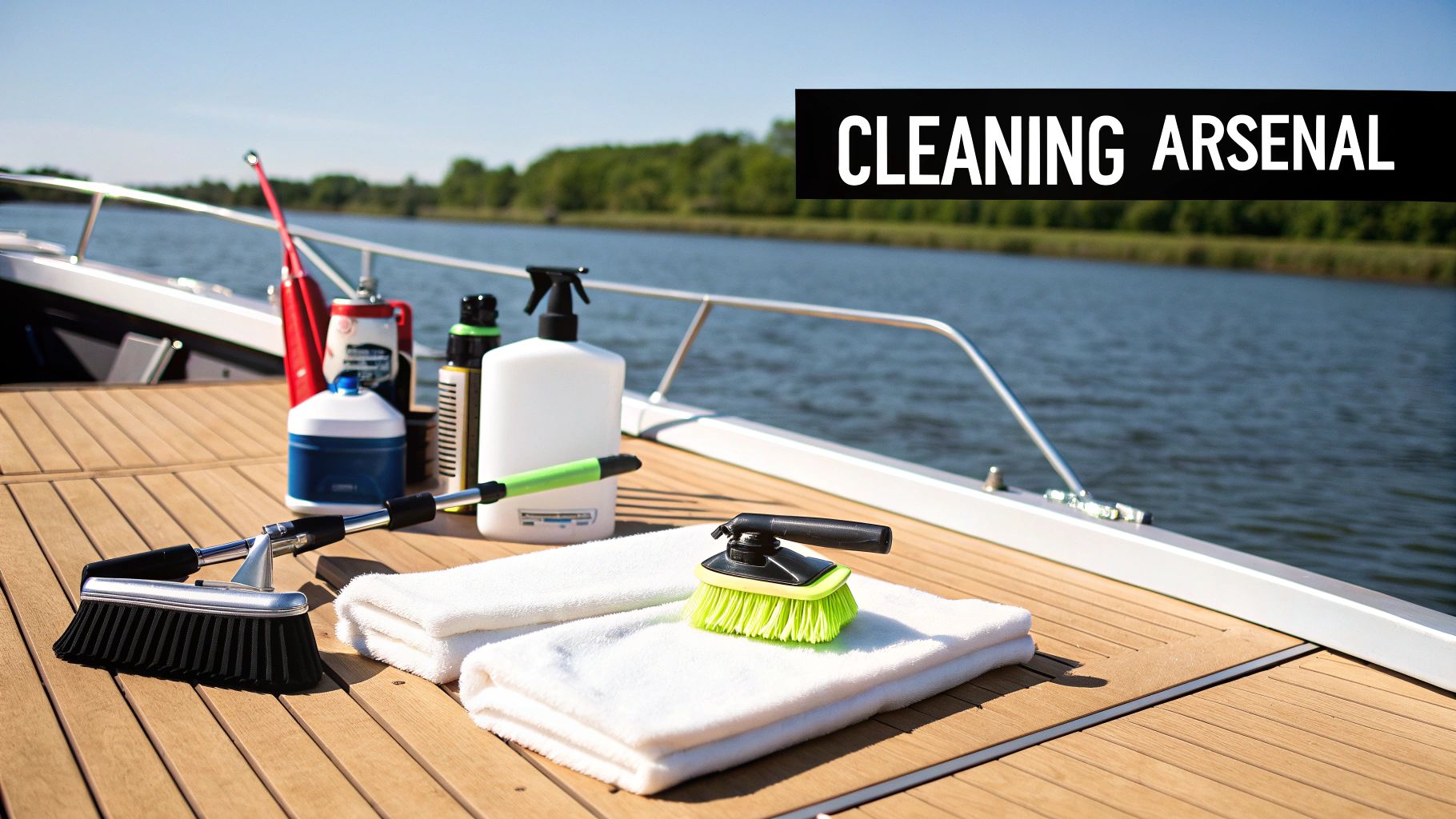
To make this super simple, here's a checklist of everything you'll need.
Your Essential Pontoon Cleaning Toolkit
| Category | Essential Item | Why You Need It |
|---|---|---|
| Brushes | Soft-Bristle Brush | Your workhorse for painted panels, gelcoat, and railings. Tough on dirt, gentle on the finish. |
| Brushes | Medium-Stiff Brush | Perfect for digging into marine carpet or scrubbing stubborn algae off the toons below the waterline. |
| Drying | High-Quality Microfiber Towels | You'll want a stack of these. They're super absorbent and won't leave streaks or lint behind. |
| Washing | Two Buckets & Hose Nozzle | One for soapy water, one for rinse water. This simple system stops you from putting dirt back on the boat. |
| Hull/Tubes | Marine Exterior Cleaner | You need something specifically made to cut through that nasty waterline scum and algae without harsh chemicals. |
| Interior | Marine Interior Cleaner | Safely cleans vinyl, carpet, and fiberglass. It should be tough on sunscreen stains but won't dry out your seats. |
| Protection | Wax or Sealant | The final step to protect your work and make future cleanups way easier. |
Having these items ready to go means you're prepared for every surface on your boat. No more running back to the garage for something you forgot.
Picking the Right Cleaners for the Job
This is where a lot of people go wrong. Grabbing a bottle of all-purpose cleaner from under the kitchen sink is a huge mistake. Many household products contain harsh chemicals like ammonia or bleach that can wreak havoc on marine-grade materials.
A Quick Word of Caution: Using a cleaner with bleach or ammonia on your vinyl seats will literally eat away their protective topcoat. This leaves them exposed to the sun, leading to premature cracking and fading. Always stick to products made for boats.
This is why having targeted cleaners is so important. A good exterior cleaner like Boat Juice Exterior is formulated to dissolve the specific kind of grime—algae, scum, mineral deposits—that builds up on your aluminum tubes. For everything inside the fence, a dedicated interior cleaner like Boat Juice Interior is pH-balanced to safely lift dirt, mildew, and sunscreen residue from vinyl and upholstery without causing damage.
While it might seem like a small detail, using the right formula is crucial. When looking for effective agents, some insights from guides on the best pool cleaning chemicals can be surprisingly helpful, as both pools and boats deal with similar challenges like algae and water-based stains. Using the right stuff from the start protects your investment and keeps your pontoon looking sharp all season long.
How to Make Your Aluminum Pontoons Shine Again
Your pontoon tubes take a real beating. They're constantly fighting off algae, mineral stains, and that nasty brown scum line that seems impossible to get rid of. Bringing them back to their original shine can feel like a huge chore, but with the right game plan and a little bit of muscle, you can get that factory-fresh look back.
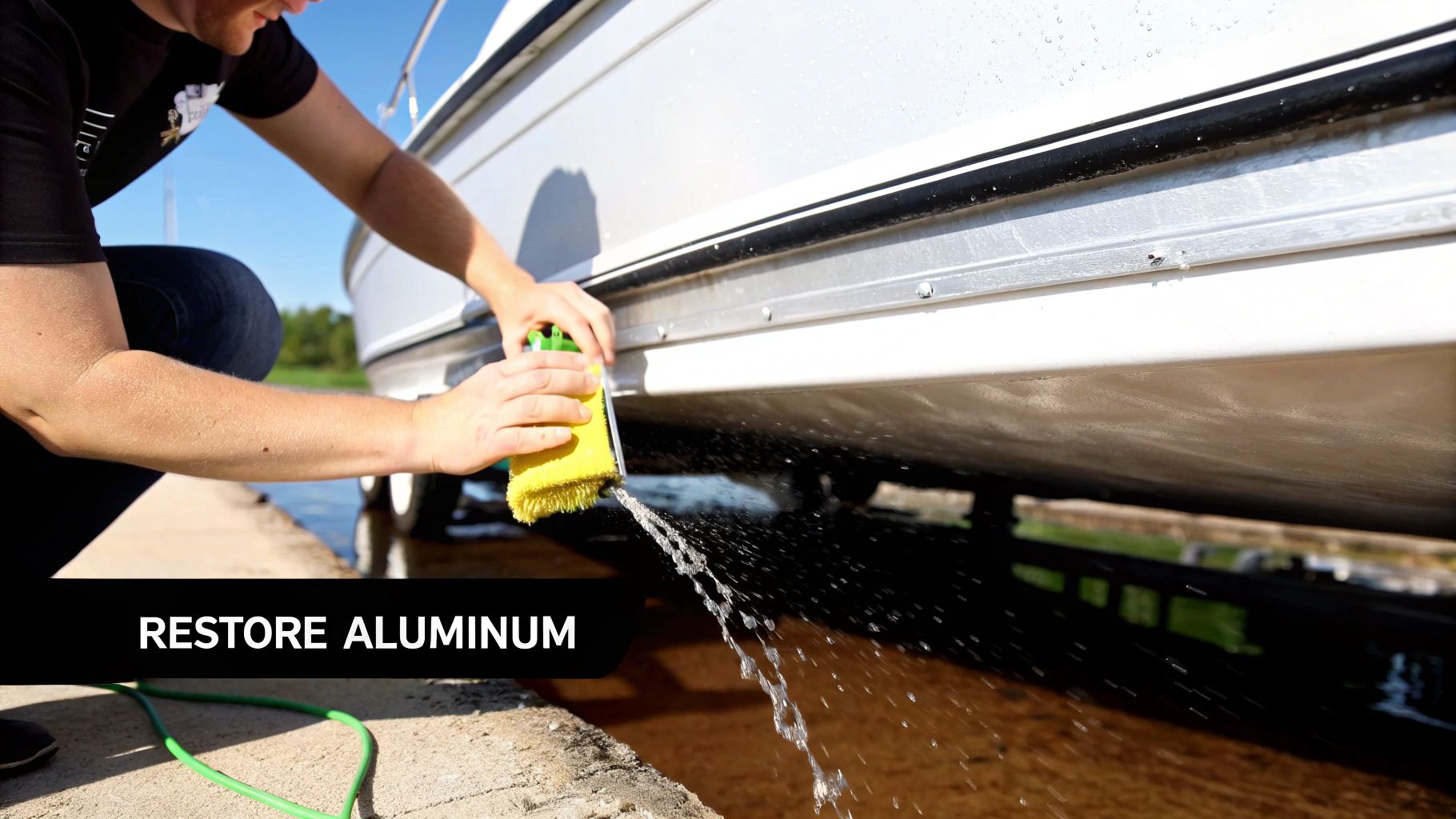
First things first: get the boat out of the water. Whether it's on a trailer or a lift, make sure it’s stable and you have enough room to safely work around the entire perimeter of each tube. This is a perfect end-of-season job, but it's also great to do if you pull the boat out for mid-season maintenance.
Step 1: Tackle That Stubborn Scum Line and Algae
Every pontoon owner knows the "bathtub ring." It’s that baked-on line of algae, biofilm, and minerals that just laughs at regular soap and water. To beat it, you need a cleaner that's designed to break down that specific kind of grime without being too harsh on the aluminum.
A dedicated marine cleaner like Boat Juice Exterior is made to go after the organic material and mineral deposits that form that ugly stain. It does most of the heavy lifting for you, which makes the scrubbing part a whole lot less painful. Work in manageable sections, maybe four or five feet at a time, to keep the cleaner from drying out before you can scrub and rinse it off.
Step 2: Scrub and Rinse the Right Way
Spray your cleaner directly onto the pontoon tube and let it sit for a minute or two. You'll actually see it start to break down the grime almost immediately.
Next, grab a medium-stiff bristle brush—preferably one on an extension pole to save your back—and scrub the area with firm, even pressure. Put a little extra effort into that scum line and any other green or brown patches you see.
Don’t let your hard work go to waste. A thorough rinse is non-negotiable. Any leftover cleaner residue can dry into streaks and actually attract more dirt. Use a hose with a good sprayer nozzle to wash away every last bit of suds and grime before moving on.
Step 3: Banish Those Annoying Hard Water Spots
Once you've rinsed, you'll probably notice some chalky-looking spots that just wouldn't budge. Those are hard water stains—mineral deposits left behind when water evaporates. They bond tightly to the aluminum and won't come off with a standard cleaner.
For these, you need a different kind of weapon. A product like Boat Juice Extreme Water Spot Remover uses a mild, acid-based formula to dissolve those mineral deposits on contact. Just spray it on, let it work its magic for about 30-60 seconds, and wipe it away with a clean microfiber towel. You’ll see the spots vanish right before your eyes.
Step 4: Protect Your Clean Pontoons for the Long Haul
After all that work, the last thing you want is for that scum line to creep back in a few weeks. This is where a final, crucial step comes in: applying a protective coating. A quality aluminum protectant creates a slick, hydrophobic barrier on the surface that makes it incredibly difficult for marine growth to get a grip.
Think of it like waxing your car. You’re adding a protective layer that keeps the surface looking great for longer and makes your next cleaning job exponentially easier. If you’re dealing with heavier oxidation, you might want to dive deeper into the full process for using an aluminum corrosion cleaner and polish.
Bringing Your Vinyl Seats and Upholstery Back to Life
Your pontoon’s vinyl seats are where all the memories are made, but they also take a serious beating from sun, sunscreen, spills, and moisture. Grimy, cracked, or mildew-stained upholstery can make an otherwise beautiful boat feel old and neglected. Let’s walk through how to get them looking brand new again and, more importantly, how to keep them that way.
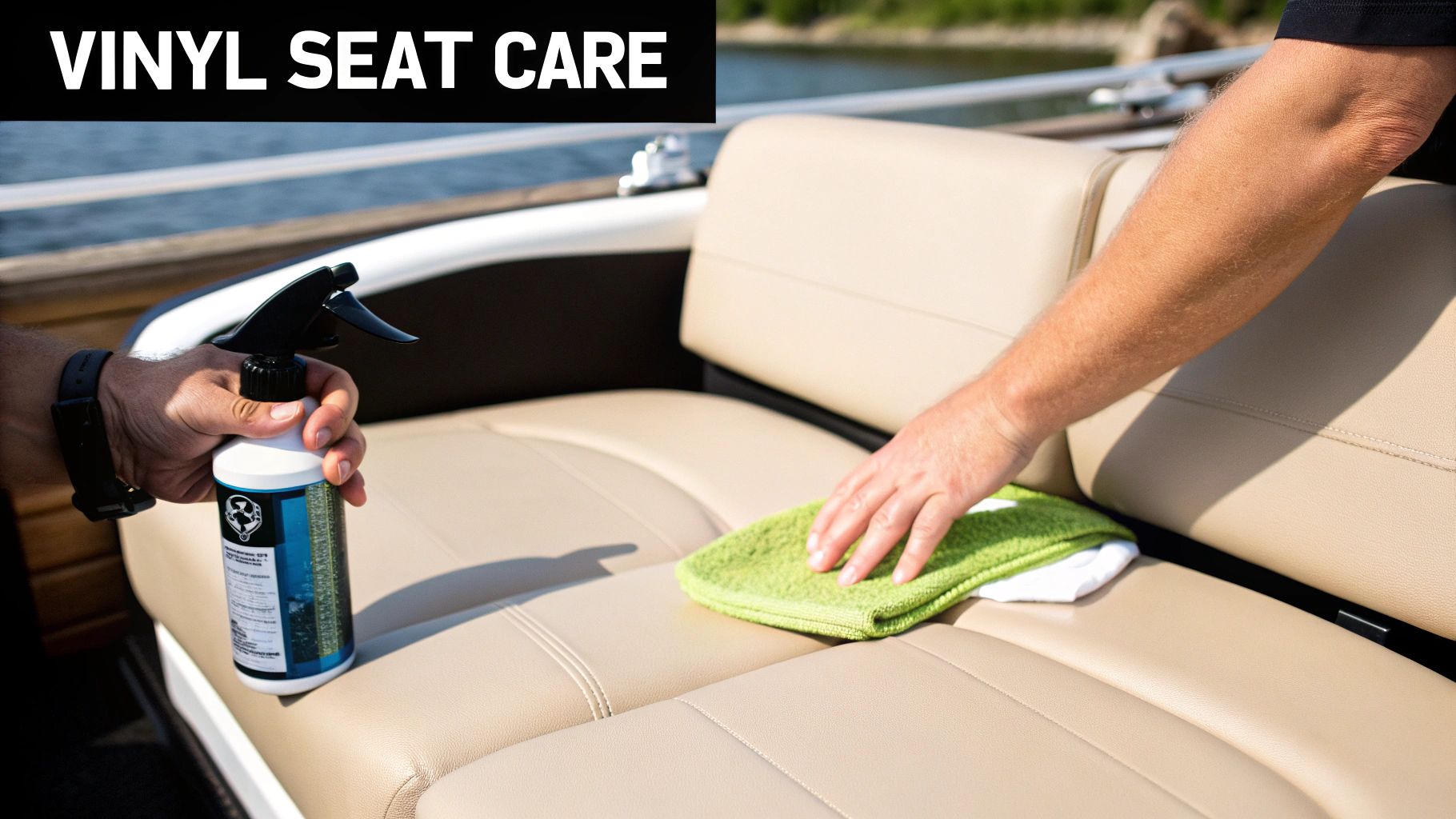
Putting off vinyl care is a surprisingly expensive mistake. Without protection, vinyl seats can fade 50% faster from UV exposure. In humid climates, it’s not uncommon for 65% of pontoons to show mildew within a single season if ignored, which can slash the boat's resale value. This isn't just about looking good; it's about protecting your investment.
Step 1: Start with a Gentle But Powerful Clean
First, you need to get rid of all that surface-level grime—the dirt, sunscreen residue, and sticky drink spills. Steer clear of harsh household cleaners. Anything with bleach or ammonia is way too aggressive for marine vinyl and can eat away at the thread in your stitching, leading to ugly rips and tears.
You'll want a pH-balanced, marine-safe cleaner like Boat Juice Interior. It’s made specifically to lift grime without stripping away the vinyl's essential oils. Just spray it directly onto the seat, give it a gentle scrub with a soft-bristle brush or microfiber towel to work it into the grain, and wipe everything clean with a fresh, damp cloth.
Step 2: Tackle Tough Mildew Stains
If you see those dreaded black or green specks, you’ve got mildew. This isn't just a surface stain; it's a living fungus that will chew right through your vinyl if you let it. Your everyday cleaner might handle a few light spots, but for deep-set mildew, you need a specialist. You can find more detailed techniques by checking out this guide on how to get rid of mould from upholstery.
For this job, grab a dedicated product like Boat Juice Mildew Stain Remover. Its whole purpose is to kill the mildew spores, not just bleach the stain on the surface.
- Spray and Wait: Hit the affected areas with the remover and let it sit for a few minutes. This gives it time to penetrate and get to the root of the problem.
- Agitate Gently: Use a soft brush to lightly scrub the spot. This helps lift the now-dead mildew out of the vinyl’s texture.
- Wipe and Repeat: Wipe the area clean with a damp microfiber. If a stain has been there for a while, don't be surprised if you need a second round.
Pro Tip: Using a dedicated mildew remover actually kills the spores. Bleach might make the stain disappear for a bit, but if the spores survive, that mildew is coming right back in the exact same spot. Guaranteed.
Step 3: Apply UV Protection (Don't Skip This!)
Okay, so your vinyl is spotless. Great! But now it's vulnerable. The sun's UV rays are the number one killer of marine upholstery, causing it to fade, crack, and get brittle. Skipping this final step is like washing your car and not waxing it—you did all the hard work but left the finish completely exposed.
Applying a quality UV protectant is absolutely non-negotiable. A spray-on product like Boat Juice Protection makes this part easy by creating a shield that blocks harmful solar radiation, repels water, and helps prevent new dirt from sticking. Think of it as sunscreen for your seats. Just mist it over the clean, dry vinyl and wipe it evenly with a fresh microfiber towel once a month.
Finishing Touches: Tackling Your Carpet, Canvas, and Hardware
Alright, with the aluminum tubes looking sharp and the vinyl seats practically sparkling, it's time to zero in on the details. This is where a good clean turns into a great one. We're talking about the deck carpet and the Bimini top—the unsung heroes that see everything from muddy footprints and fish scales to bird bombs and a thick layer of spring pollen.
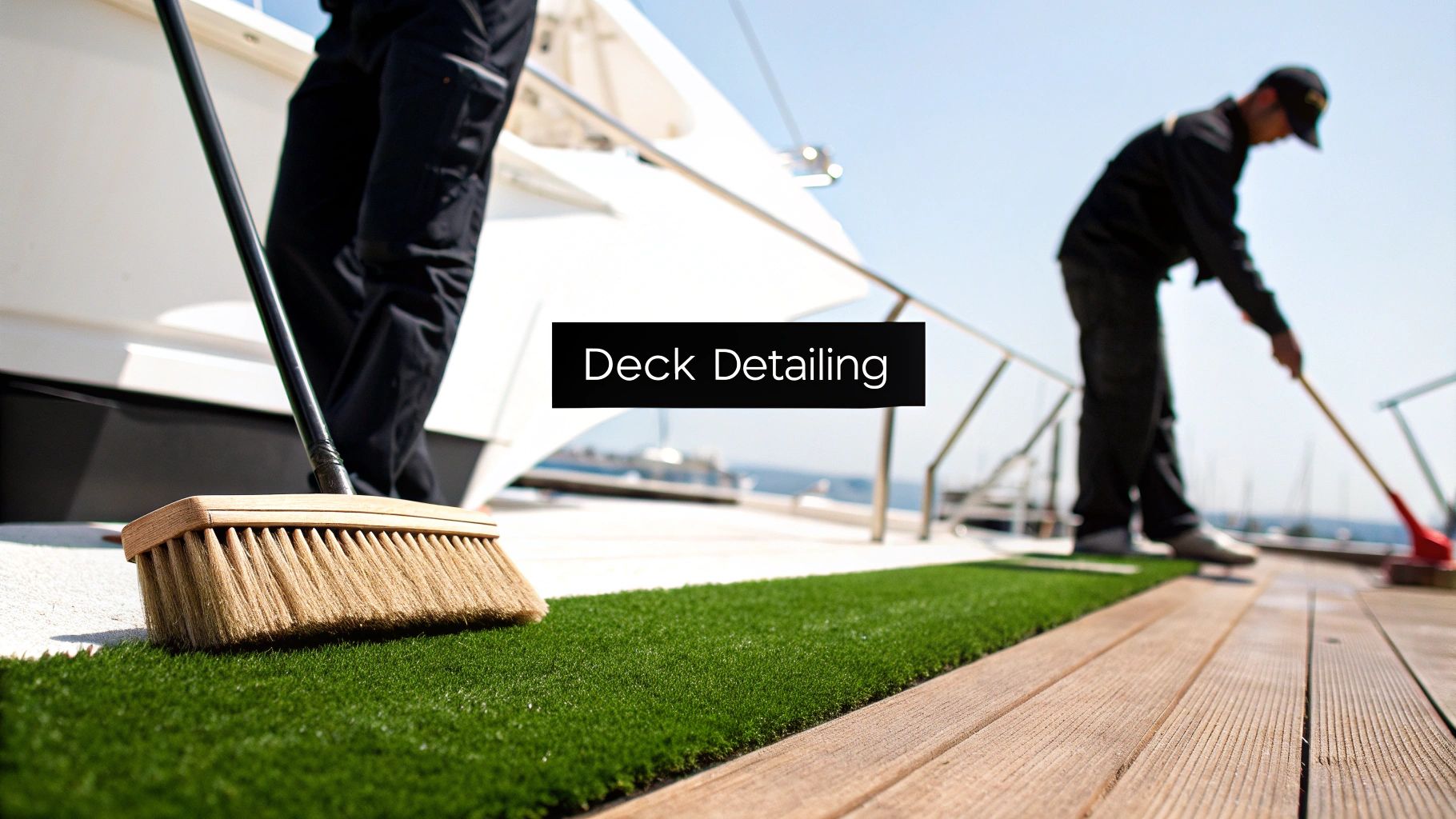
A dirty, matted carpet doesn't just look bad; it traps moisture and becomes a perfect breeding ground for mildew. Same goes for the Bimini—if you let it go, it’ll lose its water repellency and start growing its own little ecosystem.
Bringing Your Marine Carpet Back to Life
Your pontoon's carpet is basically a magnet for everything you bring on board. Sand, dirt, spilled sodas, and the occasional fish gut all find their way deep into those fibers. A quick spray with the hose just isn't going to cut it.
First, grab a powerful shop vac and give the entire carpet a serious vacuuming. You need to pull up all that loose debris before you add water, otherwise you’re just making mud. Next, use a gentle but effective cleaner like Boat Juice Interior.
- Start by mixing your cleaner with water in a bucket, just follow the label.
- Work in small, manageable sections, applying the solution and scrubbing with a medium-stiff brush to lift embedded gunk.
- Rinse it out thoroughly with clean water, and here's the crucial part: use a wet/dry vac to suck up as much of that water as you possibly can.
The real secret to avoiding a musty, mildew-ridden carpet is the extraction. If you just hose it down and let it air dry, you're trapping moisture deep down at the base. Using a shop vac to pull out all that dirty water is an absolute game-changer.
Reviving Your Bimini Top and Canvas
Your Bimini takes a constant beating from the sun, rain, and everything else. Start by gently brushing off any loose dirt, leaves, or cobwebs, then give it a rinse with cool, fresh water. For a standard cleaning, a simple mix of mild soap and water applied with a soft-bristle brush will do the trick.
For stubborn stains like mildew, you'll need a dedicated cleaner. It's important to kill the spores without harming the fabric's water-resistant coating. We've got a great resource on choosing the best mildew remover for boats that walks you through exactly what to do.
Getting Crystal-Clear Glass and Gleaming Hardware
Last but not least, let's hit the glass and metal hardware. Stay far away from any ammonia-based glass cleaners you'd use in your house; they can damage marine-grade acrylic or plexiglass. You need a dedicated, ammonia-free product to get a perfect, streak-free finish.
For all your stainless steel and chrome bits—the railings, cleats, cupholders—a quick wipe with a bit of interior cleaner on a clean microfiber towel is all it takes. It will lift fingerprints and water spots, making everything shine. This is that final touch that really makes the whole job pop.
Your Year-Round Pontoon Maintenance Schedule
A single, marathon cleaning day feels productive, but the real secret to a pontoon that always looks brand new is consistency. Spreading the work out across the year makes everything far more manageable and helps you catch small issues before they become big, expensive headaches. Think of it less as a chore and more as a simple routine.
After Every Single Trip
This isn't about a deep scrub. It's a quick, 15-minute reset that pays off big time. The goal is to tackle the daily grime before it gets a chance to bake into your boat's surfaces.
- Quick Interior Wipe-Down: Keep a spray bottle of a quality quick detailer like Boat Juice Wash & Shine and a microfiber towel handy. Give the vinyl seats, helm, and any hard surfaces a quick mist and wipe to lift away fresh dirt and oily sunscreen residue.
- Rinse the Tubes: A quick rinse of the aluminum pontoons with fresh water does wonders, especially if you're in salt or brackish water. It washes away minerals and salt that lead to water spots and corrosion.
Once a Month During the Season
This is your regular tune-up. Plan on spending about an hour once a month to hit the areas that need a little more love. This deeper clean stops grime from building up and keeps your pontoon looking sharp for every weekend on the water.
A consistent monthly cleaning is your best defense against long-term damage. It’s where you address mildew before it spreads and protect your vinyl from the sun’s relentless UV rays, which is the number one cause of cracking and fading.
Seasonal Deep Cleaning and Prep
This is the big one, the deep dive you'll do twice a year: once when you're preparing for summer and again when you're putting it to bed for winter.
Spring Launch Prep:
- Top-to-Bottom Wash: Start the season fresh. This means giving the entire boat a thorough cleaning—scrubbing the pontoons, deep cleaning the vinyl and carpet, and washing down the Bimini top.
- Apply Protection: With everything sparkling clean, now is the perfect time to apply a fresh coat of Boat Juice Protection to the vinyl and a good sealant to the aluminum tubes. This sets you up with a protected, easy-to-clean boat for the whole season.
Fall Winterization:
- Final Clean: Don't put your boat away dirty. Repeat the deep clean process, making sure no dirt, moisture, or mildew is left to fester under the cover all winter.
- Dry Everything Out: This is critical. Make absolutely certain every cushion, carpet, and storage compartment is bone dry before you cover it up. Trapped moisture is mildew’s best friend.
Following this simple schedule turns cleaning your pontoon from a daunting task into a simple, repeatable process that protects your investment and maximizes your time on the water.
Your Pontoon Cleaning Questions, Answered
Even with the best guide in hand, you're bound to run into a few head-scratchers when cleaning your pontoon. That’s just part of the process. Here are the answers to some of the most common questions I hear.
How often should I really be cleaning this thing?
Ideally, you’d give the interior a quick wipe-down and the toons a rinse after every single outing. That 15-minute habit is a game-changer for stopping sunscreen, lake scum, and salt from baking on. Beyond that, aim for a more serious scrub-down once a month during the season, with a full deep-clean detail at the start and end of the year.
Can I just use bleach or dish soap from the kitchen?
Please don't. Household cleaners can absolutely wreck your boat's materials. Bleach will rot the stitching in your upholstery and can cause permanent yellowing on your vinyl. Dish soap is designed to cut grease, which means it strips away every last bit of wax and UV protectant you have on your boat, leaving it vulnerable to sun damage. Stick with products made specifically for boats.
What's the secret to getting rid of those stubborn black streaks?
Those ugly lines running down your aluminum pontoons are usually a baked-on cocktail of algae and dock gunk. Your first move is a good marine aluminum cleaner and a brush with some backbone (but not a wire one!). If the streaks persist, a dedicated product like Boat Juice Exterior is made to dissolve that specific kind of grime without etching the aluminum. Always test it on a small, hidden spot first, and when you’re done, rinse it thoroughly.
How do I stop mildew from coming back over and over?
Mildew is all about moisture. If you can control the moisture, you can control the mildew. After you’ve cleaned off any existing spots, make sure the seats are bone dry. Then, hit them with a quality marine UV protectant spray like Boat Juice Protection. This creates a barrier against moisture and sun. And whenever you can, keep the boat covered and let the vinyl breathe after a rainstorm to prevent water from getting trapped.
Now that you know the steps and have the right strategy, your next step is to gear up. A solid cleaning routine is the best way to protect your pontoon for years of enjoyment.