


· By Boat Juice Team
A Boat Owner's Guide to Cleaning Mildew From Boat Seats
If you want to win the war against mildew on your boat seats, you first need to understand the enemy. Mildew thrives in a perfect storm of moisture, warmth, and a cozy, porous surface like your marine vinyl. Once you get a handle on keeping your seats dry and aired out, you’ll stop mildew before it ever gets a foothold.
Understanding the Mildew Problem on Your Boat
Do you feel like you're in a never-ending battle with those ugly black and green spots on your seats? You're not alone. Mildew is a type of mold that thrives in the exact same conditions your boat loves—warmth and water. Your boat's interior is basically the perfect petri dish for these stubborn spores.
Marine vinyl, with all its tiny pores and textured surfaces, gives mildew countless little crevices to latch onto. These surfaces trap moisture from wet towels, morning dew, or even just high humidity, creating an environment that’s begging for an outbreak.
The Science Behind the Spores
At its core, mildew growth is a simple formula. The spores are floating everywhere, just waiting for the perfect spot to land and multiply. Once they find a damp, warm place on your seats with a food source—like dirt, leftover sunscreen, or even the vinyl itself—they get to work.
This is why mildew seems to pop up out of nowhere after a couple of humid days, or when you pull the boat out from under a non-breathable cover. All that trapped moisture and heat create a mini greenhouse, and the growth cycle kicks into high gear. This is a real headache for boat owners.
Between 2019 and 2023, the global market for mildew removers shot up from US$609.7 million to US$813.4 million. That's because boaters are more aware of the health risks and the damage mildew can cause. If you let it go, mildew can degrade your vinyl by 30-50% in just one season, forcing an expensive replacement. You can read the full research about these market trends if you want to dive deeper.
Common Causes of Persistent Mildew
So, what are the everyday culprits that keep inviting mildew aboard? Pinpointing these is your first line of defense.
- Trapped Humidity: Your boat cover is great for protection, but if it doesn't breathe, it traps moisture and heat right against your vinyl. This creates a humid microclimate that mildew adores, especially during winter storage.
- Lingering Moisture: We’ve all done it—tossing a wet towel or life jacket on a seat. But that constant dampness is an open invitation. Even morning dew that doesn't get wiped away can be enough to kick things off.
- Poor Airflow: Stagnant air is mildew’s best friend. Without good ventilation, moist air just sits there, letting spores settle in and grow undisturbed. This is a huge problem in storage lockers and under cushions.
- Organic Debris: Spilled drinks, snack crumbs, and that oily film from sunscreen are basically a buffet for mildew. A quick wipe-down after each outing removes the fuel it needs to grow.
Key Takeaway: Mildew isn't just a sign that your boat is dirty; it's a sign that your boat is damp. Your best strategy is to eliminate the moisture that lets it grow in the first place.
Mildew doesn't just stick to seats. Here's a quick look at other problem areas to keep an eye on during your cleaning routine.
Common Mildew Hotspots on Your Boat
| Area | Why It's a Problem Zone | Quick Prevention Tip |
|---|---|---|
| Underneath Cushions | This area traps moisture and rarely sees sunlight or airflow. | Prop cushions up when the boat is not in use to let the area breathe. |
| Bimini Top & Cover | Often folded and stored while still damp, creating the perfect dark, moist environment. | Always ensure your bimini or cover is completely dry before storing it. |
| Storage Lockers | Lack of ventilation and darkness make these compartments prime real estate for spores. | Install small, solar-powered vents or use moisture-absorbing products. |
| Carpet & Decking | Carpeting holds moisture for a long time, especially the backing underneath. | Use a wet-vac to pull out excess water after a wash or rainy day. |
Understanding these factors helps shift your mindset from just reacting to stains to proactively creating an environment where mildew simply can't survive. It’s all about managing moisture and airflow on your boat.
Getting Your Mildew-Busting Arsenal Ready
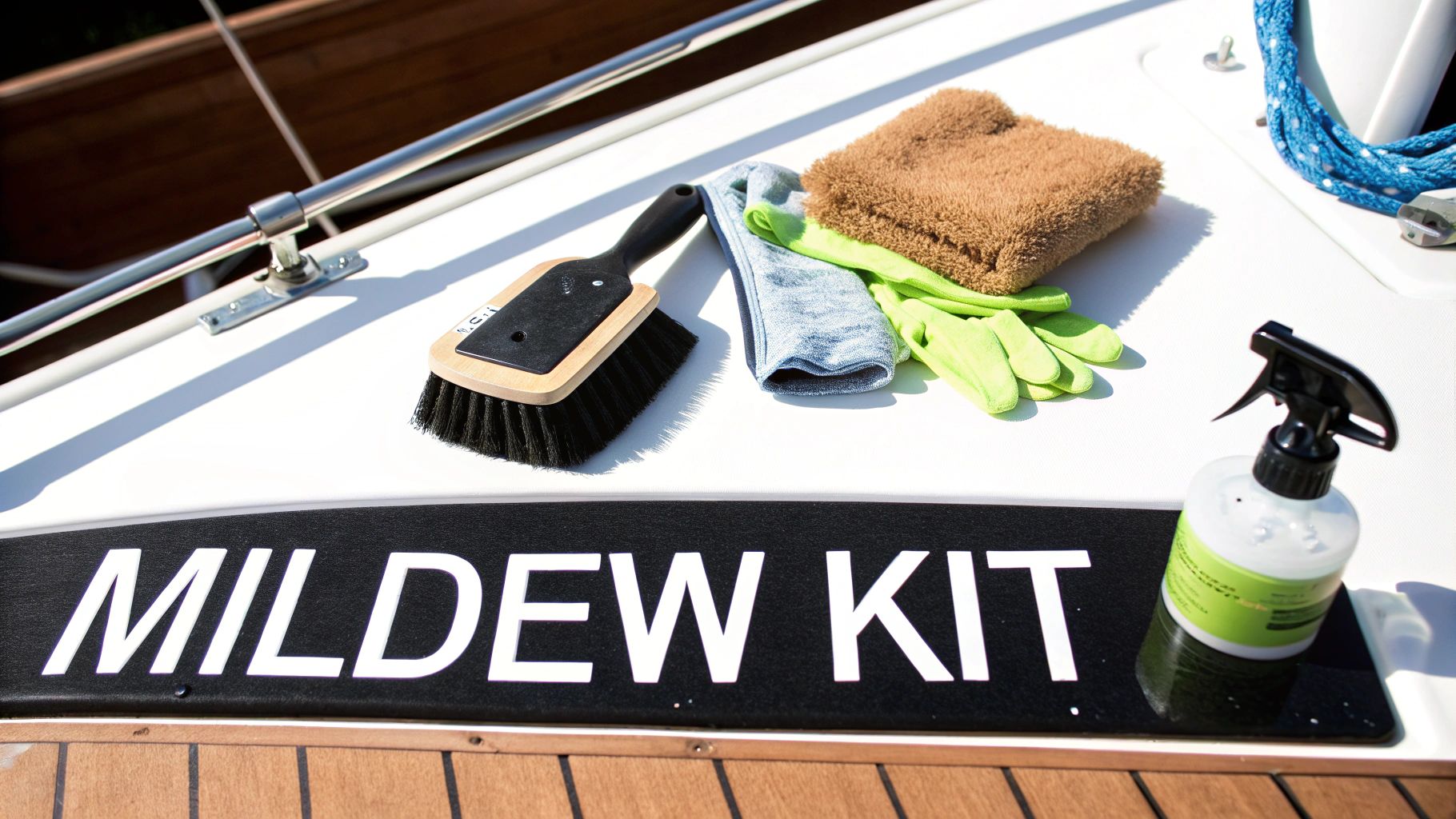
Before you jump in and start scrubbing, let's get your gear lined up. Tackling mildew unprepared is a recipe for frustration. Having the right tools on hand makes the job faster, easier, and much more effective.
The goal isn't just to wipe away the ugly surface stains but to get deep into the material's pores and kill the spores for good. This is exactly why your choice of cleaner is so crucial.
Your Must-Have Cleaning Supplies
Your toolkit doesn't need to be complicated, just effective. Remember, you're not just wiping down a kitchen counter; you're performing a deep clean on a surface that takes a beating from the sun and sea.
Here’s what you’ll want to grab:
- A dedicated marine mildew remover: This is your secret weapon. Make sure you get a product specifically formulated for marine vinyl that is bleach-free.
- A soft-bristle brush: Stiff bristles will scratch and gouge your vinyl, creating tiny new homes for future mildew to settle into. Go soft.
- Several clean microfiber towels: You’ll need a few for wiping up the cleaner and a few more for drying. Keep them separate to avoid spreading grime.
- A bucket of clean water: This is essential for rinsing your brush and towels as you go.
- Protective gloves: It's just plain smart to protect your hands during any cleaning project.
Pro Tip: Seriously, stay away from household products with bleach. I've seen it time and time again—bleach dries out marine vinyl, eats away at the stitching, and makes the material brittle. It might look clean for a minute, but you're just setting yourself up for cracked seats down the road.
Why the Right Cleaner is Everything
The cleaner you pick is the single most important decision you'll make here. Simple soap and water might remove surface grime, but it won’t kill the actual mildew spores. That’s where a purpose-built product like Boat Juice Mildew Stain Remover changes the game. It's designed to attack mildew at the source without the harsh chemicals that destroy your boat's interior.
This isn't just about looks. A staggering 60% of boat owners in the U.S. report dealing with mildew after winter storage. If you let it go, mildew can slash the lifespan of a boat seat from a decade to just three years. The principles behind an effective mildew remover for carpet are similar—you have to kill the spores without wrecking the material.
For a deeper dive into picking the right product, check out our guide on finding the best mildew remover for boats. Once you've got your kit assembled, you'll be ready to get to work with confidence.
Your Proven Method for Cleaning Vinyl Boat Seats
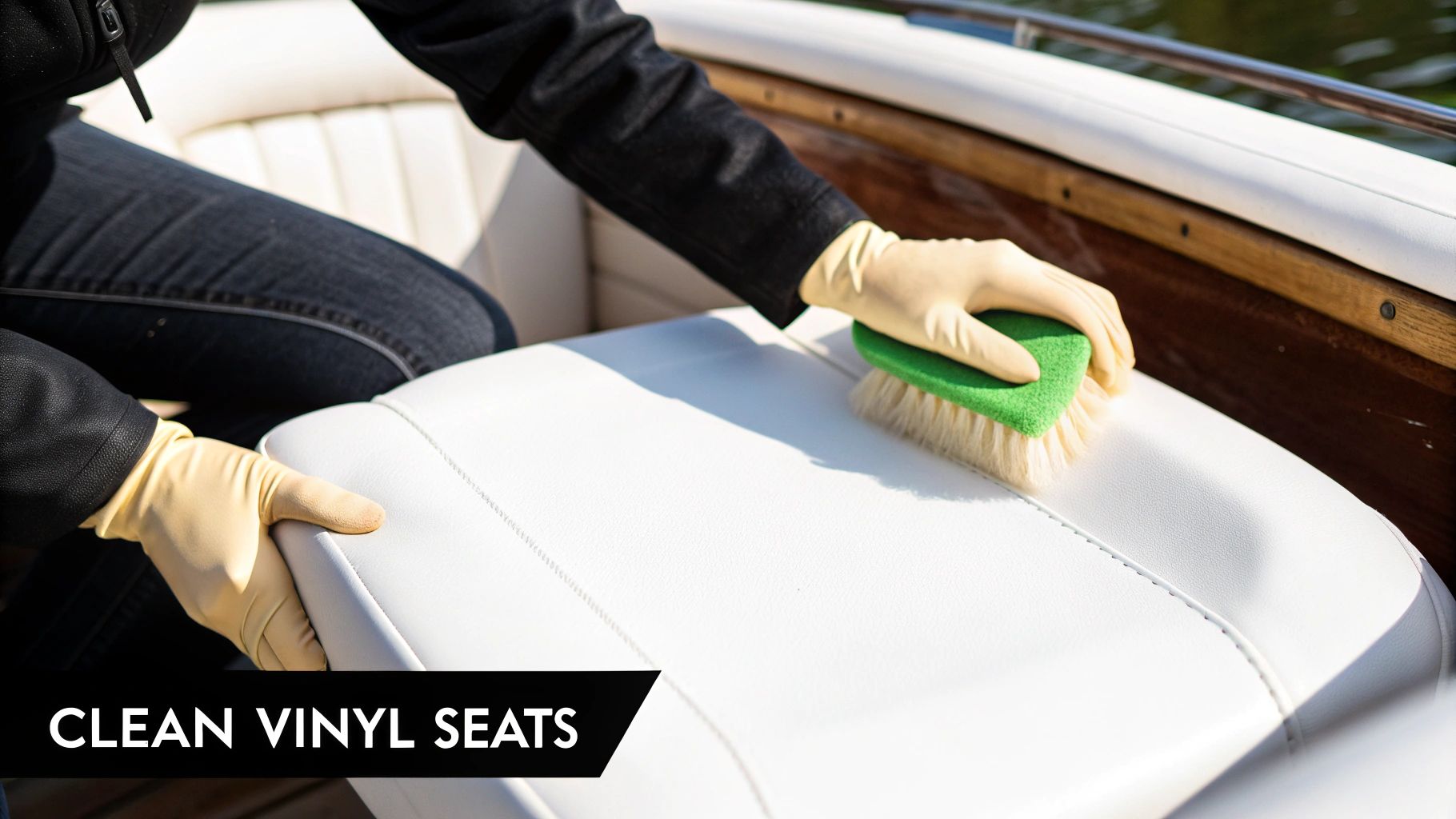
Alright, let’s get down to business. You've got your gear ready and you know what you’re up against—it's time to reclaim your vinyl seats. This isn't about hoping for the best; it's a battle-tested process that gets fantastic results without trashing your upholstery.
The secret is working smart. Going at your seats with aggressive scrubbing and harsh chemicals is a rookie mistake that often leads to scratched vinyl and busted seams. We're going to take a methodical approach that lets the right product do the heavy lifting.
First, Get a Clean Slate
Before you even think about tackling the mildew stains, you have to get rid of the surface-level gunk—dirt, dust, and general grime. Think of it as clearing the battlefield. If you skip this, you’re just grinding that loose debris into the vinyl as you scrub, which can cause thousands of tiny scratches.
A quick, gentle rinse with a hose is the perfect way to kick things off. Just use a light spray setting to wash away anything loose. This simple step ensures your mildew remover can make direct contact with the spores it needs to destroy.
Let the Cleaner Do the Work
Now you’re ready for your mildew stain remover. Here’s where most boat owners go wrong: they spray and immediately start scrubbing. That’s a huge missed opportunity. A quality cleaner needs a few moments to soak into the vinyl's pores and start breaking down the mildew.
Spray your cleaner directly onto a manageable section of the seat, making sure you get good coverage over the stained spots. Then, just let it sit for a few minutes—this "dwell time" is critical. You don't want it to dry completely. A great pro tip is to work in small, two-by-two-foot sections. This keeps the cleaner from evaporating before you can work it in, especially on a warm day.
The Gentle Agitation Technique
Once the cleaner has had a moment to work its magic, it’s time to agitate. Grab that soft-bristle brush and gently scrub the area in small, overlapping circles. This motion helps lift the now-loosened mildew spores out of the vinyl’s texture without being abrasive.
You really don't need a lot of elbow grease. The goal is to build up a light lather and work the cleaner into every little crevice. Pressing harder won't make it work any faster, but it will definitely increase the risk of scuffing your seats.
The All-Important Rinse and Dry
After scrubbing a section, you have to rinse it thoroughly with clean water. If you leave any cleaning residue behind, it can become a sticky film that actually attracts more dirt—giving new mildew spores a perfect place to set up shop.
And now for what is arguably the most important step of all: drying the seats completely. Grab your clean microfiber towels and wipe down every single drop of moisture. Don't just let it air dry. Leaving water behind is exactly how you got into this mildew mess in the first place.
Pro Insight: This final step is what separates a good cleaning job from a great one. Any moisture you leave in the seams or stitches is an open invitation for mildew to come right back. Be meticulous.
This systematic approach is what the pros do. A survey of 500 professional detailers showed that 75% swear by mildew-specific removers over all-purpose cleaners. Unlike bleach, which can leave mildew roots behind, specialized formulas attack the problem at its source, preventing regrowth and saving you from a $500-$1,000 seat replacement bill.
By following these simple steps, you'll be able to knock out any mildew outbreak. If you need a little more help picking the right product, check out our full breakdown of the best marine vinyl cleaner.
How to Handle Mildew on Fabric and Canvas
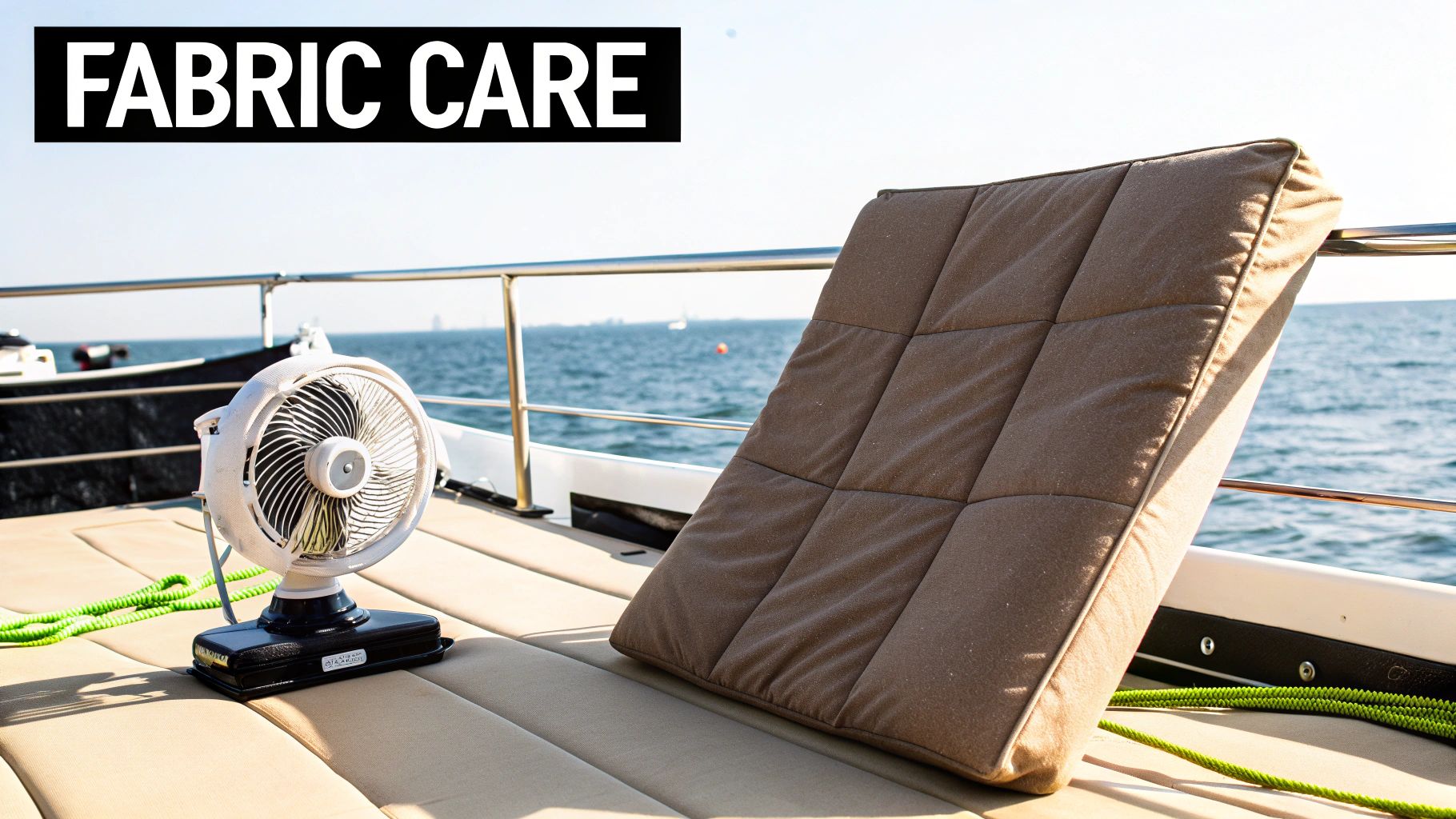
Vinyl isn't the only material on your boat. If you have fabric or canvas cushions, you know they need special care. Unlike vinyl, these materials act like sponges, absorbing moisture deep into their fibers, which makes them a five-star resort for mildew.
Because these materials are so absorbent, your approach to cleaning mildew from boat seats needs to be different. You can't just spray and wipe. The trick is cleaning deep down without messing up the delicate fibers or leaving behind a soapy residue.
The Spot-Test Is Your Best Friend
Seriously, don't skip this. Before you spray cleaner everywhere, you have to do a spot-test. Fabric and canvas can be sensitive to certain chemicals, which can cause fading or discoloration.
Find a small, hidden spot to test your cleaner—the underside of a cushion or inside a zipper flap works great. Apply a small amount, work it in gently, rinse it, and let it dry. If the color holds and the fabric looks good, you're clear to proceed.
Your Gentle Cleaning Method
Once your cleaner has passed the test, it's time to get to work. The process is similar to cleaning vinyl, but the key here is a much lighter touch to avoid fraying the fabric's weave.
- Go Light on the Spray: Start with a light mist of your cleaner over the mildewed area. You don't want to completely soak the cushion; that just makes drying a nightmare.
- Agitate, but Gently: Grab a soft-bristled brush or a microfiber towel and gently work the cleaner into the fabric using small, circular motions.
- Rinse Like You Mean It: Use a clean, damp microfiber to blot the area, lifting out both the cleaner and the mildew. You'll probably need to rinse your towel and repeat this a few times to get all the soap out.
Why This Matters: Leaving any cleaning residue in fabric is asking for trouble. When soap residue dries, it gets sticky and becomes a magnet for dirt, creating the perfect buffet for a brand-new batch of mildew.
Drying Is Everything
For fabric and canvas, the drying stage is even more important than it is for vinyl. If moisture gets trapped deep inside a cushion's foam core, that mildew will come roaring back. You need to get that cushion 100% dry, all the way through.
- Squeeze It Out: After you’re done rinsing, gently press on the cushion to push out as much water as you can.
- Use the Sun and Wind: Nothing beats mother nature. If you can, stand the cushions on their edge in a sunny, breezy spot so air can circulate all the way around them.
- Call in a Fan: If it’s not a sunny day, point a box fan directly at the cushions. The constant airflow will pull that deep-down moisture out much faster.
Taking these extra steps—especially the thorough rinse and the bone-dry finish—will get your fabric and canvas seats looking great again. If you want to dive deeper into maintaining all types of boat seating, our guide on choosing the right boat upholstery cleaner is a great place to start.
Your Ultimate Mildew Prevention Strategy
You’ve put in the work and scrubbed away every last trace of mildew. Your boat seats look incredible. But if you stop there, you’re only halfway done. Cleaning mildew is reactive; preventing it is how you truly win the war.
This is where you shift from a cleaning mindset to a prevention mindset, turning your boat’s interior into a place where mildew simply can't get a foothold. It's simpler than it sounds and starts with a few small, powerful habits.
Build Your Defensive Habits
Your first line of defense is what you do at the end of every single day on the water. This routine takes just a few minutes but pays off all season long.
The most effective habit you can build is a quick post-outing wipe-down. This isn't a deep scrub. Just grab a clean microfiber towel and a quality interior cleaner to wipe down the seats. This simple action removes moisture from spray or wet gear, and a food source like sunscreen residue and dirt.
Create an Impenetrable Shield
While a daily wipe-down is essential, the real game-changer is creating a protective barrier that actively repels the elements. After your seats are perfectly clean and dry, applying a protectant is the single most important step you can take.
A product like Boat Juice Protection is designed for exactly this. When you spray it on and wipe it in, it creates a hydrophobic ceramic (SiO2) shield over your vinyl. This invisible layer makes it incredibly difficult for water to linger. Instead, it sheets right off, taking moisture and potential mildew spores with it.
Why This Works: Boat Juice Protection doesn't just repel water; it also provides powerful UV blockers. Sun exposure breaks down your vinyl, making it brittle and more porous over time. By shielding it from the sun, you keep the material supple and less susceptible to mildew invasion.
Master Your Boat Cover and Storage
Your boat cover and off-season storage plan are the final pieces of your prevention puzzle. A cover is meant to protect your boat, but the wrong kind can create a humid, stagnant environment perfect for mildew growth.
Here’s how to make your cover work for you, not against you:
- Ventilation is Key: Your boat cover must be breathable. If it’s not, it will trap moisture and heat. Look into installing small vents or using a cover support system to create an air gap that lets things breathe.
- Use Moisture Absorbers: For long-term storage, especially over a humid winter, place a few moisture-absorbing buckets or bags inside the boat. These will pull humidity out of the air, keeping the environment dry.
For a deeper dive into staying safe, check out the truth about mold contamination, health risks, and prevention tips. By combining these simple strategies, you are creating a long-term plan for a spotless interior.
Your Seasonal Mildew Prevention Checklist
Building good habits is easier when you have a plan. Use this simple checklist to keep your boat in top shape and mildew-free all year long.
| Season | Your Key Action | Why It's Important |
|---|---|---|
| Spring | Deep clean & apply a fresh coat of protectant. | Starts the season with a clean slate and a strong defensive barrier against sun and moisture. |
| Summer | Wipe down seats after every single use. | Removes daily grime, sunscreen, and moisture before mildew has a chance to form. |
| Fall | Thoroughly clean, dry, and prep for storage. | Ensures no hidden moisture or dirt is left to fester under the cover during the off-season. |
| Winter | Use moisture absorbers & check for ventilation. | Actively fights humidity buildup during long-term storage, the prime time for mildew growth. |
This isn't about adding more chores to your list; it's about smart, preventative care that gives you more time to enjoy a boat that's always ready for the water.
Got a Few More Questions About Boat Seat Mildew?
Alright, so you've battled the mildew and won. That's a huge step! But it's totally normal to have some follow-up questions. Getting the seats clean is one thing, but knowing how to keep them that way is what really builds confidence in your boat care routine.
We get these questions all the time from fellow boat owners, so let's tackle them head-on. This is about understanding why certain methods work and others don't.
Can I Just Nuke the Mildew with Bleach or a Magic Eraser?
This is easily the question I hear most often, and my answer is always a hard no. I get the temptation—it seems like a fast, powerful fix. But trust me, using bleach or a Magic Eraser on your marine vinyl is a recipe for disaster.
Here’s the deal: Bleach is incredibly harsh. It chemically strips the essential oils out of the vinyl, which is what keeps it soft and flexible. The result? Your seats become brittle and start cracking. Bleach also eats away at the thread in your seams. And the Magic Eraser? It's basically super-fine sandpaper that sands off the protective topcoat of your vinyl, leaving a dull surface that’s a magnet for more dirt and mildew.
Pro Tip: Stick with cleaners made specifically for marine vinyl. They're formulated to kill mildew deep in the pores without wrecking the material or its stitching. Your boat seats will last so much longer if you do.
How Do I Dig Mildew Out of the Seams and Stitching?
Ugh, the seams. Mildew just loves to set up camp in those tight little crevices. Your best friend for this job is a small, soft-bristled brush—an old toothbrush works in a pinch.
Spray your mildew remover on the seams and let it sit for a few minutes. Then, use that small brush to gently agitate the cleaner right into the stitching. You don’t need a ton of elbow grease; let the product do the heavy lifting. After you've scrubbed, rinsing thoroughly is a must. I like to use a simple spray bottle with clean water to flush everything out of the seams.
What If Stains Are Still Lingering After I've Cleaned?
So you've cleaned everything, but you can still see some faint, blotchy stains. Don't sweat it, and definitely don't reach for a stronger chemical. This usually happens with older mildew that has worked its way deep into the vinyl.
The best approach is simply to repeat the cleaning process. Seriously. Those stubborn spots, sometimes called "mold measles," just need a little more persuasion. A second round with your mildew cleaner—letting it dwell, gently scrubbing—is almost always enough to knock out what's left. Patience is the name of the game here.
If you’re dealing with the absolute worst-of-the-worst stains, you might want to try a targeted product like Boat Juice Mildew Stain Remover. It’s formulated to penetrate deep and dissolve those stubborn spots without damaging the vinyl, making sure your hard work pays off.
Ready to build a complete cleaning and protection system for your boat? The experts at Boat Juice have you covered. Explore our full line of American-made detailing products, from powerful cleaners to long-lasting protectants, all designed to make your boat look, feel, and smell incredible. Shop now and see the difference for yourself at https://shopboatjuice.com.