




· By Boat Juice Team
Choosing the Best Boat Wash Down Hose for Your Needs
If there's one piece of gear that's absolutely essential for keeping your boat looking sharp, it's a high-quality boat wash down hose. This isn't just any old garden hose; think of it as your first line of defense against the constant assault of corrosive salt and grime. It’s a purpose-built tool designed to survive the harsh marine world and protect your investment.
Your Secret Weapon for a Spotless Boat
After a perfect day out on the water, the last thing you want is a long, drawn-out cleanup. That’s precisely where a dedicated washdown system comes in. It gives you the power and water flow you need to blast away salt crystals, fish guts, and mud before they can bake on and cause real damage to your gelcoat, hardware, and vinyl.

Think about it this way: you wouldn't use dish soap to wash your boat, right? So why would you settle for a standard-issue hose from a home improvement store? That green vinyl hose will get brittle and crack under constant sun exposure, and its cheap metal fittings will turn into a rusty mess in no time. A real boat wash down hose is built to make this crucial chore fast, easy, and effective.
Why Your Hose Choice Matters
The difference between a quick, satisfying rinse and a frustrating chore often boils down to the gear you're using. Having the right hose isn't just about convenience; it's a critical part of protecting your boat from long-term damage.
A solid washdown routine helps you fight back against:
- Saltwater Corrosion: Salt is the enemy. It relentlessly attacks metal fittings, snaps, and railings. A powerful freshwater rinse is the single most important thing you can do to stop it in its tracks.
- Gelcoat Staining: Bird droppings, algae, and general grime can leave permanent marks if you don't wash them off quickly.
- Upholstery Damage: That salty spray doesn't just feel crusty; it dries out and cracks vinyl seats. A quick rinse after each trip can add years to their life.
From a Good Rinse to a Great Finish
A thorough freshwater rinse is the foundation of any good cleanup, but let's be honest, it doesn't get everything. You’re often left with water spots, stubborn films, and that light layer of grime that just doesn't want to budge. That's when you bring in a quality cleaner to finish the job.
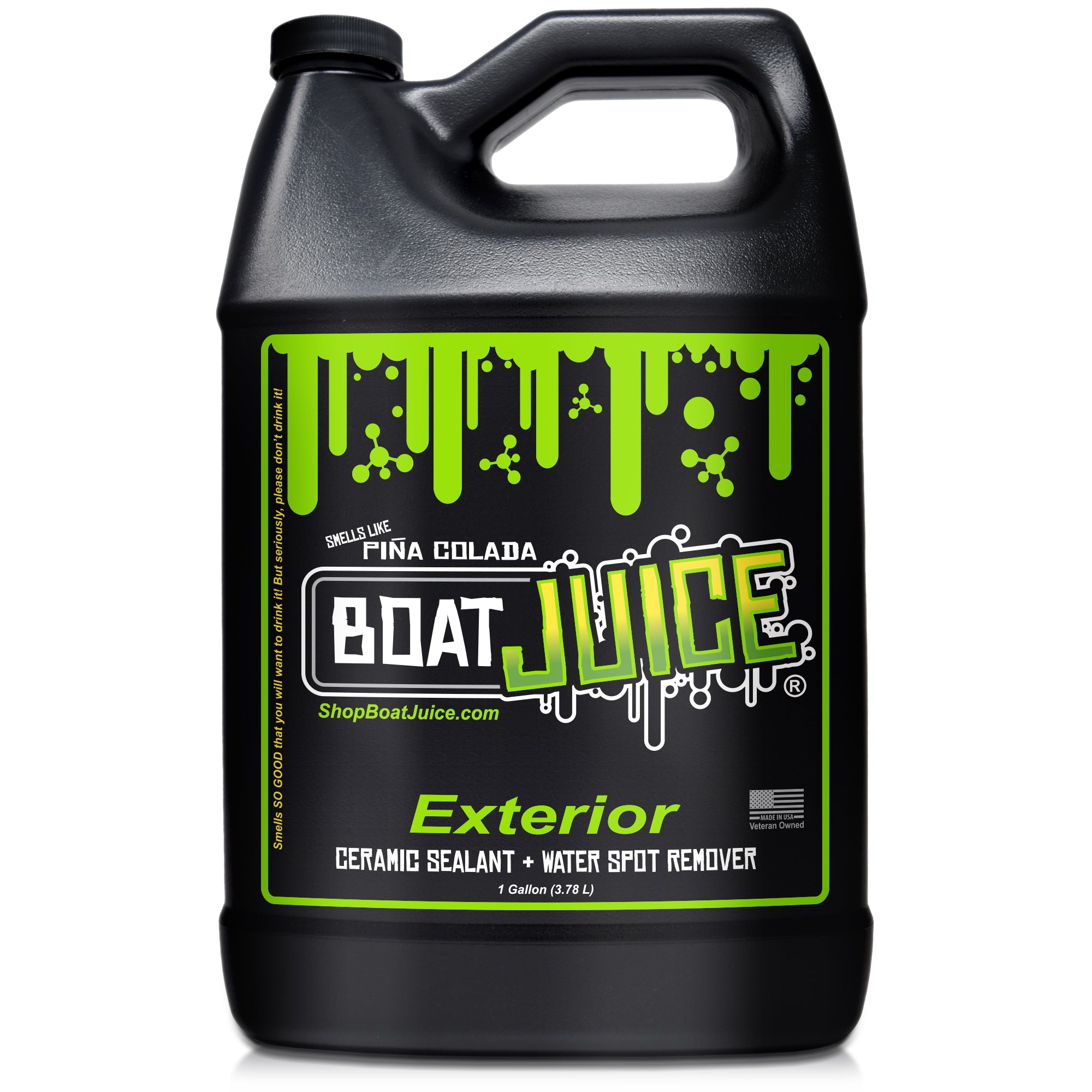
A quick follow-up with a spray-on, wipe-off product like Boat Juice Exterior after the main rinse can lift away all that remaining residue. It’s a simple second step that leaves behind a truly spotless, protected finish and makes your next cleanup even easier.
For those who want to take their boat's shine to the next level, many of the same car detailing principles can be applied to marine finishes. These pro techniques can really elevate your boat care game.
At the end of the day, having a reliable and easy-to-use boat wash down hose makes you far more likely to do that post-trip rinse every single time. It's that consistent maintenance that truly preserves your boat's value and appearance, season after season. The rest of this guide will walk you through picking out the perfect setup for your specific needs.
Understanding Hose Materials From Good to Best
Choosing the right boat wash down hose can feel a lot like picking tires for your car. You could grab a basic, budget option that gets the job done for a little while, or you can invest in something built for serious performance and a long life. The material of your hose is hands-down the biggest factor in how it performs, how long it lasts, and how easy it is to wrestle with on deck.

As you shop around, you'll run into three main materials: standard PVC, reinforced rubber, and marine-grade polyurethane. Each one comes with its own set of trade-offs in flexibility, durability against the sun and salt, and of course, price. Let's break down what you really need to know to pick the right one for your boat and your wallet.
The Budget-Friendly Choice: PVC Hoses
Standard PVC (polyvinyl chloride) hoses are the most common and affordable option out there. Think of them as the all-season tires on a basic sedan—they work, but they aren't built for high-performance situations. Their biggest selling point is their low cost, making them an easy entry point for any boater.
The catch, however, is durability. Standard PVC is notorious for UV degradation. This means the sun's rays break down the plastic, making it stiff and brittle over time, which leads to frustrating cracks and leaks. They also have a maddening habit of kinking up just when you need to quickly rinse down the deck.
The Reliable Workhorse: Reinforced Rubber Hoses
Reinforced rubber hoses are a huge step up, kind of like upgrading to a quality set of touring tires. They hit that sweet spot, offering a fantastic balance of durability, flexibility, and price. These hoses are built with multiple layers, often with radial braids woven in, which gives them excellent kink resistance and real strength.
Rubber is just naturally more flexible than PVC, especially when the temperature drops, making it much easier to coil and store. It also stands up way better to UV exposure and the scrapes and scuffs from being dragged across a non-skid deck. This blend of features makes reinforced rubber a go-to choice for most recreational boaters.
In fact, the broader industrial hose market—where a lot of marine tech comes from—heavily favors rubber's toughness. Natural rubber industrial hoses hold the largest market share in a sector valued at USD 11.81 billion, which really speaks to their trusted performance in tough jobs. That same durability is exactly why rubber works so well in the harsh marine world.
The Premium Performer: Polyurethane Hoses
For the serious boater who just wants the best, polyurethane is the top-of-the-line material. This is your high-performance summer tire—it's lightweight, incredibly strong, and built for a specific purpose. Polyurethane hoses are up to 50% lighter than their rubber cousins, which makes a massive difference when you're trying to manage a 50-foot hose.
Key Takeaway: Polyurethane hoses are not only lighter but also offer the best abrasion resistance and are exceptionally resistant to UV damage, chemicals, and mildew. They stay flexible even in cold weather and are virtually kink-proof.
Now, polyurethane hoses do come with a premium price tag. But for those who use their washdown system all the time, their longevity and how easy they are to handle often make them a worthwhile investment. If you want to dig deeper into how different hose materials handle pressure and wear, this pressure washer jetter hose guide offers some great insights.
To help you see the differences at a glance, here’s a quick breakdown of the pros and cons for each material.
Hose Material Comparison
| Material | Pros | Cons | Best For |
|---|---|---|---|
| PVC | Very inexpensive; widely available. | Kinks easily; becomes stiff and brittle from UV exposure; poor cold-weather flexibility. | Light, infrequent use where budget is the primary concern. |
| Reinforced Rubber | Good durability and flexibility; moderate kink resistance; good value. | Heavier than PVC and polyurethane; can leave scuff marks on some surfaces. | The average recreational boater looking for a reliable, all-around performer. |
| Polyurethane | Extremely lightweight and durable; excellent abrasion and UV resistance; remains flexible in cold; kink-proof. | The most expensive option. | Pro detailers, charter captains, and serious boaters who need top performance and longevity. |
Ultimately, your choice comes down to how you boat. For the occasional weekend trip, a good reinforced rubber hose will serve you well. But if you’re out on the water constantly and want a hose that’s a pleasure to use and will last for years, investing in polyurethane is the smart move.
Matching Hose Diameter to Your Pump's Power
When you're trying to blast away a day's worth of salt and grime, it’s tempting to think a bigger hose automatically means more power. But the relationship between your wash down hose and your pump is more of a delicate dance. It’s all about balancing water volume with water pressure, and nailing that balance is the secret to a quick, effective cleanup.
First, let's get two key terms straight: PSI and GPM.
-
PSI (Pounds per Square Inch): This is the force behind the water. High PSI is what gives you that satisfying, concentrated jet you need to knock stubborn crud out of your non-skid or anchor locker.
-
GPM (Gallons Per Minute): This is the sheer volume of water moving through the hose. A higher GPM lets you rinse down a big area, like the entire side of your hull, in way less time.
Your wash down pump is engineered to deliver a specific mix of PSI and GPM. If you pick the wrong hose diameter, you can throw that whole system out of whack, leaving you with a pathetic dribble instead of a powerful spray.
Why Diameter Is a Big Deal
Think about drinking a thick milkshake. Trying to use a tiny coffee stirrer is a struggle—you get a ton of pressure but barely any milkshake (low GPM). Now, switch to a wide straw, and you can pull a huge volume with very little effort (high GPM). Your wash down system works in a surprisingly similar way.
A 1/2-inch hose is a popular pick for smaller boats or more compact wash down setups. Its narrower channel naturally restricts the flow, which can actually help maintain higher pressure (PSI) even with a less powerful pump. It’s perfect for those targeted cleaning jobs.
The 5/8-inch hose, on the other hand, is the go-to standard for most recreational boats. It strikes a fantastic balance, letting a healthy volume of water flow through (good GPM) without causing a major pressure drop from most common wash down pumps. It's the versatile workhorse for just about everything else.
A classic mistake is hooking up a super long, skinny hose to a high-GPM pump. All that friction inside the hose literally robs you of pressure, and you end up with a disappointing flow at the nozzle. Always try to match the hose to what your pump can actually deliver.
The Problem with Mismatched Gear
Pairing a pump with the wrong hose isn't just inefficient; it can actually cause damage. Forcing water from a powerful, high-GPM pump through a hose that's too narrow creates a ton of backpressure. This puts a real strain on the pump's motor and seals, and can lead to it burning out way too soon.
Going the other way—using a huge hose with a small pump—just gives you a weak, lazy stream because the pump can't push enough water to fill the hose and build any real pressure.
Your goal is to find that sweet spot where your pump is running happy and efficient, giving you the performance you paid for. Check your pump’s specs—the manufacturer will list its rated GPM and PSI, which is your best guide for choosing the right hose. And if you want to get really nerdy about how water filtration protects your pump and prevents clogs, you might be interested in our article about 0.2 micron filters.
Working Smarter, Not Harder
Sometimes, brute force isn't the answer. Blasting away at your boat with extreme PSI can be really tough on your graphics, vinyl seams, and older gelcoat. This is where a great cleaning chemical can do the heavy lifting for you, letting you get the job done with less pressure and less water.
For instance, giving your boat a quick spray-down with Boat Juice Exterior Cleaner starts breaking down salt, bird droppings, and water spots on a chemical level. The formula lifts all that gunk off the surface, so a gentle, high-volume rinse is all you need to wash it clean. It's an approach that not only protects your boat but also cuts down on the wear and tear on your whole wash down system.
It's no surprise that the demand for better marine gear is growing. The global market for all types of hoses, including these specialized marine ones, was valued at USD 25.23 billion and is only expected to get bigger. It just goes to show that boaters everywhere are investing more in the right equipment to keep their vessels in top shape. You can check out more stats on this expanding market at Data Bridge Market Research.
Choosing Fittings and Nozzles That Last
A great, kink-proof hose is only half the battle. Honestly, it's the little metal and plastic bits at each end—the fittings and nozzle—that truly make or break your entire washdown system. Think of them as the weakest link in the chain; if they fail, the whole setup is useless. We’ve all been there: leaky, corroded fittings are a massive headache, killing your water pressure and always seeming to fail at the worst possible moment.

The culprit is almost always the same: using the wrong material for the job. That standard brass fitting you borrowed from your garden hose might look tough, but it stands no chance in a saltwater environment. Let's dig into the materials that will actually survive life on a boat.
Why Your Garden Hose Fittings Just Won't Cut It
Your typical hose from the hardware store uses fittings with Garden Hose Threads (GHT), and they're almost always made of brass. Brass is perfectly fine for hosing down your car in the driveway, but it’s a terrible choice for your boat.
Saltwater kicks off a nasty process called dezincification, where the salt literally leaches the zinc out of the brass alloy. What's left behind is a weak, porous copper structure that eventually cracks, crumbles, and fails. If you've ever had a brass fitting turn a weird pinkish color right before it snapped in your hand, you've seen dezincification firsthand.
To get off that frustrating merry-go-round of replacing fittings every season, you need to switch to materials actually built for the marine world.
- Marine-Grade Stainless Steel: This is the undisputed champion of strength and corrosion resistance. Stainless steel fittings can take a beating, handle high pressure, and will look brand new for years. It's a classic "buy it once, cry it once" investment that pays for itself.
- High-Impact Polymer (Plastic): Don't be so quick to dismiss modern plastics. Marine-grade polymer fittings are incredibly lightweight, completely immune to corrosion, and won't scratch or ding your beautiful gelcoat if you accidentally drop one. They're a fantastic—and often more affordable—alternative to stainless steel.
Threaded Connections vs. Quick-Connects
Once you’ve got your material sorted, you have to decide how you'll hook everything up. You’ve basically got two choices, each with its own trade-offs between a rock-solid seal and pure convenience.
Traditional Threaded Fittings: This is the classic screw-on connection we all know. When you tighten them down with a good washer, they create an incredibly secure, leak-proof seal. The only real downside is the time it takes to screw and unscrew them, which can be a real pain with cold, wet hands.
Modern Quick-Connect Systems: These systems are a game-changer. They use a "male" plug on one end and a "female" coupler on the other that snap together with a super satisfying click. For speed and convenience, you can't beat them—you can swap nozzles or disconnect the hose in a split second.
The only potential weakness of quick-connects is the small internal O-rings, which can wear out over time and cause a minor drip. But for most boaters, the massive convenience boost is well worth the five minutes it takes to swap out a tiny rubber seal every few years.
Picking the Perfect Spray Nozzle
The nozzle is where the real work gets done, turning a simple stream of water into a powerful and versatile cleaning tool. The right nozzle lets you adapt your boat wash down hose for any job, from a gentle deck rinse to blasting stubborn muck off the anchor.
Here’s a breakdown of the most common types:
- Adjustable "Fire Hose" Nozzles: These are the ultimate all-rounders. With a simple twist, you can go from a wide, gentle cone (perfect for rinsing soap off the hull) to a concentrated, high-pressure jet for getting grime out of tight spots.
- Pistol Grip Nozzles: These are fantastic for controlling the flow and conserving water. They often feature a dial with multiple spray patterns, giving you a ton of options for any cleaning task that comes your way.
- High-Pressure "Sweeper" Nozzles: These create a flat, fan-shaped spray that works wonders for clearing large, flat areas like your deck or swim platform quickly and efficiently.
No matter which style you prefer, look for a nozzle made from stainless steel or a tough, rubber-overmolded polymer. This ensures it won’t crack the first time you drop it or corrode from the inside out. With the right hose, fittings, and nozzle working together, you’ll have a reliable cleaning system that's always ready to go.
Putting It All Together: Installation and Hose Routing
Alright, you've got your new hose, fittings, and nozzle ready to go. Now for the fun part! Getting this set up right is more than just screwing things together; it’s about creating a system that’s dead simple to use and keeps your deck safe and clutter-free.
Don't worry, this isn't a massive project. A little bit of planning and care here goes a long way. Taking a few extra minutes to map out your hose's path and get your connections sealed tight will save you a ton of headaches down the road and make that end-of-day rinse-down a breeze.
Nailing the Leak-Proof Connection
First things first, let's connect the hose to your washdown pump's outlet. This connection is the foundation of the whole system. Get it right, and you'll have solid pressure. Get it wrong, and you're stuck with a frustrating drip inside a locker that saps your nozzle's power.
The secret? Thread sealant tape.
Seriously, don't just muscle the fitting on with a wrench. A good seal comes from the threads, not just from cranking it down as hard as you can.
- Wrap the Threads: Grab your PTFE thread sealant tape (you probably know it as Teflon tape) and wrap it clockwise around the male threads on the pump's spigot. Three or four wraps is usually the sweet spot. Wrapping clockwise is key—it ensures the tape tightens into the threads as you screw on the fitting, instead of bunching up and unraveling.
- Attach the Fitting: Spin the female fitting from your hose onto the wrapped threads by hand. You should feel it go on smoothly.
- Give It a Final Snug: Now, take a wrench and give it another quarter- to half-turn. That’s it. Do not overtighten! Going full gorilla on it can crack the plastic fitting or strip the threads, turning a simple task into a major repair.
- Leak Check: Before you run the hose all over the boat, flick the pump on for a second. Check for any drips at the connection. If you see a little weeping, give it just a tiny bit more of a turn.
A rock-solid, leak-free connection at the pump is everything. Even a tiny leak at the source will cause a noticeable pressure drop at the nozzle, making your whole washdown system feel weak and ineffective.
Planning Your Hose's Path
Next, take a minute to think about where this hose is going to live. A hose just thrown on the deck is a tripping hazard waiting to happen. A smart, well-planned route keeps your deck clear and makes grabbing, using, and stowing the hose second nature.
Ask yourself these questions:
- Reach: Can the hose comfortably reach the bow, the stern, and all the way across the beam from where it's connected?
- Safety: Is it routed out of the main walkways where someone could catch a foot on it?
- Protection: Will it be rubbing against any sharp corners, resting on hot engine parts, or getting pinched by a hatch lid?
Storing and Securing Your Hose
A loose hose on deck is just asking for trouble. It's a safety nightmare, and constant exposure to UV rays and foot traffic will dramatically shorten its life. You absolutely need a dedicated spot for it.
Here are your best bets:
- Hose Hangers or Clips: These are simple, cheap, and effective. A few well-placed hooks or clips on a bulkhead will keep a coiled hose tidy and off the floor.
- Built-in Hose Reels: This is the premium option. Many newer boats have them, but they can also be retrofitted. Nothing beats a reel for pure convenience.
- Dedicated Storage: Tucking the hose away in a locker or an under-seat compartment is a great way to keep it completely protected from the elements and out of sight.
Investing in quality marine gear like this is a smart move, and it's a trend that's catching on. The market for marine-grade hoses is booming, projected to jump from USD 2.5 billion to USD 4.5 billion by 2034. A huge part of that growth is from regular boaters in North America who know that reliable equipment is worth every penny. You can see more on these marine market findings on Reports and Data.
With your new setup installed, you've got a seriously effective cleaning tool. Curious how it stacks up against the heavy-duty option? You can check out our guide on when and how to pressure wash your boat. Follow these steps, and your new washdown hose will be ready for action from day one.
Simple Tricks for a Longer Lasting Hose
Your wash down hose goes through hell. It gets dragged across rough non-skid decks, baked by the sun, and constantly drenched in corrosive salt. But with just a little TLC, you can get years of reliable service out of it, making sure it’s ready to go season after season. Think of it like any other critical piece of gear on your boat—a few simple habits make all the difference.

If you do only one thing, make it this: rinse your hose with fresh water after every single use. This is non-negotiable in saltwater environments. A quick flush, inside and out, washes away those tiny salt crystals that act like sandpaper on the inner lining and eat away at your metal fittings. It’s the easiest way to prevent the slow, silent damage that kills hoses from the inside out.
Smart Storage and UV Protection
The sun is your hose’s worst enemy. Period. Those UV rays are brutal, breaking down the materials in PVC, rubber, and even tough polyurethane over time. That’s what turns a nice flexible hose into a stiff, brittle mess that’s just waiting to crack.
Keeping your hose out of direct sunlight is the key to longevity.
- Coil It, Don't Kink It: When you put your hose away, use wide, loose coils. Forcing it into a tight, twisted bundle puts stress on the material and can cause permanent kinks.
- Stow It Away: The absolute best spot for your hose is tucked away in a locker, stashed under a seat, or covered with a bit of canvas. A dedicated hose reel or bag is even better—it keeps things tidy and shielded from the sun.
Pro Tip: Never, ever leave your hose pressurized when you're not using it. That constant pressure is tough on the hose, the inner reinforcement, and the little seals in your fittings and nozzle. It’s a fast track to a blowout. Always turn the water off at the spigot and give the nozzle a squeeze to release the pressure before you stow it.
Winterization and Seasonal Care
For those of us in colder climates, getting the wash down system ready for winter is an absolute must. Any water left in the hose or pump will freeze, expand, and crack anything in its path—fittings, pump housings, and the hose itself. It’s a simple chore that can save you from a major headache come springtime.
Your Winterization Checklist:
- Disconnect Everything: Take the hose off the boat's spigot and unscrew the spray nozzle.
- Drain Completely: Walk the entire length of the hose, lifting it up to make sure every last drop of water runs out.
- Purge the Pump: Flick your wash down pump on for just a couple of seconds until it runs dry. This clears any trapped water from the pump head.
- Store Indoors: If you can, bring the hose into a garage or basement. Keeping it out of freezing temperatures is the ultimate protection.
A well-maintained system doesn’t just last longer; it works better. When it's time for a full wash, good pressure makes rinsing off a quality boat wash soap a breeze, leaving you with a clean, streak-free finish. Taking these small steps will keep your wash down hose in prime condition, saving you money and a whole lot of frustration down the line.
Your Top Questions Answered
We get asked about wash down hoses all the time, and for good reason—they're one of the most-used pieces of gear on any boat. To wrap things up, let's tackle some of the most common questions we hear from fellow boaters.
Can I Just Use a Regular Garden Hose on My Boat?
You can, but it's a terrible idea in the long run. Think of a standard green garden hose as a fair-weather friend; it's just not built for the harsh realities of life on the water.
The sun's UV rays will cook the PVC, making it brittle and prone to cracking. Even worse, saltwater will wage war on its cheap brass or aluminum fittings, causing them to corrode, seize, and eventually fail right when you need them most. A proper boat wash down hose, on the other hand, is made with UV-stabilized materials and corrosion-proof fittings, so it stays flexible and reliable season after season.
What Is the Difference Between a Self-Coiling Hose and a Regular One?
This really boils down to convenience versus raw performance. A self-coiling hose is a space-saving champ. It snaps back into a neat little bundle, which is a huge plus on a crowded deck. The trade-off? They're usually shorter and have a slightly smaller internal diameter, meaning you get less water volume (GPM).
A traditional, non-coiling hose is all about power. It gives you maximum flow for blasting away grime and comes in much longer lengths. The catch is you're on the hook for coiling it up and stowing it away. Your decision rests on what matters more: tidy, compact storage or the best possible water flow for a quick and thorough rinse.
The Verdict: If deck space is at a premium and you just need to rinse off some salt spray, the coiling hose is your ticket. For bigger boats and bigger messes, stick with a high-quality traditional hose.
My Wash Down Pump Has Low Pressure—Is It the Hose?
It could be, but don't rush out to buy a new hose just yet. A weak stream is a super common headache, and the hose is just one piece of the puzzle.
Before you blame the hose, run through this quick checklist:
- Check the Source: Is the seacock wide open? Is the water strainer clogged with seaweed or gunk? A blocked strainer is the number one cause of low pressure.
- Inspect for Kinks: Walk the entire length of the hose. It’s easy to overlook a sharp bend that’s choking off the flow.
- Look for Internal Damage: An old hose can actually break down on the inside, creating a hidden blockage that kills your pressure.
- Confirm Connections: Pop open the hatch and make sure the pump’s electrical connections are tight and free of any green, crusty corrosion.
If you’ve gone through these steps and your pressure is still pathetic, the pump itself is likely the culprit and may need to be serviced or replaced.
How Do I Prevent Mildew Inside My Hose?
The secret to a mildew-free hose is simple: get the water out. Every single time you use it, take a minute to lift the hose and drain it completely. It also helps to store it in a locker with decent airflow, not stuffed in a damp, dark bilge compartment where mildew loves to grow.
Of course, mildew has a way of showing up on other parts of your boat, like vinyl cushions and non-skid decks. For those stubborn spots, a simple rinse won't do the trick.
When you're facing those ugly black stains, Boat Juice Mildew Stain Remover is what you need. It’s specifically made to wipe out mildew without harming your boat's gelcoat or upholstery. It’s the best way to keep your entire boat looking—and smelling—fresh. Grab a bottle at shopboatjuice.com.