


· By Boat Juice Team
Why Your Boat Needs a 0.2 Micron Filter
You've probably heard the term 0.2 micron filter tossed around, but what does it actually mean for your boat? Think of it as the ultimate bouncer for your boat’s water and fuel systems. It’s a high-performance filter designed to stop contaminants so tiny you’d never see them, ensuring everything from your drinking water to your engine stays clean and safe.
What a 0.2 Micron Filter Actually Does
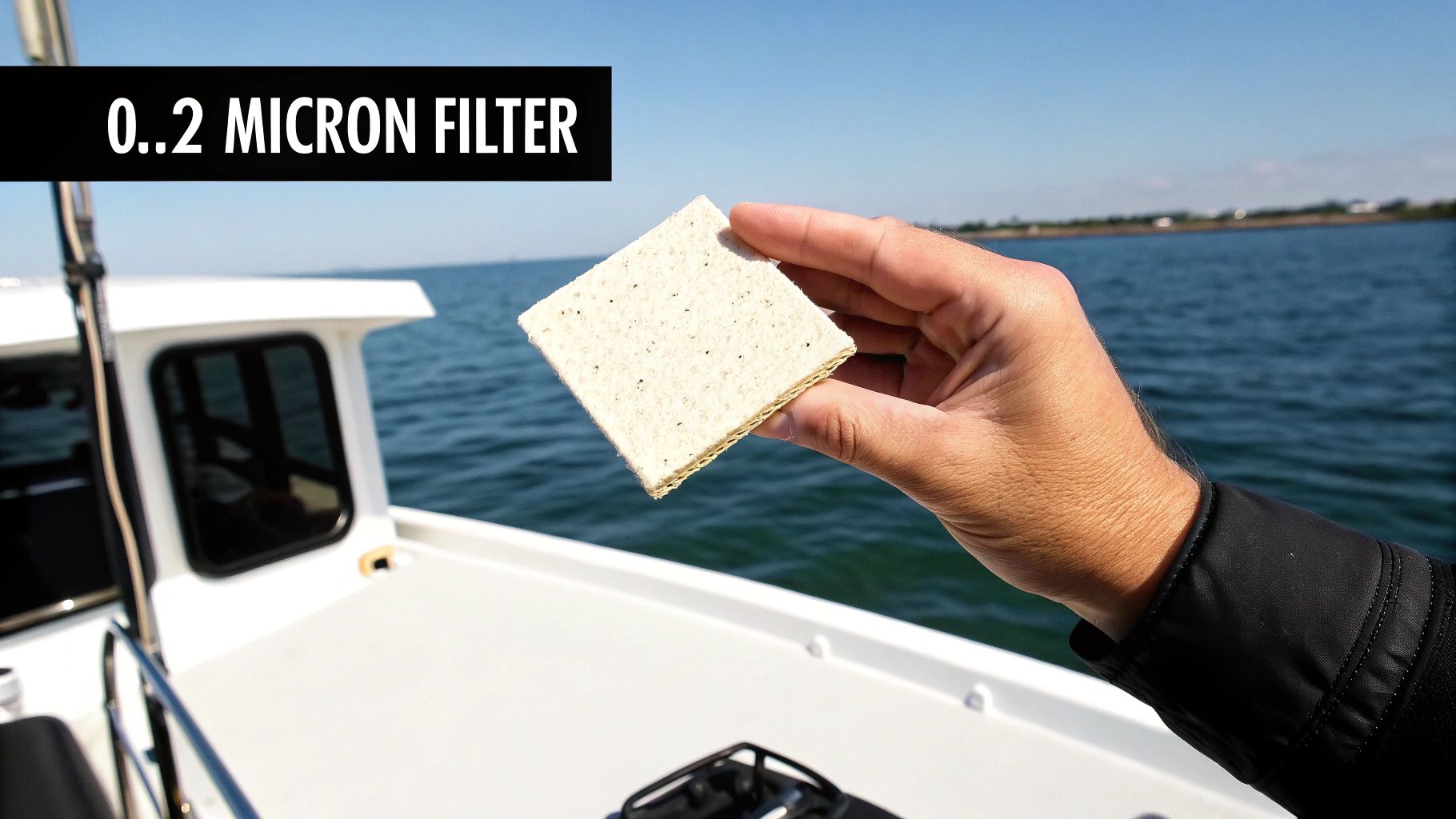
When we talk about filter ratings, "micron" is just shorthand for micrometer, which is one-millionth of a meter. To give you some real-world scale, a single human hair is about 70 microns thick. A red blood cell? That's around 5 microns.
This means a 0.2 micron filter has pores so incredibly small that it can block particles hundreds of times smaller than the width of a hair. That level of precision is exactly why these filters are a game-changer on your boat, where a tiny bit of contamination can lead to big, expensive problems.
Understanding Filter Ratings: Nominal vs. Absolute
As you shop for filters, you'll run into two critical terms: nominal and absolute. Knowing the difference is key to actually protecting your boat's systems.
-
Nominal Rating: This is basically an educated guess. A 10-micron nominal filter will probably stop most particles that size, but there’s no guarantee. It’s like a fishing net with slightly different-sized holes; some of the catch you wanted to keep might just slip through.
-
Absolute Rating: This one is a promise. A 0.2 micron absolute filter is certified to block at least 99.9% of particles at that size. This is the standard you need for critical applications like your drinking water or modern fuel injectors where even microscopic gunk can cause serious damage.
For true peace of mind on the water, you should always look for an absolute-rated filter. It’s the only way to know you’re getting the protection your systems need to run smoothly, trip after trip.
Here’s another way to think about it: a nominal filter is like a friendly doorman who gives a quick once-over, while an absolute filter is like a high-security checkpoint that scans every single thing that tries to pass. When it comes to the health of your crew and your engine, you want that guaranteed, thorough screening every time. Nailing down this concept will help you make much smarter choices for your boat.
Protecting Your Engine with Ultra-Clean Fuel
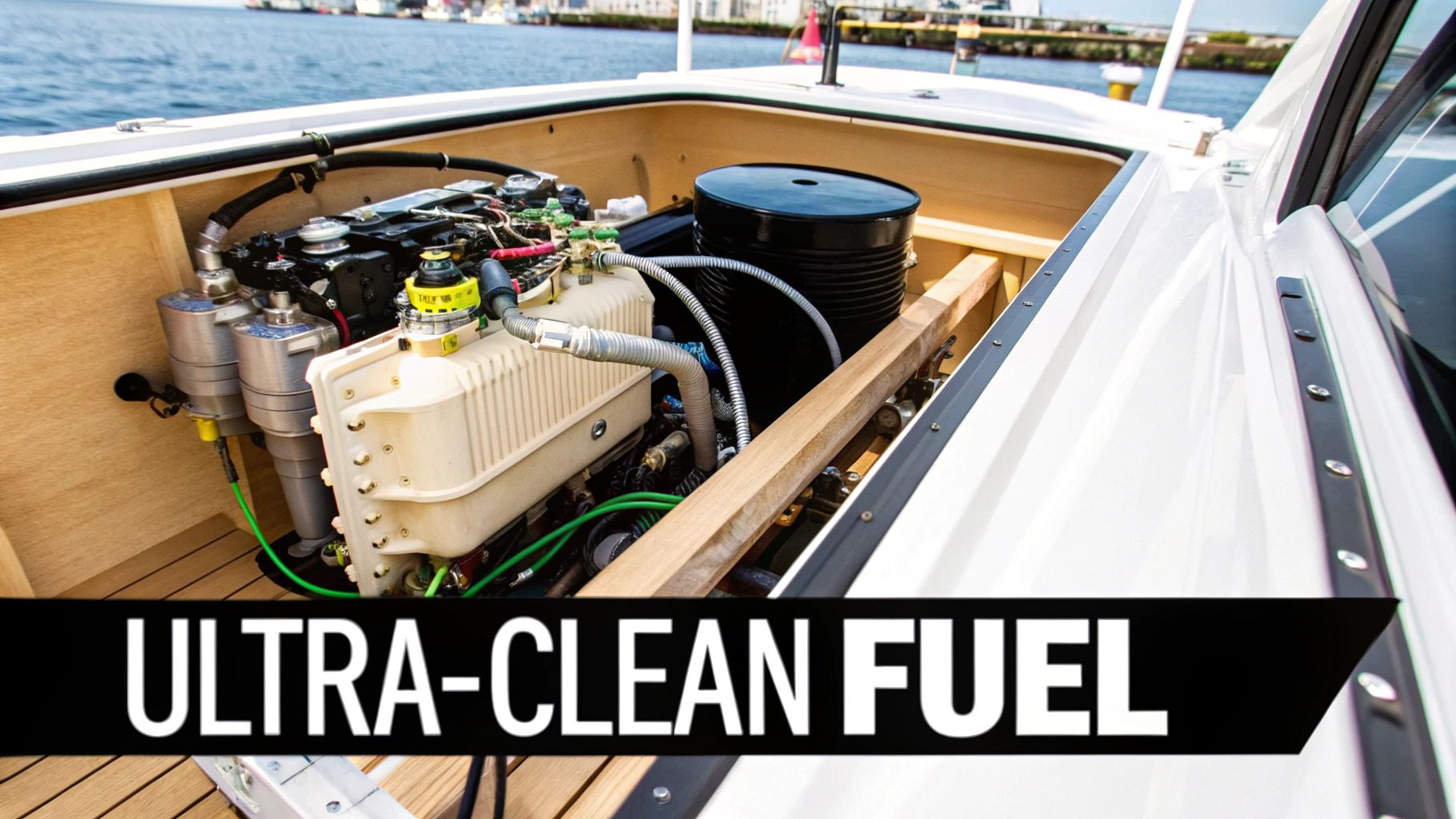
Let's be honest, your engine is the heart and soul of your boat. When it's running right, life is good. But nothing ruins a day on the water—or your bank account—faster than bad fuel. This is where a 0.2 micron filter becomes less of an accessory and more of an essential piece of gear for your boat's health and your peace of mind.
Modern marine engines, both diesel and gas, are engineering marvels with incredibly tight tolerances. Their fuel injectors and pumps have microscopic passages that are frustratingly easy to clog. Any tiny piece of debris can bring the whole operation to a standstill.
The Enemies Lurking in Your Fuel Tank
Every time you fill up, a host of tiny troublemakers can sneak into your fuel tank. A 0.2 micron absolute filter is your final, unyielding guard against the junk that wants to ruin your engine's day.
-
Sediment and Particulates: We're talking about tiny bits of rust, sand, and dirt that get sloshed around in your tank, especially in rough seas. These particles act like liquid sandpaper, grinding away at your fuel pump and injectors.
-
Water Contamination: In a marine environment, condensation is a constant battle. Water in your fuel is a triple threat: it causes corrosion, makes your engine run rough, and can even cause it to stall. If you've ever dealt with water in diesel fuel, you know how critical it is to keep it out.
-
Microbial Growth (The "Diesel Bug"): This is a nasty one. In diesel tanks, any water that gets in can create a breeding ground for bacteria and algae. This gunk forms a sludge that will choke your filters and starve your engine of fuel, leaving you dead in the water.
You can think of a 0.2 micron filter as the ultimate insurance policy for your engine. By stopping these contaminants cold, you're not just filtering fuel; you're preventing the kind of catastrophic failure that leaves you stranded with a massive repair bill.
This isn't just about being overly cautious; it's about keeping up with engine technology. Today's high-efficiency engines demand exceptionally clean fuel. A 0.2 micron filter delivers what's called sterile filtration, blocking nearly 100% of the bacteria and particles that wreck modern injectors, which can prevent major repair headaches.
Getting Safe and Great-Tasting Water Onboard
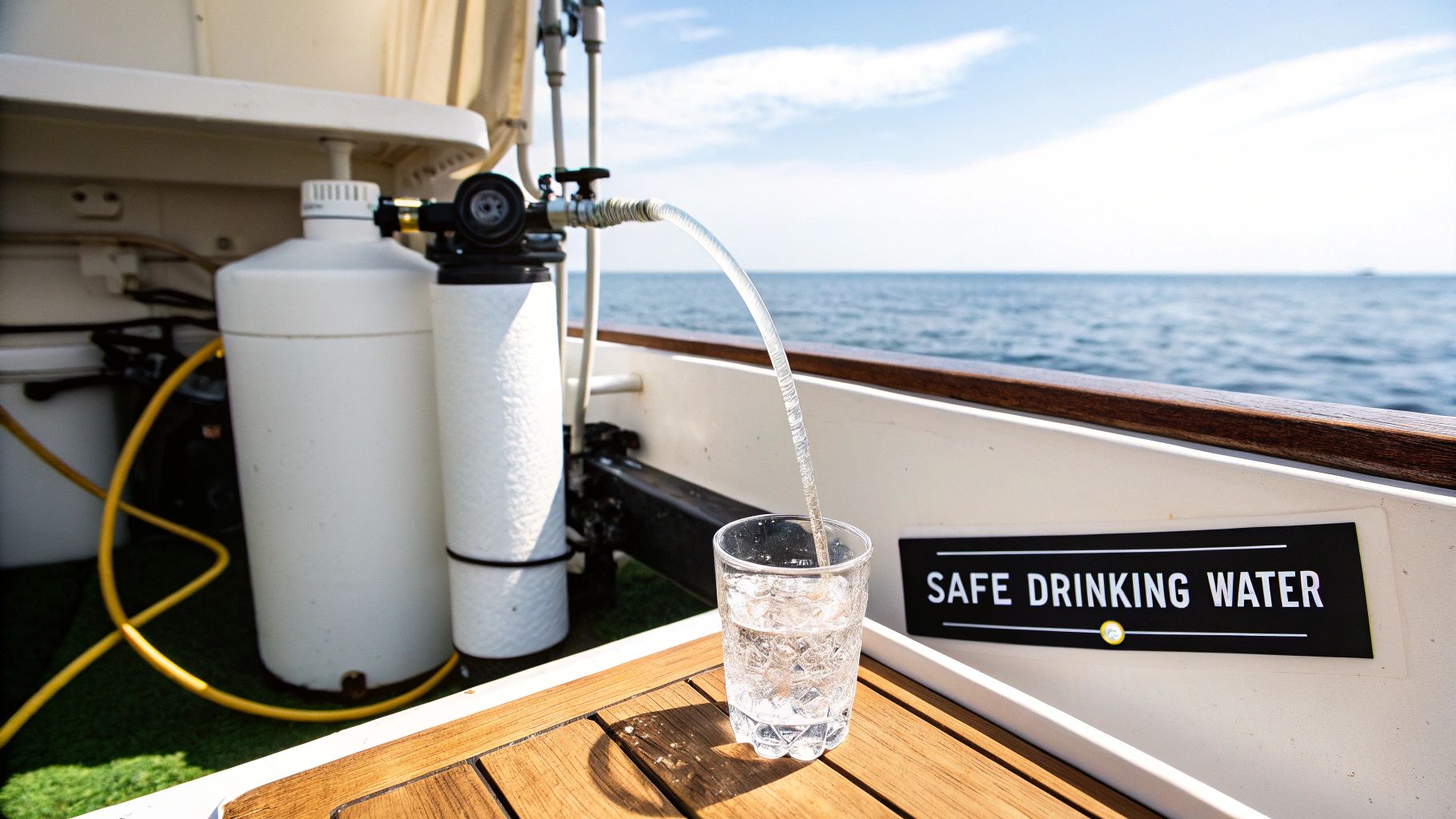
Are you tired of lugging cases of plastic water bottles onboard and losing precious storage space? Installing a good water filtration system lets you get safe, great-tasting water right from your boat’s tap. This is about more than just convenience—it's about peace of mind for you and your crew. You'll no longer have to wonder what’s in the water when you fill up at a new marina.
For your potable (drinkable) water system, a 0.2 micron filter is your absolute best line of defense. It acts as a physical barrier, literally stopping the nasty stuff you don't want to drink. We’re talking about the kind of harmful contaminants that can lurk in shore water hookups or even start to grow in your onboard tank over time.
What Does a 0.2 Micron Filter Remove from Water?
Think of this filter as a bouncer at a club, specifically trained to spot and stop the most common culprits of waterborne illness. It's a powerhouse when it comes to removing microscopic biological threats.
Here's a quick look at what a 0.2 micron filter is designed to block. This table breaks down the common contaminants it targets and why that's so important for your life on the water.
| Contaminant Type | Examples | Effectively Removed? | Why It Matters for Your Boat |
|---|---|---|---|
| Bacteria | E. coli, Salmonella, Legionella | Yes | Prevents serious gastrointestinal illnesses and keeps tank water from becoming a health hazard. |
| Protozoan Cysts | Giardia, Cryptosporidium | Yes | These are common causes of recreational water illness and can be picked up from contaminated dock water. |
| Fine Sediment | Silt, rust, sand, organic particles | Yes | Protects your plumbing, pumps, and fixtures from clogs and abrasive wear while improving water clarity. |
| Viruses | Norovirus, Hepatitis A | No (Mostly) | Most viruses are too small to be caught. An absolute-rated 0.2 micron filter may catch some, but a UV sterilizer is needed for complete protection. |
| Dissolved Solids | Salt, minerals, heavy metals | No | These require a reverse osmosis (R/O) system to be removed. |
The beauty of this mechanical filtration is that you get safety without that chemical aftertaste that purification tablets can leave behind. The result is clean, clear, and neutral-tasting water—perfect for drinking, making your morning coffee, or cooking up your fresh catch.
A key benefit of a 0.2 micron filter is its ability to reduce the total bacterial load in your water system. This not only protects you from getting sick but also helps prevent the growth of biofilm—that slimy buildup you sometimes find in hoses and tanks.
Now, it's important to be realistic about what the filter can and can’t do. While a top-notch 0.2 micron filter is amazing at removing over 99% of microbes, some incredibly tiny viruses can sometimes sneak through. That's why choosing an absolute-rated filter is so critical—it guarantees that the pore size is consistent and will block the specific threats it's designed for.
A Pro Tip for a Spotless Finish
Here’s a little secret from the world of professional boat detailing: using filtered water for your final rinse is a game-changer.
When you use water straight from your newly installed 0.2 micron filter for that final rinse-down, it prevents mineral deposits from creating those stubborn water spots on your gelcoat and glass. Those spots are a real headache and can even etch into surfaces over time. If you're already fighting this battle, check out our guide on how to remove hard water stains.
When your boat's surface is free of minerals, detailing products can finally do their job properly. For instance, applying a cleaner like Boat Juice Exterior Cleaner to a mineral-free surface lets it attack the actual grime, not the hard water spots, giving you that perfect, streak-free shine you’ve been chasing.
How to Choose the Right Filter for Your Boat
Walking into a marine supply store and staring at a wall of filters can be completely overwhelming. With all the different sizes, materials, and ratings, how do you pick the right one? The good news is that you only need to focus on a few key factors to make sure you buy the right part the first time.
Getting this choice right means you’ll have a reliable system that’s easy to maintain. Getting it wrong, on the other hand, can lead to lousy performance, constant clogs, or even damage to your boat’s expensive systems. Let’s break down exactly what you need to look for.
Match the Flow Rate to Your Pump
The very first thing you need to check is the filter’s flow rate, which you'll see measured in gallons per minute (GPM). This number tells you how much water can pass through the filter without restricting your system. The rule is simple: your filter’s GPM rating has to be higher than your pump’s GPM rating.
For example, if your boat’s freshwater pump is rated for 3 GPM, you need a filter that can handle at least that much—and preferably a bit more, like 4 or 5 GPM. If you install a filter with a lower GPM, you're creating a bottleneck. This forces your pump to work way harder, which kills the water pressure at your faucet and can drastically shorten the pump's life. The same logic goes for fuel systems; an undersized filter can starve your engine when you need power most.
Select the Right Housing and Cartridge
Next up is the physical filter itself—the housing and the replaceable cartridge that goes inside. The materials here are a huge deal for both safety and how long they'll last.
-
Fuel vs. Water Housings: Whatever you do, never mix these up. Fuel filter housings are almost always made of metal to handle the corrosive nature of gasoline or diesel and to meet strict fire safety standards. Water filter housings are usually made of high-strength, food-grade plastic. Using a plastic water filter housing in a fuel line is incredibly dangerous and a massive fire hazard.
-
Cartridge Availability: Before you commit to a specific filter system, do a quick online search for its replacement cartridges. Some obscure brands have cartridges that are surprisingly expensive or nearly impossible to find. Sticking with well-known marine brands means you can easily order replacement parts or grab them at most marine stores, saving you a huge headache next season.
Think of your filter housing as a long-term investment and the cartridge as a recurring maintenance item. Choosing a common size and brand from the start makes seasonal maintenance quick, easy, and affordable.
Demystify the Spec Sheet
When you look at a filter's packaging, you’ll see a spec sheet. Don't let it intimidate you. Beyond the micron rating and GPM we’ve already discussed, you just need to confirm the port size—that’s the diameter of the inlet and outlet fittings—to ensure it matches your boat's plumbing lines.
To make sure you’re making the best call for your specific needs, it can be useful to look over some helpful advice on selecting water filters to get a broader perspective. Taking just a few minutes to confirm these simple details will mean a leak-free installation and a system that works perfectly for your boat.
Your Step-By-Step Installation and Maintenance Guide
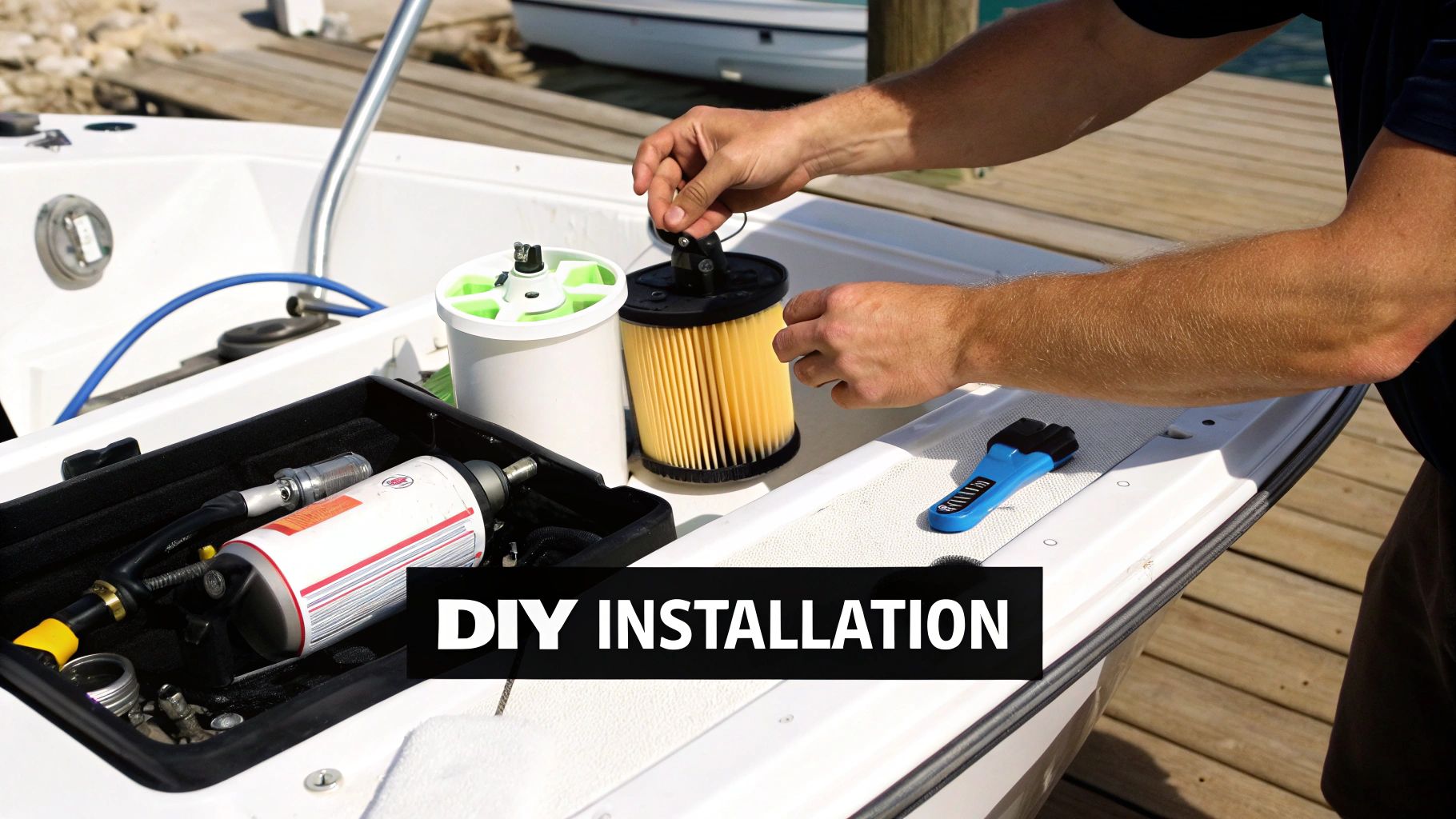
Ready for a satisfying DIY project that will genuinely improve your boat's reliability? Installing a 0.2 micron filter is one of those jobs you can absolutely tackle yourself. Let’s walk through how to get it done right, so you can skip a trip to the boat yard and have peace of mind on the water.
First, let's get your tools together. You won’t need anything too exotic, but having everything ready before you start makes the whole process a lot smoother. You should grab a set of wrenches, a filter wrench, and some thread sealant like Teflon tape that’s rated for either fuel or water. It’s also smart to have some rags handy to catch any drips.
Installing Your New Filter System
The basic steps for installing a fuel or water filter are pretty similar, but the safety rules are worlds apart. Mess up a water filter, and you might get a little wet. A mistake on a fuel filter, however, can lead to dangerous leaks.
Safety First: When you're working on a fuel line, always make sure the engine is off and the space is well-ventilated. No sparks, no flames, nothing. It’s a great idea to disconnect the battery just to be extra cautious, as fuel spills are a massive fire hazard.
Follow these simple steps for a solid, leak-free installation:
-
Turn It Off: First, shut off the fuel valve or flip the breaker for your freshwater pump. You need to stop the flow before you disconnect anything.
-
Pick Your Spot: Find a home for the filter housing where you can actually get to it later. Remember, you'll need to change the cartridge, so leave enough room below the housing to unscrew the bowl.
-
Mount the Housing: Securely mount the filter bracket to a solid surface like a bulkhead. A firm mount is crucial to prevent vibration from shaking the fittings loose over time.
-
Connect the Lines: Time to hook everything up. The housing will have arrows marking the "inlet" and "outlet" to show the direction of flow. Use the right thread sealant on every fitting to ensure a perfect, leak-proof seal.
-
Check for Leaks: Once it’s all buttoned up, turn the fuel valve or water pump back on. Now, carefully inspect every single connection for drips. If you see one, give it a slight turn to tighten, but be careful not to over-tighten and crack a plastic housing.
A Simple Maintenance Plan
With your new filter installed, keeping it in top shape is a breeze. The most important thing is simply knowing when to swap out the cartridge, and your boat will usually give you some pretty obvious clues.
A clogged 0.2 micron filter will choke the flow, causing a noticeable drop in performance. For an engine, this might show up as sputtering or not being able to reach top RPMs. With your water system, the sign is even simpler: a weak stream of water coming out of the faucet.
Keeping an eye on your guide to boat washdown hoses can also help you spot pressure changes easily.
The good news? Changing the cartridge is a five-minute job. Just turn off the system, place a rag underneath to catch spills, unscrew the filter bowl, swap the old element for a new one, and screw the bowl back on. It’s one of the easiest and most important things you can do to keep your boat running smoothly all season long.
Answering Your Top Questions About 0.2 Micron Filters
You've got questions, and we have answers. When it comes to something as vital as your boat's filtration system, there's no room for guesswork. Let's tackle some of the most common questions we hear from fellow boaters to help you get things dialed in.
How Often Should I Change My Filter?
There's no single "magic number" for this, as it really depends on how you use your boat and the quality of the water or fuel you're taking on. That said, a solid rule of thumb for your water filter is to swap it out once per season or after every 3-6 months of steady use.
For a fuel filter, your engine manual is always the final word, but a change every 100 hours or once a year is a tried-and-true practice. Honestly, the best indicator is your boat's performance. If you feel a sudden drop in water pressure from the tap or your engine starts acting sluggish, it's practically screaming at you that the filter is clogged and needs replacing.
Will a 0.2 Micron Filter Clog Too Easily?
This is a great question and a common concern. Since a 0.2 micron filter is so incredibly fine, it can clog faster if you’re pulling from a sketchy water source or get a bad batch of fuel. But don't worry, there's a simple, pro-level solution to keep this from becoming a headache.
The best practice is to set up a two-stage system. This just means you install a less-fine "pre-filter"—something like a 5 or 10 micron filter—in the line right before your main 0.2 micron filter.
Think of the pre-filter as a bouncer that handles the big, rowdy debris first. This lets your ultra-fine filter focus on what it does best: stopping the microscopic bad guys without getting overwhelmed by the big stuff. This one simple step can dramatically extend the life of your more expensive 0.2 micron cartridge.
Will This Filter Remove Chlorine Taste from Water?
A standard 0.2 micron filter is a particle-blocker, plain and simple. It’s built to physically stop solids and biological critters. It won't, however, touch chemical tastes and odors like that all-too-familiar chlorine taste from marina shore water.
To tackle that, you need a filter with activated carbon. The good news is, you don’t have to pick one over the other. Many of the best marine water filters are combo units that have both a fine particulate filter and a carbon block. If great-tasting water is a top priority, just make sure you grab a filter that's specifically rated for both micron size and chlorine reduction.
Can I Use the Same Filter for Fuel and Water?
Absolutely not. This is a non-negotiable safety rule on a boat. Fuel and water filters are constructed from totally different materials for very good reasons.
- A plastic water filter housing could be quickly broken down by gasoline or diesel, which could lead to a disastrous—and incredibly dangerous—fuel leak.
- A fuel filter isn't rated for potable water and might leach harmful materials into your drinking supply.
Always use a filter that is clearly marked for its specific job, whether that’s "Marine Fuel" or "Potable Water." There is no safe way to mix and match.
Keeping your boat's systems clean and protected is the secret to a worry-free season on the water. Your next step is to inspect your current filters and decide if an upgrade to a 0.2 micron system is right for you. Once you’ve dialed in your water system, you can get that perfect finish on the outside with our proven cleaners.