


· By Boat Juice Team
The Ultimate Guide to the Best Boat Interior Cleaner
Let's face it, nothing beats the feeling of stepping onto a boat with a clean, fresh interior. But keeping it that way can feel like a battle against sunscreen, spills, and the grime that comes with a great day on the water. The secret isn't scrubbing harder—it's using the right boat interior cleaner. You need something tough on messes but gentle on your boat's surfaces, especially that expensive marine vinyl.
Your Playbook for a Spotless Boat Interior
A sparkling clean interior is a huge part of the joy of boat ownership. But between the sun, salt, and an occasional spilled drink, your cabin and cockpit can start looking a little worse for wear. Think of this guide as your new first mate, here to help you tackle the cleanup with the right tools and techniques so you can get the job done right, the first time.
We're going to cut through the clutter of a million different products and show you exactly what works for your vinyl seats, carpet, fiberglass, and more. The goal is simple: spend less time cleaning and more time enjoying your boat.
Why You Need a Quality Boat Cleaner
Proper interior care is about so much more than just looking good—it's about protecting your investment. Sunscreen, dirt, and trapped moisture don't just stain; they actively break down marine fabrics and vinyl over time. This leads to cracks, fading, and expensive repairs you definitely want to avoid. A little preventative maintenance goes a long way.
You're not the only one thinking about upkeep. The global boat cleaner market was valued at around USD 1,951.2 million in 2024 and is expected to hit USD 3,500 million by 2035. That's a lot of boat owners realizing that a dedicated cleaner is non-negotiable. If you're curious, you can explore more market trends about boat cleaners here.
Here's What We'll Cover
This guide is your complete game plan for keeping that interior looking brand new, whether you're prepping for spring or cleaning up after a long summer weekend. We'll get into the nitty-gritty of:
- Picking the Right Tools: I'll break down how to choose the perfect cleaner for the different materials inside your boat.
- A Simple Cleaning Process: You'll get a straightforward routine you can follow every time for cleaning everything from the helm to the cabin.
- Fighting Stubborn Stains: You'll learn practical, actionable steps for getting rid of frustrating mildew spots, sunscreen smudges, and fishy messes.
- Protecting Your Work: Cleaning is just step one. I’ll show you how to shield your surfaces from UV rays and future stains.
By the time you're done reading, you'll have a clear, easy-to-follow plan to keep your boat looking and smelling amazing all season long.
Choosing the Right Cleaner for Each Surface
We've all been tempted to grab any old all-purpose cleaner from under the sink to tidy up the boat. But that's one of the fastest ways to cause serious, expensive damage. Using the wrong product can turn a simple cleanup into a nightmare repair job.
Your boat's interior is a mix of specialized materials—marine-grade vinyl, unique carpeting, plastics, and fiberglass. Each one needs a specific kind of care. Think of it this way: you wouldn’t use a harsh engine degreaser on your leather sofa at home, right? The same logic applies here.
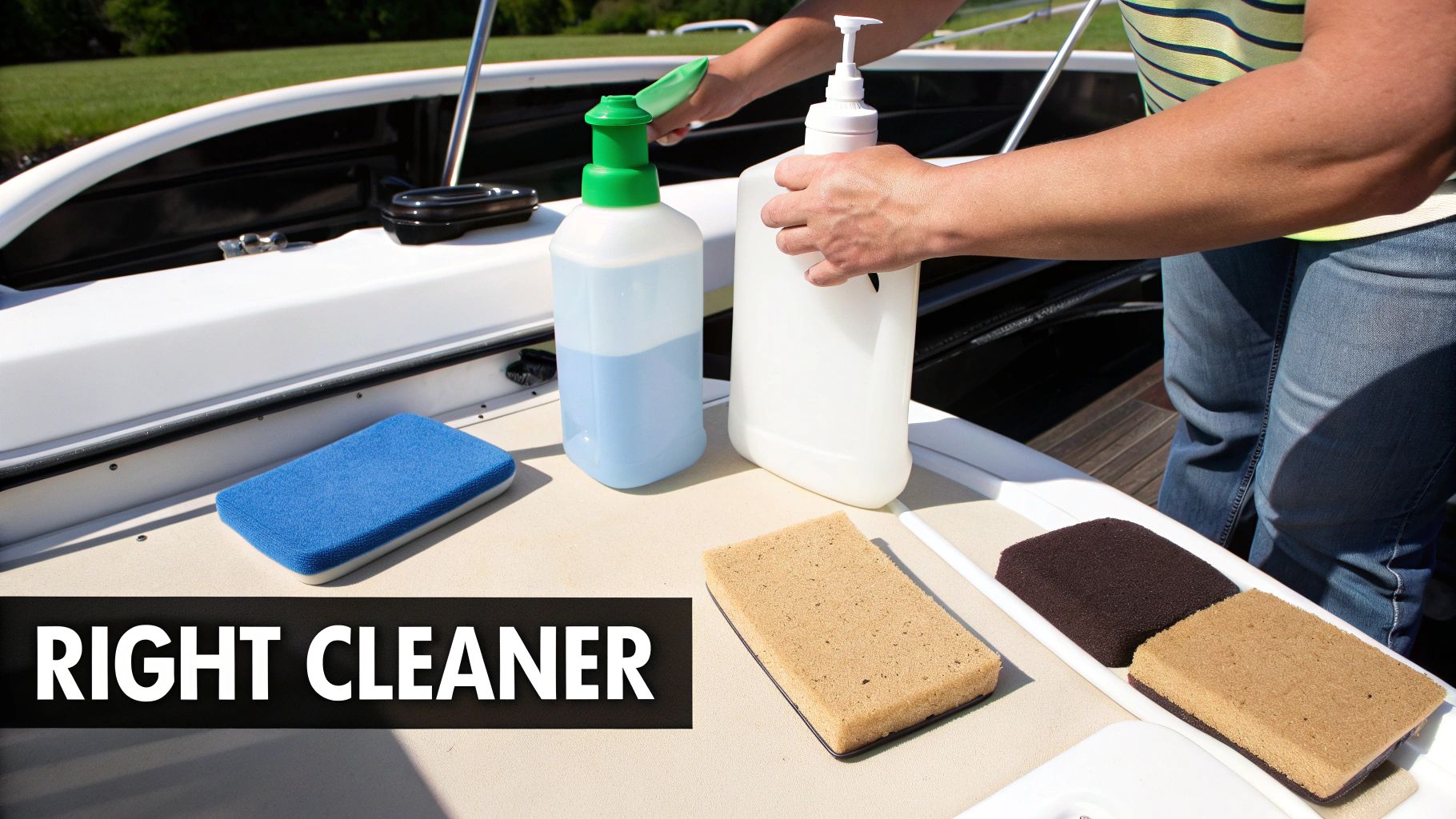
The marine environment is brutal. While your boat’s interior is built to handle sun and water, it’s not indestructible. Your goal is to find a cleaner that gets rid of the grime without destroying the material itself.
Why Your Vinyl Seats Need Special Treatment
Your boat’s vinyl upholstery is in a constant battle with UV rays, sunscreen, sweat, and dirt. Reaching for household products that contain bleach, ammonia, or harsh solvents is a huge mistake. Why? Because these chemicals strip the vinyl of its plasticizers—the compounds that keep it soft and flexible.
When that happens, you’re on a fast track to problems every boat owner dreads:
- Cracking and Fading: The vinyl gets brittle, starts to crack, and loses its color.
- Stripped UV Protection: Marine vinyl has a special UV coating from the factory. Harsh cleaners eat away at this protective layer, inviting the sun to do its worst.
- Sticky Residue: Many household cleaners leave behind a film that actually attracts more dirt.
The secret is to find a cleaner that is pH-neutral. A pH-neutral formula is strong enough to clean but gentle enough that it won't strip the vinyl’s protective topcoat. For a deeper dive, our guide on choosing the best marine vinyl cleaner breaks it down even further.
Tackling Carpet, Plastic, and Other Surfaces
It’s not just about the vinyl. Your marine-grade carpet is made to resist mildew, but it's a magnet for sand, fish scales, and cracker crumbs. You need a cleaner that lifts dirt out of the fibers without soaking the carpet, which would just invite mildew to move in.
Your plastic and fiberglass surfaces, like the helm or side panels, can get dull and grimy. You need something that can power through the gunk without scratching the finish. This is where finding a versatile, high-quality product changes the game.
A multi-surface cleaner made specifically for boats simplifies things so much. For instance, a quality formula like Boat Juice Interior Cleaner is safe on almost everything—vinyl, plastic, and even finished fiberglass. You can go from wiping down your seats to cleaning the console without juggling a dozen different bottles, saving you time and hassle.
A Practical Cleaning Process That Actually Works
Alright, let's get down to business. Knowing which cleaner to use is half the battle, but having a solid, repeatable process is what really delivers a pro-level clean. I'm going to walk you through a simple, actionable method for cleaning your boat’s interior from bow to stern.
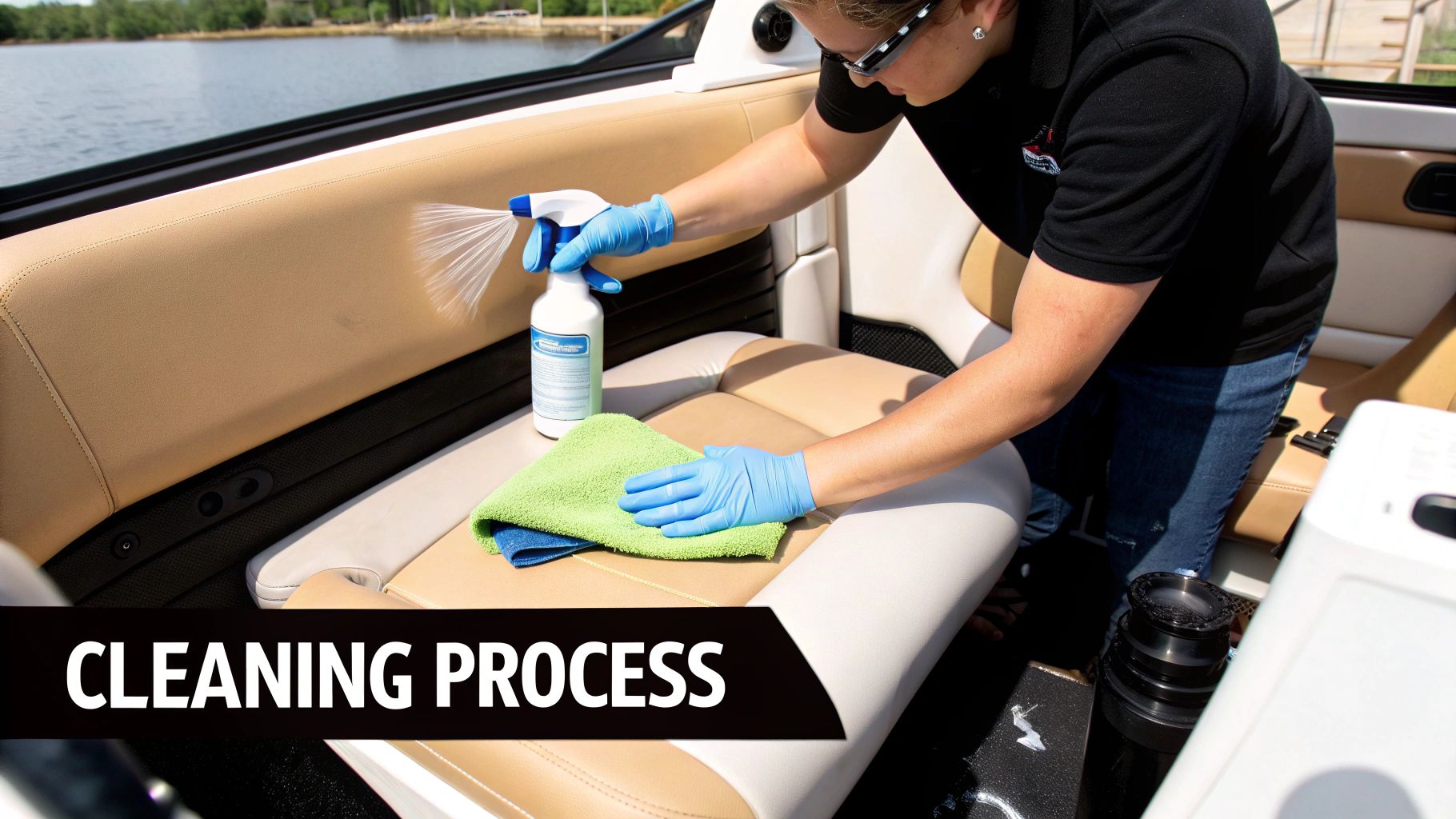
This isn’t about scrubbing until your arms ache. It's about working smarter, not harder, by focusing on one area at a time and using the right techniques.
Step 1: The Prep Phase
Before you spray a single drop of cleaner, you need to set the stage. A few minutes of prep makes the entire job faster and more effective. Don't skip this—it's the difference between a quick wipe-down and a truly deep clean.
First, clear the decks. Get all the loose gear out of the way—life jackets, towels, coolers, everything. Tossing it all on the dock gives you wide-open access to every nook and cranny.
Next, break out a shop vac or a good handheld vacuum. Suck up all the loose sand, dirt, and chip crumbs from the carpet and the seams of your vinyl seats. This is critical because it prevents you from just turning dry dirt into wet grime when you start cleaning.
Step 2: Cleaning Vinyl Seats and Upholstery
This is where your interior really shines, so let’s get it right. Your goal is a streak-free, non-greasy finish that looks and feels brand new.
Start by lightly misting your interior cleaner onto a small section of the vinyl—you don't need to soak it. A huge plus of using a versatile product like Boat Juice Interior Cleaner is that you can move from the vinyl right to the plastic trim without switching bottles.
Grab a clean, dry microfiber towel and wipe the sprayed area with firm, even pressure. For stubborn spots like sunscreen smudges, use a soft-bristle detailing brush to gently agitate the cleaner before wiping. This lifts grime out of the vinyl's texture without scratching it.
Pro Tip: Fold your microfiber towel into fourths. This gives you eight clean wiping surfaces. As one side gets dirty, just flip to a fresh one. This stops you from accidentally spreading grime back onto the surface you just cleaned.
Step 3: Deep Cleaning Carpets and Floors
Boat carpets take a beating from wet feet, spilled drinks, and fish guts. The key is to clean them effectively without leaving them sopping wet, which is an open invitation for mildew.
After you've vacuumed, spray your cleaner evenly across a manageable section of the carpet. A light, even coat will do the job.
Using a medium-stiff brush, work the cleaner into the carpet fibers. I like to scrub in different directions—north-south, then east-west—to really lift deep-down dirt. Then, use a clean, absorbent microfiber towel or a wet/dry vac to pull out the grime and excess moisture. For a more detailed breakdown, check out our complete guide on how to clean your boat interior from start to finish.
How to Handle Tough Stains and Common Problems
Every boat owner knows that sinking feeling. You spot a dark mildew stain creeping onto a seat cushion or a greasy sunscreen smudge on the bright white vinyl. These messes are part of boating, but they don't have to be permanent.
Let's walk through how to tackle the toughest interior problems without making them worse.
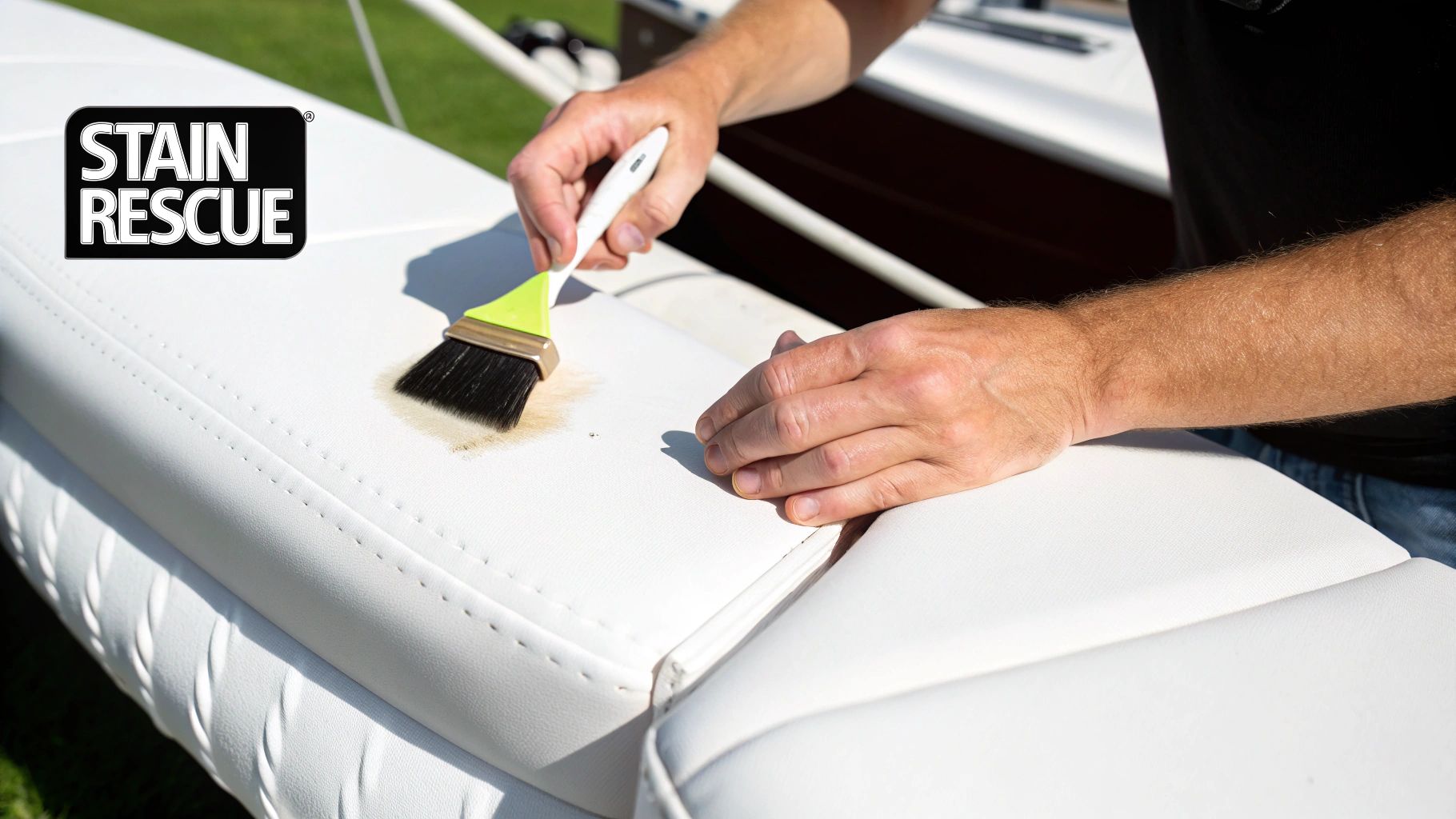
If you remember one thing from this section, let it be this: act fast. The longer a stain sits, especially baking in the sun, the deeper it sets into the material. A quick response can turn a potential disaster into a minor cleanup.
Common Boat Interior Stain Removal Cheat Sheet
Here’s a quick-reference guide for tackling the most common stains you'll find inside your boat. Keep this handy, and you'll know exactly what to do when spills happen.
| Stain Type | Recommended First Action | Effective Cleaning Agent | Pro Tip |
|---|---|---|---|
| Sunscreen & Lotions | Blot, don't rub. | Boat Juice Interior Cleaner | Let the cleaner sit for 30-60 seconds to break down the oils before gently agitating. |
| Mildew & Mold | Do NOT scrub dry. | Boat Juice Mildew Stain Remover | Regular cleaners only remove the surface stain; you need a dedicated mildew remover to kill the roots. |
| Fish Blood | Blot immediately with a cool, damp cloth. | Boat Juice Interior Cleaner | Never use hot water, as it can "cook" the protein and set the stain permanently. |
| Coffee or Soda | Blot up the excess liquid right away. | Boat Juice Interior Cleaner | Work from the outside of the stain inward to avoid spreading it further. |
| Dirt & Mud | Let wet mud dry completely, then vacuum. | Boat Juice Interior Cleaner | Scraping at wet mud will just grind it deeper into the fibers of the carpet or vinyl. |
Think of this table as your first-response plan. When a specific stain becomes a persistent problem, the detailed tips below will help you finish the job for good.
Tackling Sunscreen, Grease, and Grime
Greasy stains from sunscreen and food are probably the most common marks you'll find on your upholstery. Because they're oil-based, they can be a real pain to lift completely.
Your go-to interior cleaner is the first line of defense here. Spray it directly onto the stain and let it sit for 30-60 seconds. This pause is crucial because it gives the formula time to break down those stubborn oils.
After it's had a moment to dwell, grab a soft-bristle brush and gently work the cleaner into the spot with a light circular motion. Then, wipe it all clean with a fresh microfiber towel.
Battling Stubborn Mildew Stains
Mildew is the arch-nemesis of any boat interior. Those ugly black spots aren't just cosmetic; they're a living fungus. A standard cleaner might wipe away the surface discoloration, but it often leaves the roots behind, meaning the mildew comes roaring back.
This is where you need a specialized tool. A cleaner formulated to kill mildew at its source is essential. For pervasive spots that won't budge, a product like Boat Juice Mildew Stain Remover eliminates the stain and the underlying spores without the harsh effects of straight bleach.
We've all fought this battle. For a deeper dive, check out our complete guide on how to remove mildew from boat seats.
Removing Organic Stains Like Fish Blood or Dirt
When it comes to organic stains—think fish blood, dirt, or spilled soda—the goal is to lift the stain out, not scrub it deeper.
First, blot up as much of the spill as you can with a clean, dry cloth. Don't wipe! Just press down firmly. Next, apply your interior cleaner and let it dwell for a minute.
Now, using a clean microfiber towel, blot the stain again, working from the outside edge toward the center. This keeps the stain contained. Repeat this process until it’s gone, then give the area a final wipe with a damp cloth to rinse away any residue.
Step 4: Protect Your Interior from Sun and Stains
You’ve put in all that work to get your boat’s interior spotless. Fantastic! But the job isn't quite finished. Cleaning is only half the battle. Now, it’s about protecting that hard work so your vinyl and plastics stay looking new for years, not just a few weeks.
The single biggest enemy of your boat's interior is the sun's powerful ultraviolet (UV) rays. Season after season, that sun exposure breaks down the chemical bonds in your vinyl and plastic, causing them to fade, turn brittle, and eventually, crack. A high-quality protectant is your best defense.
Why UV Protection is Non-Negotiable
Think of a UV protectant as sunscreen for your boat's upholstery. It creates an invisible barrier that absorbs or reflects harmful UV radiation before it can cause irreversible damage. Without it, your seats and trim are sitting ducks.
This is why applying a dedicated protectant is a crucial final step after every deep clean. Modern formulas also help repel future stains, dust, and moisture, which makes your next cleanup job much easier. It’s a simple habit that can save you from the massive headache of reupholstering your boat down the road.
You just restored your vinyl to its original condition. Locking in that clean with a protectant is the difference between having to deep clean every week versus simply maintaining a fresh surface with minimal effort.
How to Apply Protectant for a Perfect Finish
Your goal is a clean, non-greasy, satin finish—not a slippery, shiny mess. Getting the application technique right makes all the difference.
- Start with a Clean Slate: Always apply a protectant to a surface that has been thoroughly cleaned and is completely dry. If you apply it over dirt, you’re just sealing the grime in.
- Use the Right Tool: A microfiber applicator pad or a fresh microfiber towel is perfect. Steer clear of old rags, which can leave lint behind.
- Apply and Buff: Lightly spray the protectant onto your applicator pad, not the vinyl itself. This prevents overspray. Wipe it onto the surface in even, overlapping strokes, then immediately follow up with a separate, clean microfiber towel to buff off any excess. This buffing step is key to getting that streak-free, non-greasy feel.
For a seamless transition from cleaning to protecting, use products designed to work together. After using Boat Juice Interior Cleaner, following up with Boat Juice Protection Spray is the perfect one-two punch. The protectant bonds perfectly with the clean surface, locking in a powerful layer of UV defense.
Your Top Boat Interior Cleaning Questions, Answered
Even the most seasoned boat owner runs into questions. Let's tackle some of the most common ones that pop up.
How often should I deep clean my boat's interior?
A quick wipe-down after every trip is your best defense. It stops small messes from becoming big headaches.
For a full deep clean, plan on doing it at least 2-3 times a season. Think of it as a spring kickoff, a mid-summer refresh, and a final cleanup before winterization. If your boat gets heavy use or you’re in a saltwater environment, a monthly deep clean isn't overkill; it's smart maintenance.
Is it really that bad to use household cleaners on my boat vinyl?
Yes, it really is. It’s tempting to grab that all-purpose cleaner from under the sink, but please don't. Those products, especially ones with bleach or ammonia, are made for hard surfaces like countertops, not your boat’s expensive vinyl.
Those harsh chemicals strip away the plasticizers that keep your vinyl soft and supple. The result? The dried-out, cracked, and yellowed upholstery you see on neglected boats. Stick with a pH-neutral cleaner made specifically for the job.
What's the secret to preventing mildew?
The magic word is ventilation. Your boat's interior holds moisture from wet towels, swimsuits, and the air itself. You have to let it breathe.
A few simple habits make all the difference:
- Prop up your seat cushions to allow air to circulate underneath.
- Open hatches and storage lockers for a few hours after docking.
- Do a quick wipe-down of any damp spots before you put the cover on.
Mildew thrives on moisture and a food source (like dirt or sunscreen residue). By keeping things dry and regularly cleaning with a product like Boat Juice Interior Cleaner, you take away everything it needs to grow.
Ready to get your boat's interior looking, feeling, and smelling amazing? Your next step is to grab the right tools for the job. The Boat Juice Interior Kit is your all-in-one solution for cleaning, protecting, and maintaining every surface like a pro.