




· By Boat Juice Team
Bird deterrent for boats: Stop bird mess with practical tips
If you’ve ever walked down the dock to find your once-gleaming boat covered in a mess of bird droppings, you know that sinking feeling. The best bird deterrent for boats isn't one single gadget. It’s about creating a layered defense that makes your vessel the least attractive spot in the marina for gulls, pigeons, and cormorants to hang out.
Why Your Boat Is a Bird Magnet (And How to Evict Your Feathered Squatters)

To a seabird, your boat isn't just a boat—it's a luxury waterfront condo. It offers a high, safe perch far from land-based predators, giving them a perfect view to spot fish. Your hardtop, swim platform, and rails are basically purpose-built landing pads, making your boat an irresistible resting spot.
Unfortunately, their five-star stay comes at a steep price for you. Bird droppings, or guano, are far more than just a gross inconvenience. They are incredibly acidic and can cause serious, long-term damage if you don't deal with them quickly.
The Real Cost of a Bird Problem
Letting a bird problem get out of hand can lead to some surprisingly expensive and frustrating repairs. The acid in guano eats right through wax and can permanently etch your boat's gelcoat. This leaves behind dull, faded spots that often require professional compounding and polishing to fix.
Your vinyl seats and canvas are prime targets, too. Those droppings can cause deep, ugly stains that become almost impossible to remove completely. If you're fighting that battle, our guide on how to clean your boat interior has some actionable steps that can help.
Boating association surveys show that a staggering 35% of owners report bird-related damage every year, with repair costs averaging $500 per incident. On the flip side, boaters who use effective deterrents see up to an 80% reduction in bird landings. A little prevention clearly goes a long way. And if you're interested in the broader impact of human-wildlife interaction on the water, BirdLife International offers some powerful insights into the challenges seabirds face.
Key Takeaway: Bird guano isn't just messy—it's corrosive. Its high acidity can permanently damage your boat's gelcoat, canvas, and upholstery, leading to costly repairs and a lower resale value.
Your Three Main Lines of Defense
So, how do you reclaim your boat? The good news is you have several effective strategies. The key to a good bird deterrent for boats is understanding the three main approaches and often combining them for the best results.
Here’s a quick comparison of the three main types of bird deterrents to help you decide which is best for your boat.
Comparing Popular Bird Deterrent Methods
| Deterrent Type | How It Works | Best For | Effort Level |
|---|---|---|---|
| Physical Barriers | Creates a physical obstruction, making it impossible for birds to land. | High-traffic areas like rails, Biminis, and hardtops where birds consistently perch. | Medium (Initial setup can be involved) |
| Visual Deterrents | Uses reflections, sudden movements, and predator shapes to create a "scare zone." | Open areas like cockpits and bows; good for deterring birds from a distance. | Low (Easy to hang or install) |
| Auditory Deterrents | Emits sounds that birds find annoying or threatening, like predator calls or ultrasonic frequencies. | Covering the entire boat or dock area; works best when birds aren't already habituated. | Low (Set it and forget it) |
Each of these methods has its place, and sometimes the best solution is a mix-and-match approach. Now that you know the "why" and the "what," let's dig into choosing the right tools for your specific boat.
Physical Barriers That Keep Birds Off for Good

When scare tactics aren’t cutting it, it's time to get serious with physical barriers. The logic is simple: if a bird can’t find a place to land, it can’t make a mess. This is the most foolproof way to protect prime perching spots like railings, hardtops, and biminis.
Installing Bird Spikes Without Damaging Your Boat
Bird spikes look intimidating, but they are one of the most effective and humane tools you can use. They are strips of upward-pointing plastic or stainless steel rods on a flexible base. The spikes don't hurt the birds; they just create an unstable, awkward surface that birds can't grip, forcing them to fly off and find an easier spot.
Here's how to install them without drilling a single hole:
- Clean the surface (e.g., railing, hardtop, wake tower) with rubbing alcohol to remove any wax or grime.
- Measure the area and cut the spike strip to the desired length.
- Use a high-quality marine double-sided tape or the included adhesive to press the strip firmly into place.
For a pontoon boat, you can line the top of the entire perimeter fence. For a center console, the top edge of the T-top is a magnet for birds and a perfect candidate for spikes. The goal is to leave no comfortable landing zones.
Pro Tip: For areas you need to walk on, like a swim platform, look for removable spike systems. Some clever designs clip onto railings or even slot into rod holders. They give you heavy-duty protection when docked but come right off when you're ready to hit the water.
Using Netting and Wire Systems Effectively
For protecting larger areas like the bow of your cruiser or the entire cockpit, nothing beats bird netting. Be sure to get a lightweight, UV-resistant marine-grade net so it doesn't fall apart after one season in the sun.
The trick to making netting work is to keep it suspended at least three to four inches above the surface. If it's too close, birds can just push it down and still land. You can use your boat's cleats, poles, and bimini frame as anchor points, using small bungee cords to pull the net tight and keep it elevated.
For long, straight runs like handrails, a tensioned wire system is a fantastic, low-profile alternative. You simply string one or two thin, coated wires a few inches above the rail. This creates an unstable landing strip that birds hate. From a short distance, you can barely even see it.
Outsmarting Birds with Visual and Sound Deterrents

While physical barriers are great, they aren't practical for every part of your boat. That’s when it's time to get clever and play a few mind games. Visual and sound-based deterrents work by messing with a bird’s survival instincts, making your boat seem like a confusing, unpredictable, and scary place.
Use Visuals to Create a Zone of Confusion
Birds, especially gulls, have incredible eyesight and are easily spooked by flashing lights and sudden movements. You can use this to your advantage by turning your boat into a shimmering, shifting space they’ll want to avoid.
- Holographic Flash Tape: This is probably the most bang for your buck in bird deterrents. The shiny material catches the sun and throws off confusing flashes, all while making a crinkling noise in the breeze. Tie a few strips to your railings, bimini frame, or antennas where they can whip around freely.
- Reflective "Scare-Eye" Balloons: These are large, inflatable balls with huge, menacing eyes printed on them. To a bird, a bobbing and spinning balloon looks an awful lot like a predator. Hang one from your radar arch or mast for the best effect.
The Fine Art of Decoys
A predator decoy, like a plastic owl or a fake hawk, can be a fantastic psychological weapon. When a gull or cormorant spots what it thinks is a bird of prey on your hardtop, its natural instinct is to fly the other way. Fast.
But there’s a catch: birds are smart. If that plastic owl sits in the exact same spot for two weeks straight, they’ll quickly figure out it’s just a lawn ornament. The secret to making decoys work is movement. You have to keep the illusion alive by moving the decoy every few days. Shift it from the bow pulpit to the stern, or from the cabin roof to a railing.
Making Some Noise (The Right Kind)
Sound deterrents work by making your boat an acoustically hostile environment for birds. This can be done with recorded distress calls or, more conveniently, with high-frequency sounds that drive birds crazy but are harmless to you.
An ultrasonic bird repeller is a popular option. These gadgets blast out high-frequency sound waves that birds can't stand but are completely silent to you and your pets. Most are battery-powered or can be wired into your boat’s 12-volt system for constant, set-it-and-forget-it protection.
The Right Way to Clean and Protect Your Surfaces

Even with the best bird deterrent for boats, a stray dropping is bound to happen. When it does, your best friend is speed. The acid in bird guano starts damaging your boat's surfaces almost immediately, especially when baking in the sun.
Match Your Cleaning Method to the Mess
You need to match your cleaning approach to the surface to avoid causing more damage. A cleaner that’s too harsh can be just as bad as the bird dropping itself.
-
For Gelcoat and Fiberglass: Fresh spots on these hard surfaces are the easiest to tackle. A quick spritz of a pH-balanced exterior cleaner, like Boat Juice Exterior Cleaner, will break down the mess. Just wipe it away with a soft microfiber towel.
-
For Vinyl and Upholstery: These softer surfaces stain much faster. Avoid aggressive scrubbing, which can wear down the vinyl's protective topcoat. Instead, use a quality interior cleaner and a soft brush to gently lift the stain.
-
For Canvas and Bimini Tops: Fabric is the most absorbent material on your boat. Blot the area to remove any excess, then gently work in a cleaner with a soft brush. The most important step here is to rinse the area thoroughly with fresh water to get all the cleaning residue out.
Did you know bird guano is responsible for a staggering 40% of all surface corrosion on idle boats? It also speeds up gelcoat degradation by 25% in saltwater environments. If you're curious about the broader impact of environmental factors on marine life, the team at Bird Rescue offers some sobering insights.
Proactive Protection Is Your Best Defense
Cleaning up messes is reactive. Making that cleanup ridiculously easy is the real pro move. Applying a quality marine sealant creates a sacrificial, hydrophobic (water-fearing) barrier over your gelcoat and other non-porous surfaces. This makes the surface slick, so messes can't get a good grip.
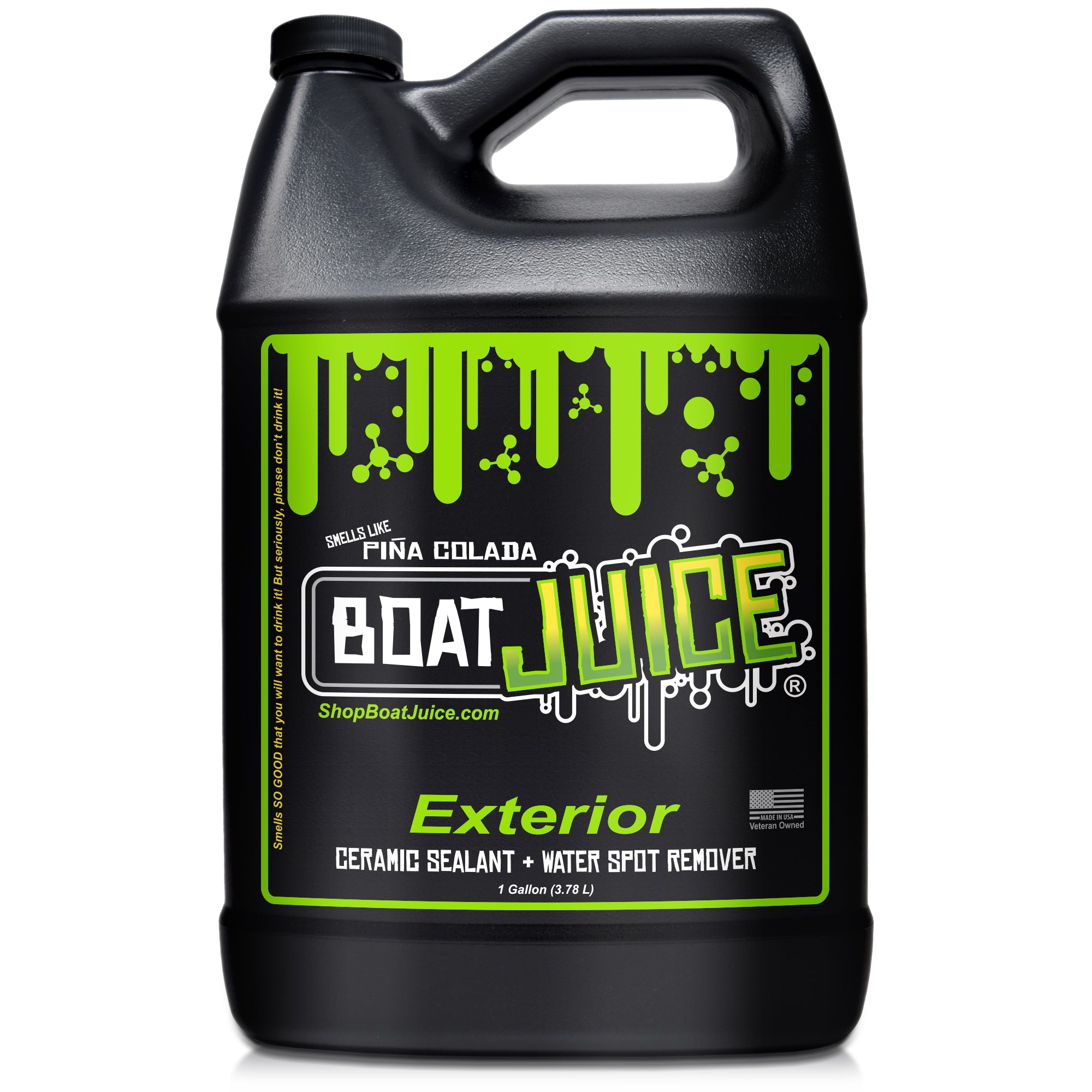
A spray-on ceramic sealant like our Boat Juice Protection Spray is perfect for this. It’s incredibly easy to apply and leaves behind a super-slick, glossy layer. This coating prevents acidic droppings from ever making direct contact with your gelcoat. When a bird inevitably leaves its mark, the mess sits on top of the sealant, turning a baked-on disaster into a simple spot you can wipe away.
If you’re looking for a complete A-to-Z walkthrough, be sure to check out our comprehensive guide on how to clean your boat the right way.
Building Your Year-Round Bird Defense Routine
Tossing a plastic owl on your deck and calling it a day isn't going to cut it. The key to keeping your boat bird-free is building a simple, ongoing routine. Your deterrents only work as long as they seem new and threatening. A solid routine ensures your boat stays an unwelcoming spot for birds, from spring launch to winter storage.
Your Seasonal Bird Defense Checklist
The easiest way to make this stick is to tie your bird-proofing tasks to your existing boating calendar.
Spring Commissioning (Getting Ready for the Season):
- Inspect and Install: While de-winterizing, install your primary deterrents. Put up bird spikes, string fresh scare tape, or mount your predator decoys.
- Check Batteries: If you use ultrasonic devices, swap in fresh batteries so they don't die mid-season when birds are at their worst.
Summer Upkeep (During Peak Season):
- Rotate and Relocate: This is the most important habit. Every week or two, move your visual deterrents. Shift that owl from the bow to the hardtop. This constant change keeps birds from getting comfortable.
- Inspect for Damage: As you're on the water, quickly check your netting or wires. A small tear or a sagging wire is an open invitation for a persistent gull.
If you want to get serious, look into the principles of Integrated Pest Management (IPM). It’s a professional approach that focuses on combining different methods for prevention, which is exactly what you are aiming for here.
Storage and Off-Season Strategy
When the boating season winds down, your strategy needs to adapt. A boat in a marina slip has different vulnerabilities than one on a trailer in your driveway.
For boats left in the water, physical barriers are key. A full cockpit enclosure or extensive netting becomes non-negotiable. If you're storing the boat at home, make sure your cover is pulled tight with support poles underneath. This prevents water from pooling, which creates a birdbath and can stretch your cover.
Finally, give yourself a head start for next spring. After your final washdown, apply a protective layer. A quality spray wax, like those in our guide on the best spray wax for boats, makes it harder for droppings to stick, so your first cleanup next year will be much easier.
Got Questions About Keeping Birds Off Your Boat?
Even with the best plan, trying to outsmart birds always brings up a few questions. Let's walk through some of the most common ones.
Will These Deterrents Actually Harm the Birds?
This is a great question. The short answer is no. All the deterrents we’ve discussed are designed to be completely humane. The goal is to make your boat inconvenient or scary, not to cause physical harm.
- Physical barriers like bird spikes or nets simply block birds from landing. The spikes are blunted and spaced to make perching impossible, not to injure their feet.
- Visual and auditory scares play on a bird's natural survival instincts. Flashing tape and decoy predators make them feel unsafe, encouraging them to find a more peaceful spot to rest.
What's the Most Budget-Friendly Bird Deterrent That Actually Works?
If you're looking for the most bang for your buck, you can't go wrong with holographic scare tape. It’s incredibly cheap and surprisingly effective.
Just hang a few strips from your rails, bimini top, or antennas. The unpredictable combination of movement, sound, and light really messes with common birds like gulls and pigeons, and they’ll typically steer clear. For example, tying a few six-inch strips to your windshield grab rail can be a simple, five-dollar fix.
How Do I Stop Birds From Nesting Under My Boat Cover?
Finding a bird's nest under your cover is a special kind of frustration. The secret is to eliminate any slack or saggy spots.
First, get your cover as tight as possible. Use support poles or even a couple of cheap, inflatable beach balls underneath to "tent" the fabric upwards. This gets rid of those cozy, sagging pockets that look like a five-star bird hotel. For really stubborn birds, you can even toss a decoy snake or a few reflective scare-eye balloons under the cover.
Do Those Electronic Ultrasonic Repellers Really Work?
Honestly, the jury is still out on ultrasonic devices. Some boaters swear by them, while others say they did nothing. These gadgets emit high-frequency sounds that are supposed to annoy birds while being silent to you.
They seem to work best in enclosed spaces—like a boathouse or covered slip—where the sound can concentrate. Out in the open, their range is limited. Think of them as one possible tool in a larger, layered strategy, not a single magic bullet.
Now that you have the right strategies, your next step is to get the right tools to clean up any existing mess and protect your surfaces. Our Boat Juice Exterior Cleaner is perfect for safely wiping away bird droppings from your gelcoat, and our Protection Spray leaves a slick surface that makes future cleanups a total breeze.